Insight

Hurricane Ida: Louisiana Department of Insurance Implements Mediation Program

Published on: December 10, 2021
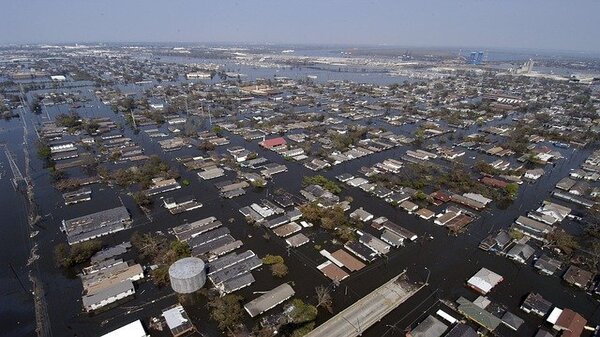
In the wake of Hurricane Ida, the Louisiana Department of Insurance (LDI) implemented a mediation program to assist policy holders with disputed insurance claims. Effective October 18, 2021, the program was implemented to assist in the prompt and reasonable settlement of disputed insurance claims.

The program is open to all authorized property and casualty insurers, as well as all surplus line insurers for personal lines residential insurance claims up to $50,000.00. Both the insurer or policyholder can submit a written request for mediation; the opposing party is free to accept or deny the invitation. If initially denied, the parties are free to later opt to participate.

If both parties agree to mediation, a mediator will be assigned and within 30 days a mediation will be scheduled at a local Mediation & Arbitration Professional Systems (MAPS) or Perry Dampf Dispute Solutions location in the Baton Rouge or New Orleans area. The initial mediation session allows for 90-minutes; however, parties are allowed to continue the mediation beyond the initial session at the agreement of the mediator.

The mediation program is free to all policyholders and a $600 fee is assessed to the insurer for the first 90-minute mediation session. If the parties and mediator agree to continue the mediation beyond the initial 90-minute session, additional fees will be assessed for the mediator’s services. The parties are to determine among themselves who will be responsible for the additional costs.

The parties are required to provide all relevant documentation to the assigned mediator and a detailed explanation of the claim and any obstacles to resolution. The policyholder can represent themselves or through counsel. They are even encouraged to bring knowledgeable individuals such as adjusters, appraisers, or contractors.

If a resolution is reached, even just partial, both parties will reduce the agreement to writing and sign the agreement. The insurer will be required to furnish any required payment to the policyholder within ten (10) days of signing the agreement. If the parties only reach a partial agreement, they will be permitted to continue to use the mediation services and schedule future mediation dates.

At this time, the program is scheduled to continue through June 30, 2022.

Posted by:

Disclaimer

Keogh Cox & Wilson, Ltd. provides this blog as a public service for general information only. The materials contained herein may not reflect the most current legal developments or even express the opinion of all or even most of Keogh Cox attorneys. Such material does not constitute legal advice or form any attorney-client relationship. Keogh Cox and all contributing author(s) expressly disclaim all liability to any person with respect to the contents of this Web site and Blog and expect that no reliance will be made upon the information provided.

Continue Reading

Explore legal perspectives on the issues shaping Louisiana's key industries and courtrooms.

Insight

Louisiana Supreme Court Finds Business Interruption Coverage Does Not Apply to Losses Attributable to COVID-19

The COVID-19 pandemic had a profound impact on the global economy. Louisiana was not spared, and many businesses had to close as sales to their customers slowed or stopped altogether. Not surprisingly, the question arose regarding whether business interruption insurance would provide coverage to businesses in this situation. The Louisiana Supreme Court recently was asked this question in Cajun Conti, LLC v. Certain Underwriters at Lloyd’s, London and found that the policy at issue did not provide such coverage.

The mayor of New Orleans issued a proclamation on March 16, 2020, that prohibited most public and private gatherings. This applied to restaurants, whose business initially was limited to takeout and delivery services. Before the pandemic, Oceana Grill, a restaurant located in the French Quarter, could serve up to 500 customers at one time. However, it had to limit its business to takeout and delivery services when the mayor’s proclamation was announced. Because of social distancing guidelines, it remained at 60% or less capacity throughout the pandemic.

Oceana maintained a commercial insurance policy with loss of business income coverage and filed suit to request a declaratory judgment that the “policy provides business income coverage from the contamination of the insured premises by COVID-19.” Oceana’s insurer argued that there was no coverage under the policy because COVID-19 did not cause “direct physical loss of or damage to property” under the policy’s terms.

The trial court denied Oceana’s request for declaratory relief at trial. The appellate court reversed and found the policy’s terms ambiguous because it held “direct physical loss” could mean loss of use of the property. Because the pandemic prevented the full use of the property due to capacity limitations, the appellate court found coverage was triggered.

The Supreme Court disagreed and reversed the appellate court’s decision, finding its focus on the use of the property to be misguided. The Court found that suspension of operations “caused by direct physical loss of or damage to property,” as defined by the policy, required “the insured’s property to sustain a physical, meaning tangible or corporeal, loss or damage.” The Court noted that the restaurant’s physical structure was not lost or damaged because of the pandemic. COVID-19 restrictions did not cause damage or loss that was physical in nature. Therefore, the policy did not provide coverage for loss of business income.

Whether a policy affords coverage depends on the terms and conditions of each policy and the facts of each case. However, in light of this decision, businesses with insurance policies that include provisions with language like that at issue in Cajun Conti should not anticipate coverage for loss of business income allegedly caused by the COVID-19 pandemic.

Case References:

Cajun Conti LLC v. Certain Underwriters at Lloyd's, London, 2022-01349 (La. 3/17/23), 2023 WL 2549132.

Insight

Is Your Neighbor a Nuisance?

The poet Robert Frost famously wrote that: “Good fences make good neighbors.” But what if there is a problem even fences won’t solve? Louisiana law offers some answers.

Under Louisiana law, a landowner cannot use their property in a manner that interferes with their neighbor’s enjoyable use. While a neighbor may have to put up with some inconveniences, excessive inconveniences that cause damage may be actionable. If a landowner’s activity is considered a nuisance, he may be liable for damages, and the court may require the landowner to stop the activity.

To determine whether a particular activity is considered a nuisance, courts look to the following factors: (1) the character of the neighborhood; (2) the degree of the intrusion; and, (3) its effect on the use and enjoyment of neighboring properties. For example, a person living in a heavy industrial area may have to put up with more noise than someone living in the suburbs. Whether activity is considered a nuisance is determined on a case-by-case basis.

Further, the nature of the noise and its persistence and duration can be a factor in determining whether the activity is a nuisance. For example, in Parish of E. Feliciana ex rel. E. Feliciana Parish Police Jury v. Guidry 2004-1197 (La. App. 1 Cir. 8/10/05), 923 So. 2d 45, writ denied, 05-2288 (La. 3/10/06), 925 So. 2d 515, the court looked not only at the level of the noise, but also at the “nature” of the noise. The court held that noise from a motor cross track was a nuisance, likening the noise to a chainsaw, a buzzing bee, or a dentist drill.

Even when a landowner has a right to conduct a business on his property, he cannot create a nuisance in running the business. Louisiana courts have held that noxious smells, dust, debris, rats, flies, and noise may all constitute a nuisance, even if the business was otherwise lawful.

The duty owed to neighbors applies not only to the landowner, but may also apply to tenants or contractors performing “work” on the property. To prove a nuisance, the offended neighbor must show that the landowner/tenant/contractor either “knew or should have known” that the activity was a nuisance.

When mending fences is not possible, you may have other options.

Chelsea Payne is an associate at Keogh Cox and has been practicing for three years. Her practice mainly relates to construction law and complex litigation. Chelsea enjoys playing tennis and spending time with her family.

Insight

"IME" Killer Bill Put Down

The Louisiana plaintiffs’ bar recently sought to tilt the scales of justice through Senate Bill 185, a bill seeking to complicate a defendant’s efforts to obtain an Independent Medical Examination ("IME"). An IME is an examination of the plaintiff by a physician or medical examiner hired by the defense. IMEs are important in the defense of a case and often act as a catalyst for settlement or to reduce the value of a claim.Bill 185 was introduced by Senator Jay Luneau (D) and passed with a unanimous 35 – 0 vote in the Senate. The bill proposed amendments to Louisiana Code of Civil Procedure Article 1464 to impose the following conditions upon IMEs:

  • All parties would be barred from referring to an IME as “independent” in the presence of a jury.
  • A plaintiff could not be ordered to submit to multiple examinations by multiple physicians within the same field of specialty, regardless of the number of defendants.
  • The party to be examined would have the right to have a person of his or her choosing present during the exam, including the plaintiff’s attorney.
  • The party to be examined would have the right not only to have the entire examination videotaped, but the ability to force the party requesting the examination to pay for all associated costs.

Were these conditions enforced, many physicians might have chosen not to provide IMEs at all when the process would involve: a potentially adversarial plaintiff’s attorney; a patient room packed with video equipment; and, the spectacle of it all captured on tape. Further, the bill would have stifled the ability to defend injury claims.We may never know what effect these changes might have brought. On May 16, 2017, the House Civil Law and Procedure Committee, involuntarily deferred on a 4-4 vote. This action effectively killed the bill and saved the IME as currently understood. By: John Grinton, a Keogh Cox associate whose practice areas include commercial and construction litigation. When he is not practicing law, John spends most of his time with his wife, Kellye, and their two dogs.

No items found.
Flood
Louisiana
Mediation
Hurricane
Insurance