Insight

Hurricane Ida: Supreme Court Suspends Certain Deadlines

Published on: September 3, 2021

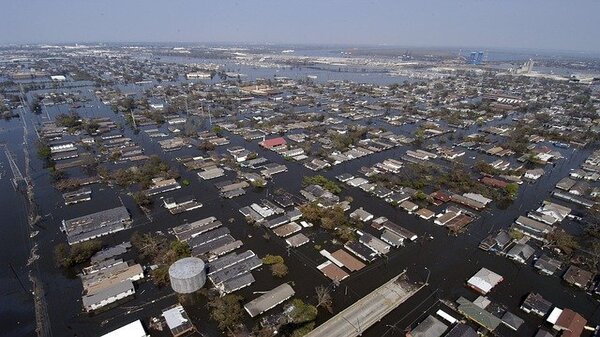
In response to Hurricane Ida, the Louisiana Supreme Court issued three Orders which affect litigation in Louisiana:

Proceeding before the Supreme Court

  • The Supreme Court Clerk of Court’s office will be closed until September 19, 2021. All filings due during this period of closure shall be deemed timely filed if filed on or before Monday, September 20, 2021.
  • Cases scheduled to be heard on the September docket (September 7-9) are postponed to the October docket, the week of October 18, 2021.

Civil Cases Statewide

  • All prescriptive and peremptive periods are hereby suspended statewide for a period of thirty days commencing from August 26, 2021.
  • All periods of abandonment are hereby suspended statewide for thirty days commencing from August 26, 2021.

Criminal Matters

  • The Court also extended time periods in criminal matters but limited the order to parishes most impacted by the storm.

Individual District Courts and Courts of Appeal may take additional actions because of the damage and loss of power experienced in multiple areas of the state.

Posted by:

Disclaimer

Keogh Cox & Wilson, Ltd. provides this blog as a public service for general information only. The materials contained herein may not reflect the most current legal developments or even express the opinion of all or even most of Keogh Cox attorneys. Such material does not constitute legal advice or form any attorney-client relationship. Keogh Cox and all contributing author(s) expressly disclaim all liability to any person with respect to the contents of this Web site and Blog and expect that no reliance will be made upon the information provided.

Continue Reading

Explore legal perspectives on the issues shaping Louisiana's key industries and courtrooms.

Insight

The Louisiana Supreme Court rules that amount billed by healthcare providers beyond what has been paid by a Workers Compensation insurer is NOT a collateral source that is recoverable against tort defendants

In a very important ruling by the Louisiana Supreme Court, a tort defendant is no longer liable for any “actual charges” by medical providers above the amount paid by a Workers Compensation insurer pursuant to promulgated Workers Compensation fee schedule . In Simmons v. Cornerstone Investments, LLC, 2018-cc-0735 (La. 5/18/19), the court concluded:

“…the amount of medical expenses charged above the amount actually incurred is not a collateral source and its exclusion from the purview of the jury was proper.” See http://www.lasc.org/opinions/2019/18-0735.CC.OPN.pdf

The court conducted a detailed analysis of the development of the collateral source rule under applicable jurisprudence noting that the genesis of the collateral source rule:

“Under the collateral source rule, a tortfeasor may not benefit, and an injured plaintiff’s tort recovery may not be reduced, because of monies received by the plaintiff from sources independent of the tortfeasor’s procuration or contribution. Under this well-established doctrine, the payments received from the independent source are not deducted from the award the aggrieved party would otherwise receive from the wrongdoer.” See Louisiana Dept. of Transp. & Dev. v. Kansas City Southern Railway Co., 02-2349, p. 6 (La. 5/20/03), 846 So.2d 734, 739.

Essentially, the court asks two questions when assessing whether the collateral source rule should apply. First, does the claimed benefit arise from some payment, wage deduction or other contribution by the Plaintiff that would diminish the plaintiff’s patrimony? Second, will the goal of tort deterrence be promoted by allowing the windfall? In a series of cases culminating in the case at bar, the court has been limiting the application of the collateral source rule in a number of contexts.

The court in Bozeman v. State, 03-1016 (La. 7/2/04), 879 So.2d 692, found that the collateral source rule did not apply when Medicaid was the payor such that the defendant could not be responsible for any amounts above what Medicaid paid to the provider. The court reasoned that it would be “unconscionable” to require taxpayers to pay the bills and then let a plaintiff recover the full undiscounted medical expenses and “pocket the windfall.” The court continued by noting in “Cutsinger v. Redfern, 08-2607 (La. 5/22/09), 12 So.3d 945, this court found the collateral source rule did not apply to prevent the plaintiff’s uninsured motorist carrier from receiving a credit for workers’ compensation benefits paid by her employer, even though the plaintiff paid for the UM coverage herself.” In Hoffman v. 21st Century North American Ins. Co., 14-2279 (La. 10/2/15), 209 So.3d 702, the court held that the collateral source rule does not apply to attorney-negotiated medical discounts. The court also looked at the US 5th Circuit in Deperrodil v. Bozovic Marine, Inc., 842 F.3d 353 (5th Cir. 2016), that the collateral source rule does not apply above any amounts actually paid by the employer in the context of the LHWCA.

In each of the instances outlined, the court noted that the patrimony of the plaintiff was not impacted by limiting recovery to the amount of medical bills actually paid. Moreover, the court noted that the goal of tort deterrence is not negatively impacted, and that allowing a plaintiff to recover a windfall in this context is tantamount to an award of punitive damages that are not recoverable absent statutory authority which is not present in this context. The Simmons decision now extends that same logic to cases where a Workers Compensation insurer has paid the medical benefits pursuant to the Louisiana Workers Compensation Law.

This ruling will have significant impact on the evaluation, settlement and trial of tort cases that have corresponding Workers Compensation claims.

Submitted by John P. Wolff, III (Partner)

Insight

Fraud Just Got More Expensive - Equity as a Factor in Attorney Fee Awards

The Louisiana Supreme Court recently held that the New Home Warranty Act ("NHWA") is not the exclusive remedy for a purchaser of a new home where the builder fails to disclose known defects in the Residential Property Disclosure Act ("RPDA"). Stutts v. Melton, 2013-0557, -- So.2d. ----. The Court also upheld an award of damages and attorney fees for fraud victims who elect not to seek rescission of a sales contract despite no Civil Code article expressly allowing for attorney fees in such instances.

Builder Chad Melton completed a home in Walker, Louisiana in 2004. He and his wife lived in the home for approximately nine months prior to selling the home to James and Lisa Stutts. The Residential Property Disclosure Act, La. R.S. 9:3196, et seq., requires disclosures of known problems with a home prior to sale. Melton provided the Stutts with a disclosure form, but failed to mention that color had previously been observed bleeding onto the walls of the home from the roof.

In Stutts, it was factually established that Melton was aware of the roof defect because he had entered into a $13,600 settlement with the roof manufacturer to fund the replacement of the roof. Nevertheless, Melton cleaned the walls and installed gutters instead of the more expensive roof replacement.

Melton's gutter solution was ill-advised and unsuccessful. After discovering the problem in the summer of 2006, the Stutts filed suit seeking as damages: the repair costs for the roof; costs for additional repairs; and attorney fees.

The Stutts filed a motion for summary judgment on their fraud claim citing La. C.C. art. 1953. The Meltons opposed the motion, arguing that the NHWA provides the "exclusive remedy" available to the Stutts. The motion was granted and, after a bench trial on damages, the trial judge awarded damages to include attorney fees.

The court of appeal reversed both the summary judgment and the money judgment, holding that the Stutts' claims were untimely under the NHWA.The NHWA provides a one year warranty period for new home construction and an additional thirty day period in which to file suit under the Act. By its terms, the NHWA provides the "exclusive remedies" between a builder and an owner relative to home construction.

The Louisiana Supreme Court reversed and reinstated that lower court's judgment. The Court held that the RPDA applied in this case because the home had been occupied by the Meltons after construction was completed. Even though the NHWA claims were prescribed, the Stutts possessed a timely claim that Melton had provided a fraudulent disclosure in violation of the RPDA.

The Court next addressed the Stutts' claim for attorney fees. The Court observed that no statute specifically authorized attorney fees where the plaintiff does not seek rescission of the sale. However, the Court reasoned, citing principles of equity found in Louisiana Civil Code article 4, that the legislature surely did not intend for victims of fraud to go uncompensated if they elect not to seek full rescission of the sale. Accordingly, attorney fees were held appropriate where fraud is committed but the victim elects not to seek rescission of the contract.

The Court's holding in Stutts may have a limited impact on the NHWA because of the peculiar facts of the case, i.e. the builder of the new construction living in the completed home before selling it to plaintiffs. However, the Court's award of attorney fees is an interesting development in the law. Time will tell whether the Court may be inclined to create further exceptions to the established rule that attorney fees cannot be awarded in the absence of statutory or contractual language awarding attorney fees.

Insight

Louisiana Supreme Court Clarifies Analysis for Open & Obvious Conditions

It seems intuitive that people have an obligation to avoid potentially harmful conditions that are open and obvious. Nevertheless, treatment of open and obvious conditions in Louisiana law has proved tricky because many cases did not apply a uniform analytical framework. In Farrell v. Circle K Stores, Inc. and the City of Pineville, the Louisiana Supreme Court recently offered needed guidance on the appropriate analysis for open and obvious conditions.

The plaintiff stopped at a gas station and decided to walk her dog in a nearby grassy area. To get to the grassy area, Farrell had to cross a pool of water that was “approximately the length of a tractor-trailer.” Farrell attempted to jump across the narrowest part of the pool, but slipped and fell. She sued for damages arising from her injuries. The defendants moved for summary judgment on the grounds that the condition was open and obvious. The trial court and court of appeal denied the defendants’ motion. However, the Louisiana Supreme Court reviewed the matter and reversed.

In finding that the condition was open and obvious, the court began its analysis by outlining the elements that a plaintiff must establish to recover for damage arising from a defect under Louisiana Civil Code articles 2315, 2316, 2317 and 2317.1:

  • That the defendant owed plaintiff a duty to conform its conduct to a specific standard;
  • That the defendant breached the duty owed;
  • That the defendant’s conduct was the cause-in-fact of the plaintiff’s injuries;
  • That the defendant’s conduct was the legal cause of the plaintiff’s injuries; and,
  • That the plaintiff suffered damages.

The court also highlighted the requirement under La. R.S. 2317.1 that plaintiff show the defendant knew or should have known of the condition before the injury occurred.

The court noted that some courts had assessed whether a condition was open and obvious in the context of whether the defendant owed the plaintiff a duty, while other courts had assessed whether a condition was open and obvious in the context of whether the defendant had breached the duty that was owed. In Farrell, the court found a duty was owed under the code articles referenced above. It clarified that whether a condition was open and obvious should be considered during analysis of whether the duty was breached, pursuant to Louisiana’s “risk/utility” test. This test requires consideration of whether the condition presented an unreasonable risk of harm, which considers whether the condition had any social utility; the likelihood and magnitude of harm the condition presented; the cost of preventing the harm; and the nature of the plaintiff’s conduct, including whether plaintiff’s conduct was socially useful or inherently dangerous.

Specifically, whether a condition is open and obvious should be considered in determining the likelihood of harm and magnitude of harm to an objectively reasonable person. The court further advised that the specific nature of the condition should be considered, such as its location and size. In contrast, a plaintiff’s particular and subjective knowledge of the condition is not relevant in determining whether defendant has breached a duty.

The Farrell court applied this analysis to the facts. It found that the pool served no useful purpose. No evidence existed regarding the cost to eliminate the risk. With respect to Farrell’s conduct, the court found that walking a dog was not dangerous by nature and may have an important social function, but this did not weigh heavily in the analysis. However, with respect to whether the condition as open and obvious, the court considered the location of the pool at the edge of the parking lot, the size of the pool, and the fact that it was apparent to all who encountered it. Thus, the condition was open and obvious, and the likelihood of and magnitude of the harm was minimal.

The court concluded that these factors collectively showed the condition was not unreasonably dangerous. The defendants did not breach their duty to plaintiff, and summary judgment should have issued for the defendants. In so holding, the Supreme Court provided clarifying guidance on analysis of open and obvious conditions under Louisiana law.

Case Reference:

Farrell v. Circle K Stores, Inc. and the City of Pineville, 2022-000849 (La. 3/17/23), --- So.3d ----, 2023 WL 2550503.

Brian T. Butler

Partner
Flood
Louisiana Supreme Court
Hurricane