Insight

Louisiana Second Circuit Applies Anti-Dram Shop Statute to Grant Summary Judgment

Published on: February 5, 2024
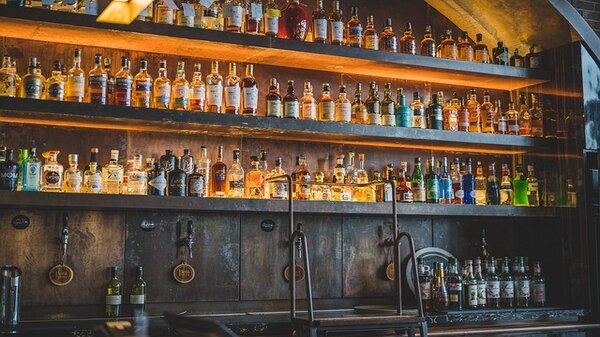
Louisiana’s “anti-dram shop” statute, La. R.S. 9:2800.1, limits the ability of a claimant to hold a provider of alcohol liable for damages resulting from the acts of an intoxicated patron. Subsection A of the statute declares that the consumption of intoxicating beverages, rather than the sale, serving, or providing of those beverages, is the proximate cause of any injury or property damage that the consumer may cause. Under Subsection B, anyone who lawfully serves alcohol to a person of legal age is provided immunity for any injury caused by the consumer that occurs “off the premises.” This immunity extends to sellers of alcohol and social hosts.

The Louisiana Second Circuit recently examined these provisions of this statute in Rugg v. Horseshoe Entertainment, et. al. The plaintiff alleged she was injured when an intoxicated patron (John Doe) fell onto her at a hotel bar. She alleged that the defendant, which operated a casino bar, was liable because it ignored multiple complaints about John Doe’s drunken state prior to the incident and failed to escort him out.

The defendant moved for summary judgment, arguing that Louisiana’s anti-dram shop statute prevented any finding of liability on its part. In opposing the summary judgment, the plaintiff argued that the statute did not rule out liability because the injury occurred on the premises.

The Second Circuit determined that the immunity afforded in Subsection B of the statute was not available because, as the plaintiff argued, the injury occurred on the premises. However, Subsection A of the statute, which declares the consumption, not the serving, of alcohol is the proximate cause of injury inflicted by an intoxicated person, still applied.

Under these circumstances, the Court held it had to determine whether the bar owner violated general negligence principles. In conducting this analysis, the court was required to focus on two issues: 1) whether the alcohol provider acted reasonably under the circumstances, and 2) whether the alcohol provider took any “affirmative acts” that increased the chances of the incident.

The Court of Appeal granted summary judgment under the facts of the case. The court found no evidence in the record that Horseshoe acted unreasonably leading up to the incident. Testimony indicated that the complaints about John Doe’s behavior arose after the incident occurred, not before. Similarly, the court reasoned that the failure to escort John Doe out of the bar was not an “affirmative act” that increased the risk of the incident because the record did not indicate Horseshoe had any reason to do so prior to the injury.

In conclusion, the court noted “that in no case will the serving of alcohol be held as the proximate cause of a tort in which alcohol was involved.” Therefore, the plaintiff had to show Horseshoe did something more to cause her injury than just serve John Doe alcohol. Because the plaintiff failed to do so, summary judgment was granted. Under these facts, Louisiana’s dram shop statute still applied to protect the defendant provider of alcohol, even though the injury occurred on its premises and the statutory immunity was not available.

References:

La. R.S. 9:2800.1

Mechelle Rugg v. Horseshoe Entertainment, et al., 55,239 (La. App. 2 Cir. 1/10/24), 2024 WL 104143.

Posted by:

Disclaimer

Keogh Cox & Wilson, Ltd. provides this blog as a public service for general information only. The materials contained herein may not reflect the most current legal developments or even express the opinion of all or even most of Keogh Cox attorneys. Such material does not constitute legal advice or form any attorney-client relationship. Keogh Cox and all contributing author(s) expressly disclaim all liability to any person with respect to the contents of this Web site and Blog and expect that no reliance will be made upon the information provided.
Continue Reading

Explore legal perspectives on the issues shaping Louisiana's key industries and courtrooms.

Insight

Louisiana Supreme Court Rules on Admissibility of Expert Opinion on “Ultimate Issues”

La Code Evid. Art. 704 addresses the use of expert testimony in Louisiana Courts and provides, “Testimony in the form of an opinion or inference otherwise admissible is not to be excluded solely because it embraces an ultimate issue to be decided by the trier of fact.” Though the text of this article is simple, Louisiana trial courts often face questions about when an expert’s opinion crosses a line and invades the jury’s fact-finding function. These questions often arise in the context of Daubert hearings under La. Code Civ. P. art. 1425.

The Louisiana Supreme Court recently addressed this issue in Hulin v. Snow, where the Court was asked to review the extent to which an expert in a civil case could offer testimony that addressed the ultimate issues of law and fact in the case. The ultimate issue in the Hulin case, which involved parental care, was the alleged negligence of the defendants. The Court examined multiple tendered opinions of the plaintiffs’ expert, including expert testimony about the defendants’ negligence and credibility.

In a Per Curiam opinion, the Court ruled that it was improper for the expert to testify on the ultimate issues of whether the defendants were negligent or credible. It held that “(a)lthough experts may aid the trial court in the determinations of ultimate facts, the final conclusions drawn from those facts belong exclusively to the trier of fact.” The testimony of plaintiffs’ expert stated conclusions about these ultimate issues. Therefore, it was inadmissible.

However, the Court did allow the expert, a board-certified pediatrician, to opine on the parental care of the defendants. “Even though this testimony may embrace some of the ultimate issues to be decided by the trier of fact, it is permissible.” It appears the Court found that this testimony did not state conclusions about ultimate issues, as the Court held that the trier of fact could accept or reject the expert’s opinions on parental care as they relate to ultimate facts.

Reference:

Hulin v. Snow, 2023-00530 (La. 6/26/23), --- So.3d ---, 2023 WL 4199310.

Insight

Summary Judgment Affirmed in Premises Liability Case Upon Court’s De Novo Review

In Marrero v. I. Manheim Auctions, Inc., the plaintiff fell after he exited a building during a rainstorm and stepped off a curb into a parking lot. He claimed he stepped into a divot where asphalt had washed away. The defendant moved for summary judgment.

In opposition, the plaintiff offered an expert affidavit that cited a lack of handrails, code violations, and loose pebbles as contributing to the plaintiff’s fall. To recover in the case, the plaintiff possessed the burden under La. R.S. 9:2800.6 to establish three elements: 1) the parking lot presented an unreasonable risk of harm, 2) this risk of harm was reasonably foreseeable, and 3) the defendant possessed actual or constructive notice of the alleged defect.

The defense argued the plaintiff could not show the parking lot presented an unreasonable risk of harm that was reasonably foreseeable and produced an expert affidavit to show the divot was only 3/16” deep. Evidence also showed the plaintiff was familiar with the area where he fell. The defendant also had received no prior complaints about the area. The trial court found that the parking lot did not present an unreasonable risk of harm because the divot was only 3/16” deep and granted summary judgment.

On appeal, the plaintiff argued that the trial court should not have granted summary judgment in light of the competing expert affidavits regarding whether the parking lot presented an unreasonable risk of harm. However, when a motion for summary judgment is appealed, the court uses a de novo standard of review. Under this standard, the appellate court reviews all issues and considers all evidence submitted to the trial court in its ruling.

The First Circuit affirmed summary judgment but did so for different reasons than the trial court. The Marrero court found the plaintiff failed to produce any evidence of the third element, i.e., whether the defendant knew or should have known of the defect. Because the plaintiff failed to establish a material issue of fact as to all three required elements, summary judgment was granted. Marrero reminds that appellate courts may consider facts and legal issues the trial court did not address in its ruling.

Insight

No Pay, No Play: What is it and why does it matter?

Louisiana’s automobile insurance premiums are some of the highest in the United States. With so many other demands on driver’s wallets, it may seem tempting to simply not purchase a liability automobile policy, even if it is required by Louisiana law. Louisiana’s “No Pay, No Play” statute, LA-R.S. 32:866, is intended to fight that temptation. See Progressive Sec. Ins. Co. v. Foster, 1997-2985 (La. 4/23/98), 711 So.2d 675. Below are some key considerations for drivers and insurers on either side of a potential “No Pay, No Play” dispute.

For Drivers

The “No Pay, No Play” statute means just what it seems—if you do not pay for your own liability insurance, you cannot recover under someone else’s liability insurance even if the accident is not your fault … at least to a point.

Specifically, the “No Pay, No Play” statute precludes someone who does not have liability insurance from recovering from another driver’s policy (1) the first $15,000 of bodily injury damages and (2) the first $25,000 of property damage. Of course, if damages do not exceed these amounts, it means the uninsured driver cannot recover his or her damage at all.

Of course, some exceptions exist. For example, the statute does not apply (meaning, it does reduce the plaintiff driver’s recovery) if the other driver is cited for operating his or her vehicle while intoxicated and is convicted or pleads nolo contendere; if the other driver intentionally causes the accident; if the other driver flees the scene; or if the other driver is in furtherance of the commission of a felony. However, the off-chance that a driver falls into an exception should not outweigh the obligation to comply with Louisiana law.

For Insurers

Generally, liability insurers should assert the “No Pay, No Play” affirmative defense when it appears a plaintiff driver lacks liability insurance. However, insurers should also keep in mind that this defense also has limitations.

For instance, the “No Pay, No Play” statute is not necessarily a total bar to a plaintiff’s recovery. If damages exceed $15,000 for bodily injury and/or $25,000 for property damage, payment may still be owed for these excess damages.

Secondly, the party asserting the “No Pay, No Play” affirmative defense—usually a defendant insurer—bears the burden of establishing that the plaintiff driver lacked insurance coverage on the vehicle he or she was operating at the time of the incident.

This burden can sometimes present difficult issues. For instance, in Johnson v. Henderson, 2004-1723 (La.App. 4 Cir. 3/16/05), 899 So.2d 626, the plaintiff was operating a vehicle he did not own. The defendant failed to yield and struck the plaintiff’s car. The defendant and his insurer asserted the affirmative defense under “No Pay, No Play.”

The facts of the case suggest the vehicle that the plaintiff was operating was not insured, but plaintiff paid his “premiums” to the owners of the vehicle, had an ostensibly valid insurance card, and believed he was insured. The court found that the defendants failed to carry their burden of establishing a lack of coverage. As a result, the insurer owed the plaintiff the full amount of his damages—a total of $5,855.00 that would otherwise have been precluded under the statute.

The “No Pay, No Play” issue is easily avoided: Louisiana drivers should get the insurance required by the statute. Failure to do so runs the risk of discounting (and potentially barring) recovery for accidents that are not the driver’s fault.

No items found.
Liability
Negligence