Insight

MVA Plaintiffs Sentenced by Federal Judge for Staging Accidents

Published on: July 13, 2022

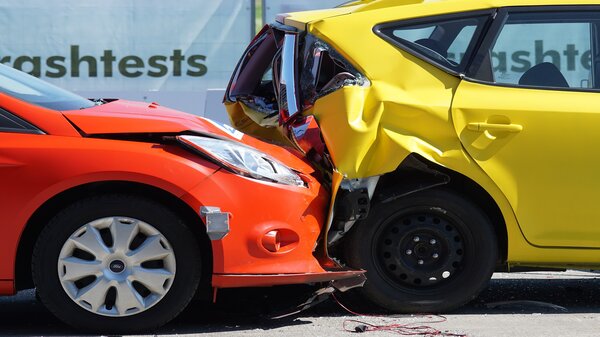
The United States Attorney for the Eastern District of Louisiana recently announced that two defendants, Doniesha Gibson and Erica Lee, had been sentenced for crimes related to staging automobile collisions with tractor-trailers. The sentences were announced as part of a criminal investigations known as "Operation Sideswipe." The years-long operation has produced multiple pleas and convictions, including a guilty plea from an involved attorney last year.

Gibson admitted that she was a passenger in a staged accident that occurred on October 15, 2015. A co-defendant intentionally drove the vehicle she occupied into a bus on the interstate. Gibson retained an attorney and filed a suit for damages. Claims related to this accident later settled for $667,500.00

Lee also admitted to filing a suit to claim injuries after the driver of the vehicle she occupied intentionally crashed into a tractor trailer on September 6, 2017. The claims for this suit settled for $30,000.00

United States District Judge Sarah S. Vance sentenced Gibson to 17 months incarceration plus 3 years of supervised release and ordered Gibson to pay restitution in the amount of the settlement. Lee was sentenced to serve 3 years of probation and 100 hours of community service. She was also ordered to pay restitution.

While “Operation Sideswipe” did not involve the typical claimants, it reminds of the need for vigilance in assessing accident claims.

Posted by:

Disclaimer

Keogh Cox & Wilson, Ltd. provides this blog as a public service for general information only. The materials contained herein may not reflect the most current legal developments or even express the opinion of all or even most of Keogh Cox attorneys. Such material does not constitute legal advice or form any attorney-client relationship. Keogh Cox and all contributing author(s) expressly disclaim all liability to any person with respect to the contents of this Web site and Blog and expect that no reliance will be made upon the information provided.

Continue Reading

Explore legal perspectives on the issues shaping Louisiana's key industries and courtrooms.

Insight

Appliers Beware: Louisiana Federal Court Voids Insurance Policy, Denies First-Party Hurricane Claim

Many insurance policies contain a Concealment or Fraud provision that provides no coverage where the insured concealed or misrepresented any material fact or circumstance, engaged in fraudulent conduct, or made false statements related to the insurance.

But will a court enforce the Concealment or Fraud provision to deny an insured recovery on an otherwise covered peril? According to a recent decision out of the Eastern District of Louisiana, the answer is YES.

In Fahimipour v. United Property & Casualty Insurance Company, the plaintiffs sought contractual and extra-contractual damages from their insurance carrier for damages to their residential property allegedly sustained during Hurricane Zeta. After a bench trial, Judge Morgan concluded Plaintiffs’ application for insurance included a false statement made with knowledge of its falsity and voided the insurance policy from inception, in its entirety.

Citing Talbert v. State Farm Fire & Cas. Ins. Co., the Fahimipour court noted that “Under Louisiana law, an insurance policy is voided entirely and from its inception when the insured makes a material misrepresentation in the application for insurance with the intent to deceive the insurer.” The insurer must prove by a preponderance of the evidence the following elements in order to succeed on such a claim:

(1) the insured made a false statement;

(2) the false statement was material; and

(3) the false statement was made with intent to deceive.

With regard to the first factor, the Court found the insureds obtained and read an inspection report in connection with their purchase of the property. They “were concerned enough about the findings of the inspectors to contact their real estate agent” about the issues. The insureds represented in their insurance application that the property was well maintained, and free of damage, debris, and liability hazards, despite the extensive contradictory findings in the inspection report.

Regarding the second element, the carrier’s in-house expert testified that the insurer would not have bound coverage if the application contained the information from the inspection report. Therefore, the court found the insured’s false statements were material.

The third element – intent to deceive – “must be determined from the surrounding circumstances indicating the insured’s knowledge of the falsity of the representations made in the application and his recognition of the materiality of his representations, or from circumstances which create a reasonable assumption that the insured recognized the materiality.”

In finding the insurer established the third element, the Court noted the insureds were “sophisticated users of insurance.” Evidence showed the insureds previously purchased houses for renovation and resale, owned multiple properties, submitted insurance applications before, and also submitted claims for coverage on at least three prior occasions.

Ultimately, the Court denied plaintiffs any recovery for alleged hurricane damages because of the misrepresentations they made in their application for insurance coverage.

Prior to Fahimipour,Courts had found that post-loss misrepresentations may also void a policy. In Roach v. Allstate Indem. Co., 476 Fed. App’x 778, 779 (5th Cir. 2012), the plaintiff’s house was damaged in a fire. The Fifth Circuit upheld a summary judgment that voided the plaintiff’s policy after he submitted a falsified claim that included contents not located on inspection following a fire at the residence.

The policy at issue in Roach included a similar Concealment or Fraud provision that stated the policy would provide no coverage if the insured misrepresented any material fact before or after a loss. In granting summary judgment, the district court applied the same three factors used in the Fahimipour case to find the plaintiff made material misrepresentations in his personal property claim when he claimed items not located on inspection.

While the policy in Fahimipour was voided in part because the insureds were “sophisticated users of insurance,” it remains to be seen whether a Louisiana court will void coverage based on a similar provision brought by a less sophisticated insured under a different set of facts.

However, the Fahimipour and Roach decisions show that a court can void a policy, from its inception, because of an insured’s misrepresentations, whether they occur in connection with the application for the policy or after a loss. These rulings also suggest that Louisiana law recognizes an insured also has a reciprocal duty of good faith in its relationship with its insurer.

Case References: Behnaz Fahimipour, et al. v. United Property & Casualty Insurance Company, 2022 WL 16833693 (E.D. La. Nov. 9, 2022); Roach v. Allstate Indem. Co., 476 Fed. App’x 778, 779 (5th Cir. 2012); Talbert v. State Farm Fire & Cas. Ins. Co., 971 So.2d 1206 (La. App. 4 Cir. 2007).

Insight

Walking Drivers: A “Sudden” Defense to Rear-end Liability

A rear-end collision is a unique animal in the law. Plaintiff’s attorneys seek them out, and insurance companies fear them­­--sometimes for good reason. The "rear-end" accident is unique because proof of the mere fact that one vehicle strikes the rear of another creates a strong legal presumption of fault under La. R.S. 32:81. While this presumption is formidable, it may be overcome.

The rear-end presumption is premised upon the duty to not follow too closely and the law will assume that the following driver breached this duty when there is impact. However, the following driver can escape liability if he shows that his vehicle was under control, that he followed at a safe distance, and that the lead driver negligently created a hazard which could not have reasonably been avoided. For instance, if it is shown that the reckless or unpredictable driving of the lead motorist created a sudden emergency, the following driver will not be at fault. Brewer v. J.B. Hunt Transport, Inc., 35 So.3d 230 (La. 2010). Once established, the sudden emergency defense trumps the “rear-end presumption.”A "sudden emergency" is created when a driver is placed in a position of imminent peril that he or she did not create through their own conduct. Hickman v. Southern Pacific Transport Company, 262 So.2d 385 (La. 1972). When a driver can demonstrate the existence of a sudden emergency, they are not negligent for failing to do what a reasonable person might have done to avoid the accident had they been given enough time to assess and react to the situation.In Jewitt v. Alvarez, 179 So.3d 645 (La. App. 2 Cir. 9/30/15), a following driver who rear-ended the vehicle of the lead driver was free from fault as a result of the sudden emergency defense where the facts revealed that the accident was solely caused by the slow speed of the lead driver (who almost came to a complete stop on the interstate) and the presence of surrounding traffic prevented the following vehicle from taking evasive action.In Carias v. Loren, 2015 WL 1019481 (La.App. 1 Cir. 3/9/15), an eighteen-wheeler was traveling in the middle lane of the interstate when a "phantom driver" moved without warning from the left lane to the middle lane and slammed on its brakes in front of the eighteen-wheeler. In attempt to avoid the collision, the driver of the eighteen-wheeler swerved to his right and impacted a vehicle which then struck the plaintiff's vehicle. The driver of the eighteen-wheeler invoked the sudden emergency defense; the court agreed and found the defendant-driver free from fault.Rear-end collisions are hard to defend, but a defendant may want to gather a clear understanding of all of the facts before accepting liability. If these facts support the sudden emergency defense, the driver may "walk."

Insight

Do You Have the “Right to Remain Silent” in Business Dealings?

As a general rule in Louisiana, a party involved in business dealings may keep silent, but exceptions exist. Sure, where information is volunteered that may influence the other party’s conduct, that information must be truthful, but is there a duty to disclose information harmful to your position? According to one recent decision, the answer may be “yes.”

In Parkcrest Builders, LLC v. Housing Authority of New Orleans, 2017 WL 193500 (E.D. La. 2017), the court highlighted a wrinkle in the general rule of silence. According to the Parkcrest court, a party to a proposed transaction may have a duty to disclose any information that an ethical person would disclose. This duty complicates matters for a party wishing to disclose as little as possible in order to protect its interests in an arms-length negotiation. It also raises a question: can a party be sued in fraud if they don’t divulge enough information to satisfy the other party?

“Fraud” is defined as a misrepresentation or suppression of a material fact, made with the intent to obtain an unjust advantage or to cause a loss or inconvenience to the other party. La. Civil Code article 1953. In order to prove fraud by silence, there must exist a duty to disclose.

Parkcrest involved a public project to construct new affordable housing units where the owner terminated its contract with the contractor and sued the contractor’s bond company. In the suit against the bond company, the owner alleged fraud and claimed that the bond company improperly concealed (1) its intent to rehire the defaulted contractor to complete the project, and (2) the nature of the bond company’s agreement with the contractor. According to Parkcrest, these allegations, if proven, were sufficient to prove fraud by silence.

Given that the law allows recovery of economic losses arising from a party’s reasonable reliance upon information provided by another, businesses need to be careful in what they say, and even in what they don’t say.

Edward F. Stauss III

Partner
Car Accident
Fraud
Injury
Collision