Insight

Is Texting While Driving The New Drunk Driving?

Published on: August 11, 2017
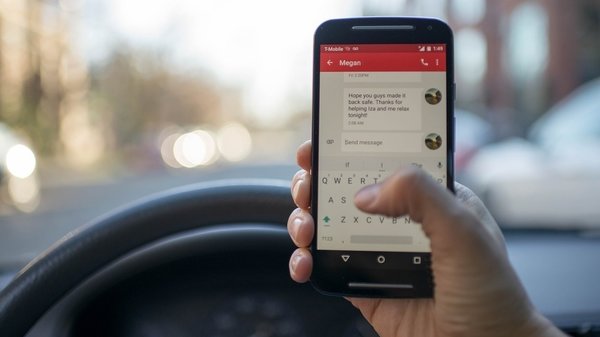
Earlier this year, Apple was sued in the California class action of Ceja v. Apple, BC #647057, Superior Ct. of California, County of Los Angeles. In the Ceja suit, it was alleged that Apple is liable for automobile-related injuries and death. The “theory of recovery” against Apple is fairly straight-forward: 1) since 2008, Apple has possessed the “lock-out” ability to prevent texting while driving; and, 2) it is liable because it failed to do so. Whether or not the plaintiffs prevail against Apple, the national trend is toward stricter anti-texting laws and harsher consequences for those who text and drive. While this post does not intend to suppose a moral equivalence between drunk driving and driving while texting, the building momentum against texting while driving is reminiscent of the development of the anti-drunk driving laws and message.

It was not until 1938 when 0.15 became the first commonly-used blood alcohol level for intoxication (nearly two times today’s legal limit). Today, driving with a .08 will land you in a Louisiana jail. Many states such as Louisiana have enacted punitive damage statutes that allow for substantial money awards against drunk drivers. For instance, under Civil Code Article 2315.4, punitive damages (a.k.a. “exemplary” damages) are available against any driver whose intoxication causes injury. The message has been heard: drunk driving is illegal and may costs you your freedom, your money, or both.

The prohibitions against texting while driving (and even the broader category of “distracted driving”) are expanding. The State of Washington was the first state to ban texting while driving in 2007. Almost every state has since followed suit. Attitudes are also changing, perhaps in response to public service announcements and targeted media campaigns.

While once legal here, Louisiana, at least on paper, now completely bans texting while driving under La. R.S. 32:300.5. This law was later expanded to prohibit driving while accessing, reading, or posting to a “social networking site.” Last year, related fines and penalties were increased.

The practice of texting while driving has been said to involve three forms of distraction:

1. Manual distraction- taking your hands away from the wheel;

2. Visual distraction- diverting your eyes away from the road;

3. Cognitive distraction- taking your attention away from safely driving.

In the last few years, at least two drivers (one in New Jersey and one in Pennsylvania) have been sued under allegations that they are liable for injury because they sent texts to persons they knew or should have known were driving. Kubert v. Best, 75 A.3d 1214 (2013) and Gallatin v, Gargiulo, #10401 of 2015, Lawrence County, PA.

At some point, auto manufacturers and phone/electronics suppliers may choose or be forced to render texting while driving impossible. Until such a time, the trend against texting while driving continues.

Posted by:

Disclaimer

Keogh Cox & Wilson, Ltd. provides this blog as a public service for general information only. The materials contained herein may not reflect the most current legal developments or even express the opinion of all or even most of Keogh Cox attorneys. Such material does not constitute legal advice or form any attorney-client relationship. Keogh Cox and all contributing author(s) expressly disclaim all liability to any person with respect to the contents of this Web site and Blog and expect that no reliance will be made upon the information provided.


Continue Reading

Explore legal perspectives on the issues shaping Louisiana's key industries and courtrooms.

Insight

Court Examines Requirements of Financing Provision in Purchase Agreement for  Residential Property

Purchase agreements for residential property routinely include financing provisions that require the buyer to show that he has applied for a loan. The Louisiana Fourth Circuit Court of Appeals recently analyzed such a provision in Abdelqader v. Ramos. The plaintiff in Abdelqader entered into a purchase agreement with the defendant for an unimproved lot on which the plaintiff planned to build his home.

The financing provision in the purchase agreement required the buyer to provide the seller with (1) written documentation; (2) from a lender; (3) that a loan application has been made; and (4) that Buyer authorized lender to proceed with the loan approval process. The provision also required that this documentation be provided to the seller “within 3 calendar days after” the date of Agreement.

After the parties executed the purchase agreement, various disputes led the seller to terminate the agreement and re-list the property for sale. The plaintiff sued for stipulated damages and attorney’s fees, which were allowed under the contract if either party breached the purchase agreement.

The buyer introduced evidence that his agent sent the seller’s broker a USDA pre-approval letter and certificate of eligibility for financing under a USDA Rural Development Program. These documents were sent to the seller’s agent before the parties executed the purchasing agreement. Generally, such pre-approval letters show the buyer appears qualified for a loan in the amount of the purchase. They do not confirm a loan was applied for or approved by the lender for the property to be purchased.

The seller argued that the pre-approval letter furnished by the buyer before the parties entered into the purchase agreement was not an actual loan application and did not verify that a loan application for the purchase had been made. The seller also argued that the buyer did not comply with the terms of the financing provision because he did not provide the subject documents within the three-day window after the purchase agreement was signed. The court rejected these arguments. The Court found the agreement did not require the buyer to produce his loan application to the seller or that the loan application be dated within three days of the Agreement. The buyer’s lender produced the pre-approval letter and the certificate of eligibility in response to the buyer’s application for financing and pursuant to the buyer’s instruction to proceed with the loan process. Though its ruling may be limited to the facts of this case, the Court found that the buyer complied with the terms of the financing agreement.

It appears the court viewed the seller’s claim that the seller did not comply with the financing provision of the purchasing agreement as after the fact justification for the seller unilaterally terminating the purchase agreement for some unrelated dispute. The Court found that the seller breached the purchase agreement and awarded the buyer stipulated damages of 10% of the contract price and attorney’s fees. This ruling also serves as a reminder that purchase agreements for residential properties are contracts, and breaches of these contracts can have consequences if terminated on a whim.

Reference:

Abdelqader v. Ramos, 2022-0305 (La. App. 4 Cir. 11/30/22), 353 So.3d 750.

Insight

Appellate Court Rules a Waiver of UM Coverage Can Only Be Changed at the Insured’s Written Request

Under Louisiana law, all automobile liability policies include uninsured/underinsured motorist coverage (“UM coverage”) unless the insured affirmatively rejects such coverage, selects lower limits, or selects economic only coverage in writing. The question of what qualifies as a valid rejection of UM coverage has been debated in numerous lawsuits across the state. In Barbera v. Andrade, examination of this issue continued, and the court ruled that an initial rejection of UM coverage remains effective until changed by the insured’s written request.

In Barbera, the court examined whether UM coverage was triggered under a policy when the insured, who previously waived coverage, failed to respond to the insurer’s request to complete a new UM waiver form. It was undisputed that the insured executed a valid waiver of UM coverage in 2001. In 2014, the insurer sent the insured a letter that asked the insured to complete an updated coverage selection form and return it to the insurer’s office. The insured did not execute the updated form. A driver insured under the policy was involved in a motor vehicle accident in 2017 and filed a claim for UM benefits.

The insured argued the letter sent with the waiver form in 2014 was ambiguous and could be read to mean that failure to respond would mean that UM coverage would be read into the policy by default. Evidence also showed that some of the insurer’s employees also thought the failure to respond with the updated form would result in UM coverage.

However, La. R.S. 22:1295(1)(a)(ii) provides, “An insured may change the original uninsured motorist selection or rejection on a policy at any time during the life of the policy by submitting a new uninsured motorist selection form to the insurer on the form prescribed by the commissioner of insurance.” Thus, the Court ruled that the insured’s initial rejection of UM coverage could only be changed via written request by submitting a waiver form to the insurer. The intent of the parties was inconsequential.

Because the insured executed a valid UM waiver in 2001, it remained part of the existing policy. No event, such as a change in the policy’s liability limits, occurred that required the execution of a new UM selection waiver form, and the insured did not submit a new form to the insurer to obtain UM coverage. Therefore, UM coverage was not afforded under the policy, and summary judgment was affirmed in favor of the insurer.

Case Reference: Barbera v. Andrade, 22-147 (La. App. 5 Cir. 11/30/22), 2022 WL 1733087, --- So.3d ---.

Insight

Supreme Court Settles Circuit Split on Right to Appeal Summary Judgment

The Louisiana Supreme Court recently ruled that a co-defendant who pleads comparative fault as an affirmative defense may appeal a summary judgment that dismisses a co-defendant, even when the plaintiff did not file an appeal. The Court’s decision in Amedee v. Aimbridge Hospitality resolved a circuit split among the Louisiana Courts of Appeal regarding this issue.

The Amedee plaintiff filed a personal injury suit against multiple defendants including the City of New Orleans and Premium Parking of South Texas, LLC. After discovery, the City of New Orleans filed a Motion for Summary Judgment seeking dismissal from the suit. The plaintiff did not oppose the city’s motion. Premium Parking was the only party to file an opposition. The trial court granted the city’s motion and dismissed it from the suit. Premium Parking appealed the court’s judgment.

The Fourth Circuit did not address the merits of Premium Parking’s appeal. Instead, the court dismissed the appeal because it found Premium Parking did not have a legal right to appeal the city’s dismissal when the plaintiff did not appeal the judgment.

The Supreme Court disagreed and reversed the appellate court’s ruling. The Court noted that “to prohibit appellate review of a summary judgment by a co-defendant, even where a plaintiff did not appeal, diminishes the search for truth—the object of a lawsuit—and denies a defendant the ability to fully defend itself.” To reach this conclusion, the Court first asked, who may appeal a judgment?

To answer this question, the Court looked to La. C.C.P. art. 2082 and observed the article makes no restriction regarding what party may appeal a final judgment. Further, the Court noted that the right to an appeal is even extended third parties, not involved in the suit, when that third party is allegedly aggrieved by the judgment. See La. C.C.P. art. 2086.

The Court also considered a defendant’s right to appeal in the context of Louisiana’s pure comparative fault system and summary judgments. Under La. C.C. art. 2323, Louisiana’s comparative fault statute, the fault of all parties is to be quantified. La. C.C.P. art. 966(G), provides that when summary judgment is granted in favor of a party or non-party to a suit, the fault of the dismissed party may not be considered in any subsequent allocation of fault in the matter.

The Court noted that while art. 966(G) precludes an allocation of the fault of a party dismissed under the statute, it does not limit the right of a defendant to appeal the dismissal of a co-defendant. No statute limited a defendant’s right to appeal a summary judgment only to those situations where a plaintiff also filed an appeal. Therefore, a defendant who hopes to keep a co-defendant in the case so that fault still may be allocated to the dismissed party at trial now may appeal the co-defendant’s dismissal, even when the plaintiff fails to do so.

Case Reference: Amedee v. Aimbridge Hosp. LLC, 2021-01906 (La. 10/1/22), --- So.3d ---, 2022 WL 12338929.

Collin J. LeBlanc

Partner
Louisiana