Insight

An Update on Prescription – The Most Important Issue

Published on: November 26, 2019
“Prescription” is the timeperiod in which a litigant must file suit, or the action is barred. Oneof the first lessons a Louisiana law student learns is the importance ofdetermining the prescriptive period of a cause of action. Filing a causeof action too late is fatal. A recent decision from the Louisiana FifthCircuit Court of Appeal reads like a law school exam and illustrates thatdetermining which prescriptive period applies is sometimes the key to the case.

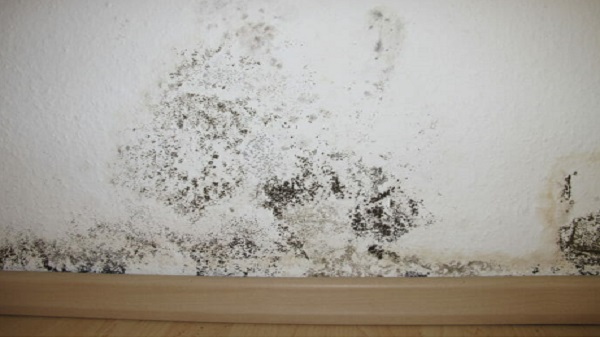
In DeFelice v. FederatedNat'l Ins. Co., 18-374 (La. App. 5 Cir. 7/9/19), mold was discovered inplaintiff’s home on June 10, 2016. Plaintiffs notified their insurancecompany, who hired a mold remediation company to inspect the home. Whenthe home was inspected on June 22, 2016, the inspector verbally informedplaintiffs that the home was safe. On the same day, a separate moldinspector collected samples. The second mold inspector issued a report on June23, 2016 advising that mold remediation may be necessary. This reportspecifically stated that “certain mold and mold spores in buildings and housingcan result in mild to severe health effects in humans and can deteriorate thestructure of the dwelling resulting in content or structure damage.” Thesecond report was provided to the plaintiffs.

Plaintiffs continued to live inthe home. In August of 2016, plaintiffs’ infant son was born. Shortly thereafter, the infant began to experience breathing issues and wasdiagnosed with a lung condition by December of 2016. Plaintiffs vacatedthe premises in January of 2017.

More than one year after receiptof the second mold report, plaintiffs filed suit on July 24, 2017 against theirinsurer and the inspector who advised that the home had no mold problems. Plaintiffs raised claims for property damage, damage to the health of theparents, damage to the health of the minor child, and consortium claims onbehalf of the parents for the damage to the minor child.

The DeFelice court foundthat prescription began to run on June 23, 2016 with regard to the parents’individual and property damage claims. Because suit was not filed withina year of the second mold report advising of possible health and propertydamages, the parents’ individual health claims and the claims for propertydamage were prescribed under the one-year period set by Civil Code article3492.

The minor child was not bornwhen the report was issued on June 23, 2016. Plaintiffs argued that thoseclaims were brought within a year of the child’s birth, and were thereforetimely. The DeFelice court agreed and held that prescription could notbegan to run until the child was born. While Louisiana law provides that a childis a “person” upon conception, this “legal fiction” applies only to protect theinterests of the child. The court reasoned that a finding that prescriptioncommenced prior to birth would not “protect the interests” of the child. While the parent’s claims were prescribed, the claim filed on behalf of theinfant, and any claims that the parents had related to their infant’s healthcondition, were timely.

The court's analysis inDeFelice reminds that determining which prescriptive period applies to whichclaim is often the most important issue.

Posted by:

Disclaimer

Keogh Cox & Wilson, Ltd. provides this blog as a public service for general information only. The materials contained herein may not reflect the most current legal developments or even express the opinion of all or even most of Keogh Cox attorneys. Such material does not constitute legal advice or form any attorney-client relationship. Keogh Cox and all contributing author(s) expressly disclaim all liability to any person with respect to the contents of this Web site and Blog and expect that no reliance will be made upon the information provided.


Continue Reading

Explore legal perspectives on the issues shaping Louisiana's key industries and courtrooms.

Insight

An Update on Prescription – The Most Important Issue

“Prescription” is the timeperiod in which a litigant must file suit, or the action is barred. Oneof the first lessons a Louisiana law student learns is the importance ofdetermining the prescriptive period of a cause of action. Filing a causeof action too late is fatal. A recent decision from the Louisiana FifthCircuit Court of Appeal reads like a law school exam and illustrates thatdetermining which prescriptive period applies is sometimes the key to the case.

In DeFelice v. FederatedNat'l Ins. Co., 18-374 (La. App. 5 Cir. 7/9/19), mold was discovered inplaintiff’s home on June 10, 2016. Plaintiffs notified their insurancecompany, who hired a mold remediation company to inspect the home. Whenthe home was inspected on June 22, 2016, the inspector verbally informedplaintiffs that the home was safe. On the same day, a separate moldinspector collected samples. The second mold inspector issued a report on June23, 2016 advising that mold remediation may be necessary. This reportspecifically stated that “certain mold and mold spores in buildings and housingcan result in mild to severe health effects in humans and can deteriorate thestructure of the dwelling resulting in content or structure damage.” Thesecond report was provided to the plaintiffs.

Plaintiffs continued to live inthe home. In August of 2016, plaintiffs’ infant son was born. Shortly thereafter, the infant began to experience breathing issues and wasdiagnosed with a lung condition by December of 2016. Plaintiffs vacatedthe premises in January of 2017.

More than one year after receiptof the second mold report, plaintiffs filed suit on July 24, 2017 against theirinsurer and the inspector who advised that the home had no mold problems. Plaintiffs raised claims for property damage, damage to the health of theparents, damage to the health of the minor child, and consortium claims onbehalf of the parents for the damage to the minor child.

The DeFelice court foundthat prescription began to run on June 23, 2016 with regard to the parents’individual and property damage claims. Because suit was not filed withina year of the second mold report advising of possible health and propertydamages, the parents’ individual health claims and the claims for propertydamage were prescribed under the one-year period set by Civil Code article3492.

The minor child was not bornwhen the report was issued on June 23, 2016. Plaintiffs argued that thoseclaims were brought within a year of the child’s birth, and were thereforetimely. The DeFelice court agreed and held that prescription could notbegan to run until the child was born. While Louisiana law provides that a childis a “person” upon conception, this “legal fiction” applies only to protect theinterests of the child. The court reasoned that a finding that prescriptioncommenced prior to birth would not “protect the interests” of the child. While the parent’s claims were prescribed, the claim filed on behalf of theinfant, and any claims that the parents had related to their infant’s healthcondition, were timely.

The court's analysis inDeFelice reminds that determining which prescriptive period applies to whichclaim is often the most important issue.

Insight

Interrupted by Silence: Medical Malpractice Prescription

By C. Reynolds LeBlanc

La. R.S. 9:5628 provides that a patient/medical malpractice plaintiff must assert his or her claim within one year of the alleged negligent act or from when that act is discovered. If a claim is not raised within this time frame, it is “prescribed,” i.e., untimely. The statute also declares that all claims must be asserted within three years of the alleged negligent act, even if the patient was unaware of the malpractice. However, there are exceptions.

Under the doctrine of contra non valentem,prescription does not run if the defendant has done something to prevent theplaintiff from filing within the prescriptive period. In In re MedicalReview Panel of Gerard Lindquist, 18-444 (La. App. 5 Cir. 5/23/19), 274So.3d 750, the Louisiana Fifth Circuit considered whether a decision not totell a patient about malpractice exempted from prescription a claim which wasnot filed within three years of the alleged malpractice.

In the case, Lindquist had spinal surgery on August 22,2013. He returned on August 24, 2013 with complaints of pain. Although an x-rayshowed a metal artifact in the operative site of his back, he was not informedand was discharged. He returned the next day with continued complaints of painand an MRI was ordered. Like the x-ray, the MRI showed the metal artifact.Again, the plaintiff was not informed.

Lindquist continued to experience pain for years. When another MRI was performed on May 25, 2017, Lindquist was first informed of the metal object in his back. Within months, he filed a claim against the doctor who performed the 2013 surgery. In response, the doctor argued that the claim was prescribed under La. R.S. 9:5628 because it was filed more than three years after the surgery.

Contra non valentem applies where a plaintiff has been lulled into inaction because of concealment or fraudulent conduct by the defendant. The doctor argued that this standard was not met simply because the doctor was silent about the patient’s condition. However, the Lindquist court held that a doctor possesses an affirmative duty to advise a patient of pertinent medical information such as the presence of a metal artifact near the spine. Therefore, if the doctor, as alleged in Lindquist, failed to disclose a metal foreign object, this would constitute a fraudulent act which prevented the plaintiff from filing his claim timely. In Lindquist, prescription was interrupted by silence and the plaintiff/patient was allowed to pursue his claim.

Reynolds LeBlanc is a partner at Keogh Cox. His practice areas include commercial litigation, personal injury claims, appeals, and other matters. Reynolds is a former teacher, who in his free time plays music and perpetually talks himself into training for his next marathon.

Insight

Fourth Circuit Brings Clarity to Peremption Statute in Suit Against Design Professional

The question addressed in MR Pittman Group, LLC versus Plaquemines Parish Government, 2015-0396 (La.App. 4 Cir. 12/2/15) was whether the five-year peremptive period set by La. R.S. 9:5607 displaces Louisiana’s general one-year prescriptive period set by La. C.C. art. 3492, when applied to tort claims against design professionals. Finding a contractor’s claim against the project engineers prescribed, the MR Pittman court held that the one-year prescriptive period governs tort claims against design professionals.

La. R.S. 9:5607 explicitly provides a peremptive period that extinguishes all claims against architects, engineers and other design professionals five years after the project is completed, thus limiting design professional liability associated with the project. The MR Pittman plaintiff/contractor argued that the statute also eliminates the one-year prescriptive period and instead creates a special five-year prescriptive period, which allowed the contractor up to five years to bring its claim against the engineers to recover for delay and other extra costs allegedly resulting from deficiencies in the construction plans. This interpretation effectively expands tort liability by increasing the time period for bringing a tort claim from one to five years. In rejecting this argument, the MR Pittman court clarified that under the statute any claimant has no more than five years after project completion to bring suit against the design professional for any cause. However, a tort claimant still has only one year to file suit from the date he “knew or should have known” of damage caused by the alleged wrongful actions of the design professional.

A secondary question addressed in MR Pittman was the date of commencement of the one-year prescriptive period, which under La. C.C. 3492 commences to run from the day damage is sustained. The defendant/engineers argued that prescription commenced when the contractor first became aware of the alleged design deficiencies early in construction, as evidenced by the contractor’s notice to the owner of the deficiencies. The contractor argued that it could not fully appreciate its damages until the change orders were resolved later in the project. Citing Louisiana Supreme Court precedent holding that the quantum of damages need not be certain or fully incurred to trigger commencement of prescription, Harvey v. Dixie Graphics, Inc., 593 So.2d 351, 354 (La. 1992), the court agreed with the engineers’ position and dismissed the claims.

Chelsea A. Payne

Partner
Prescription