Insight

Court Affirms Accident Occurred in the Course and Scope of Employment under the “Threshold Doctrine” Exception to the “Going-and-Coming Rule.”

Published on: August 20, 2026
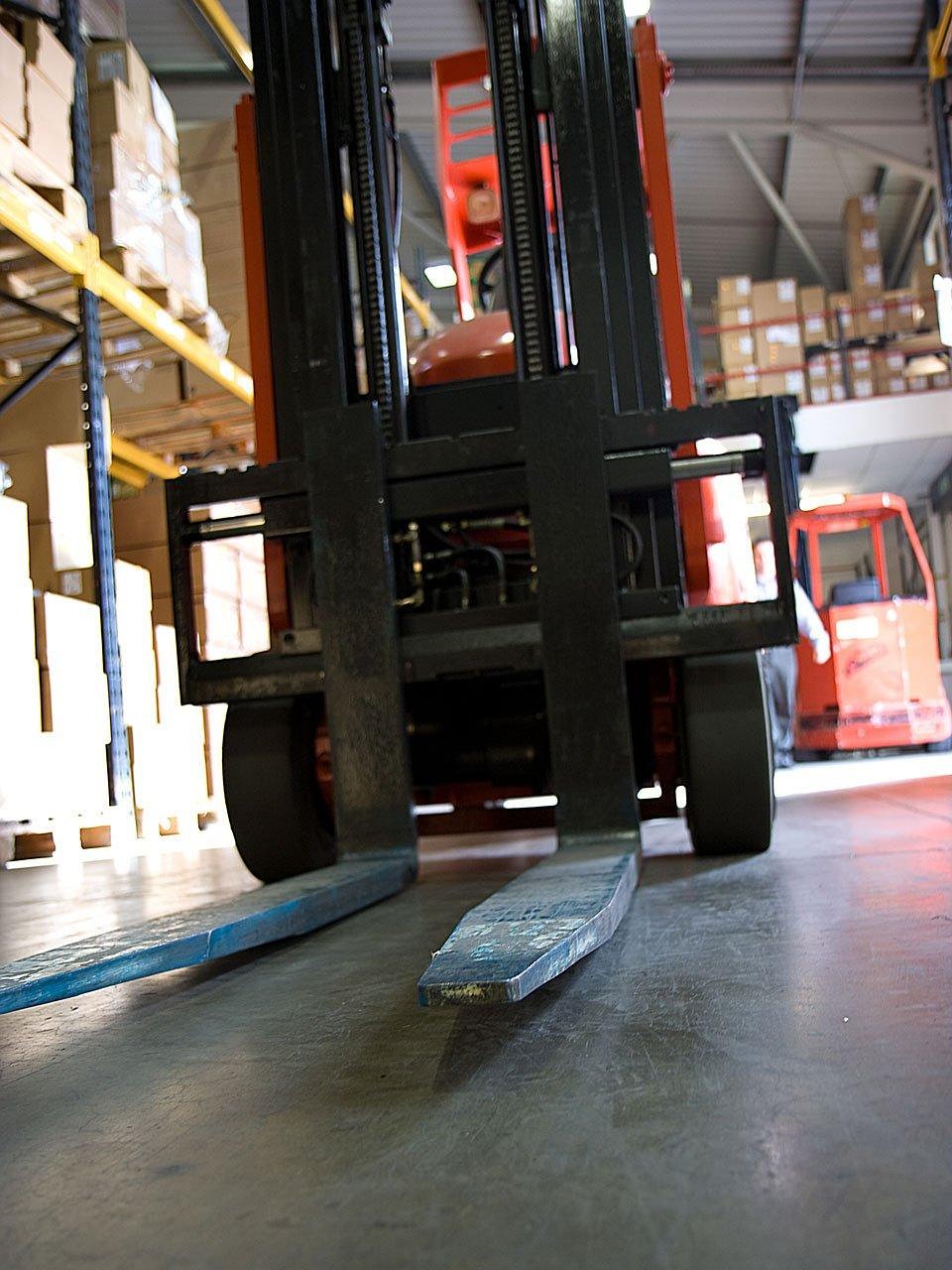
In Ralser v. Harrah’s New Orleans, the claimant tripped over the extended arm of a forklift while walking toward the employee entrance for the defendant’s casino. A third-party construction contractor had parked the forklift adjacent to the employee entrance while doing work on the premises. Surveillance footage showed that no warning signs, barricades, or other safety devices had been placed around the forklift. Evidence also showed that another employee tripped over the same forklift on the same day.

Generally, an employee's injuries sustained while traveling to or from a place of employment are not compensable under the Workers’ Compensation Law. This is known as the “going-and-coming rule.” However, at trial, the workers’ compensation judge applied the Threshold Doctrine, an exception to this general rule, and found the accident occurred in the course and scope of the claimant’s employment. Under Louisiana law, the Threshold Doctrine applies when:

  1. A distinctive or unusual travel risk exists; and
  2. The risk is immediately  adjacent to the employer’s premises.

On appeal, the employer argued that the trial judge was manifestly erroneous in applying the Threshold Doctrine. However, in affirming the trial court’s determination, the appellate court emphasized several factual findings that supported application of the doctrine:

  • The forklift created a  distinctive travel hazard.
  • The hazard was  immediately adjacent to the employee entrance.
  • Employees regularly traversed the route where the forklift was located.
  • The risk arose from construction activities associated with Harrah’s premises.
  • No warnings, barricades,  or protective measures were in place to protect employees from the hazard.

Under the facts of this case, the court found the Threshold Doctrine applied. Even though the employer did not own the forklift, evidence showed the forklift was within the defendant-employer’s control and presented a distinct travel risk immediately adjacent to the casino.  

While it may be limited to its facts, this decision is significant because it appears to extend application of the Threshold Doctrine and suggest employers may be held responsible for dangers created by conditions near workplace access points, even when those conditions arise from the activities of third parties. Because Ralser presented very unique circumstances, it remains to be seen whether the decision will impact the well-established Threshold Doctrine beyond its facts.

References:

 Ralser v. Harrah’s New Orleans, ___ So. 3d ___, 2026WL 1090787 (La. App. 4 Cir. 4/22/26).

Posted by:

Disclaimer

Keogh Cox & Wilson, Ltd. provides this blog as a public service for general information only. The materials contained herein may not reflect the most current legal developments or even express the opinion of all or even most of Keogh Cox attorneys. Such material does not constitute legal advice or form any attorney-client relationship. Keogh Cox and all contributing author(s) expressly disclaim all liability to any person with respect to the contents of this Web site and Blog and expect that no reliance will be made upon the information provided.

Continue Reading

Explore legal perspectives on the issues shaping Louisiana's key industries and courtrooms.

Insight

The Louisiana Supreme Court rules that amount billed by healthcare providers beyond what has been paid by a Workers Compensation insurer is NOT a collateral source that is recoverable against tort defendants

In a very important ruling by the Louisiana Supreme Court, a tort defendant is no longer liable for any “actual charges” by medical providers above the amount paid by a Workers Compensation insurer pursuant to promulgated Workers Compensation fee schedule . In Simmons v. Cornerstone Investments, LLC, 2018-cc-0735 (La. 5/18/19), the court concluded:

“…the amount of medical expenses charged above the amount actually incurred is not a collateral source and its exclusion from the purview of the jury was proper.” See http://www.lasc.org/opinions/2019/18-0735.CC.OPN.pdf

The court conducted a detailed analysis of the development of the collateral source rule under applicable jurisprudence noting that the genesis of the collateral source rule:

“Under the collateral source rule, a tortfeasor may not benefit, and an injured plaintiff’s tort recovery may not be reduced, because of monies received by the plaintiff from sources independent of the tortfeasor’s procuration or contribution. Under this well-established doctrine, the payments received from the independent source are not deducted from the award the aggrieved party would otherwise receive from the wrongdoer.” See Louisiana Dept. of Transp. & Dev. v. Kansas City Southern Railway Co., 02-2349, p. 6 (La. 5/20/03), 846 So.2d 734, 739.

Essentially, the court asks two questions when assessing whether the collateral source rule should apply. First, does the claimed benefit arise from some payment, wage deduction or other contribution by the Plaintiff that would diminish the plaintiff’s patrimony? Second, will the goal of tort deterrence be promoted by allowing the windfall? In a series of cases culminating in the case at bar, the court has been limiting the application of the collateral source rule in a number of contexts.

The court in Bozeman v. State, 03-1016 (La. 7/2/04), 879 So.2d 692, found that the collateral source rule did not apply when Medicaid was the payor such that the defendant could not be responsible for any amounts above what Medicaid paid to the provider. The court reasoned that it would be “unconscionable” to require taxpayers to pay the bills and then let a plaintiff recover the full undiscounted medical expenses and “pocket the windfall.” The court continued by noting in “Cutsinger v. Redfern, 08-2607 (La. 5/22/09), 12 So.3d 945, this court found the collateral source rule did not apply to prevent the plaintiff’s uninsured motorist carrier from receiving a credit for workers’ compensation benefits paid by her employer, even though the plaintiff paid for the UM coverage herself.” In Hoffman v. 21st Century North American Ins. Co., 14-2279 (La. 10/2/15), 209 So.3d 702, the court held that the collateral source rule does not apply to attorney-negotiated medical discounts. The court also looked at the US 5th Circuit in Deperrodil v. Bozovic Marine, Inc., 842 F.3d 353 (5th Cir. 2016), that the collateral source rule does not apply above any amounts actually paid by the employer in the context of the LHWCA.

In each of the instances outlined, the court noted that the patrimony of the plaintiff was not impacted by limiting recovery to the amount of medical bills actually paid. Moreover, the court noted that the goal of tort deterrence is not negatively impacted, and that allowing a plaintiff to recover a windfall in this context is tantamount to an award of punitive damages that are not recoverable absent statutory authority which is not present in this context. The Simmons decision now extends that same logic to cases where a Workers Compensation insurer has paid the medical benefits pursuant to the Louisiana Workers Compensation Law.

This ruling will have significant impact on the evaluation, settlement and trial of tort cases that have corresponding Workers Compensation claims.

Submitted by John P. Wolff, III (Partner)

Insight

Coronavirus and Workers Compensation in Louisiana

In Louisiana, workers compensation benefits can beowed if an employee sustains an accident or develops an occupational diseasearising out of and occurring during the course and scope of theiremployment. The definitions and burdens of proof differ for each.

An accident is defined by La. R.S. 23:1021 as:

(1) “Accident” means an unexpected or unforeseen actual, identifiable,precipitous event happening suddenly or violently, with or without human fault,and directly producing at the time objective findings of an injury which ismore than simply a gradual deterioration or progressive degeneration.

An occupational disease is defined by La. R.S.23:1031.1 as:

B. An occupational disease means only that disease or illnesswhich is due to causes and conditions characteristic of and peculiar to theparticular trade, occupation, process, or employment in which the employee isexposed to such disease. Occupational disease shall include injuries due towork-related carpal tunnel syndrome. Degenerative disc disease, spinalstenosis, arthritis of any type, mental illness, and heart-related or perivasculardisease are specifically excluded from the classification of an occupationaldisease for the purpose of this Section.

C. Notwithstanding the limitations of Subsection B hereof, everylaboratory technician who is disabled because of the contraction of anydisease, diseased condition, or poisoning which disease, diseased condition, orpoisoning is a result, whether directly or indirectly, of the nature of thework performed, or the dependent of a laboratory technician whose death is theresult of a disease, diseased condition, or poisoning, whether directly orindirectly, of the nature of the work performed shall be entitled to thecompensation provided in this Chapter the same as if said laboratory technicianreceived personal injury by accident arising out of and in the course of hisemployment.

As used herein, the phrase “laboratory technician” shall mean anyperson who, because of his skills in the technical details of his work, isemployed in a place devoted to experimental study in any branch of the naturalor applied sciences; to the application of scientific principles ofexamination, testing, or analysis by instruments, apparatus, chemical orbiological reactions or other scientific processes for the purposes of thenatural or applied sciences; to the preparation, usually on a small scale, ofdrugs, chemicals, explosives, or other products or substances for experimentalor analytical purposes; or in any other similar place of employment.

Except as otherwise provided in this Subsection, any disabilityor death claim arising under the provisions of this Subsection shall be handledin the same manner and considered the same as disability or death claimsarising due to occupational diseases.

In general, if an employee can prove that they were exposed toCoronavirus at work, and that the particular exposure caused them to contractCoronavirus disease, they may be able to prove a compensable accident. The burden of proof is a tough one, of course, because it would seem to benearly impossible for an employee who contracts the Coronavirus to prove thecontraction resulted from work as opposed to exposure in some otherenvironment. However, it is important to note that one Louisiana courtdid find that a claimant was able to meet that burden when he contracted theWest Nile Virus by proving to the satisfaction of the Workers CompensationJudge, rather incredibly, that a particular mosquito bite occurring at work wasthe cause. Allen v. Graphic Packaging, 51,080 (La.App. 2nd Cir. 1/11/17), 211 So.3d 1219. If a claimant isable to prove the occurrence of an accident, then the usual workerscompensation medical and indemnity benefits would be payable depending onmedical needs, disability status, or even death benefits if the employeeexpired as the result of such an accident.

For an employee to be able to prove that theircontraction of Coronavirus disease fits within the definition of anoccupational disease, they would have to prove that it was “due to causes andconditions characteristic of and peculiar to” their employment. Somehealthcare workers and others in related fields who become infected would seemto have an easier time proving their cases than others whose work would notcustomarily lead to such exposures. The definition above includeslaboratory technicians (which could be an expansive list as defined) whocontract a disease as the result exposure to something that they are workingon/with. The statute also provides some timing elements for claim filingand causation presumption, most of which would not seem to apply because ofnovel nature of the current Coronavirus outbreak. As with claims assertedas accidents, the usual medical and indemnity benefits would be payabledepending on the circumstances of the individual worker.

For additional details on the Allencase, please review Keogh Cox blog “One Particular Mosquito: West Nile Virus Foundto be a Compensable Workers’ Compensation Claim” by clicking here: https://keoghcox.com/one-particular-mosquito-west-nile-virus-found-compensable-workers-compensation-claim/.

Insight

Court Affirms Accident Occurred in the Course and Scope of Employment under the “Threshold Doctrine” Exception to the “Going-and-Coming Rule.”

In Ralser v. Harrah’s New Orleans, the claimant tripped over the extended arm of a forklift while walking toward the employee entrance for the defendant’s casino. A third-party construction contractor had parked the forklift adjacent to the employee entrance while doing work on the premises. Surveillance footage showed that no warning signs, barricades, or other safety devices had been placed around the forklift. Evidence also showed that another employee tripped over the same forklift on the same day.

Generally, an employee's injuries sustained while traveling to or from a place of employment are not compensable under the Workers’ Compensation Law. This is known as the “going-and-coming rule.” However, at trial, the workers’ compensation judge applied the Threshold Doctrine, an exception to this general rule, and found the accident occurred in the course and scope of the claimant’s employment. Under Louisiana law, the Threshold Doctrine applies when:

  1. A distinctive or unusual travel risk exists; and
  2. The risk is immediately  adjacent to the employer’s premises.

On appeal, the employer argued that the trial judge was manifestly erroneous in applying the Threshold Doctrine. However, in affirming the trial court’s determination, the appellate court emphasized several factual findings that supported application of the doctrine:

  • The forklift created a  distinctive travel hazard.
  • The hazard was  immediately adjacent to the employee entrance.
  • Employees regularly traversed the route where the forklift was located.
  • The risk arose from construction activities associated with Harrah’s premises.
  • No warnings, barricades,  or protective measures were in place to protect employees from the hazard.

Under the facts of this case, the court found the Threshold Doctrine applied. Even though the employer did not own the forklift, evidence showed the forklift was within the defendant-employer’s control and presented a distinct travel risk immediately adjacent to the casino.  

While it may be limited to its facts, this decision is significant because it appears to extend application of the Threshold Doctrine and suggest employers may be held responsible for dangers created by conditions near workplace access points, even when those conditions arise from the activities of third parties. Because Ralser presented very unique circumstances, it remains to be seen whether the decision will impact the well-established Threshold Doctrine beyond its facts.

References:

 Ralser v. Harrah’s New Orleans, ___ So. 3d ___, 2026WL 1090787 (La. App. 4 Cir. 4/22/26).

Edward F. Stauss III

Partner
Workers' Compensation
course and scope
Going-and-Coming Rule
Threshold Doctrine