Insight

Good Restrictions Can Make Good Neighbors

Published on: December 16, 2025
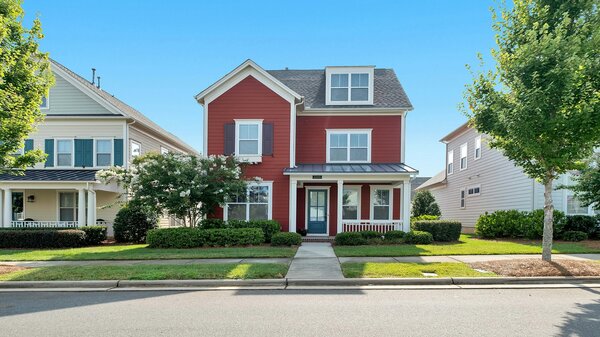
Picture it – you purchase a new home in a quiet, family-friendly neighborhood. On your first night, you notice that the neighbors are having a party – a big loud party. Your haven of peace and tranquility is interrupted by thumping bass and the shrieks of people jumping into a pool. The next day, the neighbors are gone, and the block is quiet again. However, the party returns the next weekend, bigger and louder than before. You do some research and find the house is listed on a popular website for short term rentals. What do you do?

This is the exact question that was posed to the Louisiana Court of Appeals for the Second Circuit in Marina Homeowners Association, Inc. v. Cahill. In that case, the Marina Homeowner’s Association filed a petition seeking declaratory judgment against the owner of the house on the basis that the use of the home as a short-term rental violated the covenants of the homeowner’s association. In response, the property owners argued that the covenants had expired and were no longer applicable. Therefore, they claimed they were free to use their property as they saw fit.

Many homeowners in Louisiana are familiar with building restrictions. Authority for the issuance of building restrictions is found in Louisiana Civil Code article 775. A building restriction is a real right under Louisiana Civil Code article 777. However, Louisiana Civil Code article 778 provides that if there is doubt as to the existence, validity, or extent of building restrictions, the issue should be resolved in favor of the unrestricted use of the immovable. These articles also provide a subsequent purchaser of the immovable property is also bound by the building restrictions if they are recorded in the public records.

The building restrictions for the subdivision at issue provided that the restrictions had a term of twenty years and then would renew automatically in ten-year periods. These restrictions bound the original property owners and all subsequent property owners. The court found that even though the original twenty-year term for the building restrictions had expired, the restrictions would automatically renew unless amended by the Association. Therefore, the property owner’s house was subject to the building restrictions.

Importantly for this case, the building restrictions specifically prohibited the use of the property for any reasons other than residential purposes. Therefore, the operation of a short-term rental was a violation of the building restrictions.

The Homeowners Association prevailed in this case – the property owners were no longer able to use their property for short term rentals. As the moral of the story – to be a good neighbor – it helps to follow the rules. And it is always important to check the fine print to know what those rules are!

References:

Marina Homeowners Ass'n, Inc. v. Cahill, 56,423 (La. App. 2 Cir. 8/27/25), 420 So. 3d 782.

Posted by:

Disclaimer

Keogh Cox & Wilson, Ltd. provides this blog as a public service for general information only. The materials contained herein may not reflect the most current legal developments or even express the opinion of all or even most of Keogh Cox attorneys. Such material does not constitute legal advice or form any attorney-client relationship. Keogh Cox and all contributing author(s) expressly disclaim all liability to any person with respect to the contents of this Web site and Blog and expect that no reliance will be made upon the information provided.


Continue Reading

Explore legal perspectives on the issues shaping Louisiana's key industries and courtrooms.

Insight

The “Great Flood of 2016”--Update and Resources

“Disaster Declaration” Expanded. The list of parishes now declared disaster areas by the federal government has increased to include the following parishes: Acadia, Ascension, East Feliciana, Iberia, Lafayette, Pointe Coupee, St. Landry, and Vermilion.

http://gov.louisiana.gov/news/additional-parishes-added-to-federal-disaster-declaration-8-16-16

Potential Tax Implications for Flood Victim. For those insured, it is critical that you document your losses with as much detail as possible; serial numbers, make/model/description—the more detail the better. Keep receipts and credit card statements. Time-dated photos are also important. Even those without flood insurance should do the same as it may assist in obtaining FEMA assistance. However, the same documentation of your losses could also help to reduce your tax exposure. The attached link provides key information and outlines the impact the flooding may have on tax-filing and other deadlines.

https://www.irs.gov/uac/tax-relief-for-victims-of-severe-storms-flooding-in-louisiana

Insight

Supreme Court Rules Against Broad Application of Indemnity Provision in Engineer’s Contract

The Supreme Court ruling in Couvillion Group, LLC v. Plaquemines Parish Government, 2020 -00074 (La. 4/27/20) is a reminder that an indemnity claim must be sufficiently related to the principal demand and that contract indemnity provisions are to be strictly construed.

In Couvillion, the general contractor sued the owner of a public works port project for contract delay damages resulting from a cease work order issued to allow redesign of a fuel tank platform. When the contractor submitted its delay claim, the owner requested that its project engineer review it and make recommendations. The engineer recommended payment of a little over $1 million dollars. When the owner refused to pay, the contractor sued. In response, the owner filed a third-party demand against the engineer alleging that its recommendation was erroneous and excessive and that, if it was bound by the engineer’s recommendation, then the engineer must indemnify the owner.

On behalf of the engineer, Keogh Cox attorneys argued that the engineer should not be required to reimburse the owner for any delay costs and asked for dismissal through an exception of no cause of action. Code of Procedure Article 1111 provides that a defendant in a principal action may bring in any person who may be liable to him for all or part of the principal demand. Here, that was not the situation. The engineer was not liable to the owner for any part of the contractor’s delay claim because the engineer did not cause the delay. The delay damages were incurred before the engineer made a recommendation for payment. The events giving rise to the two claims were separate and distinct: the main demand arose from the project delay and the third- party demand arose from the engineer’s recommendation of the claim amount. The Court commented that the principal claim against the owner for delay damages was too attenuated from the owner’s claim against the engineer, thus the third-party demand was improper.

The owner also relied on the indemnity provision in the engineer’s contract that required the engineer to indemnify the owner against any and all claims for personal injury or “damages to property” that may arise from its services. The Court held that the plain meaning of the term did not include the economic-only losses related to the subject delay claim. The Court further reasoned that indemnity agreements are to be strictly construed, rejecting the owner’s broader interpretation.

Insight

Click It: The Seat Belt Defense In Louisiana

Louisiana has exhibited a certain double standard when it comes to seat belts. For years, Louisiana participated in the “Click It or Ticket” public service campaign that lectured on the grave dangers caused by a failure to wear seat belts and the criminal consequences for a failure to comply. Nevertheless, and for decades, the failure to wear a seat belt was off limits as evidence to reduce a plaintiff’s recovery in a personal injury context. But, the rule was changed: effective January 1, 2021, the “gag rule” against evidence that a plaintiff failed to wear a seat belt in an accident has been lifted. La. R.S. 32:295.1. Louisiana has no recent history with the “seat belt defense,” such that many questions arise. To frame these questions, this blog takes a quick look to cases from other states and certain guideposts that may already exist in Louisiana jurisprudence.

Like several other states, Florida has a history with the defense. In Smith v. Butterick, 769 So.2d 1056, 1058-9 (Fla.2d DCA 2000), the court outlined three elements of proof a defendant must show to prevail on the defense. Similar elements have been identified in other states. See, e.g., Law v. Superior Court In and For Maricopa County, 157 Ariz. 147, 755 P.2d 1135 (1988). Louisiana may adopt similar elements or chart a different course. The elements outlined in Smith were as follows:

1-Failure to use an available, operational seat belt

This element can be proven through testimony from the plaintiff, passengers, responding law enforcement, or other such testimony or evidence to show that a seat belt was not in use at the time of the accident. Similarly, testimony or photographs may be used to show that the seat belt was operational.

2- Failure to use seat belt was unreasonable under the circumstances

Insofar as Louisiana and most states generally mandate the use of seatbelts, this element should be easy to demonstrate. Therefore, unusual facts may be necessary to excuse a plaintiff’s failure to use a seat belt such as an emergency trip to the hospital.

3-Plaintiff’s failure to use a seat belt substantially caused or contributed to the damages

Of the three possible elements, this is likely to be the battleground. In some cases, the issue may be simple. For instance, if a plaintiff’s failure to use a seatbelt allows their body to strike (or travel through) a windshield, it may be simple to show that the plaintiff’s (or decedent’s) failure to use a seatbelt magnified the injuries. Expert testimony may not even be needed. In Smith, testimony from a mechanical engineer that the passenger would not have hit interior surfaces had they used a seat belt was allowed. However, will expert testimony be required in most cases and what type of expert will be needed? Engineer? Physician? Biomechanical?

Will the defendant bear the burden to prove the aggravation like they have in many national cases? Will Louisiana courts fashion an inference or “shifting burden” approach where a prima facie showing that a plaintiff’s whose failure to wear a seat belt increased the possibility of injury would possess the burden to show their injuries would have occurred even had they used a seat belt. In Anderson v. Watson, 953 P. 2d 1284 (Colo. 1998), the court required the defendant to only show a prima facie case of seat belt nonuse to allow the fact of nonuse to go to the jury.

Seat belts are required because they can prevent or lessen injury. Does a defendant have to show the precise details as to how seat belt nonuse caused or magnified the injury? In Louisiana, these answers remain unclear; but these are some of the questions.

Further complications are present in cases involving alleged traumatic brain injury (TBI) and the new frontier of vestibular injuries. Louisiana courts have often rejected testimony from accident reconstruction or bio-mechanical experts for a variety of reasons, but with this statutory defense, such testimony may be critical to determine who is responsible for an alleged catastrophic loss. States that recognize this rule have examined many factors that relate to the injuries that arise from the failure to use a seatbelt. As such, it seems inevitable that expert testimony on this issue must be considered in many nonuse cases.

No doubt, many of these questions will be the subject of litigation arising from accidents which occur after January 1, 2021. Louisiana’s double standard has ended. What is certain is that a failure to wear a seat belt now has the potential to harm not only a plaintiff’s health, but also their chances of recovery in civil litigation.

Collin is a Keogh Cox partner who litigates injury, commercial, and legal malpractice disputes. He lives in nearby Zachary, Louisiana with his wife Melissa and three all too active children. He is an outdoorsman, a tennis player, a cook, and a hobbyist writer.

This blog was written in partnership with John P Wolff, III.

.

Virginia J. ‘Jenny’ McLin

Partner
Contracts
Louisiana
Property