Insight

"IME" Killer Bill Put Down

Published on: May 19, 2017
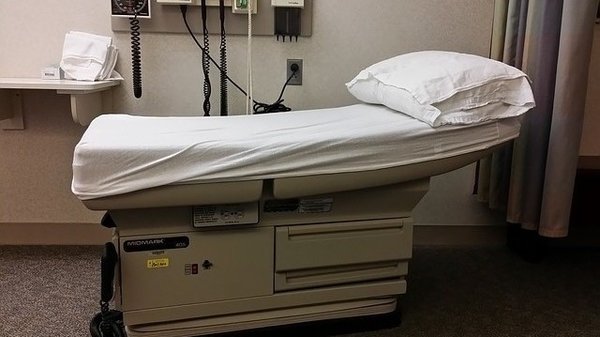
The Louisiana plaintiffs’ bar recently sought to tilt the scales of justice through Senate Bill 185, a bill seeking to complicate a defendant’s efforts to obtain an Independent Medical Examination ("IME"). An IME is an examination of the plaintiff by a physician or medical examiner hired by the defense. IMEs are important in the defense of a case and often act as a catalyst for settlement or to reduce the value of a claim.Bill 185 was introduced by Senator Jay Luneau (D) and passed with a unanimous 35 – 0 vote in the Senate. The bill proposed amendments to Louisiana Code of Civil Procedure Article 1464 to impose the following conditions upon IMEs:

  • All parties would be barred from referring to an IME as “independent” in the presence of a jury.
  • A plaintiff could not be ordered to submit to multiple examinations by multiple physicians within the same field of specialty, regardless of the number of defendants.
  • The party to be examined would have the right to have a person of his or her choosing present during the exam, including the plaintiff’s attorney.
  • The party to be examined would have the right not only to have the entire examination videotaped, but the ability to force the party requesting the examination to pay for all associated costs.

Were these conditions enforced, many physicians might have chosen not to provide IMEs at all when the process would involve: a potentially adversarial plaintiff’s attorney; a patient room packed with video equipment; and, the spectacle of it all captured on tape. Further, the bill would have stifled the ability to defend injury claims.We may never know what effect these changes might have brought. On May 16, 2017, the House Civil Law and Procedure Committee, involuntarily deferred on a 4-4 vote. This action effectively killed the bill and saved the IME as currently understood. By: John Grinton, a Keogh Cox associate whose practice areas include commercial and construction litigation. When he is not practicing law, John spends most of his time with his wife, Kellye, and their two dogs.

Posted by:

Disclaimer

Keogh Cox & Wilson, Ltd. provides this blog as a public service for general information only. The materials contained herein may not reflect the most current legal developments or even express the opinion of all or even most of Keogh Cox attorneys. Such material does not constitute legal advice or form any attorney-client relationship. Keogh Cox and all contributing author(s) expressly disclaim all liability to any person with respect to the contents of this Web site and Blog and expect that no reliance will be made upon the information provided.


Continue Reading

Explore legal perspectives on the issues shaping Louisiana's key industries and courtrooms.

Insight

Louisiana Supreme Court Confirms that Statutory Deadline to Oppose Summary Judgment Is Mandatory

A motion for summary judgment is a procedural device a party can use to avoid a full-scale trial when there is no genuine issue of material fact. La. C.C.P. art. 966 is the statute that governs motions for summary judgment in Louisiana. The statute was amended in 2015 to establish some new procedural rules for filing summary judgment motions. Before the statue was amended, the deadline for opposing a motion for summary judgment was set in the District Court Rules, and courts frequently allowed oppositions to motions for summary judgment to be filed after the statutory delay.

In 2015, the Legislature amended the statute to state that “absent the consent of the parties and the court, an opposition shall be filed” within the new fifteen-day deadline established by the article. In Auricchio v. Harriston, the Louisiana Supreme Court ruled the amendments to the statute removed the discretionary language that previously allowed a court to allow a party additional time to oppose a motion for summary judgment. Accordingly, the Court ruled the amendments to art. 966 made the opposition deadline mandatory, and late-filed oppositions should not be considered in connection with a ruling on a motion for summary judgment.

The Louisiana Supreme Court recently revisited this issue in Mahe v. LCMC Health Holdings LLC. The Court considered whether a trial court may grant a continuance of a hearing on a motion for summary judgment when a party fails to file its opposition within the fifteen-day deadline set in La. C.C.P. art. 966(B)(2).

In Mahe, a party requested a continuance of the hearing after the fifteen-day deadline passed. While subsection 966(C)(2) provides that a continuance of the hearing is permitted “for good cause shown,” the Court held that the requested continuance could not serve to circumvent the mandatory deadline for filing an opposition, as described in the Auricchio case. Accordingly, the order granting the continuance was reversed, and the trial court was instructed to rule on the motion for summary judgment without consideration of the untimely filed opposition. In so holding, the Court reinforced the mandatory deadlines set in La. C.C.P. art. 966 and provided additional guidance on the procedural rules for filing and opposing motions for summary judgment.

Insight

UM Waiver Completed by Insured’s Assistant Found Invalid

Uninsured/underinsured motorist coverage (“UM coverage”) is included in all automobile liability policies by Louisiana law unless the insured “rejects [UM] coverage, selects lower limits, or selects economic only coverage.” What constitutes an adequate rejection of UM coverage has been the crux of countless lawsuits across the state. Recently, in Havard v. Jeanlouis, et al, 2021-C-00810 (La. 6/29/22), the Louisiana Supreme Court examined the validity of a corporate representative’s signature in the context of execution of a UM waiver form. Louisiana courts have found that without a valid signature, UM coverage generally may not be waived.

The Havard court recognized that a corporation cannot “sign” its own name, and that an authorized representative must act on its behalf. Under the facts of this case, an administrative assistant attempted to execute a UM waiver form at the corporate representative’s direction with a stamp of the representative’s signature. The plaintiff argued that the use of the stamp did not meet the requirements for proper execution of the UM waiver form at issue.

Considering these facts, the court noted that Louisiana law of mandate provides that “when the law prescribes a certain form for an act, a mandate authorizing the act must be in that form.” The court continued: “Accordingly, where one individual signs a UM form on behalf of another individual and authority is not conferred by law, our Civil Code requires this authority be in writing.”

While the corporate representative in Havard verbally instructed his administrative assistant to complete the waiver with his signature stamp, no written mandate existed between the representative and the assistant to confirm this authority. Absent the written mandate, the court disregarded the express intention of the corporate representative and held the form invalid.

The court recognized the impracticality of its holding. However, it also commented “Concerns over the practical impact within the insurance industry in scrutinizing stamped signed UM forms are unavailing. Inconvenience is not absurdity. The insurer has the authority, opportunity, and responsibility to assure the UM form is completed properly. … Practical considerations regarding increased due diligence requirements are matters of policy best directed to the legislature.”

Cases involving UM waiver forms are fact-sensitive. Havard involved unique facts where the company’s authorized agent did not sign the UM waiver form personally. While Havard may be limited to its facts, it reminds that proper execution of a UM waiver form is necessary for UM coverage to be properly waived.

Louisiana Supreme Court Provides Updated Guidance on Execution of UM Waiver Forms

Insight

Uninsured Motorist Coverage: Making Smart People Feel Dumb

I have met smart, sophisticated “business” people whose eyes glass over when they try to explain their understanding of “UM” coverage. The picture becomes murkier when discussing “economic-only UM,” a form of UM coverage many people purchase without even knowing it. Through many years and conversations, I have come to conclude that there is a general fogginess that obscures this entire subject with many, if not most, people. This blog is an effort to improve understanding on the subject.What is “UM” Coverage?“UM” signifies “uninsured motorist” insurance coverage, but is more properly described as “uninsured/underinsured” motorist coverage. A person, family, business, or group purchases UM coverage to respond to damages caused in an accident by someone who has either no insurance or not enough to cover the loss. You purchase UM insurance to protect yourself or those connected to you. Without UM, you are gambling that the person who caused the accident (the “tortfeasor”) will have insurance coverage, and enough coverage, to respond to the injuries and damages they have caused.Why UM?This question is simply answered in a two-part response:#1- The roads are dangerous-Unless you are a crop duster or an undercover agent, the most dangerous thing you will likely do on any given day is to drive on a public road, even more so in the age of “smartphones” and distracted-driving.#2- Many drivers lack sufficient liability coverage- An unhealthy portion of drivers have either no insurance on insufficient insurance coverage to address an accident involving severe injuries or damages. The State of Louisiana requires motorists to obtain at least the minimum insurance of $15,000 “per person,” $30,000 “per accident,” and $25,000 to address property damage. If you do not purchase UM, you are trusting that these limits will be enough, as they might be in a minor accident. But what if the injuries are severe or you have multiple passengers in your car, van, or suburban?Often, the same people who reject UM, will buy “collision” coverage on their car to make sure they are not left paying for a car note after the car is destroyed in an accident. In this limited way, you can think of UM insurance as collision coverage on you, your family, passengers, or employees.While perfect statistics are not available, many drivers on the road have no insurance. Frequently, drivers will obtain minimum limits insurance through a “premium finance” arrangement, but will have stopped paying the premiums (thereby losing coverage) by the time of an accident.What is “Economic-Only” UM?In Louisiana, UM coverage will be afforded to you unless you “waive” the coverage under La. R.S. 22:1295. Louisiana residents are presented with a form that allows them to waive or select UM coverage. They are also allowed to select “economic-only” UM. People often choose this option because it is cheaper, but economic-only UM coverage will only pay for economic damages such as lost wages, medical bills, funeral costs, and other monetary damages. Economic-only UM will not pay money to compensate for pain and suffering/mental anguish, scarring and disfigurement, or other non-economic damages.FAQS

  • Can UM protect me from a hit-and-run driver? Yes.
  • What if another driver’s negligence caused the accident, but there was no physical contact with that driver’s vehicle and they fled? In this scenario, UM may be available under La. R.S. 22:1295(1)(f); however, you will need to identify an “independent and disinterested witness” to establish the actions of the unidentified driver.
  • Will UM protect me if I am at fault in an accident? No. The law would consider that a “moral hazard” and invite unscrupulous individuals to cause an accident in hopes of recovering under the policy they purchased.
  • Will UM protect me if I am a pedestrian? It may, depending upon the terms of your insurance policy.
  • What if an object falls from a vehicle and causes an accident? UM may be available in this circumstance. The ultimate answer may depend upon whether the “falling object” had come to rest before the accident. Rener v. State Farm Mut. Auto. Ins. Co., 99-1703 (La.App. 3 Cir. 4/05/2000), 759 So.2d 214, 215.

CONCLUSIONRational people may decide to reject UM to save money; and this decision may be the right one if they have health insurance, short-term disability, long-term disability, or others such protections. However, people often make such decisions with less than full information. Hopefully, you will make the smart choice.

No items found.
Evidence
Louisiana
State Courts