Insight

Insurance Coverage for “Temporary Substitute Autos” in Louisiana

Published on: May 25, 2022
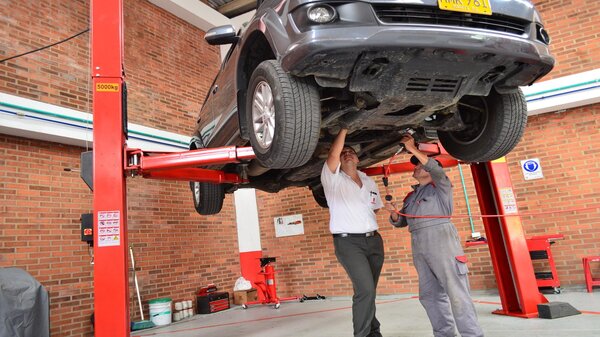
Louisiana insurance law recognizes a practical problem faced by many: the need to obtain alternative transportation when the car won’t start. Under La. R.S. 22:1296, any insurance on your personal vehicle must also extend to vehicles that are used as “temporary substitute autos.”

The statute provides that a car’s status as a “temporary substitute auto” depends on how the term is defined in the particular auto policy at issue. However, some rules typically apply to determine whether the auto is a “temporary substitute.” First, the use must be temporary, i.e. limited in duration. Second, the car must be a substitute for the auto insured under the policy and used for the same purpose. Third, policies typically limit coverage to substitute vehicles that the driver does not own.

Some policies also limit coverage by requiring that the substitution be needed for a purpose identified in the policy, such as the breakdown, repair, or destruction of the covered auto.

While the statute generally defers to the definition of “temporary substitute auto” provided in the policy, sometimes courts will overrule the insurer’s definition. For instance, in State Farm Mutual Automobile Insurance Company v. Safeway Insurance Company, 50-098 (La. App. 2 Cir. 9/30/15), 180 So.3d 450, the relevant policy defined a “temporary substitute auto” as a substitute for the owned auto when the owned auto was “being serviced or repaired by a person engaged in the business of selling, repairing, or servicing motor vehicles.” The case involved a motor vehicle accident that occurred while the policy holder operated a borrowed vehicle but before she brought her usual vehicle to a mechanic.

Citing the terms of the policy, the insurer denied coverage on grounds that the policy required the “temporary substitute auto” not only take the place of the driver’s usual vehicle, but also that the driver take the car to a mechanic before coverage would extend to the substitute vehicle. However, the court found this requirement to be against the public policies behind La. R.S. 22:1296 and found coverage under the policy extended to the borrowed vehicle.

Posted by:

Disclaimer

Keogh Cox & Wilson, Ltd. provides this blog as a public service for general information only. The materials contained herein may not reflect the most current legal developments or even express the opinion of all or even most of Keogh Cox attorneys. Such material does not constitute legal advice or form any attorney-client relationship. Keogh Cox and all contributing author(s) expressly disclaim all liability to any person with respect to the contents of this Web site and Blog and expect that no reliance will be made upon the information provided.

Continue Reading

Explore legal perspectives on the issues shaping Louisiana's key industries and courtrooms.

Insight

Louisiana Supreme Court Finds Business Interruption Coverage Does Not Apply to Losses Attributable to COVID-19

The COVID-19 pandemic had a profound impact on the global economy. Louisiana was not spared, and many businesses had to close as sales to their customers slowed or stopped altogether. Not surprisingly, the question arose regarding whether business interruption insurance would provide coverage to businesses in this situation. The Louisiana Supreme Court recently was asked this question in Cajun Conti, LLC v. Certain Underwriters at Lloyd’s, London and found that the policy at issue did not provide such coverage.

The mayor of New Orleans issued a proclamation on March 16, 2020, that prohibited most public and private gatherings. This applied to restaurants, whose business initially was limited to takeout and delivery services. Before the pandemic, Oceana Grill, a restaurant located in the French Quarter, could serve up to 500 customers at one time. However, it had to limit its business to takeout and delivery services when the mayor’s proclamation was announced. Because of social distancing guidelines, it remained at 60% or less capacity throughout the pandemic.

Oceana maintained a commercial insurance policy with loss of business income coverage and filed suit to request a declaratory judgment that the “policy provides business income coverage from the contamination of the insured premises by COVID-19.” Oceana’s insurer argued that there was no coverage under the policy because COVID-19 did not cause “direct physical loss of or damage to property” under the policy’s terms.

The trial court denied Oceana’s request for declaratory relief at trial. The appellate court reversed and found the policy’s terms ambiguous because it held “direct physical loss” could mean loss of use of the property. Because the pandemic prevented the full use of the property due to capacity limitations, the appellate court found coverage was triggered.

The Supreme Court disagreed and reversed the appellate court’s decision, finding its focus on the use of the property to be misguided. The Court found that suspension of operations “caused by direct physical loss of or damage to property,” as defined by the policy, required “the insured’s property to sustain a physical, meaning tangible or corporeal, loss or damage.” The Court noted that the restaurant’s physical structure was not lost or damaged because of the pandemic. COVID-19 restrictions did not cause damage or loss that was physical in nature. Therefore, the policy did not provide coverage for loss of business income.

Whether a policy affords coverage depends on the terms and conditions of each policy and the facts of each case. However, in light of this decision, businesses with insurance policies that include provisions with language like that at issue in Cajun Conti should not anticipate coverage for loss of business income allegedly caused by the COVID-19 pandemic.

Case References:

Cajun Conti LLC v. Certain Underwriters at Lloyd's, London, 2022-01349 (La. 3/17/23), 2023 WL 2549132.

Insight

Who’s Left Holding the Bag? Indemnity in Construction Contracts

The period of time before the contract is signed in one of optimism. After all, few sign a contract expecting problems. But if you do not consider the many "what ifs," you may be left holding the bag. And this "bag" may include indemnity provisions which could force you respond for the actions of other parties.

Many contracts include "indemnity" or "hold harmless" provisions. Black's Law Dictionary defines indemnity as "a duty to make good any loss, damage, or liability incurred by another." Like many states, Louisiana allows one party to agree to pay for the damages caused by the fault of the other, if this intention is sufficiently expressed. However, there are broad statutory exceptions that can nullify the indemnity requirement.

Parties to construction contracts should be careful not to blindly rely upon indemnity provisions because the Louisiana legislature in La. R.S. 9:2780.1 declared invalid any indemnity provision where a party seeks indemnity from another for its own fault.

Despite the broad nullification of certain types of indemnity provisions in construction contracts, current Louisiana law allows a party to be indemnified for its own fault when the other party obtains insurance to cover the risk, and recovered the cost of insurance in the contract price. For example, a general contractor can require a subcontractor to indemnify the general contractor for the general contractor’s fault, as long as the subcontractor obtains insurance for this obligation, and was paid that amount under the contract.

Indemnity obligations are not always as they seem. Even in the pre-contract period of optimism, you may want to contact an attorney so you won't be left holding the bag.

Chelsea Payne is an associate at Keogh Cox and has been practicing for three years. Her practice mainly relates to construction law and complex litigation. Chelsea enjoys playing tennis and spending time with her family.

Insight

Homeowners Awarded Money Damages Against "Good Faith" Seller of In-Ground Swimming Pool

Anyone who has spent time in the humid South knows why swimming pools are popular. The Hoffmanns, Louisiana residents, tried to purchase an in-ground swimming pool to entertain their grandchildren but found the pool was far from the oasis they imagined. Recently, in Hoffmann v. B & G, Inc., 2016-1001 (La. App. 1 Cir. 2/21/17), 215 So.3d 273, the First Circuit upheld an award in their favor which returned the price of the pool and additional costs related to its installation even though the seller was unaware of the problems with the pool at the time of sale.

The Hoffmanns asserted what is known in Louisiana law as a "redhibition" claim. Redhibition allows purchasers to void a sale if the thing bought has a “vice or defect” that makes it either:

(1) useless, or

(2) so inconvenient that the buyers would not have bought the thing had they known of the problem.

When the Hoffmanns purchased the pool, the seller arranged to have it installed, which was included in the price. The Hoffmanns used the pool for two summers. However, when they uncovered the pool for its third summer of use, they discovered that the pool liner had detached. The Hoffmanns later learned that the manufacturer no longer recommended their specific pool to be installed completely in-ground.

With redhibition, “good faith" sellers (sellers who did not know of the defect) must be given the chance to repair or replace the defective thing. Instead of repairing the pool, the seller of the Hoffmanns’ pool arranged for a new pool to be installed by a third party. Unfortunately, this second "replacement" pool also failed, this time because of an installation issue. After the second pool failed, the Hoffmanns filed suit.

The pool company argued that the Hoffmanns could not support a redhibition claim because the second pool they provided did not have a defect, but instead failed because of faulty installation. It claimed that it discharged its redhibition duties with respect to the first pool when it replaced the pool. The court disagreed and found that the "object" of the sale was a functioning in-ground swimming pool and that, after all of the efforts to repair and/or replace the original pool, the Hoffmanns still did not have a “defect-free useable in-ground swimming pool.”

The Hoffmanns won, making their summer a little more bearable.

Sydnee D. Menou

Partner
Car Accident
Insurance
Louisiana