Insight

Keogh Cox Obtains Appellate Victory in Denial of Class Certification

Published on: January 30, 2025

Keogh Cox attorneys Andrew Blanchfield, Chris Jones, and Chelsea Payne successfully defeated class certification in an action students brought to recover a partial refund of tuition and fees they claim they were owed after in-person classes were converted to remote learning because of the COVID-19 global pandemic. See Miazza v. Board of Supervisors of Louisiana State University and Agricultural and Mechanical College.

In 2021, plaintiffs Taylor Gunter and Michael Miazza filed a lawsuit seeking a partial refund of the tuition they paid to LSU for Spring 2020 classes. They alleged that they were entitled to a partial refund of tuition and certain fees because in-person classes were cancelled in the wake of the COVID-19 pandemic. In lieu of in-person classes, remote learning went into effect after spring break, from March 30, 2020 through the end of the spring semester.

In addition to their own claims for partial refunds, the plaintiffs tried to bring the case as a class action and moved to certify a class defined as: “All students who, as of March 13, 2020, were enrolled at Louisiana State University's main campus in Baton Rouge who paid Tuition and/or Fees for the Spring 2020 semester, or on whose behalf such payment was made.”

After the completion of discovery for class certification, and after the dismissal of Plaintiff Michael Miazza’s claim, Plaintiff Taylor Gunter filed a Motion for Class Certification. After hearing, the Trial Court certified the class as alleged, finding all the requirements for class certification set forth in La. C.C.P. art. 591 were satisfied. LSU appealed the decision to the First Circuit Court of Appeals.

The First Circuit reversed the Trial Court’s judgment and found the Plaintiff failed to satisfy all of the requirements for class certification. After conducting a rigorous analysis of the class certification requirements, the Court concluded that “a multitude of individualized inquiries and proof make up the liability and damages issues essential to the putative plaintiffs’ implied contract claims.” The Court identified some of these “individualized inquiries” as follows:

• which representations in each school’s or college’s catalogs, bulletins, and website materials did the putative plaintiff rely upon in developing his or her expectation and what particular facilities and on-campus opportunities did a putative plaintiff expect to utilize;

• whether the putative plaintiff has historically utilized on-campus facilities and opportunities; which facilities and/or on-campus opportunities, if any, were necessary for a particular school's or college's course completion;

• whether a putative plaintiff was satisfied with the online instruction, course credits received, and grading options provided; and

• whether a putative plaintiff actually suffered any financial loss, mindful of each student’s particular situation.

Ultimately, the Court concluded that the record lacked sufficient evidence to support findings of offers and acceptances, where were necessary (1) to establish meetings of the mind and (2) conclude each putative plaintiff and LSU consented to an implied contract. Any determination of liability for an implied contract also is dependent upon proof of facts individual to each putative class member. Therefore, the class would degenerate into a series of individual trials.

The First Circuit concluded that certification of the case as a class action was an abuse of discretion. It reversed the Trial Court’s judgment and decertified the matter. Plaintiff filed a Writ Application with the Louisiana Supreme Court. On January 14, 2025, the Louisiana Supreme Court denied Plaintiff’s Writ Application, finally resolving the class certification issue. As a result, Plaintiff cannot pursue class certification, but rather may only pursue her own individual claim.

References:

Miazza v. Board of Supervisors of Louisiana State University and Agricultural and Mechanical College, 2023-1194 (La. App. 1 Cir. 8/9/24), 394 So.3d 874, writ denied, 2025 WL 87255 (La. 1/14/25).

Posted by:

Disclaimer

Keogh Cox & Wilson, Ltd. provides this blog as a public service for general information only. The materials contained herein may not reflect the most current legal developments or even express the opinion of all or even most of Keogh Cox attorneys. Such material does not constitute legal advice or form any attorney-client relationship. Keogh Cox and all contributing author(s) expressly disclaim all liability to any person with respect to the contents of this Web site and Blog and expect that no reliance will be made upon the information provided.
Continue Reading

Explore legal perspectives on the issues shaping Louisiana's key industries and courtrooms.

Insight

When the Stakes are High: Class Actions in Louisiana

They make movies about “class actions” exactly because they can involve high stakes, with millions, even billions of dollars on the line. The class action procedure can create exposure at this level because of the large numbers of potential claims involved. Class actions are used to address losses experienced from unfair or fraudulent business practices, natural disasters, industrial explosions, or any event or action which is alleged to have damaged a large group in a similar way.

As a procedural device, the class action combines several claims (often hundreds or thousands) into a single action. A key battle in most Louisiana class actions is whether the proposed claim can properly be “certified” as a class action under Louisiana procedure. The recent Fourth Circuit decision in Duhon v. Harbor Homeowners’ Ass’n., Inc., 2016 WL 3551620 (La. App. 4 Cir. 6/30/16) addressed whether the lower court’s class “certification” was proper under Louisiana Code of Civil Procedure Article 591.

Duhon involved damages experienced following hurricanes Katrina and Rita. In particular, the class representatives sought damages against the Harbor View Condominium Association and its insurers claiming that the association was guilty of faulty repairs following these two hurricanes. In deciding whether certification was proper, the Duhon court considered the following elements, all of which must be present to certify a proper class action:

Numerosity- the class must be so numerous that joinder of all involved persons would prove impractical;

Commonality- the case must present questions of law and fact that are common to the class;

Typicality- the claims and defenses of the representative parties must be typical of the claims or defenses of the class; and,

Adequacy of representation- the representative parties must be positioned to fairly and adequately protect the interest of the class.

After analyzing each of these “elements,” the Duhon court upheld the Trial Court’s certification of the claim as a class action. Further, the court concluded that the questions of law and fact common to the members of the class predominated over any questions affecting only individual members such that a class action was superior to other available methods to fairly and efficiently adjudicate the controversy.

While the class action procedure has its detractors, it is sometimes the only real option to address a harm to a large group. Now that the class in Duhon has been certified, the case will proceed through discovery and towards trial on the merits. Who knows, they may make a movie about it someday.

Insight

Class Actions in a State of Undress

Almost no litigation grabs attention and headlines more than a high-profile class action. The Louisiana Supreme Court's recent class action ruling was no exception in a case involving salacious conduct and a violation of privacy.

The plaintiff in Jane Doe v. Southern Gyms, LLC, 2012-1566 (La. 3/19/13) was an unnamed victim of a "peeping tom." She contended that an employee of a popular gym placed a pen camera in the women's bathroom where he would tape unsuspecting women in various states of undress. The pen camera could hold only 1-2 hours of film. The perpetrator testified that, after viewing, he would immediately delete the footage. The images of only four women were seen on the footage when it was discovered. After the employee was arrested, one of the victims filed the class action lawsuit. At issue before the Louisiana Supreme Court was whether the class action was properly certified by the Trial Court.

Class action is a nontraditional litigation procedure that was introduced into Louisiana civil procedure in 1961. Louisiana class action procedure is modeled after the original federal rule and has been extensively revised since its inception. Louisiana Code of Civil Procedure Article 591 provides the elements that must be met before a class action can be certified. Failure to meet one of the threshold requirements of Article 591 precludes class action treatment. Once of these threshold requirements is numerosity, i.e. a class of potential plaintiffs "so numerous that joinder of all members is impractical." La. C.C.P. art. 591(a)(1). The requirement of numerosity was at issue in Jane Doe.

In its analysis, the Supreme Court stressed that courts must perform a rigorous analysis to determine whether the proposed class action meets the requirements of Article 591. Simply pleading a class action is insufficient. Instead, the plaintiff "must be prepared to prove in fact" that the Article 591 requirements are met. Id. at p. 9. To establish the "numerosity" requirement, the class representative cannot simply allege that several persons were affected by the defendant's bad acts. She must be able to offer some proof of a definable group of aggrieved persons so numerous that joinder is impractical.

In Jane Doe, the Supreme Court held that the plaintiff did not satisfy numerosity. The employee's testimony revealed that he may have recorded approximately 20 women. However, because the footage was deleted, most of the potential class members could not show that their privacy had been violated. Only nine women had positive knowledge that they were on video. According to the Jane Doe Court, nine class members did not meet the numerosity requirement and the class was decertified. While the Court did not reveal a "magic number" to meet numerosity, we now know it may be higher than nine.

There is an old adage that "bad facts make bad law." In Jane Doe, the Louisiana Supreme Court did not let the egregious nature of the conduct impact its view that the requirements of Article 591 must be met in every circumstance.

Insight

Impact of the U.S. Supreme Court’s Decision in Trump v. CASA, Inc. on Universal Injunctions and Class Actions

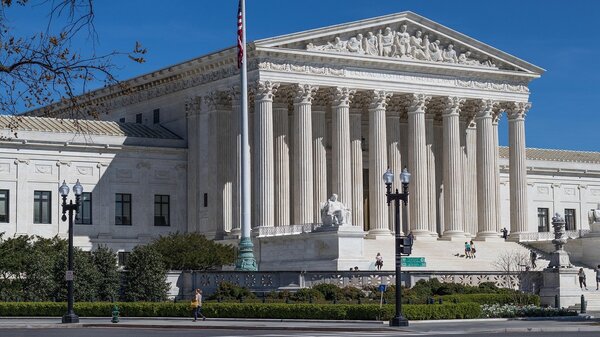
On June 27, 2025, in an Opinion authored by Justice Amy Coney Barrett, the United States Supreme Court determined that “universal injunctions,” injunctions issued by district judges that apply nationwide, “likely exceed the equitable authority that Congress has given to federal courts.” In Trump v. CASA, Inc., the Supreme Court, with a 6-3 vote, concluded that district courts do not have authority to issue universal injunctions which seek to prohibit the enforcement of a law or policy against anyone nationwide. The decision limits the relief afforded by the district courts in consolidated matters to only the parties in those actions.

By prohibiting the use of “universal injunctions” in federal courts, litigants already have started to utilize another procedure to seek the relief they seek – class actions. Class actions are a special procedure provided by both federal and state law that allows one or more class representatives to file suit and seek to represent the interests of other similarly situated individuals or companies. Prior to the Supreme Court’s ruling in Trump v. CASA, Inc., a single litigant could apply for a universal injunction through an individual action. Now that the Supreme Court has declared that process unavailable for application of an injunction nationwide, class actions may be the procedural process litigants attempt to use to achieve that same purpose. It remains to be seen whether class actions will be an effective way to achieve broader relief for individuals impacted by government policies.

References:

Trump v. CASA, Inc., --- S.Ct. ---, No. 24A884, 2025 WL 1773631 (U.S. June 27, 2025).

Christopher K. Jones

Partner
Civil Procedure
Class Actions
Class Certification