Christopher K. Jones

Partner

About

Chris has years of experience defending and prosecuting class action and complex commercial litigation matters in state and federal courts in Louisiana and courts across the country - for both businesses and individuals. With over two decades of civil litigation experience and having served in leadership roles with both state and federal bar associations, Chris has developed a strong familiarity with courts throughout Louisiana. He has been appointed as lead counsel in many consumer protection class actions and represented companies facing significant exposure in mass tort litigation, class actions and insurance claims.  He has been appointed as lead counsel in many consumer protection class actions and represented companies facing significant exposure in mass tort litigation, class actions and insurance claims. He has also successfully represented businesses, individuals, and insurers in a multitude of insurance claims matters related to first-party insurance claims involving hurricanes, fires, floods, and other catastrophic damage events.

Chris has extensive experience handling individual, multi-state and Multi-District Litigation (MDL) cases representing plaintiffs and defendants. In particular, some of the matters he has handled include the following:

  • Over 100 class action and individual claims throughout the U.S. involving violations and enforcement of the Telephone Consumer Protection Act for sending unsolicited robo-calls, fax advertisements and text messages.
  • Other consumer protection litigation under federal and state statutes, including the Fair Credit Reporting Act, Fair Debt Collection Practices Act, Louisiana Unfair Trade Practices Act, and other related privacy and consumer protection laws.
  • Mass tort, class action and individual actions involving industrial and oilfield explosions, natural disasters such as Hurricanes Katrina, Gustav, Laura, Delta, and Ida, catastrophic accidents including the BP Deepwater Horizon oil spill, massive toxic torts, and defective products such as Chinese drywall for companies and individuals in Louisiana and elsewhere in the U.S.
  • Mass tort, class action and individual actions involving insurance disputes, denials of coverage and related bad faith, including those involving liability, Uninsured/Underinsured (UM), umbrella, homeowners, life and health insurance policies. This also includes disputes against property, homeowners and flood insurers for amounts owed under policies after natural disasters, including hurricanes and floods, including for disputed property damages, contents losses, and loss of use or additional living expense damages.
  • Representation of the Louisiana Department of Revenue in various sales and use and franchise tax collections cases and defending the Department from class action claims on hundreds of claims involving the denial of tax credits before the Louisiana Board of Tax Appeals and Louisiana State courts.

Chris also represents individuals injured in motor vehicle accidents and other incidents causing personal injury, and has significant experience defending those same claims, making him qualified to handle all aspects of these types of matters. He also commonly handles cases involving natural disasters, such as hurricanes, floods, fire, and other storm damage, including first party insurance claims.

Chris commonly represents companies and individuals involved in litigation in Louisiana federal and state courts as local counsel.  In these matters, he is either retained by national counsel or directly by clients who find themselves engaged in litigation in the state.  Considering his involvement in state and federal bar associations, familiarity with the local judiciary in state and federal courts in the state, and active engagement with the local bench, Chris is an excellent choice to serve as local counsel to assist clients and national counsel with navigating the local Louisiana court systems.  Some recent examples of matters in which Chris has served as local counsel include the following:

  • Assisted a company from Rhode Island and its national counsel to pursue a copyright infringement action against a local Louisiana company in the United States District Court for the Middle District of Louisiana.
  • Represented, on an emergency basis, a Minnesota company and its national counsel to successfully defeat an injunction action in a local Louisiana state court.

  • Mass Torts
  • Civil Litigation
  • Tax Litigation
  • Personal Injury
  • Hurricane Litigation
  • Natural Disaster Litigation
  • First Party Insurance Claims/Litigation
  • Insurance Litigation
  • Local counsel assignments

  • Represented thousands of class members in several consumer remedy class actions in various courts across the country
  • Represented a commercial retail complex in multiple tenant litigation disputes
  • Represented insurance brokers against claims by homeowners for bad faith claims for failure to tender insurance payments arising out of Hurricane Katrina
  • Represented homeowner against insurer for damages owed under policy after Hurricane Gustav
  • Represented an individual in a claim against his UM carrier for bad faith damages
  • Represented a state entity in connection with sales and franchise tax litigation
  • Defended hundreds of suits, including class actions, brought by taxpayers seeking the recovery of denied tax credits
  • Defended class action suit for damages brought by inmates alleging they were over detained
  • Defended a number of suits for first party insurance claims and bad faith penalties arising from Hurricanes Laura, Delta and Ida, among other storm events
  • Represented businesses, governmental entities and individuals in first party insurance claims for property damage claims arising from Hurricanes Laura, Delta, and Ida

  • Baton Rouge Bar Association, Young Lawyers Section, Council Member, 2007 - 2008
  • Baton Rouge Bar Association, Board of Directors, 2012 - Present; President- 2021
  • Federal Bar Association, Member
  • Federal Bar Association, Baton Rouge Chapter Board of Directors, 2012 - 2017; President 2016
  • Louisiana State Bar Association, Young Lawyers Section, Council Member, 2009 - 2011
  • Louisiana State Bar Association, Board of Governors, 2025 - Present
  • Louisiana State Bar Association, Member
  • Baton Rouge Bar Association, Member

  • 2018 - 2026 Louisiana Super Lawyer- Class Action/Mass Torts
  • 2026 Louisiana Top 50 Super Lawyer
  • The Best Lawyers in America® - Mass Tort Litigation/Class Actions, 2024 - Present
  • 2026 The Best Lawyers in America® - "Lawyer of the Year" - Mass Tort Litigation/Class Actions
  • Martindale Hubbell AV Preeminent Rating- 2014 - Present
  • Participant, Louisiana State Bar Association Leadership Class, 2008 - 2009
  • Recipient, Louisiana State Bar Association Young Lawyers Section Pro Bono Award, 2008
  • Recipient, Baton Rouge Bar Association President's Award, 2007
  • Recipient, Baton Rouge Bar Association President's Award, 2013
  • Recipient, Judge Joseph Keogh Memorial Award, 2006
  • Participant, John Barton Community Leadership Program, 2006
  • Honoree, Greater Baton Rouge Business Report, Top Forty Under 40, 2011
  • Member of the Tulane University baseball team – 1995-1997

  • St. Joseph's Academy, Board of Directors, 2024 - Present
  • Baton Rouge Epicurean Society, Board of Directors, 2024 - Present
  • Louisiana Arts and Sciences Museum, Board of Trustees, 2007 - 2013
  • Louisiana Arts and Sciences Museum, Chairman, 2012
  • Catholic High School Alumni Association, Board of Directors, 2006 - 2010
  • Catholic High School Alumni Association, President, 2009
  • Boys and Girls Club of Baton Rouge, Board of Directors, 2007 - 2010
  • St. Aloysius Catholic Church, Member
  • Volunteer, disaster legal services - Hurricanes Katrina, Gustav and 2016 flooding event

Practice Areas

Education

  • J.D., Louisiana State University Paul M. Hebert Law Center, 2002
    – Recipient, LSU Board of Supervisors Scholarship
  • B.S., Tulane University, 1999
    – Major – Psychology
    – Recipient, Legislative Scholarship

Admissions

  • Louisiana, 2002
  • U.S. District Court for the District of Colorado, 2014
  • U.S. District Court for the Southern District of Texas, 2014
  • U.S. District Court for the District of Oregon-Pro Hac Vice, 2013
  • U.S. District Court for the Northern District of Illinois-Pro Hac Vice, 2013
  • U.S. District Court for the District of Maryland-Pro Hac Vice, 2013
  • U.S. Court of Appeals for the Fifth Circuit, 2002
  • U.S. District Court for the Middle, Eastern and Western Districts of Louisiana, 2002

Accolades

Recent Articles by This Attorney

Explore this author's legal perspectives on issues shaping Louisiana.

Insight

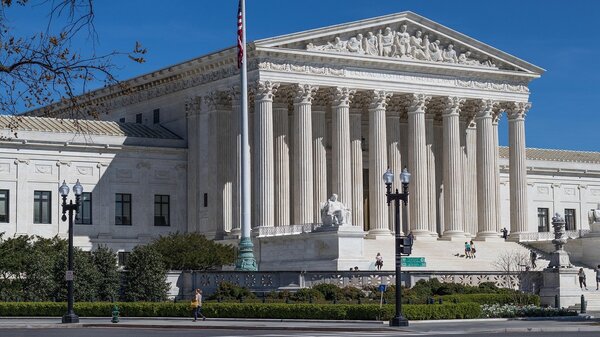
Impact of the U.S. Supreme Court’s Decision in Trump v. CASA, Inc. on Universal Injunctions and Class Actions

On June 27, 2025, in an Opinion authored by Justice Amy Coney Barrett, the United States Supreme Court determined that “universal injunctions,” injunctions issued by district judges that apply nationwide, “likely exceed the equitable authority that Congress has given to federal courts.” In Trump v. CASA, Inc., the Supreme Court, with a 6-3 vote, concluded that district courts do not have authority to issue universal injunctions which seek to prohibit the enforcement of a law or policy against anyone nationwide. The decision limits the relief afforded by the district courts in consolidated matters to only the parties in those actions.

By prohibiting the use of “universal injunctions” in federal courts, litigants already have started to utilize another procedure to seek the relief they seek – class actions. Class actions are a special procedure provided by both federal and state law that allows one or more class representatives to file suit and seek to represent the interests of other similarly situated individuals or companies. Prior to the Supreme Court’s ruling in Trump v. CASA, Inc., a single litigant could apply for a universal injunction through an individual action. Now that the Supreme Court has declared that process unavailable for application of an injunction nationwide, class actions may be the procedural process litigants attempt to use to achieve that same purpose. It remains to be seen whether class actions will be an effective way to achieve broader relief for individuals impacted by government policies.

References:

Trump v. CASA, Inc., --- S.Ct. ---, No. 24A884, 2025 WL 1773631 (U.S. June 27, 2025).

Insight

Keogh Cox Obtains Appellate Victory in Denial of Class Certification

Keogh Cox attorneys Andrew Blanchfield, Chris Jones, and Chelsea Payne successfully defeated class certification in an action students brought to recover a partial refund of tuition and fees they claim they were owed after in-person classes were converted to remote learning because of the COVID-19 global pandemic. See Miazza v. Board of Supervisors of Louisiana State University and Agricultural and Mechanical College.

In 2021, plaintiffs Taylor Gunter and Michael Miazza filed a lawsuit seeking a partial refund of the tuition they paid to LSU for Spring 2020 classes. They alleged that they were entitled to a partial refund of tuition and certain fees because in-person classes were cancelled in the wake of the COVID-19 pandemic. In lieu of in-person classes, remote learning went into effect after spring break, from March 30, 2020 through the end of the spring semester.

In addition to their own claims for partial refunds, the plaintiffs tried to bring the case as a class action and moved to certify a class defined as: “All students who, as of March 13, 2020, were enrolled at Louisiana State University's main campus in Baton Rouge who paid Tuition and/or Fees for the Spring 2020 semester, or on whose behalf such payment was made.”

After the completion of discovery for class certification, and after the dismissal of Plaintiff Michael Miazza’s claim, Plaintiff Taylor Gunter filed a Motion for Class Certification. After hearing, the Trial Court certified the class as alleged, finding all the requirements for class certification set forth in La. C.C.P. art. 591 were satisfied. LSU appealed the decision to the First Circuit Court of Appeals.

The First Circuit reversed the Trial Court’s judgment and found the Plaintiff failed to satisfy all of the requirements for class certification. After conducting a rigorous analysis of the class certification requirements, the Court concluded that “a multitude of individualized inquiries and proof make up the liability and damages issues essential to the putative plaintiffs’ implied contract claims.” The Court identified some of these “individualized inquiries” as follows:

• which representations in each school’s or college’s catalogs, bulletins, and website materials did the putative plaintiff rely upon in developing his or her expectation and what particular facilities and on-campus opportunities did a putative plaintiff expect to utilize;

• whether the putative plaintiff has historically utilized on-campus facilities and opportunities; which facilities and/or on-campus opportunities, if any, were necessary for a particular school's or college's course completion;

• whether a putative plaintiff was satisfied with the online instruction, course credits received, and grading options provided; and

• whether a putative plaintiff actually suffered any financial loss, mindful of each student’s particular situation.

Ultimately, the Court concluded that the record lacked sufficient evidence to support findings of offers and acceptances, where were necessary (1) to establish meetings of the mind and (2) conclude each putative plaintiff and LSU consented to an implied contract. Any determination of liability for an implied contract also is dependent upon proof of facts individual to each putative class member. Therefore, the class would degenerate into a series of individual trials.

The First Circuit concluded that certification of the case as a class action was an abuse of discretion. It reversed the Trial Court’s judgment and decertified the matter. Plaintiff filed a Writ Application with the Louisiana Supreme Court. On January 14, 2025, the Louisiana Supreme Court denied Plaintiff’s Writ Application, finally resolving the class certification issue. As a result, Plaintiff cannot pursue class certification, but rather may only pursue her own individual claim.

References:

Miazza v. Board of Supervisors of Louisiana State University and Agricultural and Mechanical College, 2023-1194 (La. App. 1 Cir. 8/9/24), 394 So.3d 874, writ denied, 2025 WL 87255 (La. 1/14/25).

Insight

Preparing for a Storm

Fortunately, the 2024 hurricane season has been relatively calm. We previously blogged about steps that can be taken after your property is damaged by a hurricane or other natural disaster. (Click here to access our prior blog). With a Tropical Storm, and potential Hurricane, threatening our coast, here are some steps to consider taking to prepare before a storm arrives in the event you must make a property insurance claim for damages after the storm:

  • DOCUMENT, DOCUMENT, DOCUMENT – The best way to prove the condition of your property before damage is caused is to document it. Take pictures and videos of the interior and exterior of your home or business. Create an inventory of your contents. Narrate the video to provide better descriptions. If your property is damaged, this documentation will be used to verify its condition and make it easier for your insurer to adjust and pay your claim.
  • INSPECT YOUR PROPERTY – As you are making your preparations, you may consider taking a walk around your property to notice any prior damage to your property. Identify any issues that could affect a potential insurance claim.
  • KNOW YOUR INSURANCE COVERAGES – Make sure you are aware of the coverages that your insurance policy provides. The Declarations Page to your policy should provide much of this information – the coverage limits, types of coverage provided, deductible, etc. While your insurance agent likely maintains this for you, it is good practice to maintain and know this information, which lets you know what will or will not be covered.
  • MITIGATE YOUR DAMAGES – You can take steps to prevent damage to your property during the storm. You can pick up items around the property that could become airborne and take whatever precautions you can to prevent damage to your property, particularly the exterior. If your property is damaged, you can make temporary repairs to prevent further damage until your insurance company can get to you (like placing a tarp on the roof).

Read our Latest Blogs Providing Insight on Important Legal Matters

No items found.