Insight
La. Supreme Court Rules 10-year Contract Prescription Applies to 1st Party Claims Against Insurer
Published on: March 23, 2020
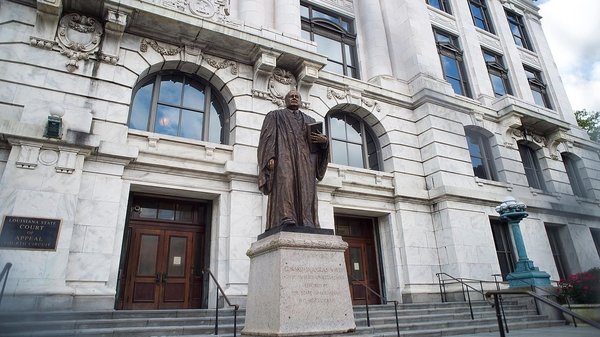
In a first-party action obtained by assignment for excess liability against an insurer, the Louisiana Supreme Court in Smith v. Citadel Insurance,19-00052 (La. 10/22/19) ruled that the claim against the carrier is subject to the 10-year contract prescription period under La. law, stating:
“For the above reasons, we hold an insurer’s duty of good faith owed to its insured under La. R.S. 22:1973 does not exist separate and apart from an insurer’s contractual obligations. The duty of good faith is codified in La. R.S. 22:1973, but this duty is an outgrowth of the contractual and fiduciary relationship between the insured and the insurer, and the duty of good faith and fair dealing emanates from the contract between the parties. Thus, first-party bad faith claims against an insurer are governed by the ten-year prescriptive period set forth in La. C.C. art. 3499. Consequently, Ms. Smith’s first-party bad faith claim against GoAuto, brought pursuant to an assignment of rights from the insured, was subject to a 10-year prescriptive period and is not prescribed.”
The concurring justice noted that it was not necessary to engage in the protracted discussion concerning the duties of insurers relative to first-party claims. Nevertheless, the court offered an in-depth discussion of these duties.
Keogh Cox & Wilson, Ltd. provides this blog as a public service for general information only. The materials contained herein may not reflect the most current legal developments or even express the opinion of all or even most of Keogh Cox attorneys. Such material does not constitute legal advice or form any attorney-client relationship. Keogh Cox and all contributing author(s) expressly disclaim all liability to any person with respect to the contents of this Web site and Blog and expect that no reliance will be made upon the information provided.

Purchase agreements for residential property routinely include financing provisions that require the buyer to show that he has applied for a loan. The Louisiana Fourth Circuit Court of Appeals recently analyzed such a provision in Abdelqader v. Ramos. The plaintiff in Abdelqader entered into a purchase agreement with the defendant for an unimproved lot on which the plaintiff planned to build his home.
The financing provision in the purchase agreement required the buyer to provide the seller with (1) written documentation; (2) from a lender; (3) that a loan application has been made; and (4) that Buyer authorized lender to proceed with the loan approval process. The provision also required that this documentation be provided to the seller “within 3 calendar days after” the date of Agreement.
After the parties executed the purchase agreement, various disputes led the seller to terminate the agreement and re-list the property for sale. The plaintiff sued for stipulated damages and attorney’s fees, which were allowed under the contract if either party breached the purchase agreement.
The buyer introduced evidence that his agent sent the seller’s broker a USDA pre-approval letter and certificate of eligibility for financing under a USDA Rural Development Program. These documents were sent to the seller’s agent before the parties executed the purchasing agreement. Generally, such pre-approval letters show the buyer appears qualified for a loan in the amount of the purchase. They do not confirm a loan was applied for or approved by the lender for the property to be purchased.
The seller argued that the pre-approval letter furnished by the buyer before the parties entered into the purchase agreement was not an actual loan application and did not verify that a loan application for the purchase had been made. The seller also argued that the buyer did not comply with the terms of the financing provision because he did not provide the subject documents within the three-day window after the purchase agreement was signed. The court rejected these arguments. The Court found the agreement did not require the buyer to produce his loan application to the seller or that the loan application be dated within three days of the Agreement. The buyer’s lender produced the pre-approval letter and the certificate of eligibility in response to the buyer’s application for financing and pursuant to the buyer’s instruction to proceed with the loan process. Though its ruling may be limited to the facts of this case, the Court found that the buyer complied with the terms of the financing agreement.
It appears the court viewed the seller’s claim that the seller did not comply with the financing provision of the purchasing agreement as after the fact justification for the seller unilaterally terminating the purchase agreement for some unrelated dispute. The Court found that the seller breached the purchase agreement and awarded the buyer stipulated damages of 10% of the contract price and attorney’s fees. This ruling also serves as a reminder that purchase agreements for residential properties are contracts, and breaches of these contracts can have consequences if terminated on a whim.
Reference:
Abdelqader v. Ramos, 2022-0305 (La. App. 4 Cir. 11/30/22), 353 So.3d 750.

The power to punish is generally the role of the criminal courts. Civil courts concern themselves with making a plaintiff "whole." In fact, it would be legal error for a civil court to impose recovery against a defendant as a form of punishment--with one notable exception. When "punitive damages" are allowed, a civil court may "punish" a defendant.
In Louisiana, punitive damages are only allowed when a statute specifically says they may be awarded. One of these statutes is La. Civil Code article 2315.4, which allows punitive damages when the plaintiff’s injuries were caused “by a defendant whose intoxication while operating a motor vehicle was a cause in fact of the resulting injuries.” Based upon the words used, punitive recovery for drunk driving would appear limited to recovery against the individual who was "operating a motor vehicle." However, what if the driver was intoxicated while “on the clock,” in the "course and scope" of his employment? Can his employer also be liable for punitive damages? Unfortunately, the answer to these questions is unclear and may vary depending upon where the case was filed.
The First and Third Circuits indicate that an employer should not be liable for these damages. In Darby v. Sentry Ins. Auto. Mut. Co., the First Circuit held that an employer could not be liable for punitive damages when its intoxicated employee was at fault for an accident, even when the employer was aware the employee had a history of alcohol abuse. The court reasoned that the principle of strict construction of punitive statutes prevented it from holding anyone other than the driver liable. 2007-0407 (La. App. 1 Cir. 3/23/07), 960 So. 2d 226, writ denied, 2007-0638 (La. 3/28/07), 953 So. 2d 59. Similarly, in Romero v. Clarendon Am. Ins. Co., the Third Circuit ruled that an employer could only be liable for the compensatory damages caused by its employee, to the exclusion of punitive damages. 2010-338 (La. App. 3 Cir. 12/29/10), 54 So. 3d 789, writ denied, 2011-0551 (La. 4/25/11), 62 So. 3d 96. A federal court decision from the Western District of Louisiana also supports this conclusion. See Lankford v. Nat'l Carriers Inc., 2015 WL 518736 (W.D. La. Feb. 6, 2015).
In contrast, the Fourth and Fifth Circuits have found that an employer can be liable for its intoxicated employee’s punitive damages. The Fourth Circuit, offering little commentary, found that an employer could be responsible for damages caused by its employee’s acts, including punitive damages under art. 2315.4. See Curtis v. Rome, 98-0966 (La. App. 4 Cir. 5/5/99), 735 So. 2d 822. Punitive damages were also awarded against an employer in a Fifth Circuit case, Levet v. Calais & Sons, Inc., 751 So.2d 153 (La. Ct. App. 1987). However, in Levet, the employer stipulated to liability and essentially agreed to be responsible for punitive damages.
While the Louisiana Supreme Court has not squarely addressed the issue, language from Berg v. Zummo tends to indicate that the employer may not be liable for drunk-driving punitive damages. In Berg, the Supreme Court examined art. 2315.4 to determine whether a bartender could be liable for providing an intoxicated driver with alcohol prior to the accident. In that context, the Court held that art. 2315.4 did not extend to someone who “contributed to” the intoxication because that Article “reflects the legislature’s intent to penalize only the intoxicated driver.” 2000-1699 (La. 4/25/01), 786 So. 2d 708, 718. However, the Berg Court specifically acknowledged lower court decisions that permitted such liability for employers, reserving its judgment on that issue for another day.
So, if someone asks you whether a corporation can drive drunk, the proper answer may be this: depends on who you ask.

It is well-established that a client in legal malpractice shall have no greater rights against their attorney than they had against the original defendant. That is, until the recent decision by the Supreme Court in Ewing v. Westport Insurance Corporation, 20-00339 (LA. 11/19/20), 2020 WL 6789490 where the Louisiana Supreme Court held that the “collectibility“ of the underlying judgment against the defendant is neither part of the plaintiff’s burden of proof nor the proper subject of an affirmative defense.
In Ewing, the defendant/attorney fax-filed a petition for damages but failed to forward the original petition within seven days as required by statute. As a result, the claim he sought to advance on behalf of Elaine Ewing prescribed. Ewing sued her attorney and his insurer.
Prior to trial, the tortfeasor testified that he would have filed for bankruptcy had an excess judgment been entered. On this basis, the defendants obtained a motion for summary judgment establishing that the underlying tortfeasor would have been unable to pay any amount above the $30,000 in available insurance coverage. Following trial, an award of $30,000 was entered in favor of the plaintiff and the plaintiff appealed.
The appellate court reversed citing to the decision in Rodriguez v. Traylor, 468 So.2d 1186, 1188 (La. 1985) which held that “the wealth or poverty of a party to a lawsuit is not a proper consideration in the determination of compensatory damages.“
The Supreme Court upheld the appellate opinion. In the analysis, Chief Justice Johnson on behalf of the majority also cited to the Rodriguez decision for the proposition that the wealth of the tortfeasor is not relevant to damages. The majority acknowledged that a majority of courts nationwide hold that the collectibility of a judgment is an essential element of a plaintiff’s legal malpractice case. It also observed “a growing trend” in other states to allow the defendant/attorney to plead collectability as an affirmative defense. Nevertheless, the Supreme Court in Ewing chose to follow neither position.
The defendants in Ewing did not argue that collectibility was part of the plaintiff’s burden. However, they did assert an affirmative defense on this basis. In rejecting this defense, the Ewing court found that nothing in statutory law of Louisiana limits damages based upon the collectibility of a judgment against a particular tortfeasor. In Ewing, it was established that the tortfeasor would have been immediately unable to pay an excess judgment. Nevertheless, the majority highlighted that a money judgment is valid for 10 years and may be revived for successive 10-year periods. As such, the court concluded that the money judgment has intrinsic value, regardless of immediate collectibility. To quote the majority, “impecunity is a snapshot in time.”
The concurring opinion by Justice Weimer reasons that there may be certain and rare cases where the underlying tortfeasor is truly judgment proof. In that circumstance, he writes that summary judgment in favor of the defendant may be appropriate but not under the record before the court.
Writing for the dissent, Justice Crain observed: “Thirty states have determined collectibility is relevant in a legal malpractice action. No state has reached a contrary conclusion, until now.” According to the majority, the absence of any statute making collectability a relevant consideration mandated the result under our civilian traditions. Justice Crain disagreed and argued that the majority opinion is inconsistent with the Code of Evidence articles which generally allow the admissibility of relevant evidence such as an inability to pay. La. L.C.E. art. 402. In support of his position, Justice Crain gave a hypothetical scenario involving an insolvent, uninsured driver who rear-ends a world-class professional athlete rendering him a paraplegic, resulting in damages and $50 million. About this hypothetical, he states:
“What did the plaintiff lose, or what harm did the lawyer cause the plaintiff, when the lawyer failed to preserve the claim against the insolvent, uninsured driver? The lawyer did not cause the paraplegia, nor did he caused a loss of $50 million, as that money was clearly uncollectible.“
To Justice Crain, the determinative question is the value of the lost judgment.
Insofar as the majority and concurring opinions highlight the absence of any statutes to support their conclusions, it would not be surprising for this issue to be considered by the legislature in coming years.
Collin is a Keogh Cox partner who litigates injury, commercial, and legal malpractice disputes. He lives in nearby Zachary, Louisiana with his wife Melissa and three all too active children. He is an outdoorsman, a tennis player, a cook, and a hobbyist writer.
This blog was written in partnership with Andrew "Drew" Blanchfield whose practice also includes professional liability defense.