Insight

New Orleans Ladies On Parade for Equal Pay

Published on: February 17, 2017
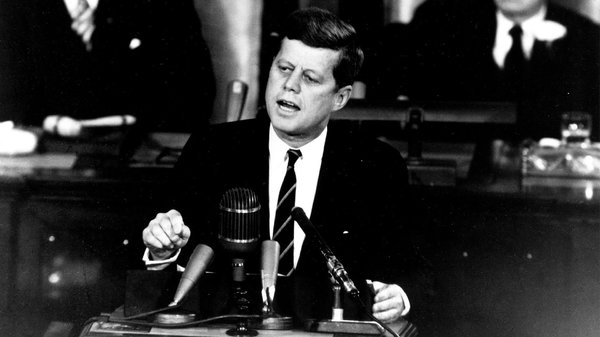
When President John F. Kennedy signed the Equal Pay Act, he called it a "first step" and one which "affirms our determination that when women enter the labor force they will find equality in their pay envelopes.” Despite the many federal statutes passed since the Equal Pay Act, "equal pay" remains a hot-button issue and the subject of protests aimed at correcting an actual and/or perceived disparity. Locally, the New Orleans Police Department estimates that between 10,000 and 15,000 protesters took part in the Women’s March in New Orleans on Saturday, January 21, 2017.

New Orleans Mayor Mitch Landrieu issued an executive order during the week following the protests wherein he requested that a pay disparity survey be conducted by the Civil Service Commission. He further announced a ban of questions about salary history during the hiring process for New Orleans city employees, noting, “It is unacceptable that, on average, women make just 79% of what men make. We need equal pay for equal work.”

Mayor Landrieu's order is limited to city jobs and follows a year when some state officials, including Gov. John Bel Edwards, were dealt a defeat in the Legislature on a separate equal pay measure. The state “equal pay” measure ultimately passed the Senate, but was defeated in a House committee.

The right of employees to be free from discrimination in their compensation is protected under many federal laws, including the Equal Pay Act of 1963, Title VII of the Civil Rights Act of 1964, the Age Discrimination in Employment Act, and the Americans with Disabilities Act. Specifically, the Equal Pay Act requires that men and women be given equal pay for equal work. Pay differentials are permitted only when they are based on seniority, merit, quantity or quality of production, or a factor other than sex. Of course, these bases provide affirmative defenses that can be raised by the employer in the event of a lawsuit.

Whether the recent protests will become a catalyst for further "equal pay" legislation is not known; what is known is that the issue has been around since before John F. Kennedy and does not appear to be going away anytime soon.

Posted by:

Disclaimer

Keogh Cox & Wilson, Ltd. provides this blog as a public service for general information only. The materials contained herein may not reflect the most current legal developments or even express the opinion of all or even most of Keogh Cox attorneys. Such material does not constitute legal advice or form any attorney-client relationship. Keogh Cox and all contributing author(s) expressly disclaim all liability to any person with respect to the contents of this Web site and Blog and expect that no reliance will be made upon the information provided.


Continue Reading

Explore legal perspectives on the issues shaping Louisiana's key industries and courtrooms.

Insight

Discovery in a Digital World

The image of a law firm stuffed with banker boxes floor-to-ceiling is shifting to the view of a computer server filled with gigabytes of information. This is increasingly a digital world and the documents, photographs, charts, memos, and emails that are the “stuff” cases are built upon now often come in digital form. As a result, great emphasis is placed upon “electronic discovery.”

What is “electronic discovery”? “Discovery” includes the exchange of information between parties in a lawsuit. “Electronic discovery” is the process of collecting, preparing, reviewing, and producing “electronically-stored information” in the context of a civil action.

What is electronically stored information (“ESI”)? The Federal Rules of Civil Procedure define ESI as information created, manipulated, communicated, stored, and best utilized in digital form, requiring the use of computer hardware and software. Because of the wide variety of computer systems currently in use, and the rapidity of technological change, courts often give an expansive definition of ESI which can include any type of information that is stored electronically, including emails, images, spreadsheets, “metadata,” PDF documents, databases, and other groupings of information.

Are printed copies of my emails sufficient? In litigation, emails are commonly produced as printouts or PDFs. However, courts may require the production of emails in their native electronic form to allow the other party to certify that the produced emails have not been altered. If the court finds that a party, anticipating litigation, intentionally deletes or destroys ESI, that party may be exposed to a claim that they have “spoliated” evidence. An opponent may even complain if a party fails to take affirmative steps to prevent information from being deleted or overridden as part of an automated process. For instance, this often occurs when a surveillance camera system “writes over” older video to create space for new video.

Insight

Louisiana Court Considers Defamation in Context of “New Media”

The country was recently captivated by the Johnny Depp and Amber Heard trial, arguably the most high-profile defamation case in recent history. Following a colorful trial, a Virginia jury found that a 2018 Washington Post op-ed by Heard defamed Depp. As a result, Depp was awarded $10 million in compensatory damages and $350,000 in punitive damages. At the same time, the jury awarded Heard $2 million dollars in compensatory damages for defamatory statements made by one of Depp’s attorneys, ostensibly on Depp’s behalf. The trial had millions of people asking a number of different questions, including the basic question “What is defamation?” Recent Louisiana cases such as Yanong v. Coleman, 53-933 (La. App. 2 Cir. 5/17/21), 317 So. 3d 905, 911, reh’g denied (June 24, 2021), writ denied, 21-01107 (La. 11/10/21), 326 So. 3d 1249 help to provide an answer.

As explained in Yanong, a party claiming defamation in Louisiana must prove four elements:

(1) a false and defamatory statement concerning another;

(2) an unprivileged publication to a third party;

(3) fault (negligence or greater) on the part of the publisher; and

(4) resulting injuries.

**To prove the third element of “fault,” malice must be shown.

The Yanong court explained that claims of defamation must be balanced against the right to free speech found in the state and federal Constitutions.

Louisiana recognizes two categories of defamatory words: (1) words that are defamatory per se and (2) words that are defamatory in meaning. Id. at 9. Words that are defamatory per se “expressly or implicitly accuse another of criminal conduct, or which by their very nature tend to injure one’s personal or professional reputation, without considering extrinsic facts or circumstances.” Id. When words are deemed defamatory per se, there is a presumption of fault on the part of the defendant that may be rebutted by showing that the statement was true or protected by a privilege such as fair commentary on a matter of public concern. Id. Words that are defamatory in meaning are words that, when taken in context, “a listener could have reasonably understood the communication to have been intended in a defamatory sense.” Id. at 9-10. Proof of words that are defamatory in meaning creates no presumption of fault.

Louisiana defamation suits frequently arise in the employment context. However, defamation claims in the employment context face obstacles. Such cases sometimes fail on the second element, publication to a third party, because “inter-corporate communications…[are] merely a communication of the corporation itself,” meaning an employer may need to communicate the alleged defamatory statement to an outside third party outside for it to be considered “published to a third party.” Cook v. Par. Of Jefferson, 2022 WL 19350, at *11 (E.D. La. Jan. 3, 2022). However, defamation claims do not always fail on the publication element and they are not limited to “A-list” celebrities or multi-million dollar cases.

In Yanong, the Louisiana Second Circuit affirmed a $15,000 compensatory damage award to a plaintiff who successfully proved that statements made by defendants on a podcast show and on Facebook were defamation per se. Yanong, p. 8. Under the facts of the case, the defendants on a live “podcast” expressed on multiple occasions their belief that the plaintiff was a victim of sex-trafficking and that she was purchased by her much-older husband. Id. at 1. The defendant(s) also labeled the plaintiff’s marriage as “legalized prostitution,” and stated that they had contacted foreign authorities to inform them the plaintiff was a victim of “trafficking.” Id. at 2. The statements continued onto social media, where one defendant insinuated the plaintiff’s husband purchased her from a catalogue or an internet matchmaking site. Id.

On appeal, the defendants argued the plaintiff did not prove the publication element of her case. Id. at 5. The appellate court found this contention meritless. The defendants “were fully aware they were engaging” in communications with third parties, they were recoding a podcast, were “shown onscreen on all the broadcasts,” and made comments that showed “they were aware that they had an audience and third parties were engaged in the interactive broadcast.” Id. at 17-19. Thus, the Second Circuit found Plaintiff met her burden on the publication element and affirmed the trial court’s judgment. Id. at. 20.

While the publication element can present a hurdle in some cases, the publication need not be in a national media source as featured in the Depp-Heard case. The Yanong decision reminds that statements made on social media and podcasts can meet the required standard.

A Decade Old Article Finds New Life: Televised Testimony - Keogh Cox.

Insight

New Orleans Ladies On Parade for Equal Pay

When President John F. Kennedy signed the Equal Pay Act, he called it a "first step" and one which "affirms our determination that when women enter the labor force they will find equality in their pay envelopes.” Despite the many federal statutes passed since the Equal Pay Act, "equal pay" remains a hot-button issue and the subject of protests aimed at correcting an actual and/or perceived disparity. Locally, the New Orleans Police Department estimates that between 10,000 and 15,000 protesters took part in the Women’s March in New Orleans on Saturday, January 21, 2017.

New Orleans Mayor Mitch Landrieu issued an executive order during the week following the protests wherein he requested that a pay disparity survey be conducted by the Civil Service Commission. He further announced a ban of questions about salary history during the hiring process for New Orleans city employees, noting, “It is unacceptable that, on average, women make just 79% of what men make. We need equal pay for equal work.”

Mayor Landrieu's order is limited to city jobs and follows a year when some state officials, including Gov. John Bel Edwards, were dealt a defeat in the Legislature on a separate equal pay measure. The state “equal pay” measure ultimately passed the Senate, but was defeated in a House committee.

The right of employees to be free from discrimination in their compensation is protected under many federal laws, including the Equal Pay Act of 1963, Title VII of the Civil Rights Act of 1964, the Age Discrimination in Employment Act, and the Americans with Disabilities Act. Specifically, the Equal Pay Act requires that men and women be given equal pay for equal work. Pay differentials are permitted only when they are based on seniority, merit, quantity or quality of production, or a factor other than sex. Of course, these bases provide affirmative defenses that can be raised by the employer in the event of a lawsuit.

Whether the recent protests will become a catalyst for further "equal pay" legislation is not known; what is known is that the issue has been around since before John F. Kennedy and does not appear to be going away anytime soon.

Tori S. Bowling

Partner
State Courts