Insight

Preparing for a Storm

Published on: September 9, 2024

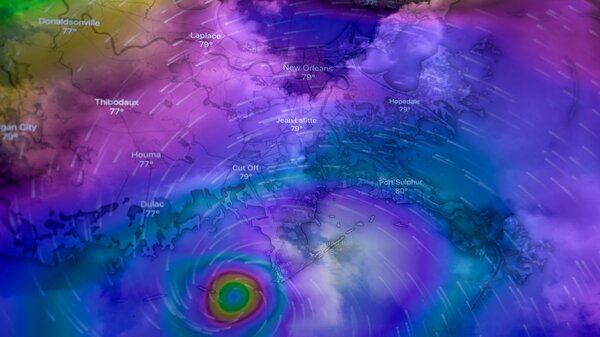
Fortunately, the 2024 hurricane season has been relatively calm. We previously blogged about steps that can be taken after your property is damaged by a hurricane or other natural disaster. (Click here to access our prior blog). With a Tropical Storm, and potential Hurricane, threatening our coast, here are some steps to consider taking to prepare before a storm arrives in the event you must make a property insurance claim for damages after the storm:

  • DOCUMENT, DOCUMENT, DOCUMENT – The best way to prove the condition of your property before damage is caused is to document it. Take pictures and videos of the interior and exterior of your home or business. Create an inventory of your contents. Narrate the video to provide better descriptions. If your property is damaged, this documentation will be used to verify its condition and make it easier for your insurer to adjust and pay your claim.
  • INSPECT YOUR PROPERTY – As you are making your preparations, you may consider taking a walk around your property to notice any prior damage to your property. Identify any issues that could affect a potential insurance claim.
  • KNOW YOUR INSURANCE COVERAGES – Make sure you are aware of the coverages that your insurance policy provides. The Declarations Page to your policy should provide much of this information – the coverage limits, types of coverage provided, deductible, etc. While your insurance agent likely maintains this for you, it is good practice to maintain and know this information, which lets you know what will or will not be covered.
  • MITIGATE YOUR DAMAGES – You can take steps to prevent damage to your property during the storm. You can pick up items around the property that could become airborne and take whatever precautions you can to prevent damage to your property, particularly the exterior. If your property is damaged, you can make temporary repairs to prevent further damage until your insurance company can get to you (like placing a tarp on the roof).

Posted by:

Disclaimer

Keogh Cox & Wilson, Ltd. provides this blog as a public service for general information only. The materials contained herein may not reflect the most current legal developments or even express the opinion of all or even most of Keogh Cox attorneys. Such material does not constitute legal advice or form any attorney-client relationship. Keogh Cox and all contributing author(s) expressly disclaim all liability to any person with respect to the contents of this Web site and Blog and expect that no reliance will be made upon the information provided.

Continue Reading

Explore legal perspectives on the issues shaping Louisiana's key industries and courtrooms.

Insight

Medical Malpractice: Can failure to communicate test results be medical malpractice?

The Louisiana Fourth Circuit Court of Appeal recently considered a medical malpractice case with an unusual set of facts. Rather than the standard medical malpractice case, where a patient argues that he was misdiagnosed and/or claims that the doctor made a mistake when administering medical treatment, in Dufreche v. Jeffery Wayne Coco, MD and Internal Medicine Specialists, Inc., 2020-CA-0030 (La. App. 4th Cir.), the patient alleged that his doctor committed malpractice by failing to communicate test results.

In Dufreche, the patient showed signs of an HIV infection. He was tested twice before being treated by the infectious disease specialist. Both tests were negative. During his examination, the infectious disease doctor thought it was unlikely that the patient had HIV, but tested him anyway at the patient’s insistence. According to the patient, he was notified by the doctor that he would be provided the results upon receipt.

Unfortunately, the test results showed that the patient was HIV positive; however, he was not contacted. Fifteen months passed, during which the patient was unaware that he was HIV positive. Because he was not contacted, he assumed he was negative. When testing by another physician showed he was positive, the patient/plaintiff filed suit to recover damages allegedly suffered through a delay in treatment and psychological shock, including a claim for “emotional distress.”

To recover, the patient was required to establish: 1) the standard of care; 2) breach of that standard of care; and 3) that the breach caused his emotional distress. At trial, the doctor testified that he required his patients to follow up in person to receive test results, and expected the patients to contact his office to schedule an appointment. The court found that expecting a patient to follow up in person to receive sensitive test results was not a breach of the standard of care. However, the evidence established that the patient was not instructed that he must schedule an in-person appointment to obtain his test results.

The Dufreche court agreed with the lower court in finding that a failure to notify the patient of the doctor’s policy was a breach of the standard of care. Further, the court found that the infectious disease specialist, who admitted to a duty to the public to protect them from HIV, had also breached his duty for failing to notify an HIV positive patient of his diagnosis for over fifteen months. The doctor’s failure to communicate the results caused the patient’s emotional distress – resulting in an award of $45,000 in damages.

Virginia “Jenny” McLin is a partner at Keogh Cox who practices in the fields of corporate litigation, insurance defense and workers compensation defense. When she is not practicing law, Jenny can be found volunteering with the Junior League of Baton Rouge; cheering for the LSU Tigers with her husband Ryan; or shuffling her two kids to and from dance practice.

Insight

An Insurer's Duty: To Defend or Not To Defend

Primary insurance policies include the duty to defend aninsured in connection with a covered loss. The insurer is sometimes presentedwith the question of whether a defense is owed when many of the allegations arenot apparently covered by a particular policy. In this circumstance, how doesan insurer determine its obligation? The law provides the answer: the “eightcorners” rule—do the four corners of the policy unambiguously exclude coveragein all respects when viewed within the context of the four corners of thepetition? If the answer is “no,” the duty to defend arises. Mossy Motors,Inc. v. Cameras America, 2004-0726 (La. App. 4 Cir. 3/2/05), 898 So.2d 602,606.

Courts generally hold that the duty to defend the caseextends to ALL claims, not just the covered claims. This duty can often provequite costly, especially when non-covered claims are high-value or involveextensive factual development or testimony to defend. In some instances, theanswer under the eight corners analysis is not so clear. The safe choice forthe insurer is to provide a defense and hire separate counsel to handle thecoverage side of the case.

In this scenario, where an insurer has serious coveragedefenses, but agrees to provide the defense, when does the duty to defend terminate?The Louisiana First Circuit Court of Appeal recently ruled on this issue againin Ponchartrain Natural Gas System, K/D/S Promix, L.L.C. and Acadian GasPipeline System v. Texas Brine Company, L.L.C., No. 2018 CA 0254 (La. App.12/12/19), stating:

“Our previous decisions in the related sinkhole appeals clearly set out the well-established rule of law that an insurer' s duty to defend terminates once the undisputed facts establish, or a judicial determination is made, that the claims asserted are not covered under the policy. See Florida Gas, 272 So. 3d at 551; Pontchartrain, 264 So.3d at 553- 54; Crosstex, 240 So.3d at 1032.”

So, the duty to defend ends when undisputed facts establishOR a judicial determination is made that the asserted claims are not covered.Of course, who is to say that the facts are “undisputed” without a judicialdetermination that confirms this conclusion. An insurer couldunilaterally determine that facts are undisputed and terminate the defensebefore a judicial determination, but if the court does not agree, the insurermay have issues. Accordingly, the safe course is to await a judicialdetermination before an insurer terminates the defense.

It is important to distinguish the duty of an excess carrierbecause such policies generally do not provide an obligation to defend.Instead, the excess carrier may exercise its “right to defend.”

Insight

Louisiana Changes Prescriptive Periods for Survival and Wrongful Death Actions

Pursuant to House Bill 291, Louisiana modified the prescriptive dates for wrongful death and survival actions. Survival actions are brought to recover damages a deceased person suffered before his or her death. For survival actions, La. Civil Code Article 2315.1 (A) now provides as follows:

If a person who has been injured by an offense or quasi offense dies, the right to recover all damages for injury to that person, his property or otherwise, caused by the offense or quasi offense, shall survive for a period of one year from the death of the deceased or two years from the day that injury or damage is sustained, whichever is longer.

A wrongful death claim can compensate the surviving family members for their own suffering following someone’s death. Similar amendments were made for the wrongful death statute. La. Civil Code Article 2315.2(B) now provides that the right of action for wrongful death prescribes one year from the death of the deceased or two years from the day that injury or damage is sustained, whichever is longer.

The changes to these articles went into effect August 1, 2025.

Christopher K. Jones

Partner
Insurance
Louisiana
Property