Insight

Privacy (Or Lack Thereof) in an Increasingly Digital Age

Published on: December 1, 2017

“Historically, privacy was almost implicit, because it was hard to find and gather information. But in the digital world, whether it's digital cameras or satellites or just what you click on, we need to have more explicit rules - not just for governments but for private companies.” -Bill Gates

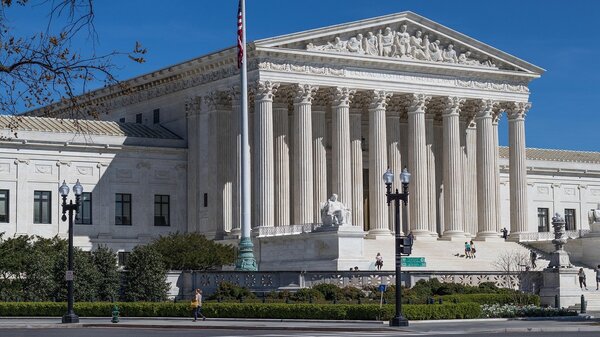
Supreme Court oral arguments were heard earlier this week in Carpenter v. United States, a closely watched case which stands to impact what privacy means in our digital age. The case will decide whether law enforcement is permitted to gather cellphone data from third-party service providers like Verizon and AT&T without a warrant. Carpenter presents the latest installment in the eternal struggle between the need for safety and the desire to prevent a surveillance state.

In Carpenter, the FBI investigated a series of robberies at Radio Shack and T-Mobile stores in Detroit. Suspecting that Carpenter was operating as a “getaway driver,” the FBI sought and obtained without a warrant the location data for his cell phone. This data revealed that Carpenter (or at least his cell phone) was near the stores at the times of the robberies­­­­­­––damning evidence.

Carpenter argued that the government’s collection of his cell photo data was a “search” under the 4th Amendment, a "search" which would require a warrant supported by “probable cause.” The government maintained that privacy concerns were addressed when law enforcement complied with the Stored Communications Act which allows law enforcement access upon a showing that the information sought is "relevant and material" to an ongoing investigation. The government further argued that there is no reason to afford greater protection to cell phone data than given to other data such as bank records and dialed telephone numbers which can be obtained without a warrant.

The issues presented in Carpenter are not new, but are magnified by the awesome power of advancing technology to track our movement and assembly with others. The Louisiana court in State v. Bone, 12-34 (La. App. 5 Cir. 9/11/12), 107 So. 3d 49, held that an exclusive user of a cell phone did not have a reasonable expectation of privacy to the call detail record log associated with the phone. The court reasoned that access to the information in the detail record log was voluntarily surrendered by the defendant to the phone’s providers. However, in United States v. Jones, 132 S. Ct. 945 (2012), the United States Supreme Court found that the installation of a GPS device on a vehicle to monitor the vehicle’s movement was a “search” under the 4th Amendment. Carpenter addresses the intersection of these two cases.

By carrying a cell phone you know can track your movements, do you lose any reasonable expectation of privacy? Or, would allowing warrantless access to this information be akin to the prohibited GPS search in United States v. Jones? The Supreme Court will soon decide. How it chooses will impact criminal litigation and by extension how cell phone data is regarded in civil suits. More importantly, it may also impact the relationship between citizens and their government.

Collin LeBlanc is a Keogh Cox partner and experienced litigator who concentrates in injury, commercial, and legal malpractice disputes. He lives in nearby Zachary, Louisiana with his wife Melissa and three all-too-active children. He is an outdoorsman, a tennis player, a cook, and a hobbyist writer.

Posted by:

Disclaimer

Keogh Cox & Wilson, Ltd. provides this blog as a public service for general information only. The materials contained herein may not reflect the most current legal developments or even express the opinion of all or even most of Keogh Cox attorneys. Such material does not constitute legal advice or form any attorney-client relationship. Keogh Cox and all contributing author(s) expressly disclaim all liability to any person with respect to the contents of this Web site and Blog and expect that no reliance will be made upon the information provided.

Continue Reading

Explore legal perspectives on the issues shaping Louisiana's key industries and courtrooms.

Insight

Oil & Gas Clean-Up Not "Capped"

Louisiana's long relationship with oil and gas has been profitable for both the oil and gas industry and Louisiana's citizens. However, the nature and extent of the duty to restore the land after drilling has often been a disputed and litigated issue. Recently, the Louisiana Supreme Court's decision in State v. Louisiana Land and Exploration Co., 2012-0884 (La. 1/30/13), - So.3d - added clarity to the law by establishing that the presence of a Court-approved remediation plan does not create a "cap" on damages.

The Louisiana Legislature passed La. R.S. 30:29 to provide a procedure for the clean-up, or "remediation," of oilfield, exploration and production sites. Before this statute, a plaintiff who was awarded monetary "remediation" damages to restore land was not obligated to actually use the money to perform remediation work. The purpose of La. R.S. 30:29 was to ensure that any money awarded to remediate polluted sites be used for this purpose. By the statute, any such award is to be deposited with the Court and spent under a Court-approved plan.

Even after the statute, it remained unclear whether a Court's approval of a remediation plan created a "damages cap" whereby the plaintiff landowner could not recover in excess of the plan. This issue was resolved in State v. Louisiana Land and Exploration Co.

The suit involved the State's action for remediation of land owned by the State and managed by the Vermilion Parish School Board. The property was allegedly polluted by oil and gas exploration performed pursuant to a mineral lease. Consistent with recovery allowed in earlier cases, the State sought to recover damages in excess of the remediation costs. Attorneys for one of the defendants filed a motion for partial summary judgment and argued that, under La. R.S. 30:29, the plaintiffs did not have a right to seek damages in excess of the amount necessary to complete the Court's remediation plan

The trial court held the plaintiffs could only recover damages equal to the amount listed in the Court's remediation plan. The appellate court overturned the trial court's decision and held that the landowner could recover damages in excess of the Court's plan, whether those damages are based on a contract or tort law. The Supreme Court affirmed the appellate court's decision and confirmed that there is no "cap" on damages.

Before and after State v. Louisiana Land and Exploration Co., an award for damages in excess of the remediation plan is available and arises from a private right in either contract or tort law. Contract damages are permitted if they are expressly provided by the contract. If contract damages are not available, tort damages may be recovered if the plaintiff shows that the defendant acted unreasonably or excessively in its exploration of gas, oil or minerals. See Terrebonne Parish School Bd. v. Castex Energy, Inc., 2004-0968, p. 10 (La. 1/9/05), 893 So.2d 789.

In view of the State v. Louisiana Land and Exploration Co. decision, oil and gas companies should be aware that they face exposure in excess of the statutory remediation plan, making them potentially liable for far more than just clean-up.

Insight

Supreme Court Rules Against Broad Application of Indemnity Provision in Engineer’s Contract

The Supreme Court ruling in Couvillion Group, LLC v. Plaquemines Parish Government, 2020 -00074 (La. 4/27/20) is a reminder that an indemnity claim must be sufficiently related to the principal demand and that contract indemnity provisions are to be strictly construed.

In Couvillion, the general contractor sued the owner of a public works port project for contract delay damages resulting from a cease work order issued to allow redesign of a fuel tank platform. When the contractor submitted its delay claim, the owner requested that its project engineer review it and make recommendations. The engineer recommended payment of a little over $1 million dollars. When the owner refused to pay, the contractor sued. In response, the owner filed a third-party demand against the engineer alleging that its recommendation was erroneous and excessive and that, if it was bound by the engineer’s recommendation, then the engineer must indemnify the owner.

On behalf of the engineer, Keogh Cox attorneys argued that the engineer should not be required to reimburse the owner for any delay costs and asked for dismissal through an exception of no cause of action. Code of Procedure Article 1111 provides that a defendant in a principal action may bring in any person who may be liable to him for all or part of the principal demand. Here, that was not the situation. The engineer was not liable to the owner for any part of the contractor’s delay claim because the engineer did not cause the delay. The delay damages were incurred before the engineer made a recommendation for payment. The events giving rise to the two claims were separate and distinct: the main demand arose from the project delay and the third- party demand arose from the engineer’s recommendation of the claim amount. The Court commented that the principal claim against the owner for delay damages was too attenuated from the owner’s claim against the engineer, thus the third-party demand was improper.

The owner also relied on the indemnity provision in the engineer’s contract that required the engineer to indemnify the owner against any and all claims for personal injury or “damages to property” that may arise from its services. The Court held that the plain meaning of the term did not include the economic-only losses related to the subject delay claim. The Court further reasoned that indemnity agreements are to be strictly construed, rejecting the owner’s broader interpretation.

Insight

Supreme Court Establishes Shifting Burden of Proof for Additional Medical Opinions (“AMO”)

Louisiana Code of Civil Procedure article 1464 allows a defendant to select a physician to perform a physical and/or mental examination of a plaintiff to challenge the plaintiff’s claimed physical and mental injuries. This is called an Additional Medical Opinion (AMO); this was previously referenced as an Independent Medical Examination (IME). Earlier this year, the Louisiana Supreme Court, outlined the “good cause” requirement of the statute—an essential element required to proceed with an AMO. But, what remained as a question was the scope of an AMO and which party had the burden to deal with requested restrictions on the physician’s medical exam. This question was answered: In Augustine v. Safeco Insurance Company of Oregon, the Louisiana Supreme Court held that after “good cause” has been shown for the examination, the party seeking to limit the scope of the AMO bears the burden to justify the restrictions.

In Augustine, a sequel to Hicks v. USAA General Indemnity Company, Et al, the Court held that if the party to be examined for the AMO, usually the plaintiff, wants to place limits upon the examination, that party then has the burden of proof to justify the need for any restrictions or limitations with competent evidence. This ruling appears to show a trend in which the Court is confirming a defendant’s ability to obtain an AMO to support its defenses to a personal injury claim. Augustine follows another Supreme Court decision from March of 2022, in which the Court held that a party establishes “good cause” for an AMO if that party shows a “reasonable nexus” between the requested examination and the condition in controversy. See Hicks v. USAA General Indemnity Company, Et al. The Hicks decision eased the hurdles that defendants faced when seeking to compel AMOs pursuant to Louisiana Code of Civil Procedure article 1464. For more information on the Hicks decision, see our prior blog here. Supreme Court Clarifies “Good Cause” for Additional Medical Opinion (“AMO”) (keoghcox.com)

In Augustine, the defendants requested an AMO. The plaintiff agreed to the examination, but the parties were unable to agree on “certain restrictions” the plaintiff sought to impose on the scope of the examination. The defendants ultimately filed a Motion to Compel regarding this issue. The District Court limited the examination to only those tests that the plaintiff’s treating physicians had performed. The District Court also noted that it did not want the AMO to turn into a “fishing expedition.” The Court of Appeal denied the defendant’s request for review of the Trial Court’s decision. The defendants then sought relief from the Supreme Court, which vacated the Trial Court’s ruling and remanded the case for further proceedings consistent with its opinion.

In its opinion, the Supreme Court set forth the burden of proof each party has in the context of a Motion to Compel an AMO. As outlined in Hicks, the party requesting the AMO initially has the burden to establish “good cause” for the AMO. Importantly, the Augustine court found that once “good cause” has been found, “the court should presume that the examination will be conducted in a reasonable manner.” Because it is presumed the examination will be conducted reasonably, if a party opposing the AMO wants to place restrictions on the examination, the burden now shifts to that party to establish “special circumstances” that justify the restrictions they request. To meet this burden, the opposing party must produce “competent evidence” to establish (1) the need for the restriction and (2) that harm that will result if the restrictions are not imposed. The type of evidence that may support AMO restrictions under Augustine likely will vary depending on the unique facts of each case. However, Hicks and its “sequel,” Augustine, provide clarification and guidance to parties seeking to compel or limit an AMO under article 1464.

Case References:

Augustine v. Safeco Insurance Company of Oregon, 2021-01753 (La. 10/1/22), __ So.3d __.

Hicks v. USAA General Indemnity Company, Et al., 2021-00840 (La. 3/25/22), 339 So.3d 1106.

Written by Chad A. Sullivan and George A. Wright

Collin J. LeBlanc

Partner
Supreme Court