Insight

When No Higher Court Remains

Published on: December 10, 2014
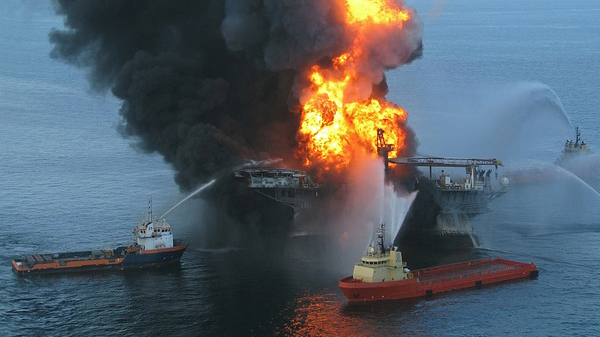
On April 20, 2010, BP's Deepwater Horizon rig exploded at a cost of eleven lives. What followed was the largest accidental marine oil spill in history. In the aftermath, BP looked for a solution, ostensibly to cap its exposure and address a swirling PR disaster. BP began to actively negotiate a settlement.

On March 2, 2012, BP agreed to a detailed settlement which set forth specific criteria for recovery under the Fund created by the Agreement. In August of that year, BP asked U.S. District Judge Carl Barbier to approve the settlement. The Agreement was approved.

Despite championing the settlement, BP later filed a lawsuit seeking to set aside the settlement, unless it was interpreted as suggested by BP. BP's challenges were rejected by the Federal District Court. Thereafter, the New Orleans-based Fifth Circuit Court of Appeals affirmed that ruling in a 2-to-1 decision. BP then applied for a Petition of Writ for Certiorari with the United States Supreme Court in a final challenge to the settlement.

About BP's legal maneuvers, Samuel Issacharoff, a New York University Law Professor, said the following: "This case is about a contract that BP signed that it now wishes it hadn't."

One of BP's primary complaints was that, in effect, the settlement could be interpreted to provide recovery for individuals or businesses who could not show a direct link between a financial downturn and the spill. In response, it was stated that the settlement was crafted to use objective measures to gauge whether losses are recoverable.

On December 8, 2014, the U.S. Supreme Court rejected BP's Petition for Writ of Certiorari. As such, the settlement agreement first proposed by BP will remain in place. No higher court remains.

Under the Agreement, potential claimants have 6 months from the Supreme Court's Petition denial to file claims.

Posted by:

Disclaimer

Keogh Cox & Wilson, Ltd. provides this blog as a public service for general information only. The materials contained herein may not reflect the most current legal developments or even express the opinion of all or even most of Keogh Cox attorneys. Such material does not constitute legal advice or form any attorney-client relationship. Keogh Cox and all contributing author(s) expressly disclaim all liability to any person with respect to the contents of this Web site and Blog and expect that no reliance will be made upon the information provided.


Continue Reading

Explore legal perspectives on the issues shaping Louisiana's key industries and courtrooms.

Insight

Treating Physician Testimony – Pitfalls for Plaintiffs & Opportunities for Defendants

A party that wants to rely upon the testimony of a treating physician to support a personal injury case in federal court should be sure to consult the Federal Rules of Civil Procedure. Different rules will apply depending on the scope of the treating physician’s testimony.

Rule 26 sets two standards for expert disclosures. 26(a)(2)(C) sets a “lower standard” that typically applies to treating physicians. Under this standard, the treating physician may provide testimony beyond his personal knowledge, but he must base his opinions on “facts or data obtained or observed in the course of the sequence of events giving rise to the litigation.” LaShip, LLC v. Hayward Baker, Inc., 296 F.R.D. 475 (E.D.La. Nov. 13, 2013). Further, the physician may be permitted to testify regarding causation and future medical treatment if these opinions come from the doctor’s actual treatment of the party.

Under this “lower standard,” the party seeking to offer the physician’s testimony, usually the plaintiff, must timely disclose: (1) the subject matter on which the treating physician is expected to present evidence; and (2) a summary of the facts and opinions to which he is expected to testify. Importantly, production of a plaintiff’s medical records alone is not sufficient – the plaintiff must actually provide a summary of the physician’s opinions. See e.g. Williams v. State, 2015 WL 5438596, at *4 (M.D. La. Sept. 14, 2015). If the party fails to timely disclose this information, he runs a substantial risk of having his testimony excluded from trial.

Where the physician’s testimony goes beyond the medical records or his treatment of the plaintiff, a “higher standard” can apply to the physician’s testimony. Rule 26(a)(2)(B). The physician may be required to produce a complete expert report to disclose: (1) a complete statement of all opinions the witness will express and the basis and reasons for them; (2) the facts or data considered by the witness in forming them; (3) any exhibits that will be used to summarize or support them; (4) the witness’s qualifications, including a list of publications authored in the last 4 years; (5) a list of all cases the expert has been used as an expert at trial or in depositions; and (6) a statement of the compensation the witness is to be paid for his work and testimony.

Application of this “higher standard” often turns on the frequency and recency of the physician’s treatment. Courts are also more likely to apply the higher standard when the physician’s opinions are based general scientific knowledge of the plaintiff’s condition rather than his actual treatment of the plaintiff.

John Grinton, a Keogh Cox associate whose practice areas include commercial and construction litigation. When he is not practicing law, John spends most of his time with his wife and son, and their two dogs.

Insight

Keogh Cox's Win Prevents Plaintiff from Recovering Louisiana Lottery Jackpot

The United States District Court for the Eastern District of Louisiana grants defendant, Circle K's, Motion to Dismiss concluding that plaintiff has no right to claim loss of opportunity to win the Louisiana Lottery Powerball jackpot, $103,100,000.00, because of an expired ticket issued in error.

This matter arose from plaintiff's purchase of two sets of Powerball tickets on or about January 19, 2012. The drawing that was the subject of the purchase was to be held on January 21, 2012 with a jackpot of $103,100,000.00. Sometime after the drawing date, plaintiff discovered the purchased tickets were printed on January 18, 2012 and worthless for the January 21, 2012 drawing. Plaintiff filed suit seeking damages in the amount of the Powerball jackpot.

After removal to Federal Court, on behalf of Circle K, Keogh Cox moved to dismiss the suit by claiming that Louisiana law affords no relief to plaintiff for the alleged claims. Specifically, Louisiana law explicitly precludes any relief to the plaintiff.

Keogh Cox cited La. R.S. 47:9009 which states "that there shall be no liability on the part of and no cause of action shall arise against the corporation, its governing board, staff, agents, vendors, or employees, arising out of or in connection with the issuance, failure to issue, or delivery of a lottery ticket."

Moreover, Keogh Cox asserted that the Louisiana Statute precludes payment of prize money on the basis of lottery tickets produced or issued in error. The United States District Court found merit in these assertions after extensive briefing and arguments by Keogh Cox attorneys, John P. Wolff, III, Nancy B. Gilbert, Richard W. Wolff and Mark Assad.

The United States District Court found that Circle K was statutorily exempt from the suit and, under the directives of the lottery itself, it is the sole responsibility of plaintiff to verify the accuracy of the game play. Plaintiff failed to do so and, as such, was barred from suit.

Insight

Appliers Beware: Louisiana Federal Court Voids Insurance Policy, Denies First-Party Hurricane Claim

Many insurance policies contain a Concealment or Fraud provision that provides no coverage where the insured concealed or misrepresented any material fact or circumstance, engaged in fraudulent conduct, or made false statements related to the insurance.

But will a court enforce the Concealment or Fraud provision to deny an insured recovery on an otherwise covered peril? According to a recent decision out of the Eastern District of Louisiana, the answer is YES.

In Fahimipour v. United Property & Casualty Insurance Company, the plaintiffs sought contractual and extra-contractual damages from their insurance carrier for damages to their residential property allegedly sustained during Hurricane Zeta. After a bench trial, Judge Morgan concluded Plaintiffs’ application for insurance included a false statement made with knowledge of its falsity and voided the insurance policy from inception, in its entirety.

Citing Talbert v. State Farm Fire & Cas. Ins. Co., the Fahimipour court noted that “Under Louisiana law, an insurance policy is voided entirely and from its inception when the insured makes a material misrepresentation in the application for insurance with the intent to deceive the insurer.” The insurer must prove by a preponderance of the evidence the following elements in order to succeed on such a claim:

(1) the insured made a false statement;

(2) the false statement was material; and

(3) the false statement was made with intent to deceive.

With regard to the first factor, the Court found the insureds obtained and read an inspection report in connection with their purchase of the property. They “were concerned enough about the findings of the inspectors to contact their real estate agent” about the issues. The insureds represented in their insurance application that the property was well maintained, and free of damage, debris, and liability hazards, despite the extensive contradictory findings in the inspection report.

Regarding the second element, the carrier’s in-house expert testified that the insurer would not have bound coverage if the application contained the information from the inspection report. Therefore, the court found the insured’s false statements were material.

The third element – intent to deceive – “must be determined from the surrounding circumstances indicating the insured’s knowledge of the falsity of the representations made in the application and his recognition of the materiality of his representations, or from circumstances which create a reasonable assumption that the insured recognized the materiality.”

In finding the insurer established the third element, the Court noted the insureds were “sophisticated users of insurance.” Evidence showed the insureds previously purchased houses for renovation and resale, owned multiple properties, submitted insurance applications before, and also submitted claims for coverage on at least three prior occasions.

Ultimately, the Court denied plaintiffs any recovery for alleged hurricane damages because of the misrepresentations they made in their application for insurance coverage.

Prior to Fahimipour,Courts had found that post-loss misrepresentations may also void a policy. In Roach v. Allstate Indem. Co., 476 Fed. App’x 778, 779 (5th Cir. 2012), the plaintiff’s house was damaged in a fire. The Fifth Circuit upheld a summary judgment that voided the plaintiff’s policy after he submitted a falsified claim that included contents not located on inspection following a fire at the residence.

The policy at issue in Roach included a similar Concealment or Fraud provision that stated the policy would provide no coverage if the insured misrepresented any material fact before or after a loss. In granting summary judgment, the district court applied the same three factors used in the Fahimipour case to find the plaintiff made material misrepresentations in his personal property claim when he claimed items not located on inspection.

While the policy in Fahimipour was voided in part because the insureds were “sophisticated users of insurance,” it remains to be seen whether a Louisiana court will void coverage based on a similar provision brought by a less sophisticated insured under a different set of facts.

However, the Fahimipour and Roach decisions show that a court can void a policy, from its inception, because of an insured’s misrepresentations, whether they occur in connection with the application for the policy or after a loss. These rulings also suggest that Louisiana law recognizes an insured also has a reciprocal duty of good faith in its relationship with its insurer.

Case References: Behnaz Fahimipour, et al. v. United Property & Casualty Insurance Company, 2022 WL 16833693 (E.D. La. Nov. 9, 2022); Roach v. Allstate Indem. Co., 476 Fed. App’x 778, 779 (5th Cir. 2012); Talbert v. State Farm Fire & Cas. Ins. Co., 971 So.2d 1206 (La. App. 4 Cir. 2007).

Christopher K. Jones

Partner
B.P.
Class Actions
Energy
Federal Courts
Gulf Oil Spill
Oil & Gas
Supreme Court