Insight

Supreme Court Abrogates Louisiana’s “Professional Rescuer’s Doctrine”

Published on: May 11, 2022
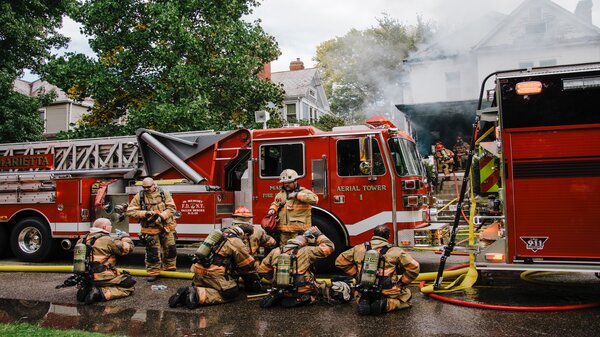
Historically, Louisiana law provided that a professional rescuer injured in the performance of his or her duties “assumes the risk” of an injury and is not entitled to damages. See Worley v. Winston, 550 So.2d 694, 696 (La. App. 2 Cir.), writ denied, 551 So.2d 1342 (La. 1989). This is known as the Professional Rescuer’s Doctrine and applied as a defense to claims raised by firefighters, policeman, and others. The doctrine prevented recovery because the professional rescuer “assumed the risk” of injury. Recently, the Louisiana Supreme Court in Doe v. McKesson, 2021-00929 (La. 3/25/22) rejected the doctrine as a bar to suit by the professional rescuer.

In Doe, the Supreme Court of Louisiana accepted a certified question from the Fifth Circuit of the United States Court of Appeals as to the viability of the doctrine. In response, the Supreme Court held that the Professional Rescuer’s Doctrine has been abrogated in Louisiana both legislatively under La. C.C. art. 2323 and jurisprudentially in Murray v. Ramada Inns, Inc., 521 So.2d 1123, 1132 (La. 1988).

The Court cited La. C.C. art. 2323(A), which provides that the fault of “all persons […] shall be determined” in a civil action. Subsection (B) of the article provides this rule applies “to any claim for recovery of damages for injury, death, or loss asserted under any law or legal doctrine or theory of liability, regardless of the basis of liability.”

In Murray, the Supreme Court previously held that the doctrine of assumption of risk no longer had a place in Louisiana tort law following the adoption of comparative fault. Nevertheless, the Murray Court identified two exceptions:

  • Cases “where the plaintiff, by oral or written agreement, expressly waives or releases a future right to recover damages from the defendant,” if “no public policy concerns would invalidate such a waiver, the plaintiff's right to recover damages may be barred on a release theory;” and
  • “[I]n the sports spectator or amusement park cases (common law’s “implied primary” assumption of risk cases).”

Murray, 521 So.2d at 1134. (internal citations omitted).

The Doe court observed that Murray provided no exception relative to professional rescuers. The Court further observed that, while the legislature had enacted statutes that bar plaintiff recovery in other settings, no such statute had been passed to codify the Professional Rescuer’s Doctrine.

Although professional rescuers injured in the performance of their duties may still be found at fault, the is no longer an automatic bar to suit.

Posted by:

Disclaimer

Keogh Cox & Wilson, Ltd. provides this blog as a public service for general information only. The materials contained herein may not reflect the most current legal developments or even express the opinion of all or even most of Keogh Cox attorneys. Such material does not constitute legal advice or form any attorney-client relationship. Keogh Cox and all contributing author(s) expressly disclaim all liability to any person with respect to the contents of this Web site and Blog and expect that no reliance will be made upon the information provided.
Continue Reading

Explore legal perspectives on the issues shaping Louisiana's key industries and courtrooms.

Insight

Louisiana Supreme Court Now Allows Direct Negligence Claims Against Employer

In a previous blog, we outlined developing law in the Louisiana appeals courts, and federal district courts in Louisiana on the issue of whether a claimant may maintain a separate cause of action against an employer for independent negligence when it is stipulated that the employee was in the course and scope of employment.1 Most courts held a claimant could not maintain a separate action against the employer under these circumstances, reasoning that the employee’s fault would impute to the employer, and therefore, additional inquiry was not appropriate. However, the Louisiana Supreme Court recently addressed the issue and stated:

“(A) plaintiff may pursue both a negligence cause of action against an employee for which the employer is vicariously liable and a direct claim against the employer for its own negligence in hiring, supervision, training, and retention as well as a negligent entrustment claim, when the employer stipulates that the employee was in the course and scope of employment at the time of the injury.” (Emphasis added) See Martin v. Thomas et al., 21-1490 (La. 12/21/21), 328 So. 3d 1164.

This holding notably overturned the 1st Circuit Court of Appeal ruling in Elee v. White, - - So.3d - - (La. App. 1 Cir 7/24/20), 2020 WL 4251974 and other Louisiana 5th Circuit Court of Appeals decisions. The Supreme Court in Martin reasoned that “the initial assessment of fault required by the law is not bypassed due to the employer-employee relationship” and “shielding a potential tortfeasor from liability is not compatible with a comparative negligence regime.” The Court further stated that the possibility that both the employee and employer may be at fault is not “subsumed” by the employer’s admission on course and scope. In fact, if the fault of the employee is shown, then the issue of whether there is also fault on the part of the employer remains and must be decided by the evidence on a case-by-case basis.

The consequences of this decision remain to be seen, but it is expected that claimants may also pursue employers separately on theories such as negligent hiring, supervision, and entrustment. The scope of such discovery will remain within the sound discretion of the trial judge.

By: John P. Wolff, III and Richard W. Wolff

1Louisiana Appeal Courts Prohibit Direct Negligence Claims Against Employer; US District Court Uses Rule to Limit Discovery - Keogh Cox

Insight

Biomechanical Testimony: Reliability Sinks Expert Testimony

Recently, the Louisiana Supreme Court rejected biomechanical testimony due to a lack of sufficient facts or data. In Louisiana, as elsewhere, the trial court is to serve as the “gatekeeper” in deciding the admissibility of expert testimony.

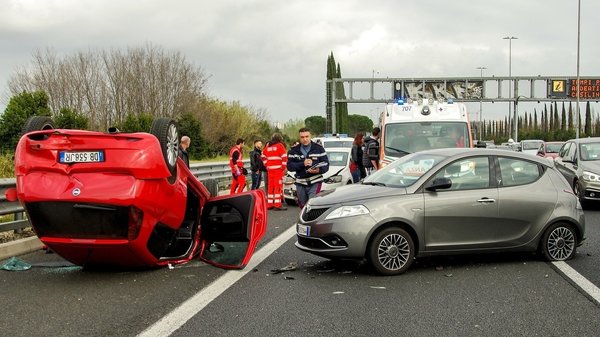
In Blair v. Coney 20-00795 (La. 4/3/20),the plaintiff sought damages for injuries caused by a rear-end collision. The defendant offered testimony from Dr. Charles E. Bain, partial owner of Biodynamics Research Corporation. Dr. Bain testified that the plaintiff was not subjected to acceleration and forces sufficient to cause lasting injuries. Dr. Bain’s testimony was based on previously conducted collision tests, photographs of the accident, and inspection of two vehicles of the same make and model.

The plaintiff moved to have Dr. Bain’s testimony excluded, claiming the testimony was irrelevant, unreliable, unduly prejudicial, and failed to satisfy the requirements of the “Daubert standard” as applied through Code of Evidence art. 702. The district court granted the plaintiff’s motion and the defendant appealed. After ordering reasons from the trial court, the appellate court reversed the trial court’s rejection of Dr. Bain. The Louisiana Supreme Court reversed.

According to the Blair Court, Dr. Bain’s testimony was properly excluded where he did not review prior medicals, inspect the vehicles involved, and made assumptions regarding the plaintiff’s body position which contradicted sworn testimony. As such, the testimony did not satisfy the reliability required for expert testimony.

The Blair Court declined to address whether Dr. Bain’s testimony satisfied any of the other requirements of Code of Evidence art. 702. The Court expressed no opinion as to Dr. Bain’s qualifications or methodology.

Insight

Renewed or Was it New? Dispute over UM Coverage in Auto Policy

Louisiana law requires UM coverage in automobile liability insurance policies in the same amount as the policy’s bodily injury liability coverage. UM coverage will be included in the policy unless the insured rejects UM coverage, selects lower limits, or selects economic-only coverage. This rejection, selection of lower limits, or selection of economic-only coverage must be made on a form prescribed by the commissioner of insurance and must be signed by the insured or its legal representative. See La. R.S. 22:1295. If a rejection form is not completed, UM coverage will be read into the policy. However, a valid UM waiver form executed for a policy of insurance remains in effect when that policy is renewed with a few exceptions. Generally, execution of a new waiver form is not required unless a new policy is issued or the liability limits increased. These basic principles were considered in the recent First Circuit decision in Johnson, et al. v. Bass, Geico General Ins. Co., and GoAuto Management Services, LLC, 2021 CA 0139 (La. App. 1 Cir. 12/22/21).

In Johnson, the plaintiff obtained a policy of insurance from GoAuto on July 17, 2015 and validly rejected UM coverage on the commissioner’s UM rejection form. The plaintiff renewed the policy multiple times and also completed an “Application for Personal Automobile Insurance” on February 23, 2018 to add her husband and an additional vehicle to the policy.

The Johnson plaintiff was in a motor vehicle accident on November 26, 2019 and claimed UM benefits under the policy. She argued that the insurance application she completed in February 2018 to add a new driver and a new vehicle to the policy created a new policy of insurance that required completion of a new UM waiver form. Because a new UM waiver form was not executed in February 2018, the plaintiff argued that UM coverage should be read into the policy. Thus, the question posed to the court was whether the 2018 policy became new or was simply a renewal. The trial court found that the policy was a renewal and dismissed the UM claim.

The First Circuit affirmed and rejected the plaintiff’s argument holding, “the language of La. R.S. 22:1295 is clear and unambiguous; only changes in the ‘limits of liability’ to an existing policy will create a new policy that requires the completion of a new UM selection form.” Despite multiple renewals, the liability limits of the policy did not change from the date it was issued through the date of the accident. Importantly, the limits also did not change when the new driver and vehicle were added to the policy in February 2018. Thus, no new policy was created. The original rejection of UM coverage remained in effect, and the plaintiff’s claims against her alleged UM insurer were dismissed.

Cole C. Frazier

Partner
Injury
Liability
Louisiana Supreme Court
Louisiana