Insight

Walking Drivers: A “Sudden” Defense to Rear-end Liability

Published on: August 2, 2016
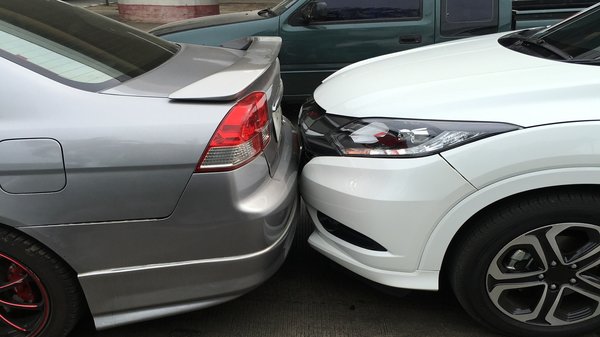
A rear-end collision is a unique animal in the law. Plaintiff’s attorneys seek them out, and insurance companies fear them­­--sometimes for good reason. The "rear-end" accident is unique because proof of the mere fact that one vehicle strikes the rear of another creates a strong legal presumption of fault under La. R.S. 32:81. While this presumption is formidable, it may be overcome.

The rear-end presumption is premised upon the duty to not follow too closely and the law will assume that the following driver breached this duty when there is impact. However, the following driver can escape liability if he shows that his vehicle was under control, that he followed at a safe distance, and that the lead driver negligently created a hazard which could not have reasonably been avoided. For instance, if it is shown that the reckless or unpredictable driving of the lead motorist created a sudden emergency, the following driver will not be at fault. Brewer v. J.B. Hunt Transport, Inc., 35 So.3d 230 (La. 2010). Once established, the sudden emergency defense trumps the “rear-end presumption.”A "sudden emergency" is created when a driver is placed in a position of imminent peril that he or she did not create through their own conduct. Hickman v. Southern Pacific Transport Company, 262 So.2d 385 (La. 1972). When a driver can demonstrate the existence of a sudden emergency, they are not negligent for failing to do what a reasonable person might have done to avoid the accident had they been given enough time to assess and react to the situation.In Jewitt v. Alvarez, 179 So.3d 645 (La. App. 2 Cir. 9/30/15), a following driver who rear-ended the vehicle of the lead driver was free from fault as a result of the sudden emergency defense where the facts revealed that the accident was solely caused by the slow speed of the lead driver (who almost came to a complete stop on the interstate) and the presence of surrounding traffic prevented the following vehicle from taking evasive action.In Carias v. Loren, 2015 WL 1019481 (La.App. 1 Cir. 3/9/15), an eighteen-wheeler was traveling in the middle lane of the interstate when a "phantom driver" moved without warning from the left lane to the middle lane and slammed on its brakes in front of the eighteen-wheeler. In attempt to avoid the collision, the driver of the eighteen-wheeler swerved to his right and impacted a vehicle which then struck the plaintiff's vehicle. The driver of the eighteen-wheeler invoked the sudden emergency defense; the court agreed and found the defendant-driver free from fault.Rear-end collisions are hard to defend, but a defendant may want to gather a clear understanding of all of the facts before accepting liability. If these facts support the sudden emergency defense, the driver may "walk."

Posted by:

Disclaimer

Keogh Cox & Wilson, Ltd. provides this blog as a public service for general information only. The materials contained herein may not reflect the most current legal developments or even express the opinion of all or even most of Keogh Cox attorneys. Such material does not constitute legal advice or form any attorney-client relationship. Keogh Cox and all contributing author(s) expressly disclaim all liability to any person with respect to the contents of this Web site and Blog and expect that no reliance will be made upon the information provided.


Continue Reading

Explore legal perspectives on the issues shaping Louisiana's key industries and courtrooms.

Insight

THE “ATTORNEY CLIENT” PRIVILEGE”: How, When (and Why) Communications between You and Your Attorney are Protected - Part 2

Part 1 of this two-part series explored the basic elements of the attorney-client privilege. Part 2 will discuss some of the restrictions to the privilege.

The privilege applies only to legal matters.

While legal advice is protected, advice that is considered “business advice” may not. Unfortunately, the line between legal and business advice is not always clear. Legal advice requires that the attorney interpret law and apply it to specific facts to do one (or both) of two things: tell the client what to do in the future or tell the client what was done right (or wrong) in the past. Business advice involves discussions about the operations of a client which are independent from legal considerations.

If the communication involves both legal advice and business advice, the general rule is that the legal advice must predominate over the business advice. See, Exxon Mobil Corp. v. Hill, 2013 WL 3293496 (E.D. La. June 28, 2013), vacated and remanded on other grounds by Exxon Mobil Corp. v. Hill (5th Cir. May 6, 2014).

The crime-fraud exception.

The privilege is also subject to the “crime fraud” exception. Communications between an attorney and client regarding either: 1) a plan or intent to commit a crime or fraud; or 2) while the crime or fraud is being committed, are not protected by the attorney-client privilege. Remember, you obtain the services of an attorney to obtain legal advice, not illegal advice. As explained by the court in State v. Menard, 02-1182 (La. App. 3 Cir. 5/7/03), 844 So. 2d 1117, the reasons for the privilege cease to operate when the legal advice refers to future wrongdoing.

Other exceptions.

The privilege also has other limitations, including the fact that it may be waived, intentionally or unintentionally, by the client. As discussed in Part 1 of this blog, the decision to include third-parties in conversations and communications (including emails) between the client and the attorney may waive the privilege. If a client sues an attorney after the relationship has terminated, the privilege is likewise waived, and the attorney can discuss privileged communications to defend himself against that suit. Similarly, if an attorney acted as a notary or witness to a document, the attorney may discuss whether a document is authentic or whether the signors were legally competent to sign. Interestingly, the privilege also does not apply to communications with a deceased client if the communications are relevant to an inheritance dispute.

The attorney client privilege offers broad protection; however, it is important to remember that this protection is not without its limits.

Insight

La. Supreme Court Rules 10-year Contract Prescription Applies to 1st Party Claims Against Insurer

In a first-party action obtained by assignment for excess liability against an insurer, the Louisiana Supreme Court in Smith v. Citadel Insurance,19-00052 (La. 10/22/19) ruled that the claim against the carrier is subject to the 10-year contract prescription period under La. law, stating:

“For the above reasons, we hold an insurer’s duty of good faith owed to its insured under La. R.S. 22:1973 does not exist separate and apart from an insurer’s contractual obligations. The duty of good faith is codified in La. R.S. 22:1973, but this duty is an outgrowth of the contractual and fiduciary relationship between the insured and the insurer, and the duty of good faith and fair dealing emanates from the contract between the parties. Thus, first-party bad faith claims against an insurer are governed by the ten-year prescriptive period set forth in La. C.C. art. 3499. Consequently, Ms. Smith’s first-party bad faith claim against GoAuto, brought pursuant to an assignment of rights from the insured, was subject to a 10-year prescriptive period and is not prescribed.”

The concurring justice noted that it was not necessary to engage in the protracted discussion concerning the duties of insurers relative to first-party claims. Nevertheless, the court offered an in-depth discussion of these duties.

Insight

Claims for Negligent Spoliation of Evidence Not Supported by Louisiana Law, Reynolds v. Bordelon

In Reynolds v. Bordelon, 2014-2362 (La. 6/30/15), — So.3d—, 2015 WL 3972370, the Louisiana Supreme Court definitively ruled that Louisiana law does not recognize a cause of action for negligent spoliation of evidence. This resolved a disputed issue of Louisiana law.

The Reynolds plaintiff was involved in a multi-car accident in which his airbag failed to deploy. His insurance company paid what was owed for the totaled vehicle under its policy and, in the normal course of business, disposed of the vehicle by auctioning it to a salvage yard. Plaintiff’s petition included a claim against the auto manufacturer for the airbag failure. It also included a claim against his insurance company and the salvage yard for failure to preserve the vehicle as evidence likely to be used in litigation.

The Supreme Court classified the insurer and salvage yard as "third parties" to the lawsuit and categorized the plaintiff's claims against them as a negligent spoliation theory. In rejecting these third-party claims, the Court declared a claim for negligent spoliation to be against Louisiana public policy.

First, the tort would not deter future conduct, but would instead penalize a party unaware of potential wrongdoing. Second, liability for such a tort would be based upon great speculation regarding the value of the evidence at issue. Lastly, it would create unnecessary litigation and place a substantial burden upon society as a whole because third parties not even aware of litigation would be required to adopt cumbersome retention policies to reduce exposure to liability.

To prevent spoliation of evidence by third parties, a plaintiff who anticipates litigation should instead enter into an agreement with the third party or obtain a court order to preserve the evidence. By doing so, the plaintiff preserves a potential breach of contract claim regarding the evidence or can seek remedies for violation of the court order in the event the evidence is lost or destroyed.

Under Reynolds, the plaintiff cannot assert a claim for negligent spoliation of evidence. However, the Court confirmed that discovery sanctions and criminal sanctions remain viable against “first parties” who intentionally destroy evidence, Further, third parties may still be liable if a plaintiff can demonstrate a breach of a contract to preserve the evidence.

Richard W. Wolff

Partner
Attorney
Collision
Insurance