Insight

What Mrs. O'Leary's Cow Has to Do With Spoliation

Published on: April 29, 2016
For more than a century, the debate has raged over whether Mrs. O'Leary and her famous cow truly started The Great Chicago Fire of 1871. Were the tragic events of that conflagration to happen today, someone would ask Mrs. O'Leary to produce the "RFID" chip in her bovine. (You know they would). They would contend that this key evidence could show the whereabouts and movement of the cow at the time the fire began. When she could not produce it, they would claim not only that she started the fire that destroyed a swath of Chicago, but that she also destroyed the evidence of her guilt. They would cry "spoliation."

"Spoliation" is the legal term for the improper destruction or alteration of evidence to prevent its use in litigation. It is also an ugly word and its presence in litigation can lead to ugly results. While this doctrine has existed in some form or the other for hundreds of years, understanding the concept may prove to be even more important now in a time when reams of documents can be stored on a "zip drive" smaller than a stick of gum and information can be maintained in a multiplicity of ways previously unthinkable.

To prove spoliation, a litigant must demonstrate that their adversary in litigation: (1) knew of a lawsuit or had a reasonable expectation that a lawsuit would follow; (2) failed to produce relevant evidence without an explanation; and, (3) participated in intentional conduct to alter, secret, or destroy the evidence. It is important to note that a defendant is not responsible under the doctrine of spoliation when the defendant’s failure to produce evidence is adequately explained.

A party who discovers that evidence has been spoliated has options. They may ask the court to enter an adverse presumption. If allowed, a court may instruct the jury that the missing or altered evidence would have been unfavorable to the party who destroyed it. Depending upon the nature and relevancy of the evidence, the court may have grounds to strike claims or defenses relevant to the evidence.

Another option is to file a formal claim against the party who spoliated the evidence. This type of claim alleges that the alleged “spoliator” impaired a party's ability to win or defend a law suit. In Louisiana, all five appellate circuit courts have recognized the tort of spoliation.

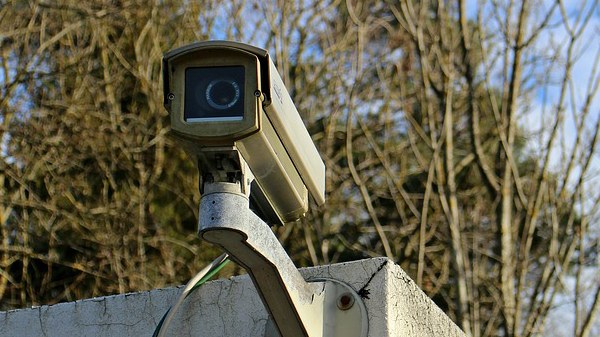
The issues surrounding spoliation have been magnified by technology. Meaningful information can now be found on almost anything: "smart refrigerators"; product sensors; a car's "black box" that may reveal the speed at the time of impact; SMS information on a phone, computer, or tablet; and on and on. Consider further the increasing scope of surveillance video recorded at businesses, schools, hospitals, and even homes, which is complicated by the fact that many systems automatically "write over" prior video in a matter of days, weeks, or months.

In short, it’s a good time for everyone to understand the doctrine of spoliation. The chance that some party will loudly proclaim that your spoliation of evidence adversely affected their case continues to increase. Being aware of the potential spoliation issues that may arise when a suit has been filed, or is expected to be filed, may save your case. It may also save you the time, money, and distraction involved in defending a claim that you have spoliated key evidence.

Posted by:

Disclaimer

Keogh Cox & Wilson, Ltd. provides this blog as a public service for general information only. The materials contained herein may not reflect the most current legal developments or even express the opinion of all or even most of Keogh Cox attorneys. Such material does not constitute legal advice or form any attorney-client relationship. Keogh Cox and all contributing author(s) expressly disclaim all liability to any person with respect to the contents of this Web site and Blog and expect that no reliance will be made upon the information provided.


Continue Reading

Explore legal perspectives on the issues shaping Louisiana's key industries and courtrooms.

Insight

Sudden Emergency Defense: Now More Dispositive

On August 28, 2015, the Louisiana Supreme Court denied a Writ Application in Leandro Carias v. Vernon A. Loren, et al. This denial signifies that the "sudden emergency" defense may be properly applied at the summary judgment level. The defense in the Carias litigation was handled by Keogh Cox attorneys Gracella Gail Simmons and Collin J. LeBlanc.

In Carias, the defendant operated his 18-wheeler traveling eastbound over the Mississippi River Bridge when, according to his testimony, a "phantom driver" abruptly entered into his lane of travel and forcefully applied their brakes. In the sliver of time allowed, the defendant sought to quickly determine if he could safely move from his lane of travel. Incorrectly, he believed that there was sufficient space in the lane to his right and impacted a truck in that lane. In turn, that vehicle rear-ended the plaintiff.

A Motion for Summary Judgment was filed and won based upon the sudden emergency defense, which provides that one is not negligent when they fail to take reasonable measures to avoid an accident when they were presented with: 1) a sudden emergency; 2) which was not of their making; and, 3) which did not allow sufficient time for deliberation. In opposition to the Motion, the plaintiff cited testimony that the defendant was "following too closely," and contended that the defendant was therefore at fault and unable to seek the protections of the defense. In response, it was argued that whether the defendant driver allowed sufficient space between his vehicle and the vehicle to the front was non-material when it was the actions of the phantom driver which exclusively created the sudden emergency.

Plaintiff appealed the grant of summary judgment to the Louisiana First Circuit. Prior to Carias, the Louisiana First Circuit had questioned whether the sudden emergency defense could ever be used at the dispositive motion stage. On this subject, the Louisiana First Circuit stated as follows in Manno v. Gutierrez, 05-0476 (La. App. 1st Cir. 3/29/06); 934 So. 2d 112, 117-118: "while we cannot say that it would never be possible to apply the doctrine on a motion for summary judgment, our research has disclosed no cases from this court that have so applied it, and by the nature of the sudden emergency doctrine, it would seem rarely appropriate on a motion for summary judgment." Nevertheless, the First Circuit upheld the Carias summary judgment finding that, unlike earlier cases, there was no conflicting testimony regarding the defendant's lack of opportunity to assess the situation or take other evasive actions.

In the Writ Application to the Supreme Court, the plaintiff cited to a "split in the Circuits" concerning whether the sudden emergency defense may be used at the summary judgment stage.  In response, it was argued that the decades of jurisprudence following the Louisiana Supreme Court’s establishment of the sudden emergency defense in Hickman v. Southern Pacific Trans. Co., 262 La. 102, 113-114, 262 So.2d 385, 389 (1972) demonstrate that the lower courts have not struggled with this doctrine and that nothing in Hickman nor the Summary Judgment Article prevent a consideration of the sudden emergency defense through motion practice.

As a practical matter, summary judgment may still be difficult to obtain in the context of the sudden emergency defense because of the highly factual context into which the defense is often sought for application. Nevertheless, after Carias, it appears likely that there is no legal prohibition to the use of the doctrine in support of a dispositive Motion for Summary Judgment

Written by:

Gracella Gail Simmons and Collin J. LeBlanc

Insight

Creating Obstacles to Frivolous Claims

The costs of litigation can be substantial, but a seldom used statute arms defendants with a tool to minimize these costs. If a defendant has not filed another pleading, La. R.S. 13:4522 allows the defendant to request that a court order the plaintiff to post a bond as security to cover certain costs. If the plaintiff fails to post this security in the time fixed, his case will be dismissed without prejudice.

The security identified in this statute can include expert witness fees, deposition costs, exhibit costs, and other related expenses. The defendant bears the burden of showing the amount needed for proper security. If a plaintiff’s damages are questionable, or preliminary investigation shows that the plaintiff might be apportioned most of the liability for the incident, the attorney filing the suit may think twice before pursuing the claim further, especially if a substantial amount of security is ordered.

By its terms, the statute does not apply to cases brought in forma pauperis. It also does not apply to claims filed in the Parish of Orleans. Everywhere else, the provisions of La. R.S. 13:4522 can add a layer of protection in the defense of frivolous claims.

John Grinton is a Keogh Cox associate whose practice areas include commercial and construction litigation. When not practicing law, John spends most of his time with his wife and son, and their two dogs.

Insight

When a Settlement Is Not a Settlement

Louisiana law favors the settlement of disputes. With a settlement, both sides agree to avoid costly litigation and obtain a certain, negotiated result. While neither side is completely happy with the result in a typical settlement, the case is at least closed and the financial and emotional drain of litigation is ended. But the recent decision in The Marietta Trust and The Warren Trust v. J.R. Logging, Inc., Fair Hills Farm, LLC, Jerry Avants, Jr., Thomas Keaty, Jr. and XYZ Insurance Company, 2016 CA 1136 (La. App. 1 Cir. 5/11/17) shows what can happen when one of the parties change their mind. This case is important because it calls into question whether an exchange of emails is sufficient to reach a final settlement.

The Marietta Trust case involved a dispute regarding the wrongful cutting of timber and the parties seemingly came to a resolution. Via email, the case was negotiated and the terms were agreed upon. Formal settlement documents were drawn up and money was exchanged. However, when the time came to execute the final documents, one set of defendants refused to sign the paperwork. This refusal to sign came after the attorney for these defendants directly stated in an email that his "clients have agreed to the settlement." Id. at *4. In response to the refusal to sign, the other parties filed a Joint Motion to Enforce Settlement Agreement which was denied by the Trial Court.

Settlement agreements are governed by the Louisiana Civil Code art. 3071 which provides that litigation can be resolved via settlement or compromise. A settlement agreement can take two forms: 1) recitation in open court; or 2) a writing. “The purpose of the writing requirement is to serve as proof of the agreement and the acquiescence therein.” Marietta Trust, 2016 CA 11336, Id. at *3. The writing must be signed by the parties or their agents. “Until the parties sign a written document or documents evincing their consent to the terms of the proposed agreement, a party is free to change his or her mind.” Id. at *3. Prior courts have found that emails meet the "writing" requirements. See, Geer v. BP America Production Co., 2014-450 (La. App. 3 Cir. 11/5/14), 150 So. 3d 621; Dozier v. Rhodus, 2008-1813 (La. App. 1 Cir. 5/5/09), 17 So. 3d 402.

The appellate court in Marietta Trust refused to enforce the "settlement." The court found that the exchange of emails was insufficient to meet the "writing" requirement of Civil Code article 3071 because neither the emails nor any other evidence showed that the attorney possessed "the express consent necessary to accept the terms of the settlement." Id. at *3.

When is a settlement not a settlement? Maybe when it came to you through your inbox. So, if an email from the attorney is not sufficient to perfect a settlement, what can we do? The answer offered by the 1st Circuit is to either: 1. Recite in open court; or 2. Obtain a writing that includes the client’s express consent given to the attorney to settle the case (presumably for the amount in the writing).

No items found.
Litigation
Torts