Blog
Explore news, articles, outcomes, and legal resources by category or practice area.
Thank you! Your submission has been received!
Oops! Something went wrong while submitting the form.
deselect
No items found...
INSURANCE- In Byrnside v. Hutto, 2013 WL 692474, the Second Circuit affirmed a decision excluding insurance coverage for injuries sustained by the plaintiff in a bar fight. The Court held that, where the actions of the defendant were intentional and reasonably calculated to produce harm or injury, coverage for such injuries is excluded under the intentional acts exclusion contained in the policy. The Court indicated that the intentional acts exclusion would not have applied in the case of self-defense. However, the factual finding that the defendant ordered the persons holding the plaintiff to release him, only to then "immediately hit Byrnside in the face" offered ample factual support for the rejection of self-defense.PRESCRIPTION- In Howard v. Mamou Health Resources, 2013 WL 811676, the Third Circuit affirmed an exception of prescription in favor of a "qualified health care provider" as defined in Louisiana Revised Statutes title 40, section 1299 et seq, where the plaintiff filed suit in district court against the health care provider within a year of the incident, but failed to file a claim with the Patient's Compensation Fund within that time period. The Court found that the timely filing of suit against a qualified health care provider in the district court neither suspends nor interrupts the one-year prescriptive period for the filing of medical malpractice claims.PUNITIVE DAMAGES- In Rachal v. Brouillette, 2013 WL 950355, the Third Circuit was presented with evidence that the defendant/tortfeasor was under the influence of hydrocodone and marijuana and that his impairment caused him to strike a mother and her two children walking near the roadway. The jury awarded substantial damages including $100,000 in punitive (exemplary) damages.The Third Circuit cited to the principle that an award of punitive damages will not be disturbed on appeal absent a showing that the jury's decision was manifestly erroneous or clearly wrong. Nevertheless, the Court held that the award of $100,000 was abusively low under the facts presented and increased the punitive award to $500,000. The defendants argued that no punitive damages were recoverable because the tortfeasor had only a "small amount" of drugs in his system and was not impaired. In rejecting this argument, the Court stated:"This 'small amount of drugs' was apparently enough to cause Mr. Brouillette to drive erratically at a high speed, kill three people, and not remember any of it."In support of its decision, the Court cited to a wide range of facts including the fact that the tortfeasor's prior conviction for driving while intoxicated had not served as a sufficient deterrent.
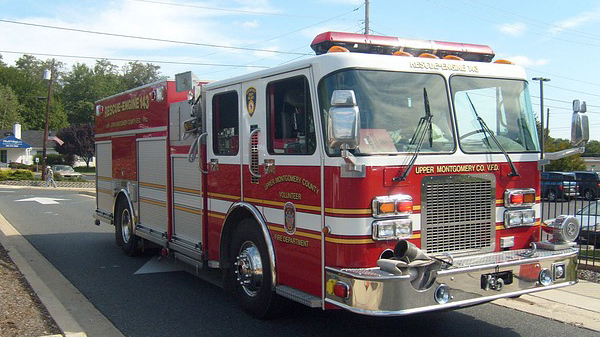
The Louisiana Supreme Court recently held that the workers' compensation tort immunity provided by LSA-R.S. 23:1032 does not apply to suits by one volunteer fireman against another volunteer. See Champagne v. American Alternative Insurance Corp., 12-1697 (La. 3/19/13), -- So.3d ---. LSA-R.S. 23:1036 provides that workers' compensation is the sole and exclusive remedy provided to a volunteer fireman against a fire company. Champagne clarified that this immunity does not similarly apply to claims for personal injury brought by one volunteer fireman against another.
The last sentence of LSA- R.S. 23:1036(A) states as follows:
The remedies provided herein shall constitute the exclusive remedy of the volunteer member against the fire company as provided in R.S. 23:1032.
In Champagne, the attorney for the defendants argued that the legislature's incorporation of LSA-R.S. 23:1032 reflected the intent to extend immunity beyond the language provided by LSA-R.S. 23:1036(A). The defendants asserted that this last sentence has internal inconsistencies; the first portion of the sentence "standing in isolation, can be read to limit workers' compensation immunity solely to the fire company, whereas its last phrase specifically incorporates La. R.S. 23:1032, which applies workers' compensation tort immunity to officers and employees of the employer or principal." Defendants further argued that, "to not include co-volunteers as co-employees under La. R.S. 23:1032 is to render the phrase, 'as provided in La. R.S. 23:1032,' superfluous and meaningless."
The Supreme Court disagreed with the defendants' statutory interpretation arguments. The Court stated: "[t]he fundamental question in all cases of statutory construction is legislative intent and the reasons that prompted the legislature to enact the law." In assessing the legislative intent, the Court gave a "narrow construction" of the statute because the statute sought to provide immunity in derogation of "the delictual rights of injured workers existing in the Louisiana Civil Code." Under this narrow construction, "every presumption should be on the side of preserving the general tort or delictual rights of an injured worker..."
Utilizing a narrow (or "strict") construction of LSA-R.S. 23:1036, the Court found that the legislature did not expressly provide immunity to volunteer firemen. Further, the Court did not find intent to provide such immunity in the legislative history.
Champagne is not the first time a Louisiana court has commented on the application of Louisiana's Workers' Compensation Law to volunteer firemen. In 1994, the First Circuit held that a volunteer fireman was not an "employee" of the fire district and therefore was not eligible for workers' compensation benefits. See Genusa v. Pointe Coupee Volunteer Fire Dist. No. 4, 93-2214 (La. App. 1 Cir. 10/7/94); 644 So.2d 851. The Genusa Court reasoned that workers' compensation did not apply when there was no employer-employee relationship, and that an employer-employee relationship does not exist without compensation.
The Champagne Court expressed its belief that LSA-R.S. 23:1036 was likely enacted in response to Genusa. However, the statute only granted volunteer members of fire companies "some workers' compensation benefits" and did not change "the law to define a volunteer member... as an 'employee' of the fire company for the purposes of immunity under the workers' compensation law." Emphasis added.
Both the Supreme Court and the appellate court in Champagne observed that a denial of immunity to volunteer firemen "may make members of the community reluctant to act as volunteers at their local department." However, the legislature did not clearly provide for such immunity according to Champagne. It would not be surprising to see the Louisiana legislature address the issue of immunity for volunteer firemen moving forward.

The Louisiana Supreme Court recently held that a district court must reconsider a case involving a seventeen year old who was sentenced to life in prison without the possibility of parole for second degree murder under a mandated penalty provision of a statute. See State of Louisiana v. Darrius R. Williams, 12-1723 (La. 03/08/13), --So.3d---. The defendant's application for review to the Louisiana Supreme Court was pending when, Miller v. Alabama, 567 U.S. ___, 132 S.Ct. 2455, 183 L.Ed.2d 407 (2012), was decided by the United States Supreme Court.
In Miller, the United States Supreme Court found that "the Eighth Amendment forbids a sentencing scheme that mandates life in prison without possibility of parole for juvenile offenders." The Miller Court additionally stated that "[a]lthough we do not foreclose a sentencer's ability to make that judgment in homicide cases, we require it to take into account how children are different, and how those differences counsel against irrevocably sentencing them to a lifetime in prison." Miller, 567 U.S. at ____, 132 S. Ct. at 2469.
The Williams Court found that "the Miller court did not establish a categorical prohibition against life without parole for juveniles" in homicide cases but did establish the requirement "that a sentencing court consider an offender's youth, and attendant characteristics as mitigating circumstances before deciding to impose" a life sentence without the possibility of parole on a juvenile." The requirement to consider the age and attendant characteristics of juveniles as mitigating circumstances before sentencing is the Williams Court's interpretation of Miller's mandate that the sentencer "take into account how children are different, and how those differences counsel against irrevocably sentencing them to a lifetime in prison." Id.
On remand, the district court is to reconsider the sentence of a juvenile to life in prison without the possibility of parole "after conducting a new sentencing hearing in accordance with the principles enunciated in Miller v. Alabama." State v. Williams, (La. 03/08/13), -- So.3d at ---.

The Louisiana Supreme Court recently held that a request for service of process made by facsimile filing within ninety days from the filing of the petition, but not perfected until after the ninety days has passed, is a timely request for service of process under LSA-C.C.P. art. 1201. See Brenda Morales and Jerson Rodriguez v. State of Louisiana Through the Board of Supervisors of LSU Through Earl K. Long Medical Center, 12-2301 (La. 1/11/13), --So.3d---.
In reaching its decision, the Morales court addressed whether Louisiana's Facsimile Filing Statute, LSA- R.S. 13:850, required both the payment of fees and the receipt of the original request for service before service is considered to have been requested. Under Louisiana procedure, the petitioner has 90 days to request service upon all defendants. See LSA-C.C.P. art. 1201. When service is not timely requested, the case can be involuntarily dismissed without prejudice on the motion of another party. See LSA-C.C.P. art. 1672(C). This dismissal can result in a later bar to the claim if the re-filed suit is then prescribed and the defendants can show bad faith in the failure to request service or the suit involves a claim against the state or a political subdivision of the state.
In Morales, the Louisiana First Circuit had found that the request for service was not timely because the fax filing fees were not paid by the attorney until after the ninetieth day. The First Circuit relied on the Louisiana Supreme Court's previous ruling in Trachant v. State of Louisiana, Louisiana State University Health Sciences Center, 08-0978 (La. 1/21/09), 5 So.3d 832 which stated that "[a] valid request for service under La. R.S. 13:6107(D)(1) is made when the clerk receives the request for service and can then act on it." The First Circuit reasoned that a clerk cannot act upon a request for service when there is no original request and the corresponding fees had not been paid. However, Trachant did not involve fax filing and instead considered whether a request for service is effective when it is placed in the mailbox or when it is received by the clerk. This is sometimes referred to as the "mailbox rule." The Trachant court held that actual receipt of the request was required.
The Louisiana Supreme Court in Morales disagreed with the First Circuit and found that the clerk can "act upon" receipt of the facsimile filing. The Court emphasized that LSA- R.S. 13:850(A) provides that a facsimile filing "shall be deemed complete at the time that the facsimile transmission is received and a receipt of transmission has been transmitted to the sender by the clerk of court." The Morales Court harmonized its ruling with Trachant by finding that the Court has always held that the receipt of the request must occur within the 90 day period.
Even after Morales, a request for service of process should be followed by the prompt mailing of the original signed document and the required transmission fee. However, Morales indicates that Louisiana's highest court is likely to give consideration to preserving a claim when interpreting the otherwise strict requirements of Louisiana's Facsimile Filing Statute.

Louisiana's long relationship with oil and gas has been profitable for both the oil and gas industry and Louisiana's citizens. However, the nature and extent of the duty to restore the land after drilling has often been a disputed and litigated issue. Recently, the Louisiana Supreme Court's decision in State v. Louisiana Land and Exploration Co., 2012-0884 (La. 1/30/13), - So.3d - added clarity to the law by establishing that the presence of a Court-approved remediation plan does not create a "cap" on damages.
The Louisiana Legislature passed La. R.S. 30:29 to provide a procedure for the clean-up, or "remediation," of oilfield, exploration and production sites. Before this statute, a plaintiff who was awarded monetary "remediation" damages to restore land was not obligated to actually use the money to perform remediation work. The purpose of La. R.S. 30:29 was to ensure that any money awarded to remediate polluted sites be used for this purpose. By the statute, any such award is to be deposited with the Court and spent under a Court-approved plan.
Even after the statute, it remained unclear whether a Court's approval of a remediation plan created a "damages cap" whereby the plaintiff landowner could not recover in excess of the plan. This issue was resolved in State v. Louisiana Land and Exploration Co.
The suit involved the State's action for remediation of land owned by the State and managed by the Vermilion Parish School Board. The property was allegedly polluted by oil and gas exploration performed pursuant to a mineral lease. Consistent with recovery allowed in earlier cases, the State sought to recover damages in excess of the remediation costs. Attorneys for one of the defendants filed a motion for partial summary judgment and argued that, under La. R.S. 30:29, the plaintiffs did not have a right to seek damages in excess of the amount necessary to complete the Court's remediation plan
The trial court held the plaintiffs could only recover damages equal to the amount listed in the Court's remediation plan. The appellate court overturned the trial court's decision and held that the landowner could recover damages in excess of the Court's plan, whether those damages are based on a contract or tort law. The Supreme Court affirmed the appellate court's decision and confirmed that there is no "cap" on damages.
Before and after State v. Louisiana Land and Exploration Co., an award for damages in excess of the remediation plan is available and arises from a private right in either contract or tort law. Contract damages are permitted if they are expressly provided by the contract. If contract damages are not available, tort damages may be recovered if the plaintiff shows that the defendant acted unreasonably or excessively in its exploration of gas, oil or minerals. See Terrebonne Parish School Bd. v. Castex Energy, Inc., 2004-0968, p. 10 (La. 1/9/05), 893 So.2d 789.
In view of the State v. Louisiana Land and Exploration Co. decision, oil and gas companies should be aware that they face exposure in excess of the statutory remediation plan, making them potentially liable for far more than just clean-up.
LEGAL MALPRACTICE- Plaintiffs sued in legal malpractice after their medical malpractice action was dismissed as untimely. The legal malpractice suit was filed even though the dismissal of the plaintiffs' medical malpractice action was pending appeal. When the dismissal of the medical malpractice action was reversed and the medical malpractice action was reinstated, the plaintiffs refused to dismiss the legal malpractice action.The plaintiffs continued to pursue their attorneys arguing that a failure to properly defend the exception in the medical malpractice action caused damages in the form of additional legal fees incurred in the appeal. Under these facts, the Louisiana Fourth Circuit in Thibodeaux v. Braud & Gallagher, L.L.C., 12-0904 ( La. App. 4 Cir. 1/31/13), --So. 3d --- upheld a dismissal of the legal malpractice suit.The Braud Court reasoned that the plaintiffs could not show the prerequisites to legal malpractice because the underlying suit was, in fact, timely. The plaintiffs postulated that the dismissal could have been avoided had their attorneys made better arguments in the lower court. On this subject, the Braud Court stated:[W]e cannot suppose that a single ineffective (or even unsound) argument in the trial court can constitute actionable negligencewhen the party ultimately prevails on the very issue to which the ineffective argument was addressed.In its analysis, the Fourth Circuit reaffirmed the principle that an attorney need not make the best argument or identify every legal issue involved. Instead, the attorney's actions will be judged by the standard of the lowest acceptable conduct of a reasonable practitioner under the circumstances.ALLOCATION OF FAULT- a comparison of fault among multiple actors is an inherently subjective process. To add guidance to this otherwise inconsistent process, the Louisiana Supreme Court long ago set forth a number of factors which should be used to guide this analysis. These factors, known as the "Watson Factors," ask the trier of fact to consider the following:1) Whether the conduct resulted from inadvertence or involved an awareness of the danger;2) How great a risk was created by the conduct;3) The significance of what was sought by the conduct;4) The capacities of the actor, whether superior or inferior; and,5) Any extenuating circumstances which might require the actor to proceed in haste, without proper thought.The recent First Circuit decision in Guitreau v. City of Gonzales, 12-0794 (La. App. 1 Cir. 2/13/13), 2013 WL 557018 is an excellent example of the use of the Watson Factors.In Guitreau, the Louisiana First Circuit reversed the lower court's fault allocation and held a police officer 75% at fault when he pulled into the oncoming lane of travel and began to pass vehicles in pursuit of an alleged seatbelt violator. Although the officer used flashing blue lights and a "yelp" siren, the plaintiff did not see or hear these warnings. The plaintiff was injured when she took a left hand turn and her vehicle was struck by the officer's vehicle. The plaintiff was held 25% at fault because of the high duty of care imposed upon a driver making a left hand turn.Applying the Watson Factors, the Court felt that the plaintiff's conduct was mere inattentiveness, whereas the officer's conduct was a conscious decision (Watson Factor #1). The risk created by the officer's conduct was also greater than that presented by the plaintiff's conduct (Watson Factor #2). The Court observed that the pursuit of a suspected seatbelt violator was a "non-emergency situation." Had the officer been pursuing a kidnapper or wanted murderer, then the significance of what was sought through his conduct (Factor #3) would have been greater and the allocation of fault may have been very different.AGENCY PRINCIPLES- the Louisiana Third Circuit upheld a dismissal in favor of defendants in Henry v. Zurich American Insurance Company, 12-888 (La. App. 3 Cir. 2/6/13), -- So. 3d. ---. In Henry, the owner of a race horse sued a veterinarian when the race horse "Toolights Ruckus" died from a reaction to anesthesia. The owner asserted that he had not given any consent to the procedure such that the veterinarian should be held liable for the consequences of the non-authorized treatment. The owner contended that the trainer who took the horse to the clinic was not the owner and did not possess authority to consent to non-routine care.The veterinarian responded that it reasonably believed that the trainer was in fact the owner of the horse. In rejecting the claim against the veterinarian, the Henry court held that the failure to obtain consent lied with the trainer or, alternatively, that the trainer did in fact have sufficient authority to act on behalf of the owner as his representative, or mandate. The Court also implied that the owner would have consented to the procedure had his consent been necessary.In its discussions, the Third Circuit reaffirmed that allegations of veterinarian malpractice will be assessed under the same standards which govern medical malpractice claims.

The Louisiana Supreme Court recently struck down legislation which sought to regulate the charter of the Louisiana High School Athletics Association, Inc. (LHSAA). See Louisiana High School Athletics Association, Inc. v. State, 2012-1471 (La. 1/29/13), - So.3d -. This is a significant development because it allows the LHSAA to govern much of high school athletics without state interference.
The LHSAA was formed in 1920 to promote and regulate interscholastic athletic competition in Louisiana. In 1988, the LHSAA reorganized itself as a private, non-profit corporation. Membership in the corporation is voluntary and its members include both private and public schools. The LHSAA's charter states that its bylaws can only be amended by a majority vote of its members present and voting at a regular meeting.
Prior to the Louisiana Supreme Court ruling, the LHSAA enacted regulations: prohibiting a student's participation in athletics for one year if the student transfers to a new school; defining what is a "family" for purposes of complying with residency requirements; and, prohibiting home school students from sports unless they enroll in a member school.
In response to controversy over these regulations, the Legislature passed various laws to limit the impact of the LHSAA regulations. For instance, La. R.S. 17:176(G) expanded the definition of "family" to allow students to more easily comply with LHSAA's good faith change of residence rule. Additionally, LSA-R.S. 17:236.3(A) required the LHSAA to allow home school students to participate in athletics without enrolling in a LHSAA member school.
The State took the position that it possessed the authority to enact the statutes because public education is under Legislative control and the LHSAA performs significant administrative functions affecting public education. It argued that the laws were a legitimate expression of governmental power and designed to allow parents and students to optimize the best learning environment, without sacrificing participation in athletics.
The LHSAA opposed these statutes, arguing that the statutes violated the Louisiana Constitution. The trial court agreed with the LHSAA and declared the statutes unconstitutional. Thereafter, the Louisiana Supreme Court exercised its appellate jurisdiction and accepted writs.
The Supreme Court noted that the Louisiana Constitution prohibits the Legislature from passing a local or "special law" regarding certain enumerated subjects, including amending, renewing, extending or explaining the charter of a private corporation. LA. CONST. art. III, § 12(A)(7). The Court held that these statutes were improper "special" laws which arbitrarily singled out the LHSAA and, in effect, re-wrote the LHSAA's bylaws.
The Court found that the Legislature essentially modified the LHSAA charter to allow the Legislature, as a non-member, to amend the LHSAA bylaws without any approval of the LHSAA or its members. As such, the statutes were unconstitutional.
The impact of the Court's ruling may reach beyond the arena of athletics. While the particular facts of this case involve participation in high school athletics, the decision reinforces the policy of this state to allow private institutions to self-govern their affairs. As such, this decision shows the Supreme Court's willingness, at least for the time being, to halt to the gradual expansion of State power.

The Louisiana Supreme Court recently held that an insurance agent's negligent handling of a claim did not justify an award for mental anguish in Prest v. Louisiana Citizens Property Corp., 2012-0513 (La. 12/4/12). In Prest, it was alleged that the agent negligently failed to process a request for increased insurance sent more than 10 days prior to Hurricane Katrina.
Based upon representations from their agent, plaintiffs believed their property was insured up to the requested amounts for Katrina-related damages. However, the insurance company denied the additional coverage because the request for additional coverage was not reviewed.
The plaintiffs filed suit and settled the claim for insurance benefits. They reserved in the settlement the right to pursue a negligence claim against their insurance agent and took that claim to trial.
At trial, the Trial Court found the agent negligent and awarded damages to include a $75,000 award for "frustration, inconvenience and mental anguish." The Fourth Circuit affirmed. The Supreme Court likewise upheld the finding of negligence. However, it reversed the award for mental damages.
Generally, if a defendant's conduct is merely negligent and only causes mental disturbance without physical injury, the defendant is not liable for damages. Moresi v. State, 567 So. 2d 1081, 1095 (La. 1990). An exception to this rule exists when there is a likelihood of genuine or serious mental distress arising from "special circumstances."
The Supreme Court did not feel that the facts involving the additional insurance created "special circumstances" sufficient to disregard the general rule that emotional damages are not recoverable in the absence of physical injury. In its ruling, the Court acknowledged that the plaintiffs were likely stressed and inconvenienced by the insurer's failure to pay. Nevertheless, the Court did not find that the plaintiffs' stress was any greater than that experienced by a host of Louisiana citizens affected by Hurricane Katrina.