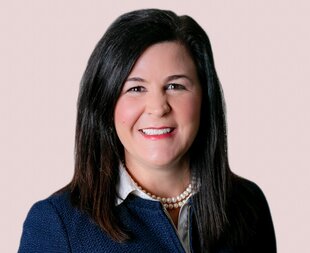
Catherine S. Giering

Partner

About

Catherine (“Cathy”) Saba Giering joined the firm as a partner in October 2020.  Prior to joining our firm, Cathy served as Court Attorney for the United States District Court for the Middle District of Louisiana. Her service included providing procedural and substantive advice to the Court; conducting legal research; reviewing case records; drafting proposed opinions, rulings and orders; providing objective advice to the judges and staff; occasionally conferring with counsel; analyzing complex legal issues; working on deadline; and providing proposed solutions to matters.

Prior to entering public service, Cathy was a litigator for almost 20 years in Baton Rouge and Lafayette, Louisiana.

Cathy has successfully represented clients in jury and bench trials in Louisiana state and federal courts for over 20 years.  Local judiciary and attorneys highlight Cathy’s command of the rules of evidence and organized approach to oral argument and trial as among her greatest strengths. She also routinely represents clients in mediation, having mediated well over 1,000+ cases.

When practicing and prior to her work with the Middle District, Cathy’s representative clients ranged from the small locally-owned business to the large, complex corporation. She has successfully defended clients in general liability, premises liability, construction, professional liability, personal and commercial auto/transportation, products liability, insurance agents and brokers, admiralty and maritime matters (both land-based and offshore, including contract negotiations and litigation), healthcare litigation, and complex personal injury and property damage matters.

The Louisiana Association of Business and Industry (“LABI”) periodically assembles task forces to advise LABI.  Members of the task forces are nominated by LABI Board members and associated interests state-wide.  Cathy was named to LABI’s Legal Advisory Council Task Force in March 2021.  The Legal Advisory Council members bring knowledge and insight from the daily practice of law to LABI’s advocacy.  This task force was created to guide LABI and its board on important legal topics like civil justice policy, amicus brief participation, judicial administration and structure and political positions.

Recently, Cathy was honored by Emerge as a Baton Rouge Area Volunteer Activist for her commitment and service to the Greater Baton Rouge community.

Cathy is a mission-driven, experienced professional capable of providing proactive advice and services in legal, regulatory and policy matters associated with organizational activities and governance. Her work with corporate clients on a variety of non-litigation matters, ranging from contract negotiations, employment matters, compliance and governance issues, and minimizing risk and exposure, has demonstrated astuteness and attention to detail, integrity, discretion and adaptability to a broad range of issues, people and situations, as both a leader and member of inclusive teams.

  • American Bar Association, Member (1999 to present)
  • Federal Bar Association, Member (2015 to present)
  • Louisiana State Bar Association, Member (1999 to present)
    • Professionalism Orientation Panel (2005; 2022)
    • High School Essay Contest Competition Judge (2006)
    • Young Lawyers Awards Selection Committee (2007)
    • Insurance, Negligence and Workers’ Compensation Section
    • Admiralty and Maritime Law Section
    • Employment and Labor Law Section
  • Baton Rouge Bar Association, Member (2004 to present)
    • Board of Directors, Director-at-Large (2026)
    • Membership Committee (2004-2006)
    • Moot Court Competition Judge (2006)
    • Young Lawyers Council (2006-2011)
      • Chair (2010-2011)
    • Bench Bar Conference Committee (2018 to present)
      • Committee & Conference Chair (2018 to present)
  • Louisiana Hospital Association Society of Hospital Attorneys (2022 to present)
  • LABI's Legal Advisory Council Task Force (2021 to present)
  • Louisiana Association of Defense Counsel (1999-2012)
  • Defense Research Institute (2004-2012)
    • Professional Liability Committee
    • Insurance Practice Committee
    • Products Liability Committee
    • Admiralty and Maritime Committee

  • Greater Baton Rouge Business Report and Capital Area United Way “50 for the Future” (2008)
  • “Best Dressed” of Baton Rouge (2008; benefiting the American Cancer Society)
  • Greater Baton Rouge Business Report “Forty Under 40” (2010)
  • Baton Rouge Area Chamber Leadership Baton Rouge (2013)
  • Baton Rouge Bar Association Judge Joseph Keogh Award (2013)
  • LSU Greek Excellence Award (2016)
  • Baton Rouge Bar Association President’s Award (2020)
  • Baton Rouge Area Volunteer Activist Honoree (2022)

  • Junior League of Baton Rouge
    • Active Member (2004-2014)
    • Sustaining Member (2014 to present)
    • President (June 1, 2013-May 31, 2014)
  • Foundation for Woman’s Hospital
    • Inaugural Board of Trustees (2015 to present)
      • Chairman of the Board (2023)
    • Woman’s Impact Society (2015 to present)
    • Strategic Planning Committee (2018 to present)
    • Executive Committee (2020 to present)
    • Governance and Nominating Committee (2020 to present)
  • Mary Bird Perkins Cancer Center
    • Board of Directors (2018 to present)
    • Marketing Committee (2018 to present)
    • Nominating Committee (2020 to present)
    • Professional Affairs Committee (2018 to present)
    • Governmental Affairs Committee (2026 to present)
  • Our Lady of the Lake Children’s Hospital Family Advisory Council (2016 to 2019)
  • Franciscan Missionaries of Our Lady University (formerly Our Lady of the Lake College)
    • Development Board (2014)
  • LSU Rural Life Museum Board of Trustees (2015 to 2019)
  • Forum 35 (2005-2012)
    • John Barton, Sr. Community Leadership Fellow (2006-2008)
  • Charles W. Lamar Jr. YMCA Board of Directors (2005-2008)
    • Chair (2007-2008)
  • River City Jazz Coalition (2007 to present)
  • LSU Alumni Association (2001 to present)
  • LSU Foundation (2001 to present)
  • Friends of the LSU Rural Life Museum (2001 to present)
  • Manship Theatre (2007 to present)
  • Tiger Athletic Foundation (2001 to present)
  • University Laboratory School Foundation (2007 to present)
  • University Laboratory School Cub Club (2012 to present)
    • Board of Directors, Secretary (2015-2018)
    • Board of Directors, Vice Chair (2018 to 2020)
    • Board of Directors, Chair (2020 to 2021)

Practice Areas

Education

  • Louisiana State University at Baton Rouge, B.A., 1996
  • Louisiana State University, Paul M. Hebert Law Center, J.D., 1999

Admissions

  • Louisiana, 1999
  • U.S. District Court of the Eastern District of Louisiana, 1999
  • U.S. District Court of the Western District of Louisiana, 1999
  • U.S. District Court of the Middle District of Louisiana, 1999
  • U.S. Court of Appeals, Fifth Circuit, 2007
  • U.S. Supreme Court, 2017

Accolades

Recent Articles by This Attorney

Explore this author's legal perspectives on issues shaping Louisiana.

Insight

Court Finds University Not Liable for Criminal Act of its Student

A Louisiana court recently granted a motion for summary judgment in a case involving third-party criminal activity on a university campus. The motion initially was denied, but the Louisiana Supreme Court remanded the motion for reconsideration in light of its ruling in Evans v. Abubaker, Inc. After considering Evans in the context of a claim brought against an institution of higher learning, the court found Grambling University had no duty to provide additional security measures and could not have done anything within its scope of duty to prevent the murder of one of its students. See Augman v. Grambling State University.

In Augman, the plaintiff’s son, a student at Grambling University, was fatally shot at a party on the Grambling campus by another Grambling University student. The established facts confirmed the social gathering was on campus, that alcohol was consumed at the party, and that guns were present. In applying Evans to a higher education context and granting Grambling University’s Motion for Summary Judgment, the Third Judicial District Court reasoned:

There are allegations of breached policies by Grambling, i.e., allowing alcohol consumption on campus, allowing a pop-up party, and not searching for weapons in all the dorm rooms. Despite those allegations, there is no evidence presented in this summary judgment that shows that by following any of those policies to the T, Grambling would have prevented this incident. Likewise, the evidence presented on summary judgment does not show that there are additional security measures that Grambling could have taken to prevent this tragedy.

There is no indication Grambling had any duty to provide any additional security measures in this case. Likewise, there is no evidence presented that Grambling could have done anything within its duty or scope of duty, analyzed with regard to Evans, to prevent this tragedy.

The Louisiana Supreme Court’s opinion in Evans explained that preventing third party criminal activity by someone who intentionally engages in criminal conduct is not within the scope of duty of a business owner. The Evans court held, “Some risks that arise because of a defendant’s conduct are not within the scope of the duty owed to a particular plaintiff because they are unforeseeable.” Augman applied Evans’ reasoning in a higher education/alleged negligence on campus context and dismissed the claims brought against Grambling University because preventing the shooting of one student by another student on its campus was not within Grambling’s scope of duty.

Just one month after the Augman ruling, the Louisiana Supreme Court issued the opinion of Campbell v. Orient-Express Hotels Louisiana, Inc. For more detailed analysis of this case, see a July 28, 2025, Keogh Cox blog by John P. Wolff III. In Campbell, the Supreme Court did not modify the duty/risk analysis but clarified the separate analyses of “duty” and “scope of duty”, concluding that the scope of the duty owed by the defendant hotel did not encompass the risk of the harm and injury suffered by the plaintiff. Again, the Campbell Court focused on “foreseeability” of the criminal activity and considered evidence that the plaintiff’s own actions placed him in the path of peril.

The Louisiana Supreme Court’s reasoning in Campbell echoes its decision in Evans, suggesting that the issue of “scope of duty” for third-party criminal activity on university campuses analyzed in Augman would apply in cases involving claims against other institutions of higher learning as well.

References:

Evans v. Abubaker, Inc., 2023-00955 (La. 5/10/24), 384 So.3d 853.

Augman v. Grambling State University, Third Judicial District Court, Parish of Lincoln, Supplemental Summary Judgment Ruling with Reasons for Ruling, Feb. 07, 2025.

Campbell v. Orient-Express Hotels Louisiana, Inc., 2024-00840 (La. 3/21/25), 403 So.3d 573.

Insight

Public Health Emergencies, Medical Review Panels, and Gross Negligence – Where Does Louisiana Currently Stand?

Under the Louisiana Health Emergency Powers Act (“LHEPA”), a plaintiff must establish a medical provider’s gross negligence in a medical malpractice case when the treatment at issue occurred during a declared state of public health emergency.^ However, the Louisiana Supreme Court recently ruled that a medical review panel shall not consider gross negligence when the medical treatment occurred during a declared state of public health emergency.

In Sebble v. St. Luke’s, the plaintiff instituted a medical review panel for a medical malpractice claim related to medical treatment provided from June 17, 2020 to June 24, 2020. This treatment was received during a declared state of public health emergency. Sebble asked the court for a declaratory judgment to state that the gross negligence standard, usually applied during a state of public health emergency, should not be considered or applied in medical review panel proceedings conducted pursuant to the Louisiana Medical Malpractice Act (“LMMA”).

In response, the health care provider also sought a declaratory judgment that LHEPA’s standard of gross negligence applied and that the medical review panel must consider and analyze the claim under the gross negligence standard. The trial court ruled in favor of Sebble declaring that the gross negligence standard shall not be considered or applied in the medical review panel proceeding. The Louisiana Fourth Circuit Court of Appeal affirmed.

The Louisiana Supreme Court examined provisions of the LMMA and the LHEPA and affirmed the trial court and court of appeal. The court agreed there is a distinction between a medical standard of care (considered by the medical review panel) and a legal standard of care (dictated by the LHEPA). The panel of medical experts is only qualified to render an opinion based on the medical standard of care. The panel’s opinion is then considered by the trier of fact in making a judicial determination.

Medical review panels include an attorney chairperson. However, the Supreme Court stated that the attorney chairperson is not authorized to instruct the panel on gross negligence. The Supreme Court also rejected a proposed two-step process where the panel would first determine whether the medical provider breached the standard of care; and only if the panel found a breach would it consider whether there was gross negligence. The Court rejected this proposal because the legislature did not provide for this process in the statute.

Although the Court agreed that the LHEPA is an immunity statute, it made clear that immunity is an affirmative defense that can only be plead in civil litigation. The statute provides for two defenses at the panel stage: right of action and prescription. Therefore, immunity provided under the LHEPA may not be invoked until a civil action is instituted district court.

However, Sebble was 4-3 decision, with a dissent by Justices Weimer, Cain, and McCallum, which may suggest this issue could resurface in the future. For now, under Sebble, gross negligence is not to be considered by the medical review panel.

References:

Sebble v. St. Luke’s, 2023-C-00483 (La. 10/20/23), 379 So.3d 615.

^ La. R.S. 29:766(A).

Insight

Court Addresses the Reach of the Louisiana Health Emergency Powers Act’s Immunity Provision for Claims Against Health Care Providers

The Louisiana Health Emergency Powers Act (LHEPA), La. R.S. 29:760 et seq, was enacted in 2003 to allow the government to use extraordinary powers in order to respond to potential or actual public health emergencies. Historically, claims against medical providers have been governed by a negligence standard, which requires a plaintiff to prove the provider failed to act with reasonable care. However, La. R.S. 29:771(2)(c), which was enacted as part of the LHEPA, provides what has been described as a limited or quasi-immunity for health care providers:

During a state of public health emergency, any health care providers shall not be civilly liable for causing the death of, or injury to, any person or damage to any property except in the event of gross negligence or willful misconduct.

This provision imposes a heightened standard of gross negligence or willful misconduct for claims against health care providers and their employees. “Gross negligence” has been defined as “the entire absence of care and the utter disregard of the dictates of prudence, amounting to complete neglect of the rights of others.”* Therefore, absent a showing of gross negligence or willful misconduct, the provision provides immunity from civil liability for all claims against all health care providers.

The reach and application of this heightened standard of gross negligence under the LHEPA has been the subject of recent rulings from Louisiana courts. In Lejeune v. Steck, which was decided before COVID-19 in connection with a public health emergency declared following Hurricane Katrina, the Louisiana Fifth Circuit Court of Appeals ruled that the LHEPA’s heightened standard applied to all medical providers in the state while the state was in a public health emergency.^

In Lejeune, a doctor left a sponge in a patient during a surgery. The plaintiff argued that a general negligence standard should apply because the surgery occurred outside the Hurricane Katrina emergency area. However, the Court found that the plaintiff must prove gross negligence or willful misconduct because the LHEPA “does not provide for a limited set of health care providers, nor does it limit its application to only those medical personnel rendering emergency assistance voluntarily due to the emergency in the area.” Thus, the Court ruled the LHEPA was broad reaching and covered all health care providers in all areas of Louisiana during the public health emergency.

More recently, Governor Edwards invoked the LHEPA on March 11, 2020 in response to COVID-19. In line with the all-inclusive application seen in Lejeune, the Louisiana Second Circuit Court of Appeals recently held that the LHEPA applied to all claims against health care providers that arose during the public health emergency declared for COVID-19.

In Lathon v. Leslie Lakes Ret. Ctr., the Second Circuit applied the LHEPA to a premises liability claim.^^ The plaintiff slipped and fell in a puddle at Leslie Lakes Retirement Center. The accident occurred during the declared public health emergency. The retirement center filed a motion for summary judgment and argued that because it qualified as a health care provider, the gross negligence standard set forth in the LHEPA should apply to the plaintiff’s claim.

The court agreed and found that the statute dictated that immunity applied in favor of any healthcare provider for any personal injury or property damage claim as long as it arose during a public health emergency. In so holding, the Court stated that the purpose of the LHEPA was to alleviate the liability burden on healthcare providers during public health emergencies. Therefore, the Court found its ruling aligned with the purpose of the act. The Lathon decision is significant because it applied the LHEPA’s statutory immunity to personal injury claims against healthcare providers outside of a medical malpractice setting.

At least one justice on the Louisiana Supreme Court voiced a desire to address the constitutionality of this statutory immunity provision. However, the Court ultimately declined to review the Second Circuit’s ruling. Therefore, under Lathon, it appears the statutory immunity granted under the LHEPA applies to any claim brought against any healthcare provider for acts that occur during a public health emergency. While it remains to be seen how courts will address this issue in the future, these decisions show the reach and application of the LHEPA continue to evolve.

References:
*Ambrose v. New Orleans Police Dep't Ambulance Serv., 93-3099 (La. 7/5/94), 639 So. 2d 216.

^Lejeune v. Steck, 13-1017 (La. App. 5 Cir. 5/21/14), 138 So. 3d 1280, writ denied sub nom. Daigle v. Steck, 2014-1408 (La. 10/3/14), 149 So. 3d 800.

^^Lathon v. Leslie Lakes Ret. Ctr., 54,479 (La.App. 2 Cir. 9/21/22); 348 So.3d 888, writ denied, 2022-01566 (La. 12/20/22); 352 So.3d 80.

Read our Latest Blogs Providing Insight on Important Legal Matters

No items found.
No items found.