Congratulations to Chris Jones for being honored in the 2020 list of Louisiana Super Lawyers. Chris was selected for Class Action/Mass Torts. This selection is based on an evaluation of 12 indicators including peer recognition and professional achievement in legal practice. The Super Lawyers list recognizes no more than 5 percent of attorneys in each state.
Congratulations to Tori Bowling, Reynolds LeBlanc, Jenny McLin, and Richard Wolff for being honored in the 2020 list of Louisiana Super Lawyers Rising Stars. Tori Bowling was selected for Civil Litigation: Defense. Reynolds LeBlanc was selected for Appellate. Jenny McLin was selected for Workers’ Compensation. Richard Wolff was selected for Civil Litigation: Defense. The Rising Stars list recognizes no more than 2.5 percent of attorneys in each state.
Posted by:
Disclaimer
Keogh Cox & Wilson, Ltd. provides this blog as a public service for general information only. The materials contained herein may not reflect the most current legal developments or even express the opinion of all or even most of Keogh Cox attorneys. Such material does not constitute legal advice or form any attorney-client relationship. Keogh Cox and all contributing author(s) expressly disclaim all liability to any person with respect to the contents of this Web site and Blog and expect that no reliance will be made upon the information provided.

When "Drone" Used to be a Boring Word
Webster's top two definitions of the word "drone" are as follows:
1: A stingless male bee (as of the honeybee) that has the role of mating with the queen and does not gather nectar or pollen.
2: one that lives on the labors of others: parasite
While bees and parasites have their allure, Webster's third definition of the word "drone" is the one with current intrigue.
According to Webster's, a drone is also "an unmanned aircraft or ship guided by remote control or onboard computers." Drones began as play things; but are now poised to revolutionize industry, retail, agriculture, journalism, art, and law at an ever-increasing pace.
Currently, drones are regulated by the Federal Aviation Administration which has for decades regulated flight by planes and helicopters; but not everyone can own an airplane or helicopter. Everyone can own a drone and many soon will.
The soon-to-be pervasive use of drones will stretch at the fabric of criminal and civil law and raises intriguing questions with hazy answers. For example,
1: Without probable case, can the government park a drone over a house or building, or even a crime-ridden city block, and monitor for criminal activity with sensors that easily peer through walls?
2: Does one have a reasonable expectation of privacy within a fenced-in back yard?
3: Is following a personal injury plaintiff via drone considered stalking?
4: Can a business fly a drone over a competitor's work yard to observe it processes without recourse?
5: Is it legal to use technology (which is now available) to disrupt or even crash drones flying overhead? Would that be a tort?
In an upcoming Keogh Cox blog, we will advise of pending changes to the law that may begin to answer some of these questions. For now, we will observe that the word "drone" is no longer a boring word.

Can a Corporation Drive Drunk?: A Look at Employer Liability for Punitive Damages
The power to punish is generally the role of the criminal courts. Civil courts concern themselves with making a plaintiff "whole." In fact, it would be legal error for a civil court to impose recovery against a defendant as a form of punishment--with one notable exception. When "punitive damages" are allowed, a civil court may "punish" a defendant.
In Louisiana, punitive damages are only allowed when a statute specifically says they may be awarded. One of these statutes is La. Civil Code article 2315.4, which allows punitive damages when the plaintiff’s injuries were caused “by a defendant whose intoxication while operating a motor vehicle was a cause in fact of the resulting injuries.” Based upon the words used, punitive recovery for drunk driving would appear limited to recovery against the individual who was "operating a motor vehicle." However, what if the driver was intoxicated while “on the clock,” in the "course and scope" of his employment? Can his employer also be liable for punitive damages? Unfortunately, the answer to these questions is unclear and may vary depending upon where the case was filed.
The First and Third Circuits indicate that an employer should not be liable for these damages. In Darby v. Sentry Ins. Auto. Mut. Co., the First Circuit held that an employer could not be liable for punitive damages when its intoxicated employee was at fault for an accident, even when the employer was aware the employee had a history of alcohol abuse. The court reasoned that the principle of strict construction of punitive statutes prevented it from holding anyone other than the driver liable. 2007-0407 (La. App. 1 Cir. 3/23/07), 960 So. 2d 226, writ denied, 2007-0638 (La. 3/28/07), 953 So. 2d 59. Similarly, in Romero v. Clarendon Am. Ins. Co., the Third Circuit ruled that an employer could only be liable for the compensatory damages caused by its employee, to the exclusion of punitive damages. 2010-338 (La. App. 3 Cir. 12/29/10), 54 So. 3d 789, writ denied, 2011-0551 (La. 4/25/11), 62 So. 3d 96. A federal court decision from the Western District of Louisiana also supports this conclusion. See Lankford v. Nat'l Carriers Inc., 2015 WL 518736 (W.D. La. Feb. 6, 2015).
In contrast, the Fourth and Fifth Circuits have found that an employer can be liable for its intoxicated employee’s punitive damages. The Fourth Circuit, offering little commentary, found that an employer could be responsible for damages caused by its employee’s acts, including punitive damages under art. 2315.4. See Curtis v. Rome, 98-0966 (La. App. 4 Cir. 5/5/99), 735 So. 2d 822. Punitive damages were also awarded against an employer in a Fifth Circuit case, Levet v. Calais & Sons, Inc., 751 So.2d 153 (La. Ct. App. 1987). However, in Levet, the employer stipulated to liability and essentially agreed to be responsible for punitive damages.
While the Louisiana Supreme Court has not squarely addressed the issue, language from Berg v. Zummo tends to indicate that the employer may not be liable for drunk-driving punitive damages. In Berg, the Supreme Court examined art. 2315.4 to determine whether a bartender could be liable for providing an intoxicated driver with alcohol prior to the accident. In that context, the Court held that art. 2315.4 did not extend to someone who “contributed to” the intoxication because that Article “reflects the legislature’s intent to penalize only the intoxicated driver.” 2000-1699 (La. 4/25/01), 786 So. 2d 708, 718. However, the Berg Court specifically acknowledged lower court decisions that permitted such liability for employers, reserving its judgment on that issue for another day.
So, if someone asks you whether a corporation can drive drunk, the proper answer may be this: depends on who you ask.

“Forensic Defendants” Dismissed from Wrongful Conviction Suit
On December 9, 1982, a victim was raped and stabbed multiple times in her Baton Rouge residence. In those harrowing moments, the victim was face-to-face with her assailant and vowed that she would remember the characteristics of her assailant in the unlikely event she survived. A friend arrived at the residence and entered the second-floor room containing the assailant and the wounded victim. Fortunately, at that moment, noise from a postal employee caused the assailant to flee the scene. The investigation began that same day.
Sometime later, Archie Williams became a suspect and was then criminally charged after the victim identified Mr. Williams as her attacker. The victim identified a prominent scar on the assailant which, in an unfortunate twist of fate, tended to match a scar on Mr. Williams. Several of the governmental officers involved in the investigation and the April 1983 criminal trial of Mr. Williams were sued many years later in the case styled Archie Williams v. City of Baton Rouge, ET AL. Keogh Cox attorneys Drew Blanchfield, Collin LeBlanc, Cathy Giering, and Chelsea Payne represented a forensic scientist, a lab technician, and a print examiner in the suit (the “Forensic Defendants.”) In his June 10, 2024 ruling, Judge Brian A. Jackson granted a Motion for Summary Judgment in favor of these defendants, dismissing the claims against them with prejudice.
At the 1983 criminal trial, Forensic Defendants testified that they could not identify Mr. Williams as the attacker. Similarly, both the prosecutor and defense counsel advised the jury that the physical evidence did not implicate Mr. Williams. Nevertheless, Mr. Williams was convicted based upon the passionate but mistaken testimony of the victim. Mr. Williams had not committed these crimes but remained incarcerated until his release decades later.
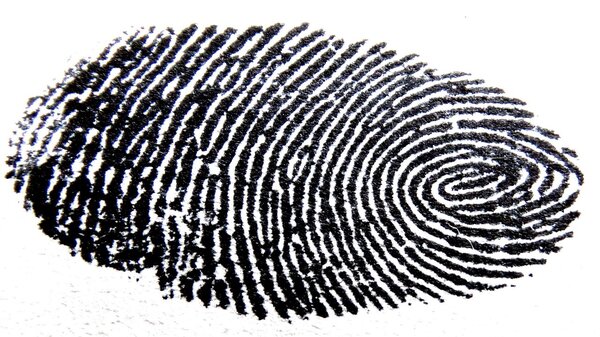
Mr. Williams consistently denied guilt. In 2008, he hoped DNA testing would help to prove his innocence. However, the DNA evidence was of no assistance. In 1999, The FBI launched its National Fingerprint Database (“IAFIS.”) Yet, a 2009 search generated no matches to fingerprints from the crime scene that had not already been identified. In 2014, Next Generation Identification (NGI) replaced IAFIS. By 2016, NGI held approximately 72,000,000 criminal fingerprints and 50,000,000 civil fingerprints. A 2019 search of this ever-expanding database matched fingerprint evidence taken from the 1983 crime scene to the prints of a convicted rapist who had died in prison years before. Mr. Williams was innocent and was soon released through a joint filing by the State of Louisiana and Mr. Williams. His lawsuit against multiple defendants followed.
In response, the Forensic Defendants filed a Motion that advanced the “qualified immunity” granted to governmental officials. In opposition to the Motion, the plaintiff possessed the burden: 1) to raise a fact dispute on whether his constitutional rights were violated by the defendants’ individual conduct; and 2) to show those rights were “clearly established” at the time of the alleged violation. The Court found that the plaintiff did not meet this burden. Although Plaintiff alleged that certain fingerprint evidence had been “suppressed” in violation of the “Brady Rule,” the Court cited the robust factual record showing that the jury was fully aware that no fingerprint evidence identified Mr. Williams and that unidentified prints were present at the crime scene. The Court also rejected the claim that there was any fabricated exculpatory blood or serology evidence.
The facts in Williams highlight the great technological improvements since the early 1980s which now aid the court system, prosecutors, and defense attorneys to protect against the conviction of an innocent suspect. These facts also tell a sad human story of an individual who spent more than 30 years in jail for a crime he did not commit. While it does not replace the lost years, Louisiana has created a fund which provides some financial resources to wrongfully convicted individuals to help them re-enter society. Williams was able to take advantage of this fund.
References:
Archie Williams v. City of Baton Rouge, ET AL, United States District Court, Middle District of Louisiana, No. 3:20-cv-00162.