Insight

Another Year, Another Natural Disaster: What to do if Your Home is Damaged by a Storm or Flood

Published on: September 11, 2017

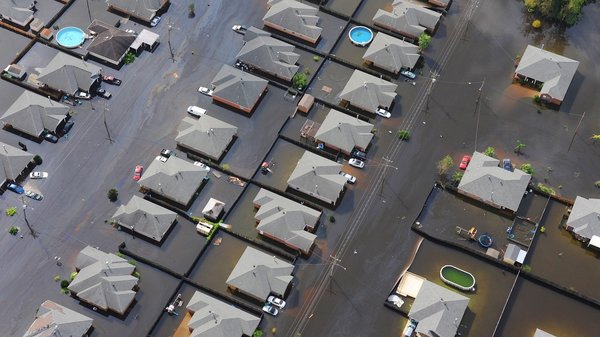
Unfortunately, Louisianans (and their property insurers) have endured many natural disasters in the past several years. From the historic flooding in the greater Baton Rouge area in August 2016 to the devastation caused by Hurricane Harvey in August 2017, Gulf Coast residents are all too familiar with significant storms and flooding events. While the rebuilding process will take months or years, this article is designed to provide some basic information on how to document your property claim and apply for and obtain disaster assistance.

  • DOCUMENT, DOCUMENT, DOCUMENT - Once able, make sure to document the damages to your home and contents. Whether for a homeowners or flood insurance policy or to obtain government assistance, take plenty of photos and even video of the damage. Make a list of the items in your home that were damaged or destroyed. One way to organize this list is to group items from each room together; approximate the item’s age, where it was purchased, and its value when purchased. If you have receipts, try to salvage them. As you rebuild, and materials and items are thrown out, it will become more difficult to document your claim. Proper documentation will lessen the burden upon your insurer’s claims handlers and adjusters and may speed the processing of your claim. A lack of documentation may require the insurer to investigate longer and result in delay.
  • OBTAIN MULTIPLE ESTIMATES - Although the volume of work and distractions which follow a natural disaster make this difficult, try to obtain estimates for the work needed on your home. Pay for the estimate, if necessary. If you have three estimates and the amounts are close, they are more credible. Also, try and get as much detail as possible in each estimate, including specific materials to be used, dimensions, and finishes. Your insurer is looking to determine the true amount of the loss and thorough estimates help to define your claim.
  • APPLY FOR ASSISTANCE - Especially if your property is not insured, make sure to immediately apply for government assistance. You can apply for federal assistance at disasterassistance.gov. Oftentimes, the state government will also administer federal and state disaster assistance funds.

Recovering after a disaster may not be a quick or easy process, but spending more time and effort initially may ultimately save you time and allow you to present a claim your insurer will agree to pay.

Posted by:

Disclaimer

Keogh Cox & Wilson, Ltd. provides this blog as a public service for general information only. The materials contained herein may not reflect the most current legal developments or even express the opinion of all or even most of Keogh Cox attorneys. Such material does not constitute legal advice or form any attorney-client relationship. Keogh Cox and all contributing author(s) expressly disclaim all liability to any person with respect to the contents of this Web site and Blog and expect that no reliance will be made upon the information provided.

Continue Reading

Explore legal perspectives on the issues shaping Louisiana's key industries and courtrooms.

Insight

A Matter of Control: Vicarious Liability in Construction Projects

Under Louisiana’s comparative fault system, each party in a lawsuit generally is only liable for their own percentage of fault. However, in some instances, a party may be “vicariously” liable for the fault of another party. One example of vicarious liability is an employment relationship, where an employer can be liable for the fault of its employees. On the other hand, vicarious liability generally does not apply when the alleged “employee” is found to be an independent contractor. Whether a worker qualifies as an employee or an independent contractor often becomes an important issue in suits related to construction projects.

The test for determining whether a party is an employee or an independent contractor involves analysis of who has the right to control his or her work. In the construction context, courts distinguish between “operational control” (which suggests an employment relationship) and control as it relates to the results of the work (which suggests an independent contractor relationship). Two recent cases examine this issue and provide examples of how courts analyze the type of control necessary to establish vicarious liability in the construction projects.

In Stonetrust Com. Ins. Co. v. TBT Contracting, Inc. of LA, homeowners hired a general contractor to renovate their home. During the project, an electrical subcontractor was injured after falling through an attic space. It was alleged that the general contractor created a hazard by cutting a hole in the attic and concealing it. The plaintiff sued the general contractor and the homeowner. The court had to determine whether the homeowner could be liable for the subcontractor’s injuries, which would require a finding that the homeowner was vicariously liable for the general contractor’s fault.

The plaintiff argued that the homeowners were particularly involved in the project. It presented evidence to show the homeowners would give suggestions regarding the work to be performed and also directed alterations or additions to the work. The plaintiff argued that this demonstrated control over the general contractor’s work. However, the court disagreed. Despite the homeowners’ level of involvement, the court held that their control was limited to the results of the work, and was not “operational control.” The general contractor therefore was an independent contractor, and the homeowners were not vicariously liable for its acts.

In Baham v. Fisk Elec. Co., a city worker brought suit against a general contractor after suffering injuries from an electrical shock. The worker alleged that the general contractor was vicariously liable for the fault of its subcontractor. While evidence showed the subcontractor relied on the general contractor for the location of its work, the court found that this was not “operational control.” The court observed that general contractors are entitled to exercise supervisory control over its independent contractors to ensure compliance with the contract. It further found that suggestions or instructions given to an independent contractor do not equate to control over the methods or details of the work. Absent such “operational control” vicarious liability could not be imposed.

Though they may be limited to their facts, these cases show courts usually require a showing of more than suggestions or instructions regarding the work to establish the “operational control” necessary to trigger vicarious liability. Absent such a showing, independent contractors usually remain independent.

Case References:

Stonetrust Com. Ins. Co. v. TBT Contracting, Inc. of LA, 2022-0971 (La. App. 1 Cir. 4/14/23), 2023 WL 2947826

Baham v. Fisk Elec. Co., 2022-0551 (La. App. 4 Cir. 3/22/23), 2023 WL 2595253

Insight

Limitation of Liability under the LPLA: Can Internet Retailers be Manufacturers?

The Louisiana Products Liability Act (“LPLA”) contains the exclusivetheories of recovery against a manufacturer for damages caused by its product.The term “manufacturer” within the LPLA includes “the seller of a product whoexercises control over or influences a characteristic of the design,construction, or quality of the product that causes damage.” The rapid growthof e-commerce raises a unique question – how do we classify internet retailers?

Internet retailers generally act as a middleman for third partymanufacturers and online consumers. In this respect, they are not technically“sellers” as defined by the LPLA because they typically do not have controlover the design or construction of the products they sell. Nevertheless, theproper categorization of internet retailers may become important when someoneis injured by a product, as was the case in State Farm Fire and CasualtyCompany v. Amazon.com, Inc., 2019 WL 5616708 (Miss. N.D. 10/31/19) ---F.Supp.3d ---.

In State Farm Fire and Casualty Company v. Amazon.com, Inc., two hoverboards purchased through Amazon caught fire inside a Mississippi home and the home was destroyed. In considering Amazon’s possible liability, the Mississippi Court asked whether Amazon was a “service provider” or a “marketplace.” In Mississippi, a finding that Amazon was a “service provider” would insulate it from the claim. However, if Amazon acted as a “marketplace,” it could be exposed by the common law to a negligent failure-to-warn claim. The Mississippi Court held that, because Amazon operated as a marketplace, the claim against it could go forward.

If similar facts arose in Louisiana, could Amazon or similar retailers be exposed under the LPLA? If an internet retailer established policies that forced a “true” manufacturer to negatively alter product quality, would the LPLA provide a remedy? For example, if an internet retailer sets a price ceiling, this artificial figure, especially if unreasonably low, might pressure a manufacturer to lower product safety. Is setting a price range the exercise of enough control or influence over the “design, construction, or quality of a product” to render internet retailers subject to suit under the LPLA? That is a question likely to be answered in cases to come.

Insight

SHOW ME YOUR TAX RECORDS: Why You Should Preserve Business and Tax Records

A case successfully handled by Keogh Cox on behalf of the Louisiana Department of Revenue serves a strong reminder of the importance of maintaining business tax records, and of the significant burden imposed on Taxpayers who do not.

In Barfield v. Diamond Construction, Inc., 51,291 (La. App. 2 Cir. 4/5/17), 217 So.3d 1211, writ denied, 2017-0751 (La. 9/15/17), 2017 WL 4105839, the Louisiana Second Circuit affirmed the Trial Court who granted summary judgment in favor of the Louisiana Department of Revenue in response to a Taxpayer’s failure to pay sales and use taxes over the span of several years.

Although the burden of proof on a motion for summary judgment is usually imposed on the party who filed the motion, a Louisiana statute (La. R.S. 13:5034) shifts the burden in suits filed by the Department of Revenue to collect unpaid taxes. Therefore, to defeat the Department’s motion in Barfield, the Taxpayer possessed the burden to demonstrate that taxes were not owed on the various transactions at issue. Because the law presumes that sales and rentals of tangible personal property are fully taxable, the Taxpayer possessed the additional burden to show that the sales and rentals involved exempted categories. In the face of this “double burden,” the Taxpayer was unable to provide business records to demonstrate the nature of each transaction as these records were not preserved by the Taxpayer.

During the Department’s audit, the Taxpayer was unable to present the necessary records to prove it did not owe taxes on certain transactions. As a result, the Department was allowed to complete the audit by making an estimate of the amount of taxes owed for the subject transactions. The resulting audit findings were then treated as prima facie correct and were ultimately accepted because the Taxpayer offered no contrary evidence.

Noting the Taxpayer’s poor record-keeping, the Court cited the failure to produce the necessary records in support of its conclusion that the Taxpayer did not create a “material issue of fact” in opposition to the Department’s motion. This warranted the entry of judgment in favor of the Department and should remind every business of the real-world need to keep your tax records.

Written by: Chris Jones

Christopher K. Jones

Partner
Flood
Louisiana