Insight

Court Holds Knowledge of a Condition Does Not Equal Knowledge that Condition Is Unreasonably Dangerous

Published on: March 11, 2026

In Webber v. City of Shreveport, No. 56,705-CA (La. App. 2 Cir. Dec. 17, 2025), the Louisiana Second Circuit recently affirmed summary judgment in favor of the defendants in a trip-and-fall case involving a cracked sidewalk.

The plaintiff alleged she tripped and fell over an uneven area of the sidewalk in front of the defendant’s business. The defendant moved for summary judgment, arguing that the plaintiff could not establish (1) a defect creating an unreasonable risk of harm or (2) the defendant knew or should have known of any defect. The defendant produced evidence to show it had no notice of any defect and no prior accidents in the area where the plaintiff fell. The defendant also produced photographs showing no holes in the area and no differences in elevation exceeding one inch.

In support of her claims, the plaintiff provided evidence including testimony from a corporate representative of the defendant who admitted to knowledge of cracks in the sidewalk prior to the plaintiff’s accident.

However, the court importantly distinguished that knowledge of a condition is not the same as knowledge of an unreasonably dangerous condition. The defendant maintained that not all cracks in sidewalks present unreasonably dangerous conditions. It also offered proof that the subject portion of the sidewalk was traveled every day as the building’s main passage. There were no prior complaints regarding its condition, nor were there any prior accidents.

Based upon this evidence, the court found that the plaintiff failed to prove that the cracks in the sidewalk were unreasonably dangerous or that the defendants had any actual or constructive notice of the defect’s existence. Summary judgment was affirmed in the defendant’s favor.

Reference: Webber v. City of Shreveport, 56,705 (La. App. 2 Cir. 12/17/25), 425 So. 3d 485.

Posted by:

Disclaimer

Keogh Cox & Wilson, Ltd. provides this blog as a public service for general information only. The materials contained herein may not reflect the most current legal developments or even express the opinion of all or even most of Keogh Cox attorneys. Such material does not constitute legal advice or form any attorney-client relationship. Keogh Cox and all contributing author(s) expressly disclaim all liability to any person with respect to the contents of this Web site and Blog and expect that no reliance will be made upon the information provided.
Continue Reading

Explore legal perspectives on the issues shaping Louisiana's key industries and courtrooms.

Insight

Supreme Court Settles Circuit Split on Right to Appeal Summary Judgment

The Louisiana Supreme Court recently ruled that a co-defendant who pleads comparative fault as an affirmative defense may appeal a summary judgment that dismisses a co-defendant, even when the plaintiff did not file an appeal. The Court’s decision in Amedee v. Aimbridge Hospitality resolved a circuit split among the Louisiana Courts of Appeal regarding this issue.

The Amedee plaintiff filed a personal injury suit against multiple defendants including the City of New Orleans and Premium Parking of South Texas, LLC. After discovery, the City of New Orleans filed a Motion for Summary Judgment seeking dismissal from the suit. The plaintiff did not oppose the city’s motion. Premium Parking was the only party to file an opposition. The trial court granted the city’s motion and dismissed it from the suit. Premium Parking appealed the court’s judgment.

The Fourth Circuit did not address the merits of Premium Parking’s appeal. Instead, the court dismissed the appeal because it found Premium Parking did not have a legal right to appeal the city’s dismissal when the plaintiff did not appeal the judgment.

The Supreme Court disagreed and reversed the appellate court’s ruling. The Court noted that “to prohibit appellate review of a summary judgment by a co-defendant, even where a plaintiff did not appeal, diminishes the search for truth—the object of a lawsuit—and denies a defendant the ability to fully defend itself.” To reach this conclusion, the Court first asked, who may appeal a judgment?

To answer this question, the Court looked to La. C.C.P. art. 2082 and observed the article makes no restriction regarding what party may appeal a final judgment. Further, the Court noted that the right to an appeal is even extended third parties, not involved in the suit, when that third party is allegedly aggrieved by the judgment. See La. C.C.P. art. 2086.

The Court also considered a defendant’s right to appeal in the context of Louisiana’s pure comparative fault system and summary judgments. Under La. C.C. art. 2323, Louisiana’s comparative fault statute, the fault of all parties is to be quantified. La. C.C.P. art. 966(G), provides that when summary judgment is granted in favor of a party or non-party to a suit, the fault of the dismissed party may not be considered in any subsequent allocation of fault in the matter.

The Court noted that while art. 966(G) precludes an allocation of the fault of a party dismissed under the statute, it does not limit the right of a defendant to appeal the dismissal of a co-defendant. No statute limited a defendant’s right to appeal a summary judgment only to those situations where a plaintiff also filed an appeal. Therefore, a defendant who hopes to keep a co-defendant in the case so that fault still may be allocated to the dismissed party at trial now may appeal the co-defendant’s dismissal, even when the plaintiff fails to do so.

Case Reference: Amedee v. Aimbridge Hosp. LLC, 2021-01906 (La. 10/1/22), --- So.3d ---, 2022 WL 12338929.

Insight

Louisiana Court Finds No Coverage Under Policy Based Upon Insured’s Failure to Cooperate

In South Alexander Development I, LLC v. Markel American Insurance Co., the U.S. District Court for the Middle District of Louisiana granted an insurer’s motion for summary judgment finding that the insured’s failure to cooperate violated the policy’s coverage terms and voided coverage.

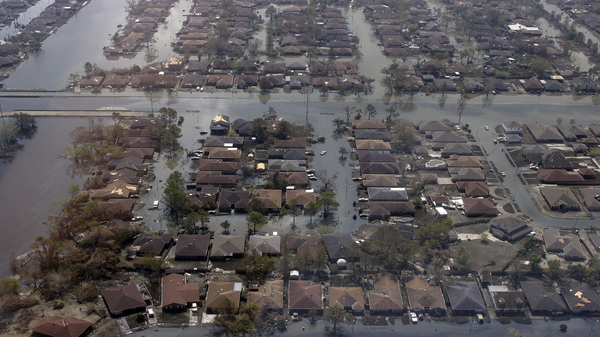
The dispute arose from a commercial first-party property loss following Hurricane Ida. The insurer moved quickly to adjust the claim by retaining an independent adjuster and engineers to evaluate the damage to and value of the insured property. It also asked the insured to produce documentation needed to complete the adjustment, including records of installation costs, monthly revenues, and repair estimates. The insured did not respond.

Additionally, the insurer sent numerous emails over the course of the claim requesting information about (1) the costs the insured had incurred; (2) documentation supporting the income loss claim, along with quotes, estimates, and proposals for repairs; and (3) the scope of work for testing and repairs. However, most of these requests went unanswered.

Based on this evidence, the court determined that the insured violated the terms of the policy because it failed to cooperate with the insurer’s investigation. Most notably, the insured obtained repair estimates and proposals from its own contractor and withheld them from the insurer until after suit was filed. The insured also never submitted a completed proof of loss, even though the policy required submission of such a document that included estimates and “other reasonable information” the insurer needed to settle the loss. These acts showed the insured failed to “cooperate with [the insurer] in performing all acts required by this policy.”

The insurer showed that it pursued the information diligently and that the insured’s breach was both material and prejudicial. The court found (1) the insurer had documented repeated, specific requests for nearly a year, (2) the withheld documents went directly to quantifying the loss, and (3) the insured’s noncompliance deprived the insurer of its right to investigate the insured’s claim.

As a result, the court granted summary judgment finding no genuine issue of material fact relating to the insured’s breach of the policy’s cooperation clause. The insured was precluded from bringing a breach of insurance contract claim and therefore, without a valid contractual claim, the insured also could not pursue a bad faith claim against the insurer.

References:

South Alexander Development I, LLC v. Markel American Insurance Co., CV 23-1436-JWD-SDJ, 2026 WL 1819120 (M.D. La. June 24, 2026).

Insight

Keogh Cox Obtains Summary Judgment in Premises Liability Action

The First Circuit Court of Appeals affirmed the Trial Court’s ruling that granted summary judgment in a premises liability case filed following an accident that occurred at the LSU Hilltop Arboretum. The Louisiana Supreme Court recently denied writs seeking review of the lower courts’ rulings. Keogh Cox attorneys, Brian T. Butler and C. Reynolds LeBlanc, defended the case.

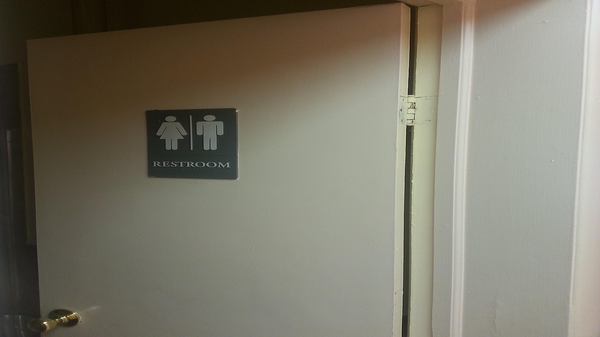
In Hebert v. Louisiana State Univ. Sys. Bd. of Supervisors Through Louisiana State Univ., the plaintiff went to the LSU Hilltop Arboretum to attend a wedding. Before the wedding, she went to the ladies’ room located in the outdoor pavilion area. The door to the restroom is controlled by an automatic door closer. The plaintiff alleged that the door began to close with “excessive force” when she exited the ladies’ room, and her finger was injured when it slid into the hinge-side of the door.

The plaintiff claimed the automatic door closer was defective because it was not properly adjusted at the time of the accident. The plaintiff retained an expert professional engineer to support her claims. The expert inspected the door and the door closer approximately 19 months after the incident. He testified that when he inspected the door, it was closing too fast, was out of adjustment, and had been improperly maintained. The plaintiff argued these findings showed the door was also defective at the time of the accident.

The expert also said the doors should have been inspected and adjusted every six months. The plaintiff argued the alleged problem with the door would have been discovered if it was inspected as her expert recommended.

Keogh Cox filed a Motion for Summary Judgment on behalf of the defendants. First, we argued the plaintiffs failed to produce evidence that the door was defective on the date of the accident. While the expert opined the door was defective when it was inspected nineteen months after the accident, the plaintiff had no evidence to show the alleged defect existed at the time of the accident. Keogh Cox asserted that the expert’s testimony claiming a defect was pure speculation. The court agreed and found the plaintiff failed to show the door presented an unreasonable risk of harm.

Second, we argued the plaintiff could not show LSU had prior notice that the door was defective at the time of the accident. As the door to the primary restroom on the premises, it was frequently used. There was no evidence of any prior complaints or reports of problems with the door before the accident. The plaintiff argued that notice could be found because LSU did not have a set inspection plan for the door as her expert recommended.

The court rejected this argument, stating “The opposite is true; in the absence of other facts such as recorded complaints about a defect or hazard, the lack of a plan of inspection implies that the public entity has no knowledge of dangerous defects or conditions.” Thus, the court found the plaintiff failed to show LSU had notice of the alleged problem with the door.

Reference:

Hebert v. Louisiana State Univ. Sys. Bd. of Supervisors Through Louisiana State Univ., 2025-0246 (La. App. 1 Cir. 11/7/25), 424 So. 3d 809, writ denied, 2025-01542 (La. 2/10/26), 425 So. 3d 1205.

Asia V. Jackson

Associate
Summary Judgment