Insight

Louisiana Court Finds No Coverage Under Policy Based Upon Insured’s Failure to Cooperate

Published on: July 8, 2026
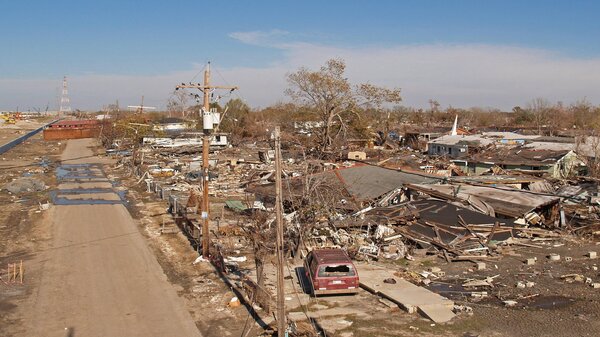
In South Alexander Development I, LLC v. Markel American Insurance Co., the U.S. District Court for the Middle District of Louisiana granted an insurer’s motion for summary judgment finding that the insured’s failure to cooperate violated the policy’s coverage terms and voided coverage.

The dispute arose from a commercial first-party property loss following Hurricane Ida. The insurer moved quickly to adjust the claim by retaining an independent adjuster and engineers to evaluate the damage to and value of the insured property. It also asked the insured to produce documentation needed to complete the adjustment, including records of installation costs, monthly revenues, and repair estimates. The insured did not respond.

Additionally, the insurer sent numerous emails over the course of the claim requesting information about (1) the costs the insured had incurred; (2) documentation supporting the income loss claim, along with quotes, estimates, and proposals for repairs; and (3) the scope of work for testing and repairs. However, most of these requests went unanswered.

Based on this evidence, the court determined that the insured violated the terms of the policy because it failed to cooperate with the insurer’s investigation. Most notably, the insured obtained repair estimates and proposals from its own contractor and withheld them from the insurer until after suit was filed. The insured also never submitted a completed proof of loss, even though the policy required submission of such a document that included estimates and “other reasonable information” the insurer needed to settle the loss. These acts showed the insured failed to “cooperate with [the insurer] in performing all acts required by this policy.”

The insurer showed that it pursued the information diligently and that the insured’s breach was both material and prejudicial. The court found (1) the insurer had documented repeated, specific requests for nearly a year, (2) the withheld documents went directly to quantifying the loss, and (3) the insured’s noncompliance deprived the insurer of its right to investigate the insured’s claim.

As a result, the court granted summary judgment finding no genuine issue of material fact relating to the insured’s breach of the policy’s cooperation clause. The insured was precluded from bringing a breach of insurance contract claim and therefore, without a valid contractual claim, the insured also could not pursue a bad faith claim against the insurer.

References:

South Alexander Development I, LLC v. Markel American Insurance Co., CV 23-1436-JWD-SDJ, 2026 WL 1819120 (M.D. La. June 24, 2026).

Posted by:

Disclaimer

Keogh Cox & Wilson, Ltd. provides this blog as a public service for general information only. The materials contained herein may not reflect the most current legal developments or even express the opinion of all or even most of Keogh Cox attorneys. Such material does not constitute legal advice or form any attorney-client relationship. Keogh Cox and all contributing author(s) expressly disclaim all liability to any person with respect to the contents of this Web site and Blog and expect that no reliance will be made upon the information provided.


Continue Reading

Explore legal perspectives on the issues shaping Louisiana's key industries and courtrooms.

Insight

Keogh Cox Secures Dismissal of Premises Liability Case

The Fourth Circuit recently affirmed summary judgment Keogh Cox obtained in Clark v. Premier Automotive Management, LLC, finding the plaintiff’s circumstantial evidence failed to establish an unreasonable risk of harm caused her to fall.

In Clark, the plaintiff claimed she was injured after slipped and fell in a puddle of water in a service garage. Keogh Cox attorneys Chad A. Sullivan and Cole C. Frazier filed a motion for summary judgment on behalf of the defendants in response. The defendants asserted that the plaintiff failed to submit sufficient proof to establish that standing water or a hazardous condition caused her fall. Specifically, the defendants maintained that the plaintiff could not establish (1) an unreasonable risk of harm existed within the garage or (2) the puddle of water existed on the garage floor for an extended period of time.

The plaintiff’s deposition testimony established that it rained earlier in the day, that she was walking quickly before she fell, and that she was wearing flip flops. The plaintiff also testified she assumed she fell in a puddle of water because her back was damp after her fall. She described the amount of water under her shoes as the size of a “softball.”

The defendants also attached the affidavits of two employees who worked at the service garage on the day of the incident. The affidavits acknowledged wet conditions on the day of the incident but denied any prior complaints or accidents in the area. The affidavits also established that the plaintiff fell in an uncovered area of the garage that slopes downward. Thus, there was no possibility for standing water or puddles to collect.

Based upon this evidence, the appellate court found that the defendants satisfied their burden of proof to show there was no unreasonable risk of harm. The court stated the burden then shifted to the plaintiff to establish that there was an unreasonable risk of harm and thus establishing a genuine issue of material fact. However, the court found that the plaintiff failed to meet her burden because all her arguments were based upon conclusory allegations and unsupported speculation. To support her claims, the plaintiff could only cite to the “possibility” of the existence of standing water or puddles. As such, the plaintiff only speculated whether a hazardous substance or an unreasonable risk of harm caused her fall. Such speculation was insufficient to establish a genuine issue of material fact.

In so holding, the court affirmed the dismissal of the plaintiff’s claims that Keogh Cox obtained through summary judgment.

References:

Clark v. Premier Auto. Mgmt., LLC, 2024-0397 (La. App. 4 Cir. 2/10/25), --- So.3d ---, 2025 WL 451473.

Insight

Court Holds Knowledge of a Condition Does Not Equal Knowledge that Condition Is Unreasonably Dangerous

In Webber v. City of Shreveport, No. 56,705-CA (La. App. 2 Cir. Dec. 17, 2025), the Louisiana Second Circuit recently affirmed summary judgment in favor of the defendants in a trip-and-fall case involving a cracked sidewalk.

The plaintiff alleged she tripped and fell over an uneven area of the sidewalk in front of the defendant’s business. The defendant moved for summary judgment, arguing that the plaintiff could not establish (1) a defect creating an unreasonable risk of harm or (2) the defendant knew or should have known of any defect. The defendant produced evidence to show it had no notice of any defect and no prior accidents in the area where the plaintiff fell. The defendant also produced photographs showing no holes in the area and no differences in elevation exceeding one inch.

In support of her claims, the plaintiff provided evidence including testimony from a corporate representative of the defendant who admitted to knowledge of cracks in the sidewalk prior to the plaintiff’s accident.

However, the court importantly distinguished that knowledge of a condition is not the same as knowledge of an unreasonably dangerous condition. The defendant maintained that not all cracks in sidewalks present unreasonably dangerous conditions. It also offered proof that the subject portion of the sidewalk was traveled every day as the building’s main passage. There were no prior complaints regarding its condition, nor were there any prior accidents.

Based upon this evidence, the court found that the plaintiff failed to prove that the cracks in the sidewalk were unreasonably dangerous or that the defendants had any actual or constructive notice of the defect’s existence. Summary judgment was affirmed in the defendant’s favor.

Reference: Webber v. City of Shreveport, 56,705 (La. App. 2 Cir. 12/17/25), 425 So. 3d 485.

Insight

Walking Drivers: A “Sudden” Defense to Rear-end Liability

A rear-end collision is a unique animal in the law. Plaintiff’s attorneys seek them out, and insurance companies fear them­­--sometimes for good reason. The "rear-end" accident is unique because proof of the mere fact that one vehicle strikes the rear of another creates a strong legal presumption of fault under La. R.S. 32:81. While this presumption is formidable, it may be overcome.

The rear-end presumption is premised upon the duty to not follow too closely and the law will assume that the following driver breached this duty when there is impact. However, the following driver can escape liability if he shows that his vehicle was under control, that he followed at a safe distance, and that the lead driver negligently created a hazard which could not have reasonably been avoided. For instance, if it is shown that the reckless or unpredictable driving of the lead motorist created a sudden emergency, the following driver will not be at fault. Brewer v. J.B. Hunt Transport, Inc., 35 So.3d 230 (La. 2010). Once established, the sudden emergency defense trumps the “rear-end presumption.”A "sudden emergency" is created when a driver is placed in a position of imminent peril that he or she did not create through their own conduct. Hickman v. Southern Pacific Transport Company, 262 So.2d 385 (La. 1972). When a driver can demonstrate the existence of a sudden emergency, they are not negligent for failing to do what a reasonable person might have done to avoid the accident had they been given enough time to assess and react to the situation.In Jewitt v. Alvarez, 179 So.3d 645 (La. App. 2 Cir. 9/30/15), a following driver who rear-ended the vehicle of the lead driver was free from fault as a result of the sudden emergency defense where the facts revealed that the accident was solely caused by the slow speed of the lead driver (who almost came to a complete stop on the interstate) and the presence of surrounding traffic prevented the following vehicle from taking evasive action.In Carias v. Loren, 2015 WL 1019481 (La.App. 1 Cir. 3/9/15), an eighteen-wheeler was traveling in the middle lane of the interstate when a "phantom driver" moved without warning from the left lane to the middle lane and slammed on its brakes in front of the eighteen-wheeler. In attempt to avoid the collision, the driver of the eighteen-wheeler swerved to his right and impacted a vehicle which then struck the plaintiff's vehicle. The driver of the eighteen-wheeler invoked the sudden emergency defense; the court agreed and found the defendant-driver free from fault.Rear-end collisions are hard to defend, but a defendant may want to gather a clear understanding of all of the facts before accepting liability. If these facts support the sudden emergency defense, the driver may "walk."

Cole C. Frazier

Partner
Bad Faith
Hurricane
Insurance
Summary Judgment