Insight

When "Drone" Used to be a Boring Word

Published on: March 13, 2017

Webster's top two definitions of the word "drone" are as follows:

1: A stingless male bee (as of the honeybee) that has the role of mating with the queen and does not gather nectar or pollen.

2: one that lives on the labors of others: parasite

While bees and parasites have their allure, Webster's third definition of the word "drone" is the one with current intrigue.

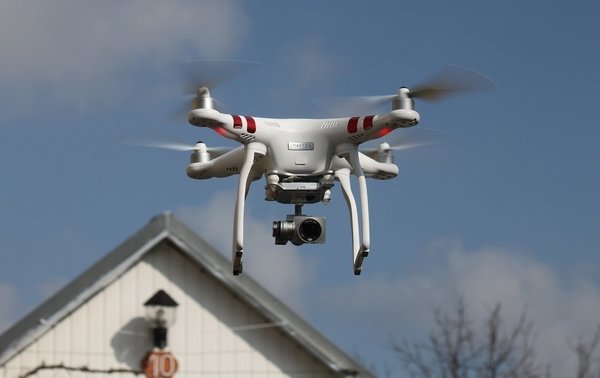
According to Webster's, a drone is also "an unmanned aircraft or ship guided by remote control or onboard computers." Drones began as play things; but are now poised to revolutionize industry, retail, agriculture, journalism, art, and law at an ever-increasing pace.

Currently, drones are regulated by the Federal Aviation Administration which has for decades regulated flight by planes and helicopters; but not everyone can own an airplane or helicopter. Everyone can own a drone and many soon will.

The soon-to-be pervasive use of drones will stretch at the fabric of criminal and civil law and raises intriguing questions with hazy answers. For example,

1: Without probable case, can the government park a drone over a house or building, or even a crime-ridden city block, and monitor for criminal activity with sensors that easily peer through walls?

2: Does one have a reasonable expectation of privacy within a fenced-in back yard?

3: Is following a personal injury plaintiff via drone considered stalking?

4: Can a business fly a drone over a competitor's work yard to observe it processes without recourse?

5: Is it legal to use technology (which is now available) to disrupt or even crash drones flying overhead? Would that be a tort?

In an upcoming Keogh Cox blog, we will advise of pending changes to the law that may begin to answer some of these questions. For now, we will observe that the word "drone" is no longer a boring word.

Posted by:

Disclaimer

Keogh Cox & Wilson, Ltd. provides this blog as a public service for general information only. The materials contained herein may not reflect the most current legal developments or even express the opinion of all or even most of Keogh Cox attorneys. Such material does not constitute legal advice or form any attorney-client relationship. Keogh Cox and all contributing author(s) expressly disclaim all liability to any person with respect to the contents of this Web site and Blog and expect that no reliance will be made upon the information provided.

Continue Reading

Explore legal perspectives on the issues shaping Louisiana's key industries and courtrooms.

Insight

Google Earth Images Ruled Admissible

Recently, a Louisiana appellate court found that images fromGoogle Earth images were admissible. In Walker v. S.G.B.C., LLC,2019-506 (La.App. 3Cir. 2/5/20); --- So.3d ---, 2020 WL 563818, theLouisiana Third Circuit rejected a challenge to the use of the images on thebasis that they were not properly authenticated.

In this case, the plaintiff sought recognition of ahistorical servitude of passage from his landlocked property. During the trial,the plaintiff offered Google Earth images of the property to show a gravelpathway on the alleged right of way. The images were dated January 2004,November 2005, and December 2017. Multiple witnesses identified the pathon the images. Thereafter, the trial court admitted the images into evidenceover the defendant’s objections.

On appeal, the defendant argued that the images were notproperly authenticated under La. C.E. art. 901 because the plaintiff did not:(1) have the creator of the images testify to their authenticity; (2) get acertification from Google that the images were what they purported to be; and(3) have an expert testify that the images were accurate depictions of whatthey claimed to be.

The Walker court affirmed the trial court ruling thatthese images were admissible. Louisiana Code of Evidence Article 901(B)(1)provides the testimony of a witness with personal knowledge may supply theauthentication of evidence required for its admission. Because the plaintiffidentified various landmarks on each image, and each image was subsequentlyrecognized by multiple witnesses (including the defendant’s witnesses), theCourt concluded there was sufficient support for finding the images authentic.

In Walker, the precise dates the photographs were taken were not critical. Under different facts, courts may choose to apply the authentication rules of Article 901 more stringently.

Chris Jones is a partner with Keogh Cox in Baton Rouge, LA. He focuses his practice on class actions and mass torts, and handles these matters in courts throughout the country. He is a life-long resident of Baton Rouge, where he lives with his wife and four children.

Insight

Court Examines Requirements of Financing Provision in Purchase Agreement for  Residential Property

Purchase agreements for residential property routinely include financing provisions that require the buyer to show that he has applied for a loan. The Louisiana Fourth Circuit Court of Appeals recently analyzed such a provision in Abdelqader v. Ramos. The plaintiff in Abdelqader entered into a purchase agreement with the defendant for an unimproved lot on which the plaintiff planned to build his home.

The financing provision in the purchase agreement required the buyer to provide the seller with (1) written documentation; (2) from a lender; (3) that a loan application has been made; and (4) that Buyer authorized lender to proceed with the loan approval process. The provision also required that this documentation be provided to the seller “within 3 calendar days after” the date of Agreement.

After the parties executed the purchase agreement, various disputes led the seller to terminate the agreement and re-list the property for sale. The plaintiff sued for stipulated damages and attorney’s fees, which were allowed under the contract if either party breached the purchase agreement.

The buyer introduced evidence that his agent sent the seller’s broker a USDA pre-approval letter and certificate of eligibility for financing under a USDA Rural Development Program. These documents were sent to the seller’s agent before the parties executed the purchasing agreement. Generally, such pre-approval letters show the buyer appears qualified for a loan in the amount of the purchase. They do not confirm a loan was applied for or approved by the lender for the property to be purchased.

The seller argued that the pre-approval letter furnished by the buyer before the parties entered into the purchase agreement was not an actual loan application and did not verify that a loan application for the purchase had been made. The seller also argued that the buyer did not comply with the terms of the financing provision because he did not provide the subject documents within the three-day window after the purchase agreement was signed. The court rejected these arguments. The Court found the agreement did not require the buyer to produce his loan application to the seller or that the loan application be dated within three days of the Agreement. The buyer’s lender produced the pre-approval letter and the certificate of eligibility in response to the buyer’s application for financing and pursuant to the buyer’s instruction to proceed with the loan process. Though its ruling may be limited to the facts of this case, the Court found that the buyer complied with the terms of the financing agreement.

It appears the court viewed the seller’s claim that the seller did not comply with the financing provision of the purchasing agreement as after the fact justification for the seller unilaterally terminating the purchase agreement for some unrelated dispute. The Court found that the seller breached the purchase agreement and awarded the buyer stipulated damages of 10% of the contract price and attorney’s fees. This ruling also serves as a reminder that purchase agreements for residential properties are contracts, and breaches of these contracts can have consequences if terminated on a whim.

Reference:

Abdelqader v. Ramos, 2022-0305 (La. App. 4 Cir. 11/30/22), 353 So.3d 750.

Insight

What Mrs. O'Leary's Cow Has to Do With Spoliation

For more than a century, the debate has raged over whether Mrs. O'Leary and her famous cow truly started The Great Chicago Fire of 1871. Were the tragic events of that conflagration to happen today, someone would ask Mrs. O'Leary to produce the "RFID" chip in her bovine. (You know they would). They would contend that this key evidence could show the whereabouts and movement of the cow at the time the fire began. When she could not produce it, they would claim not only that she started the fire that destroyed a swath of Chicago, but that she also destroyed the evidence of her guilt. They would cry "spoliation."

"Spoliation" is the legal term for the improper destruction or alteration of evidence to prevent its use in litigation. It is also an ugly word and its presence in litigation can lead to ugly results. While this doctrine has existed in some form or the other for hundreds of years, understanding the concept may prove to be even more important now in a time when reams of documents can be stored on a "zip drive" smaller than a stick of gum and information can be maintained in a multiplicity of ways previously unthinkable.

To prove spoliation, a litigant must demonstrate that their adversary in litigation: (1) knew of a lawsuit or had a reasonable expectation that a lawsuit would follow; (2) failed to produce relevant evidence without an explanation; and, (3) participated in intentional conduct to alter, secret, or destroy the evidence. It is important to note that a defendant is not responsible under the doctrine of spoliation when the defendant’s failure to produce evidence is adequately explained.

A party who discovers that evidence has been spoliated has options. They may ask the court to enter an adverse presumption. If allowed, a court may instruct the jury that the missing or altered evidence would have been unfavorable to the party who destroyed it. Depending upon the nature and relevancy of the evidence, the court may have grounds to strike claims or defenses relevant to the evidence.

Another option is to file a formal claim against the party who spoliated the evidence. This type of claim alleges that the alleged “spoliator” impaired a party's ability to win or defend a law suit. In Louisiana, all five appellate circuit courts have recognized the tort of spoliation.

The issues surrounding spoliation have been magnified by technology. Meaningful information can now be found on almost anything: "smart refrigerators"; product sensors; a car's "black box" that may reveal the speed at the time of impact; SMS information on a phone, computer, or tablet; and on and on. Consider further the increasing scope of surveillance video recorded at businesses, schools, hospitals, and even homes, which is complicated by the fact that many systems automatically "write over" prior video in a matter of days, weeks, or months.

In short, it’s a good time for everyone to understand the doctrine of spoliation. The chance that some party will loudly proclaim that your spoliation of evidence adversely affected their case continues to increase. Being aware of the potential spoliation issues that may arise when a suit has been filed, or is expected to be filed, may save your case. It may also save you the time, money, and distraction involved in defending a claim that you have spoliated key evidence.

Collin J. LeBlanc

Partner
Attorney
Discovery
Property
Torts