Insight

“Forensic Defendants” Dismissed from Wrongful Conviction Suit

Published on: July 1, 2024
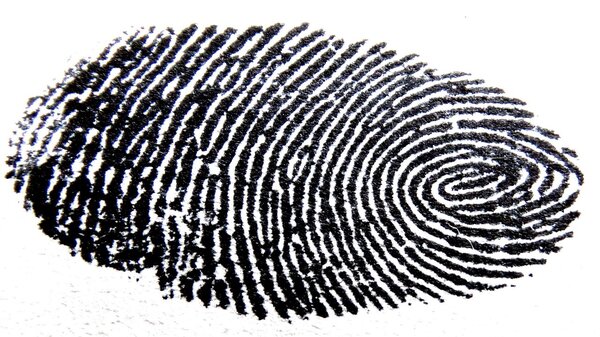
On December 9, 1982, a victim was raped and stabbed multiple times in her Baton Rouge residence. In those harrowing moments, the victim was face-to-face with her assailant and vowed that she would remember the characteristics of her assailant in the unlikely event she survived. A friend arrived at the residence and entered the second-floor room containing the assailant and the wounded victim. Fortunately, at that moment, noise from a postal employee caused the assailant to flee the scene. The investigation began that same day.

Sometime later, Archie Williams became a suspect and was then criminally charged after the victim identified Mr. Williams as her attacker. The victim identified a prominent scar on the assailant which, in an unfortunate twist of fate, tended to match a scar on Mr. Williams. Several of the governmental officers involved in the investigation and the April 1983 criminal trial of Mr. Williams were sued many years later in the case styled Archie Williams v. City of Baton Rouge, ET AL. Keogh Cox attorneys Drew Blanchfield, Collin LeBlanc, Cathy Giering, and Chelsea Payne represented a forensic scientist, a lab technician, and a print examiner in the suit (the “Forensic Defendants.”) In his June 10, 2024 ruling, Judge Brian A. Jackson granted a Motion for Summary Judgment in favor of these defendants, dismissing the claims against them with prejudice.

At the 1983 criminal trial, Forensic Defendants testified that they could not identify Mr. Williams as the attacker. Similarly, both the prosecutor and defense counsel advised the jury that the physical evidence did not implicate Mr. Williams. Nevertheless, Mr. Williams was convicted based upon the passionate but mistaken testimony of the victim. Mr. Williams had not committed these crimes but remained incarcerated until his release decades later.

Mr. Williams consistently denied guilt. In 2008, he hoped DNA testing would help to prove his innocence. However, the DNA evidence was of no assistance. In 1999, The FBI launched its National Fingerprint Database (“IAFIS.”) Yet, a 2009 search generated no matches to fingerprints from the crime scene that had not already been identified. In 2014, Next Generation Identification (NGI) replaced IAFIS. By 2016, NGI held approximately 72,000,000 criminal fingerprints and 50,000,000 civil fingerprints. A 2019 search of this ever-expanding database matched fingerprint evidence taken from the 1983 crime scene to the prints of a convicted rapist who had died in prison years before. Mr. Williams was innocent and was soon released through a joint filing by the State of Louisiana and Mr. Williams. His lawsuit against multiple defendants followed.

In response, the Forensic Defendants filed a Motion that advanced the “qualified immunity” granted to governmental officials. In opposition to the Motion, the plaintiff possessed the burden: 1) to raise a fact dispute on whether his constitutional rights were violated by the defendants’ individual conduct; and 2) to show those rights were “clearly established” at the time of the alleged violation. The Court found that the plaintiff did not meet this burden. Although Plaintiff alleged that certain fingerprint evidence had been “suppressed” in violation of the “Brady Rule,” the Court cited the robust factual record showing that the jury was fully aware that no fingerprint evidence identified Mr. Williams and that unidentified prints were present at the crime scene. The Court also rejected the claim that there was any fabricated exculpatory blood or serology evidence.

The facts in Williams highlight the great technological improvements since the early 1980s which now aid the court system, prosecutors, and defense attorneys to protect against the conviction of an innocent suspect. These facts also tell a sad human story of an individual who spent more than 30 years in jail for a crime he did not commit. While it does not replace the lost years, Louisiana has created a fund which provides some financial resources to wrongfully convicted individuals to help them re-enter society. Williams was able to take advantage of this fund.

References:

Archie Williams v. City of Baton Rouge, ET AL, United States District Court, Middle District of Louisiana, No. 3:20-cv-00162.

Posted by:

Disclaimer

Keogh Cox & Wilson, Ltd. provides this blog as a public service for general information only. The materials contained herein may not reflect the most current legal developments or even express the opinion of all or even most of Keogh Cox attorneys. Such material does not constitute legal advice or form any attorney-client relationship. Keogh Cox and all contributing author(s) expressly disclaim all liability to any person with respect to the contents of this Web site and Blog and expect that no reliance will be made upon the information provided.

Continue Reading

Explore legal perspectives on the issues shaping Louisiana's key industries and courtrooms.

Insight

Click It: The Seat Belt Defense In Louisiana

Louisiana has exhibited a certain double standard when it comes to seat belts. For years, Louisiana participated in the “Click It or Ticket” public service campaign that lectured on the grave dangers caused by a failure to wear seat belts and the criminal consequences for a failure to comply. Nevertheless, and for decades, the failure to wear a seat belt was off limits as evidence to reduce a plaintiff’s recovery in a personal injury context. But, the rule was changed: effective January 1, 2021, the “gag rule” against evidence that a plaintiff failed to wear a seat belt in an accident has been lifted. La. R.S. 32:295.1. Louisiana has no recent history with the “seat belt defense,” such that many questions arise. To frame these questions, this blog takes a quick look to cases from other states and certain guideposts that may already exist in Louisiana jurisprudence.

Like several other states, Florida has a history with the defense. In Smith v. Butterick, 769 So.2d 1056, 1058-9 (Fla.2d DCA 2000), the court outlined three elements of proof a defendant must show to prevail on the defense. Similar elements have been identified in other states. See, e.g., Law v. Superior Court In and For Maricopa County, 157 Ariz. 147, 755 P.2d 1135 (1988). Louisiana may adopt similar elements or chart a different course. The elements outlined in Smith were as follows:

1-Failure to use an available, operational seat belt

This element can be proven through testimony from the plaintiff, passengers, responding law enforcement, or other such testimony or evidence to show that a seat belt was not in use at the time of the accident. Similarly, testimony or photographs may be used to show that the seat belt was operational.

2- Failure to use seat belt was unreasonable under the circumstances

Insofar as Louisiana and most states generally mandate the use of seatbelts, this element should be easy to demonstrate. Therefore, unusual facts may be necessary to excuse a plaintiff’s failure to use a seat belt such as an emergency trip to the hospital.

3-Plaintiff’s failure to use a seat belt substantially caused or contributed to the damages

Of the three possible elements, this is likely to be the battleground. In some cases, the issue may be simple. For instance, if a plaintiff’s failure to use a seatbelt allows their body to strike (or travel through) a windshield, it may be simple to show that the plaintiff’s (or decedent’s) failure to use a seatbelt magnified the injuries. Expert testimony may not even be needed. In Smith, testimony from a mechanical engineer that the passenger would not have hit interior surfaces had they used a seat belt was allowed. However, will expert testimony be required in most cases and what type of expert will be needed? Engineer? Physician? Biomechanical?

Will the defendant bear the burden to prove the aggravation like they have in many national cases? Will Louisiana courts fashion an inference or “shifting burden” approach where a prima facie showing that a plaintiff’s whose failure to wear a seat belt increased the possibility of injury would possess the burden to show their injuries would have occurred even had they used a seat belt. In Anderson v. Watson, 953 P. 2d 1284 (Colo. 1998), the court required the defendant to only show a prima facie case of seat belt nonuse to allow the fact of nonuse to go to the jury.

Seat belts are required because they can prevent or lessen injury. Does a defendant have to show the precise details as to how seat belt nonuse caused or magnified the injury? In Louisiana, these answers remain unclear; but these are some of the questions.

Further complications are present in cases involving alleged traumatic brain injury (TBI) and the new frontier of vestibular injuries. Louisiana courts have often rejected testimony from accident reconstruction or bio-mechanical experts for a variety of reasons, but with this statutory defense, such testimony may be critical to determine who is responsible for an alleged catastrophic loss. States that recognize this rule have examined many factors that relate to the injuries that arise from the failure to use a seatbelt. As such, it seems inevitable that expert testimony on this issue must be considered in many nonuse cases.

No doubt, many of these questions will be the subject of litigation arising from accidents which occur after January 1, 2021. Louisiana’s double standard has ended. What is certain is that a failure to wear a seat belt now has the potential to harm not only a plaintiff’s health, but also their chances of recovery in civil litigation.

Collin is a Keogh Cox partner who litigates injury, commercial, and legal malpractice disputes. He lives in nearby Zachary, Louisiana with his wife Melissa and three all too active children. He is an outdoorsman, a tennis player, a cook, and a hobbyist writer.

This blog was written in partnership with John P Wolff, III.

.

Insight

La. Supreme Court Determines Impact of Failure to Pay Filing Fee in Medical Review Panel

The Louisiana Supreme Court recently held that failure to pay filing fees necessary to add a defendant does not invalidate the proceeding as to other defendants. Prior to the ruling, Louisiana courts held that a failure to pay for one defendant invalidated the entire proceeding.

In Kirt v. Metzinger 2019-C-1162 (La. 04/03/20), plaintiffs requested a medical review panel after the death of their mother due to complications after surgery. Plaintiffs named three defendants—two doctors and the hospital. A letter from the Patient’s Compensation Fund Oversight Board (PCF) was mailed to the plaintiffs, confirming that the defendants were qualified under the Louisiana Medical Malpractice Act, and informing the plaintiffs that they were required by La. R.S. 40:1231.8 to pay a filing fee of $100 per named defendant within forty-five days of the mailing of the letter. Plaintiffs responded, requesting to add two additional defendants to the panel, one of whom was an unidentifiable nurse. Plaintiffs also included payment of $500.

The PCF responded that it was unable to add the nurse without proper identification. Three weeks later, plaintiffs notified the PCF they were also unable to identify the nurse. Upon request, Parish Anesthesia was added to the panel instead. Nearly five months later, plaintiffs provided the PCF with the identity of the nurse in question and requested she be added. The PCF sent confirmed the addition and requested another $100 filing fee which was never paid. Nevertheless, the medical review panel thereafter determined that none of the defendants, including the nurse, breached their standard of care. Suit followed against all defendants.

The defendants moved for summary judgment, arguing that the failure to pay the additional filing fee invalidated the proceeding as to all defendants. The trial court granted this motion, and the appellate court affirmed. Reversing the lower courts, the Supreme Court found that the failure to pay the additional $100 filing fee did not invalidate the entire proceeding. The court observed that separate confirmation letters sent by the PCF provided a different forty-five day period during which to pay the filing fee tied to each individual defendant.

The Kirt court stated: “[t]he notion of ‘one filing fee’ for every panel proceeding cannot be reconciled with the different payment deadlines that arise when the PCF sends separate letters confirming defendants’ qualified status. A single filing fee cannot be subject to different payment deadlines.” The court dismissed only the nurse and remanded the remainder of case to the lower courts.

Chad A. Sullivan is a partner with Keogh, Cox & Wilson, Ltd. Prior to becoming an attorney, he worked as a licensed Registered Nurse. He utilizes his background in nursing on a daily basis in his law practice that primarily focuses on automobile liability, medical malpractice, nursing home litigation, healthcare professional licensure and discipline, and products liability.

Insight

Louisiana Legislature Passes the Civil Justice Reform Act of 2020

On June 30, 2020, the last day of the 2020 First Extraordinary Session, the Louisiana legislature passed HB 57 legislation designed to revise tort law legislation. Although not yet signed by Governor Edwards, it appears he is likely to sign this legislation into law. The highlights of this new legislation include the following:

  • The jury trial threshold has been lowered from $50,000 to $10,000;
  • If the tort demand is between $10,000 and $50,000, the party demanding a jury must post a cash deposit of $5,000 within sixty (60) days of the jury demand;
  • The existence of insurance coverage will not be communicated to the jury unless (a) the jury will decide a coverage issue; (b) “the existence of insurance would be admissible to attack the credibility of the witness under Article 607;” or (c) bad faith is claimed under La. R.S. 22:1973 or against the insurer alone under the Direct Action statute;
  • The identity of the insurer will not be communicated to the jury “unless the identity of the insurer would be admissible to attack the credibility of a witness under Article 607.” The Judge will instruct the jury at the opening and closing of trial that there is insurance coverage for the damages claimed by the plaintiff;
  • If Medicaid or workers’ compensation pays medical bills, the amount recoverable is limited to the amount actually paid. If health insurance or Medicare pays medical bills, the amount recoverable is limited to the amount actually paid (plus any co-pays, deductibles, etc.). Additionally, the Court shall award 40% of the difference between the amount of the bill and the amount paid. If anyone other than health insurance, Medicare, Medicaid, or workers’ compensation pays the medical bills, the amount recoverable is the amount actually paid and amounts remaining owed;
  • Except for Medicaid and workers’ compensation the jury will only know the amount of medical treatment billed. After trial, the Judge will take evidence relevant to any discounts;
  • Failure of the plaintiff to wear a seat belt is now admissible evidence of comparative fault or failure to mitigate.

Importantly, if signed by the Governor, HB 57 will become effective on January 1, 2021. It will have prospective application only and will not apply to a cause of action arising or action pending prior to January 1, 2021.

Chris Jones is a partner with Keogh Cox in Baton Rouge, LA. He focuses his practice on class actions and mass torts, and handles these matters in courts throughout the country. He is a life-long resident of Baton Rouge, where he lives with his wife and four children

Collin J. LeBlanc

Partner
Attorney
Evidence
Louisiana