Insight

What to do if your Home or Business is Damaged by Flood or Storm

Published on: May 18, 2021

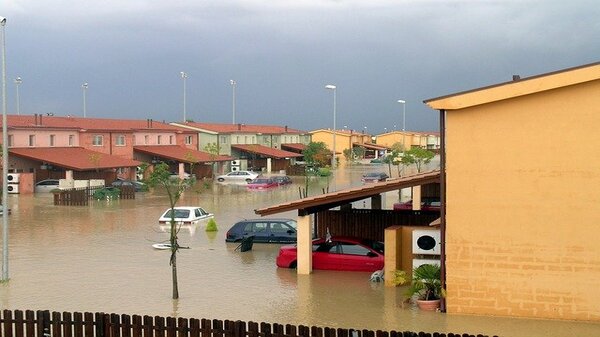
Unfortunately, recent flooding and storm events have again affected our area in Louisiana. Many people experienced flooding and storm damage to their homes and businesses. If you experienced flood or storm damage, please consider following these steps to ensure your damage claim is properly documented and submitted:

  • DOCUMENT, DOCUMENT, DOCUMENT - Once you are able, make sure to document the damages to your home and contents. Whether for a homeowners or flood insurance policy or to obtain government assistance, take plenty of photos and video of the damage. Make a list of the items that were damaged or destroyed. One way to organize this list is to group items from each room together, approximate its age, where it was purchased, and its value when purchased. It will be more difficult to document your claim once the cleanup or rebuilding begins.
  • OBTAIN MULTIPLE ESTIMATES -To the extent you are able, obtain multiple estimates for the work needed on your home. Pay for the estimate if necessary. If you have three estimates and the amounts are close, they are much more credible. Also, try and get as much detail as possible in each estimate, including specific materials to be used, dimensions, and finishes.
  • NOTIFY YOUR INSURER – Whether a homeowners or flood policy claim, or other insurance claim related to your business, promptly notify your insurer of your damage. Your insurer will send someone to inspect the damage and start your claim. Provide as much information as possible to make their job as easy as possible. That will likely quicken the pace of your claim.
  • FLOOD CLAIMS – If you have flood insurance, it is likely provided by the federal government through the National Flood Insurance Program (NFIP). There are specific rules for submitting your claim through the NFIP. YOU MUST SUBMIT FEMA FORM 086-0-11 (NOTICE OF LOSS) WITHIN 120 DAYS OF YOUR DAMAGE. You can find this form here.

Posted by:

Disclaimer

Keogh Cox & Wilson, Ltd. provides this blog as a public service for general information only. The materials contained herein may not reflect the most current legal developments or even express the opinion of all or even most of Keogh Cox attorneys. Such material does not constitute legal advice or form any attorney-client relationship. Keogh Cox and all contributing author(s) expressly disclaim all liability to any person with respect to the contents of this Web site and Blog and expect that no reliance will be made upon the information provided.

Continue Reading

Explore legal perspectives on the issues shaping Louisiana's key industries and courtrooms.

Insight

Make Sure You Are Sure! – A Comment on the Finality of Settlement Agreements under Louisiana Law

Preparing for a trial is a tense and stressful process for attorneys and their clients. Sometimes, during trial preparation, a crucial piece of evidence can come to light that may push a case from a path towards trial to a path towards a settlement agreement. A “settlement” or “compromise” under Louisiana law is just that – an agreement between the parties to settle the dispute raised in the lawsuit, usually with the exchange of a sum of money. Often, settlements are reached in the weeks leading up to trial or even on the courthouse steps.

This type of scenario occurred in Nola Title Company, LLC v. Archon Information Systems. While in the thick of trial preparation, audio recordings from one of the parties were discovered. That party concluded this evidence would be prejudicial to its case at trial, which spurred settlement negotiations. The parties eventually agreed to a compromise and notified the court of the settlement via an email to the judge’s law clerk. The next day, the attorneys reported to court and verbally outlined the terms of the settlement agreement on the official court record.

Two weeks later, the defendants hired new counsel. Two months after that, counsel for the plaintiff forwarded the formal settlement documents to memorialize the agreement that was made between the parties and entered into the court’s record. However, the defendants refused to sign the paperwork and did not timely make the payments that previously were agreed upon. Therefore, the plaintiff filed a motion to enforce the settlement agreement.

In opposition to the motion to enforce, the defendants argued: 1) that their prior counsel did not have authority to enter into the settlement agreement; and 2) that the agreement on the record of the court was invalid because it did not include a provision about the audio recording, which the defendant claimed was a key element of the agreement between the parties. After an evidentiary hearing, the trial court found that the settlement that was stated on the record was an enforceable settlement agreement.

The Louisiana Court of Appeals for the Fourth Circuit affirmed the ruling of the trial court. In its opinion, the appellate court includes a summary of the law governing settlements in Louisiana. After a thorough review of the applicable law, the court came to the following conclusions:

  • The settlement agreement on the record of the court was a binding settlement agreement, even if the parties contemplated a future formal written agreement;
  • When a compromise is placed on the record, the recital must include full disclosure of the material terms;
  • Any “missing terms” from the recorded settlement agreement were not a material element of the settlement; and
  • The defendants’ prior counsel had authority to enter into the settlement as written.

Based upon the court’s ruling, if the parties have a meeting of the minds and settlement terms are entered on the trial court record, there are no “do-overs” or “take-backs.” It is important to “make sure you are sure” when entering the crucial courthouse steps settlement agreement.

References:

Nola Title Company, LLC v. Archon Information Systems, et. al., 2022-CA-0967 (La. App. 4 Cir. 4/13/23), 360 So. 3d 166.

Insight

Umm, Should I Buy UM?

It’s a question you will have to answer if you purchase automobile liability insurance in Louisiana. While the question may appear simple, many people, even sophisticated people, do not fully understand the purpose of uninsured motorist coverage.

Uninsured motorist coverage (or “UM”) is a form of insurance that can be purchased to protect you, your family, your passengers and/or your workers in the event they are injured in an automobile accident when the at-fault driver is uninsured. Your auto liability policy will not cover your bodily injuries, lost wages and other damages caused by the fault of another.

UM coverage also responds in the case of “underinsured drivers.” An underinsured driver is one who is in fault in an accident, but does not possess sufficient insurance to respond to the loss. Unfortunately, if you are in an accident in Louisiana, or anywhere really, there is an unhealthy chance that you will encounter an uninsured or underinsured motorist.

In 2014, the Insurance Research Council estimated that over one in eight Louisiana drivers are uninsured. When you consider that many “insured drivers” are insured only with “minimum limits” policies, the chance of you needing UM coverage increases dramatically. While you are not required to carry UM coverage under Louisiana law, UM may be your best option.

In deciding whether to purchase UM, one factor you may consider is whether you have other available forms of insurance such as health insurance or a disability policy. Nevertheless, those types of policies may not meet all of your needs. For instance, neither will address any pain and suffering you have experienced. A second factor is the cost. UM coverage is often not as expensive as you might expect and is generally much less expensive than liability coverage.

UM coverage will be provided by Louisiana law if it is not “waived.” Your carrier should ask if you choose to purchase UM. If you indicate that you don’t want UM, you will be provided with a Waiver. Should you decide to waive this coverage, at least you will now know what you have waived.

“In 2014, the Insurance Research Council estimated that over one in eight Louisiana drivers are uninsured.”

Insight

Renewed or Was it New? Dispute over UM Coverage in Auto Policy

Louisiana law requires UM coverage in automobile liability insurance policies in the same amount as the policy’s bodily injury liability coverage. UM coverage will be included in the policy unless the insured rejects UM coverage, selects lower limits, or selects economic-only coverage. This rejection, selection of lower limits, or selection of economic-only coverage must be made on a form prescribed by the commissioner of insurance and must be signed by the insured or its legal representative. See La. R.S. 22:1295. If a rejection form is not completed, UM coverage will be read into the policy. However, a valid UM waiver form executed for a policy of insurance remains in effect when that policy is renewed with a few exceptions. Generally, execution of a new waiver form is not required unless a new policy is issued or the liability limits increased. These basic principles were considered in the recent First Circuit decision in Johnson, et al. v. Bass, Geico General Ins. Co., and GoAuto Management Services, LLC, 2021 CA 0139 (La. App. 1 Cir. 12/22/21).

In Johnson, the plaintiff obtained a policy of insurance from GoAuto on July 17, 2015 and validly rejected UM coverage on the commissioner’s UM rejection form. The plaintiff renewed the policy multiple times and also completed an “Application for Personal Automobile Insurance” on February 23, 2018 to add her husband and an additional vehicle to the policy.

The Johnson plaintiff was in a motor vehicle accident on November 26, 2019 and claimed UM benefits under the policy. She argued that the insurance application she completed in February 2018 to add a new driver and a new vehicle to the policy created a new policy of insurance that required completion of a new UM waiver form. Because a new UM waiver form was not executed in February 2018, the plaintiff argued that UM coverage should be read into the policy. Thus, the question posed to the court was whether the 2018 policy became new or was simply a renewal. The trial court found that the policy was a renewal and dismissed the UM claim.

The First Circuit affirmed and rejected the plaintiff’s argument holding, “the language of La. R.S. 22:1295 is clear and unambiguous; only changes in the ‘limits of liability’ to an existing policy will create a new policy that requires the completion of a new UM selection form.” Despite multiple renewals, the liability limits of the policy did not change from the date it was issued through the date of the accident. Importantly, the limits also did not change when the new driver and vehicle were added to the policy in February 2018. Thus, no new policy was created. The original rejection of UM coverage remained in effect, and the plaintiff’s claims against her alleged UM insurer were dismissed.

Christopher K. Jones

Managing Partner
Flood
Insurance
Louisiana