Insight

Impact of the U.S. Supreme Court’s Decision in Trump v. CASA, Inc. on Universal Injunctions and Class Actions

Published on: July 15, 2025
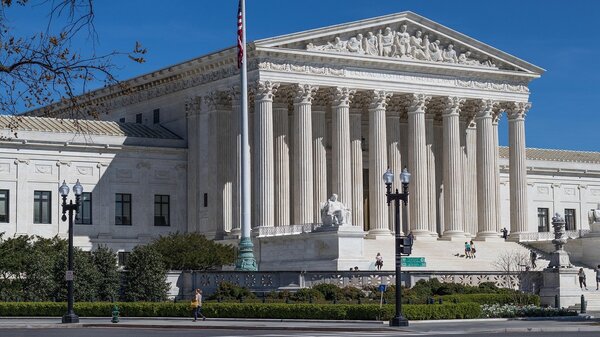
On June 27, 2025, in an Opinion authored by Justice Amy Coney Barrett, the United States Supreme Court determined that “universal injunctions,” injunctions issued by district judges that apply nationwide, “likely exceed the equitable authority that Congress has given to federal courts.” In Trump v. CASA, Inc., the Supreme Court, with a 6-3 vote, concluded that district courts do not have authority to issue universal injunctions which seek to prohibit the enforcement of a law or policy against anyone nationwide. The decision limits the relief afforded by the district courts in consolidated matters to only the parties in those actions.

By prohibiting the use of “universal injunctions” in federal courts, litigants already have started to utilize another procedure to seek the relief they seek – class actions. Class actions are a special procedure provided by both federal and state law that allows one or more class representatives to file suit and seek to represent the interests of other similarly situated individuals or companies. Prior to the Supreme Court’s ruling in Trump v. CASA, Inc., a single litigant could apply for a universal injunction through an individual action. Now that the Supreme Court has declared that process unavailable for application of an injunction nationwide, class actions may be the procedural process litigants attempt to use to achieve that same purpose. It remains to be seen whether class actions will be an effective way to achieve broader relief for individuals impacted by government policies.

References:

Trump v. CASA, Inc., --- S.Ct. ---, No. 24A884, 2025 WL 1773631 (U.S. June 27, 2025).

Posted by:

Disclaimer

Keogh Cox & Wilson, Ltd. provides this blog as a public service for general information only. The materials contained herein may not reflect the most current legal developments or even express the opinion of all or even most of Keogh Cox attorneys. Such material does not constitute legal advice or form any attorney-client relationship. Keogh Cox and all contributing author(s) expressly disclaim all liability to any person with respect to the contents of this Web site and Blog and expect that no reliance will be made upon the information provided.


Continue Reading

Explore legal perspectives on the issues shaping Louisiana's key industries and courtrooms.

Insight

Supreme Court Establishes Shifting Burden of Proof for Additional Medical Opinions (“AMO”)

Louisiana Code of Civil Procedure article 1464 allows a defendant to select a physician to perform a physical and/or mental examination of a plaintiff to challenge the plaintiff’s claimed physical and mental injuries. This is called an Additional Medical Opinion (AMO); this was previously referenced as an Independent Medical Examination (IME). Earlier this year, the Louisiana Supreme Court, outlined the “good cause” requirement of the statute—an essential element required to proceed with an AMO. But, what remained as a question was the scope of an AMO and which party had the burden to deal with requested restrictions on the physician’s medical exam. This question was answered: In Augustine v. Safeco Insurance Company of Oregon, the Louisiana Supreme Court held that after “good cause” has been shown for the examination, the party seeking to limit the scope of the AMO bears the burden to justify the restrictions.

In Augustine, a sequel to Hicks v. USAA General Indemnity Company, Et al, the Court held that if the party to be examined for the AMO, usually the plaintiff, wants to place limits upon the examination, that party then has the burden of proof to justify the need for any restrictions or limitations with competent evidence. This ruling appears to show a trend in which the Court is confirming a defendant’s ability to obtain an AMO to support its defenses to a personal injury claim. Augustine follows another Supreme Court decision from March of 2022, in which the Court held that a party establishes “good cause” for an AMO if that party shows a “reasonable nexus” between the requested examination and the condition in controversy. See Hicks v. USAA General Indemnity Company, Et al. The Hicks decision eased the hurdles that defendants faced when seeking to compel AMOs pursuant to Louisiana Code of Civil Procedure article 1464. For more information on the Hicks decision, see our prior blog here. Supreme Court Clarifies “Good Cause” for Additional Medical Opinion (“AMO”) (keoghcox.com)

In Augustine, the defendants requested an AMO. The plaintiff agreed to the examination, but the parties were unable to agree on “certain restrictions” the plaintiff sought to impose on the scope of the examination. The defendants ultimately filed a Motion to Compel regarding this issue. The District Court limited the examination to only those tests that the plaintiff’s treating physicians had performed. The District Court also noted that it did not want the AMO to turn into a “fishing expedition.” The Court of Appeal denied the defendant’s request for review of the Trial Court’s decision. The defendants then sought relief from the Supreme Court, which vacated the Trial Court’s ruling and remanded the case for further proceedings consistent with its opinion.

In its opinion, the Supreme Court set forth the burden of proof each party has in the context of a Motion to Compel an AMO. As outlined in Hicks, the party requesting the AMO initially has the burden to establish “good cause” for the AMO. Importantly, the Augustine court found that once “good cause” has been found, “the court should presume that the examination will be conducted in a reasonable manner.” Because it is presumed the examination will be conducted reasonably, if a party opposing the AMO wants to place restrictions on the examination, the burden now shifts to that party to establish “special circumstances” that justify the restrictions they request. To meet this burden, the opposing party must produce “competent evidence” to establish (1) the need for the restriction and (2) that harm that will result if the restrictions are not imposed. The type of evidence that may support AMO restrictions under Augustine likely will vary depending on the unique facts of each case. However, Hicks and its “sequel,” Augustine, provide clarification and guidance to parties seeking to compel or limit an AMO under article 1464.

Case References:

Augustine v. Safeco Insurance Company of Oregon, 2021-01753 (La. 10/1/22), __ So.3d __.

Hicks v. USAA General Indemnity Company, Et al., 2021-00840 (La. 3/25/22), 339 So.3d 1106.

Written by Chad A. Sullivan and George A. Wright

Insight

Treating Physician Testimony – Pitfalls for Plaintiffs & Opportunities for Defendants

A party that wants to rely upon the testimony of a treating physician to support a personal injury case in federal court should be sure to consult the Federal Rules of Civil Procedure. Different rules will apply depending on the scope of the treating physician’s testimony.

Rule 26 sets two standards for expert disclosures. 26(a)(2)(C) sets a “lower standard” that typically applies to treating physicians. Under this standard, the treating physician may provide testimony beyond his personal knowledge, but he must base his opinions on “facts or data obtained or observed in the course of the sequence of events giving rise to the litigation.” LaShip, LLC v. Hayward Baker, Inc., 296 F.R.D. 475 (E.D.La. Nov. 13, 2013). Further, the physician may be permitted to testify regarding causation and future medical treatment if these opinions come from the doctor’s actual treatment of the party.

Under this “lower standard,” the party seeking to offer the physician’s testimony, usually the plaintiff, must timely disclose: (1) the subject matter on which the treating physician is expected to present evidence; and (2) a summary of the facts and opinions to which he is expected to testify. Importantly, production of a plaintiff’s medical records alone is not sufficient – the plaintiff must actually provide a summary of the physician’s opinions. See e.g. Williams v. State, 2015 WL 5438596, at *4 (M.D. La. Sept. 14, 2015). If the party fails to timely disclose this information, he runs a substantial risk of having his testimony excluded from trial.

Where the physician’s testimony goes beyond the medical records or his treatment of the plaintiff, a “higher standard” can apply to the physician’s testimony. Rule 26(a)(2)(B). The physician may be required to produce a complete expert report to disclose: (1) a complete statement of all opinions the witness will express and the basis and reasons for them; (2) the facts or data considered by the witness in forming them; (3) any exhibits that will be used to summarize or support them; (4) the witness’s qualifications, including a list of publications authored in the last 4 years; (5) a list of all cases the expert has been used as an expert at trial or in depositions; and (6) a statement of the compensation the witness is to be paid for his work and testimony.

Application of this “higher standard” often turns on the frequency and recency of the physician’s treatment. Courts are also more likely to apply the higher standard when the physician’s opinions are based general scientific knowledge of the plaintiff’s condition rather than his actual treatment of the plaintiff.

John Grinton, a Keogh Cox associate whose practice areas include commercial and construction litigation. When he is not practicing law, John spends most of his time with his wife and son, and their two dogs.

Insight

Too Much Money and No One to Give it to- The Cy Pres Doctrine

What happens when someone leaves money in a will to a charity that has closed its doors by the time the will is probated? In this strange circumstance, a court may apply the “cy pres doctrine” to answer this question. Cy pres is a French term which loosely translates to mean “as near as possible.” In modern litigation, cy pres is not only used to distribute charitable donations, but also to distribute millions of dollars left over in class action settlements.

In the example above, a court may use cy pres to transfer the donated money to a charity similar to the one that had shut down. In class actions, there are often funds left over when not enough people register to receive money under a settlement. In this situation, the court will use cy pres to decide where this money goes; but that decision is a tricky one. Courts will sometimes direct these funds to a governmental entity loosely related to what the lawsuit was about. Other times these funds will go to a charity. Whatever the choice, there are usually complaints.

In one case, a nationwide class of AOL customers agreed to a settlement in a class action filed in California. Even though class members lived all over the country, the cy pres funds went to a legal aid office in Los Angeles, where the judge’s husband served as a director. This raised some eyebrows.

In another case, Kellogg’s settled a class action filed because its advertisements claimed that frosted mini-wheats improved kids’ brain power, which -sadly- turned out not to be true. Those cy pres funds initially went to a charity designed to feed the poor. However, the court later ruled that the funds should have gone to a group that protected the public from false advertising.

As more and more cases like these garnered attention, rules were passed as to how to distribute these funds. Generally, these rules require some connection between the issues in the lawsuit and the mission of the group that gets the funds. While the United States Supreme Court has yet to address these issues, Chief Justice Roberts recently indicated that the Court may be ready to put its stamp on cy pres.

We may be “as near as possible” to some clarity in the murky law of cy pres.

Christopher K. Jones

Partner
Class Actions
Litigation
Supreme Court