Insight

Insurance: “ACV,” Depreciation, or Both

Published on: February 19, 2021
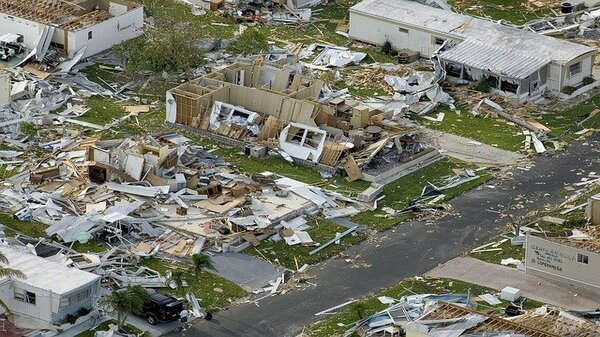
In Louisiana, we are all too familiar with natural disasters. Every “hurricane season,” we hope the storm causes only minor inconvenience; but history teaches us to prepare for more. When these storms come, home and business owners inevitably make post-disaster insurance claims to repair the damage. While the specific amount owed for property damage is determined by the terms of the policy, the amount received may be affected by when (and if) the damage is repaired.

An insurer will work with you to identify the “actual cash value” or “ACV” of the damaged property when handling your claim. “ACV” is defined as the cost to repair/replace the damage, less depreciation. Jouve v. State Farm Fire and Cas. Co., 2010-1522 (La.App. 4 Cir. 8/17/11), 74 So.3d 220. Many policies provide that an insurer is not obligated to provide you with more than the “ACV” of the damage, unless and until you actually make repairs. Later, you can recover the depreciation amount once you submit proof that the repairs are complete. Courts have enforced such provisions in many cases, regardless of the type of loss.

So, what happens if you never make the repairs? Simply, the insurance company may never owe the depreciation. In Hackman v. EMC Ins. Co., 07-552 (La.App. 5 Cir. 3/25/08), 984 So.2d 139, the plaintiff’s property was damaged by a fire. The insurer paid the ACV of the loss but withheld depreciation pending repairs. The plaintiff never made the repairs and ultimately sold the property. The Court ruled the plaintiff was not entitled to recover the difference.

Similarly, in Jouve v. State Farm Fire & Cas. Co., supra, the plaintiffs’ home was damaged by wind during Hurricane Katrina. Their insurer paid the ACV of the loss. Thereafter, the plaintiffs sold the home “as is” and sought recovery for the depreciation. The court reviewed the policy and found the plaintiffs’ sale of the home without repairs limited their recovery to ACV.

As with any insurance claim, you should always read your policy before losses occur to ensure you understand its terms and conditions. Maybe add this as an unusual step to your hurricane checklist. As these cases show, your ultimate recovery can be affected by what you do, or do not do, following the loss.

Posted by:

Disclaimer

Keogh Cox & Wilson, Ltd. provides this blog as a public service for general information only. The materials contained herein may not reflect the most current legal developments or even express the opinion of all or even most of Keogh Cox attorneys. Such material does not constitute legal advice or form any attorney-client relationship. Keogh Cox and all contributing author(s) expressly disclaim all liability to any person with respect to the contents of this Web site and Blog and expect that no reliance will be made upon the information provided.


Continue Reading

Explore legal perspectives on the issues shaping Louisiana's key industries and courtrooms.

News

Mary Anne Wolf will present Construction Insurance at the LSU and LSBA Construction Law CLE Program.

Mary Anne Wolf will present Construction Insurance at the LSU and LSBA Construction Law CLE Program on September 20, 2024.

Insight

The “Great Flood of 2016”--Update and Resources

“Disaster Declaration” Expanded. The list of parishes now declared disaster areas by the federal government has increased to include the following parishes: Acadia, Ascension, East Feliciana, Iberia, Lafayette, Pointe Coupee, St. Landry, and Vermilion.

http://gov.louisiana.gov/news/additional-parishes-added-to-federal-disaster-declaration-8-16-16

Potential Tax Implications for Flood Victim. For those insured, it is critical that you document your losses with as much detail as possible; serial numbers, make/model/description—the more detail the better. Keep receipts and credit card statements. Time-dated photos are also important. Even those without flood insurance should do the same as it may assist in obtaining FEMA assistance. However, the same documentation of your losses could also help to reduce your tax exposure. The attached link provides key information and outlines the impact the flooding may have on tax-filing and other deadlines.

https://www.irs.gov/uac/tax-relief-for-victims-of-severe-storms-flooding-in-louisiana

Insight

Compelling Arbitration of Commercial Property Insurance Claims under the New York Convention

In the wake of recent hurricanes, Louisiana courts were flooded with cases property owners filed against their insurers alleging improper denial or underpayment of hurricane claims. Many of those cases were stayed and the parties were compelled to arbitration, despite Louisiana law prohibiting arbitration provisions in insurance contracts, La. R.S. 22:868(A)(2).

In a typical case involving commercial property, a property owner filed suit against its insurers, often including both domestic and foreign companies. One or more insurance policies contained an arbitration agreement requiring all disputes to be resolved by arbitration in a specified U.S. city. Undeterred, the insured filed suit in Louisiana state court. The insurers removed the case to federal court and filed a motion to compel arbitration.

The foreign insurers sought to enforce the arbitration agreement under the Convention on the Recognition and Enforcement of Foreign Arbitral Awards (aka the New York Convention). The New York Convention is an international treaty that requires signatory countries to enforce an arbitration agreement where four requirements are met: (1) a written arbitration agreement exists, (2) that provides for arbitration in a signatory country, (3) which arises from a commercial legal relationship, and (4) at least one party is not a U.S. citizen. These conditions are met where a foreign insurer issues a commercial policy that contains an arbitration provision to a U.S. property owner. Under such circumstances, the courts were bound to compel the parties to arbitration.

The cases presented some interesting questions. For example, could domestic insurers also compel arbitration? Yes. Under the doctrine of equitable estoppel, where the claims against the insurers are interdependent, the domestic insurers, even if they were not signatories to the arbitration agreement, could compel arbitration.

Does the McCarran-Ferguson Act, a federal law that maintains the states’ power to regulate the insurance industry, cause Louisiana’s law prohibiting arbitration in insurance contracts to reverse-preempt the Convention? No, the Act does not apply to treaties.

What about the arguments that the contract was not freely negotiated, or that under conflict of laws principles Louisiana law should apply, or that the federal courts should abstain because the state has a vital interest in regulating insurance? The courts rejected these arguments as well.^

Recently, the U.S. Fifth Circuit Court of Appeals, in Bufkin Enterprises, LLC v. Indian Harbor Ins. Co., affirmed that equitable estoppel applied to allow domestic insurers to compel arbitration under the New York Convention even where the insured dismissed the foreign insurers with prejudice.* However, the U.S. Second Circuit has held the opposite in two recent cases involving insurance contracts between foreign insurers and Louisiana property owners – that Louisiana law applied to prohibit the enforcement of the arbitration provision in the insurance policy.^^

With the exception of the Second Circuit split, the numerous cases arising from recent hurricanes confirm a strong policy favoring arbitration under the New York Convention, which overrides potential state law obstacles to enforcing arbitration provisions in insurance policies.

Mary Anne Wolf is an arbitrator on the commercial, construction and large, complex cases panels of the American Arbitration Association and is a neutral at Perry Dampf Dispute Solutions.

References:

^ See for example, General Mill Supplies, Inc. v. Underwriters at Lloyd’s, London, et al, 23-6464, 2024 WL 216924 (E.D. La. 1/19/2024), - F.Supp.3d – (2024); Dryades YMCA v. Certain Underwriters at Lloyds, London, et al, 23-3411, 2024 WL 398429 (E.D. La. Jan. 31, 2024); Parish of Lafourche v. Indian Harbor Ins. Co., et al, 23-3472, 2024 WL 397785 (E.D. La. Feb. 2, 2024).

* Bufkin Enterprises, LLC v. Indian Harbor Ins. Co., et al, 96 F.4th 726 (5th Cir. Mar. 26, 2024).

^^ See Certain Underwriters at Lloyds, London v. 3131 Veterans Blvd. LLC, 22-9849, 2023 WL 5237514 (S.D.N.Y. Aug. 15, 2023); and Certain Underwriters at Lloyd’s, London v. Mpire Properties, LLC, 22-9607, 2023 WL 6318034 (S.D.N.Y. Sept. 28, 2023) (appeal filed).

Sydnee D. Menou

Partner
Construction
Flood
Insurance
Property
Hurricane