Insight

Jury Duty Part 2: Am I exempt from being a juror?

Published on: November 10, 2017
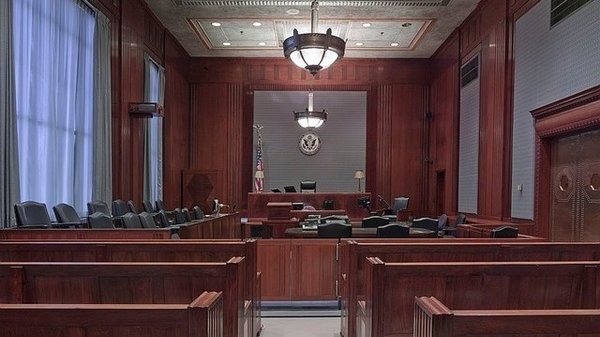
“There were eleven votes for 'guilty.' It's not easy for me to raise my hand and send a boy off to die without talking about it first.” - Reginald Rose, Twelve Angry MenJury service is a civil duty. Our system would collapse without the diligent individuals who respond and serve, but the law does provide exemptions and exceptions which may be utilized to be excused. Part 2 of this blog will explore those circumstances.General Exemptions

Louisiana provides two general exemptions from jury service.

1 - Age. Persons seventy years of age or older shall be exempt from jury service and may decline to serve as jurors. La. Const. Ann. art. V, § 33. However, they are free to serve if otherwise qualified.

2 - Prior Service. The second, all “persons who have served as grand or petit jurors in criminal cases or as trial jurors in civil cases or in a central jury pool during a period of two years immediately preceding their selection for jury service.” La. Sup. Ct. R. 25.

No exemption is automatic. A prospective juror qualifying for one of the above exemptions must assert the exemption by contacting the appropriate jury commission.

Recognized Excuses

In criminal cases, a juror may be excused when such service “would result in undue hardship or extreme inconvenience.” C.Cr.P. art. 783

In civil cases, a juror may be excused when service would result in “undue or extreme physical or financial hardship.” However, these circumstances are limited to circumstances in which an individual would:

1. Be required to abandon a person under his or her personal care or supervision due to the impossibility of obtaining an appropriate substitute care giver during the period of participation in the jury pool or on the jury; or

2. Incur costs that would have a substantial adverse impact on the payment of the individual's necessary daily living expenses or on those for whom he or she provides the principal means of support; or

3. Suffer physical hardship due to an existing illness or disease. La. Rev. Stat. Ann. § 13:3042

With respect to both criminal and civil service, a request for excusal can be mailed to the issuing court and should include an explanation of circumstances. In most cases, the letter must also include supporting documentation, such as, “state income tax returns, medical statements from licensed physicians, proof of dependency or guardianship, and similar documents, which the judge finds to clearly support the request to be excused.” “Failure to provide documentation shall result in a denial of the request for a waiver.” La. Rev. Stat. Ann. § 13:3042You should serve if you can but, if you need to be excused, questions regarding exemptions, excusals, and/or qualifications should be directed to the appropriate jury commissioner’s office.

Posted by:

Disclaimer

Keogh Cox & Wilson, Ltd. provides this blog as a public service for general information only. The materials contained herein may not reflect the most current legal developments or even express the opinion of all or even most of Keogh Cox attorneys. Such material does not constitute legal advice or form any attorney-client relationship. Keogh Cox and all contributing author(s) expressly disclaim all liability to any person with respect to the contents of this Web site and Blog and expect that no reliance will be made upon the information provided.


Continue Reading

Explore legal perspectives on the issues shaping Louisiana's key industries and courtrooms.

Insight

Keogh Cox Partner Secures Defense Verdict in Fatal Shooting Case

Andrew Blanchfield, Managing Partner at Keogh Cox, represented the Louisiana Office of State Police and a State Trooper in a recent wrongful death jury trial in the 19th Judicial District Court in Baton Rouge. In the case, Andrew Arway was fatally shot during a traffic stop in Avoyelles Parish on May 24, 2004 by a Louisiana State Trooper.

The Trooper's dash cam video established that the traffic stop was initiated at 4:30 a.m. However, Arway did not initially stop his vehicle and instead drove forward slowly for several hundred feet. Once Arway's vehicle came to a stop, he exited, placed his hands in his pockets, and began to move to the front of his truck, ignoring the Trooper’s commands. Arway then made the motion of searching for a weapon. At one point, he formed his hands as if he held a gun and yelled “freeze.” In response, the Trooper loudly commanded Arway to place his hands where they could be seen. Arway again ignored the Trooper's commands and moved towards a ditch, outside of camera view.

The Trooper testified that Arway continued to make gestures as if he was looking for a weapon around his ankle. According to the Trooper, he fired two shots when he lost sight of Arway’s hands. No weapon was found on Arway and his blood alcohol level was twice the legal limit.

Arway’s wife and children brought a wrongful death action alleging excessive force. At trial, Blanchfield argued that the Trooper’s force was reasonable and that the Trooper justifiably feared for his life in view of Arway’s bizarre and threatening behavior. Evidence was also presented that Arway’s behavior was consistent with a “suicide by cop” theory.

The Baton Rouge jury deliberated for 90 minutes and concluded that the Trooper’s use of force was reasonable under the circumstances.

Andrew "Drew" Blanchfield is a litigator with over 30 years of courtroom experience. Litigating dozens of complex jury trials in state and federal courts, Drew has offered representation to various sectors to include industrial accidents, business litigation, oil and gas, healthcare, and professional liability defense. When he is not advising his corporate clients or in a court room (or on the tennis court), Drew spends time with his wife and four children.

Insight

What ifs….. Indemnifying Premises Liability Exposure

If you are a property owner, stop and think about the “what ifs” before you enter into a lease with a property manager or lessee. For example, what if an invitee of the property that you own is hurt while on and/or because of a condition on the property? Who is responsible?

A property owner may be able to transfer its potential liability to a property manager or lessee of the property if the lease contains an indemnification provision. However, not all indemnification provisions are enforceable, and these critical provisions are often litigated.

The Eastern District Court of Louisiana recently enforced an indemnification provision, granting summary judgment to a landowner who sought indemnification from its property lessee in Avila v. Village Mart, LLC, Civ. A. No. 20-1850, 2021 WL 4439579 (E.D. La. 9/28/21). In the case, a shopping center leased retail space to a men’s store. Before the store opened, a painter was injured when he fell from a ladder. The owner of the shopping center argued that the lessee owed a defense. It argued indemnity applied because the plaintiffs’ claims arose out of the lessee’s buildout construction, over which the owner did not have any care, custody, or control.

In response, the lessee argued that the owner was not entitled to indemnification because the plaintiffs’ claims did not “arise out of or were connected with Tenant’s use, occupancy, management or control of the Leased Premises.” The lessee claimed that it was not using, occupying, managing, or controlling the leased space because the only permitted use of the space was to sell menswear, and the space was not being used for this purpose at the time of the accident.

Louisiana courts often apply a “but for” causation test to such “arising out of” language in indemnity provisions. Avila, 2021 WL 4439579, at *5, citing Kan. City S. Ry. Co. v. Pilgrim’s Pride Corp., No. 06-03, 2010 WL 1293340, at *6 (W.D. La. Mar. 29, 2010), and Perkins v. Rubicon, Inc., 563 So.2d 258, 259-60 (La. 1990). The court observed the lessee’s arguments contradicted language in the lease that allowed the lessee to use and occupy the store before it opened to the public. The lease also explained that the lessee was responsible for certain construction work and identified specific dates to begin work and to open the store. Thus, the lease contemplated use and occupancy before the store was open to the public. The court found that the lessee’s possession of the space and its construction obligations under the lease established its use and occupancy of the space. The court stated:

Given the broad language in the indemnity agreement – ‘arising out of or connected with’ – [the plaintiffs’] injuries, resulting from his work as a subcontractor painting the premises leased by [the retail space lessee,] are connected to [its] use and occupancy of the premises. … Because [the retail space lessee] was in possession of the space, and had assumed responsibility for the buildout and for contractors and subcontractors working on the buildout, the Court finds that the plaintiffs’ liability theories fall within the scope of the indemnity provision in the lease. Avila, 2021 WL 4439579, at *6.

The enforceability of indemnity provisions such as the one examined in Avila will continue to be litigated. In the meantime, Avila reminds us of the importance of sound indemnity language to anticipate the “what ifs.”

Insight

Wage Garnishment –Failure to Comply with Louisiana Procedures Can Result in Costly Penalties for Louisiana Employers

Although courts have described the outcome as “harsh,” a recent ruling shows that a judgment creditor can recover the full amount of an employee’s unpaid debt from an employer if that employer fails to comply with specific garnishment procedures.

A party that prevails in a lawsuit and is awarded damages is known as a judgment creditor. In order to collect on the judgment, Louisiana law allows a judgment creditor to garnish the wages of the judgment debtor, the party cast in judgment. Once a judgment against an employee is obtained, the judgement creditor may issue garnishment interrogatories to the employer requesting information related to the employee’s job, rate of compensation, manner of payment, and whether there are other judgments or garnishments affecting the employee’s compensation.

It is imperative that the employer file sworn answers to all garnishment interrogatories within 30 days from the date of service.^ Louisiana courts treat unsworn answers to interrogatories as a failure to answer,* and an employer’s failure to timely answer garnishment interrogatories can result in costly penalties. In fact, a Louisiana employer can be held liable for the full amount of the employee’s judgment if procedural requirements are not followed.

La. C.C.P. art. 2413(A) states that if the employer fails to answer the garnishment interrogatories within 30 days from the date of service, then the judgment creditor may proceed against the employer for the amount of the unpaid judgment, with interest and costs. La. C.C.P. art. 2413(B) provides that the employer must pay the entire amount of the judgment unless it proves the actual amount it owed to the employee at the trial on the contradictory motion. Regardless of the decision on the contradictory motion, La C.C.P. art. 2413(C) requires the employer to pay the costs and reasonable attorney’s fees of the judgment creditor.

The First Circuit Court of Appeals recently examined these procedures in Tower Credit, Inc. v. Williams.^^ The judgment creditor in the Tower Credit case issued garnishment interrogatories to the judgment debtor’s employer. However, the employer failed to timely respond to garnishment interrogatories. When the judgment creditor filed a Motion for Judgment Pro Confesso against the employer to require it to appear and present evidence regarding the amount of wages it should have withheld after receiving the garnishment interrogatories, the employer failed to appear for the hearing.

Given the employer’s failure to timely respond to the interrogatories and its failure to appear for the hearing, the First Circuit found that the creditor was entitled to a judgment pro confesso against the employer for the entire amount of the employee’s debt. Citing the unique facts of the case, which included evidence that the judgment debtor/employee no longer worked for the employer cast in judgment, the Louisiana Supreme Court recently granted vacated part of the judgment pro confesso and remanded the matter for rehearing.**

However, this case shows that Louisiana courts will enforce La. C.C.P. art. 2413 and cast an employer in judgment for its employee’s debt, even though courts have described the statute’s penalties as “harsh.” Tower Credit shows that employers should respond to garnishment interrogatories within the timeframe provided by law. In the event the deadline is passed, La. C.C.P. art. 2413(B) requires the employer to appear for the judgment pro confesso hearing if it intends to argue it should not be indebted for the judgment. Failure to do both could result in the employer being held liable for the full amount of its employee’s unpaid debt.

References:

^ See La. C.C.P. art. 2412(D).

*See All Star Floor Covering, Inc. v. Stitt, 804 So. 2d 705 (La. Ct. App. 1st Cir. 2001).

^^Tower Credit, Inc. v. Williams, 2022-0106 (La. App. 1 Cir. 9/16/22), 352 So. 3d 1029, writ granted, judgment vacated in part, 2022-01556 (La. 2/7/23), 354 So. 3d 659.

**Tower Credit, Inc. v. Williams, 2022-01556 (La. 2/7/23), 354 So. 3d 659.

Richard W. Wolff

Partner
Louisiana
State Courts
Jury