Insight

Louisiana Supreme Court Uses Reason to Decide Case Involving Tragic Facts

Published on: September 16, 2022
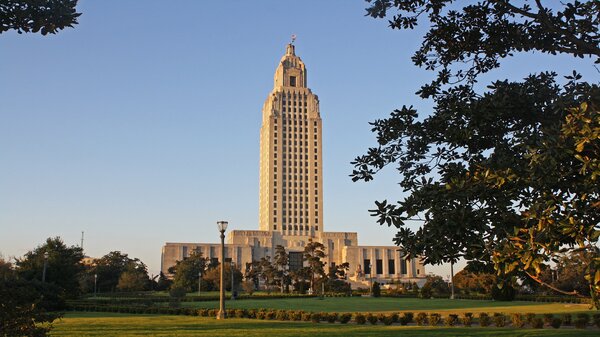
Sometimes in law, the facts of a case may threaten to eclipse the legal issue. However, Louisiana law instructs the fact finder to see through the facts, and their sometimes tragic nature, and apply the law as written. As Aristotle once wisely said, “The Law is reason free from passion.”

In Kazan, et. al. v. Red Lion Hotels Corporation, et. al., 2021-CC-01820 (La. 6/29/22), the Louisiana Supreme Court recently ruled on a case with tragic facts, and its ruling provides an example of Aristotle’s description of law in action. In Kazan, a female patron was in the parking lot of a motel when a male patron approached her and used Kazan’s vehicle to abduct her from the premises. The car was later found submerged in a lake, and Kazan’s body was recovered from the water. The family filed a tort suit against several parties, including the motel’s owner and its insurer, the Great Lakes Insurance Company SE.

Great Lakes filed a motion for summary judgment and asked to be dismissed on grounds that coverage for the event was excluded from its policy. Specifically, the insurer argued that bodily injury caused by an “assault,” “battery,” or “physical altercation” was excluded under the policy’s terms. Great Lakes further argued that the kidnapping and ultimate death of the patron was excluded under the policy as bodily injury caused by an assault, battery, or physical altercation. The Louisiana Supreme Court agreed and reversed the decision of the trial and appellate courts.

Under Louisiana law, “[a]n insurance policy is a contract between the parties and should be construed using the general rules for the interpretation of contracts.” Id. at p. 3. “When the words of an insurance policy are clear and explicit and do not lead to absurd consequences, courts must enforce the language as written.” Id. at p. 3. “Courts lack authority to alter the terms of an insurance policy under the guise of interpretation and should not create an ambiguity where none exists.” Id. at p. 3.

With these basic rules in mind, the Court carefully reviewed the wording of the exclusion in the Great Lakes policy which stated as follows: “This insurance does not apply to ‘bodily injury,’ ‘property damage,’ or ‘personal advertising injury’ arising out of an ‘assault,’ ‘battery,’ or ‘physical altercation.’” “Physical altercation” was defined in the policy as “a dispute between individual [sic] in which one or more persons sustain bodily injury arising out of the dispute.” Citing Merriam-Webster’s dictionary, the Court defined the term “dispute” as “verbal controversy” or “quarrel.”

Based upon the evidence in the case, the Court found the female patron was involved in a “dispute” with her male attacker, and ultimately sustained bodily injury as a result of the dispute. Therefore, the patron was injured in a physical altercation, as defined under the specific terms of the Policy, and coverage for the event was excluded under the policy’s terms.

The Court noted as follows: “The facts of this case are undoubtedly tragic. Nonetheless, absent a conflict with statutory provisions or public policy, insurers are entitled to limit their liability by imposing reasonable conditions upon the policy obligations they contractually assume. That is what Great Lakes did in the insurance policy at issue here.” Despite the tragic facts presented in the case, in so holding, it appears the court agreed with Aristotle’s belief that the Law is Reason Free from Passion.

Posted by:

Disclaimer

Keogh Cox & Wilson, Ltd. provides this blog as a public service for general information only. The materials contained herein may not reflect the most current legal developments or even express the opinion of all or even most of Keogh Cox attorneys. Such material does not constitute legal advice or form any attorney-client relationship. Keogh Cox and all contributing author(s) expressly disclaim all liability to any person with respect to the contents of this Web site and Blog and expect that no reliance will be made upon the information provided.


Continue Reading

Explore legal perspectives on the issues shaping Louisiana's key industries and courtrooms.

Insight

Volunteer Firemen "On the Hook" in Louisiana

The Louisiana Supreme Court recently held that the workers' compensation tort immunity provided by LSA-R.S. 23:1032 does not apply to suits by one volunteer fireman against another volunteer. See Champagne v. American Alternative Insurance Corp., 12-1697 (La. 3/19/13), -- So.3d ---. LSA-R.S. 23:1036 provides that workers' compensation is the sole and exclusive remedy provided to a volunteer fireman against a fire company. Champagne clarified that this immunity does not similarly apply to claims for personal injury brought by one volunteer fireman against another.

The last sentence of LSA- R.S. 23:1036(A) states as follows:

The remedies provided herein shall constitute the exclusive remedy of the volunteer member against the fire company as provided in R.S. 23:1032.

In Champagne, the attorney for the defendants argued that the legislature's incorporation of LSA-R.S. 23:1032 reflected the intent to extend immunity beyond the language provided by LSA-R.S. 23:1036(A). The defendants asserted that this last sentence has internal inconsistencies; the first portion of the sentence "standing in isolation, can be read to limit workers' compensation immunity solely to the fire company, whereas its last phrase specifically incorporates La. R.S. 23:1032, which applies workers' compensation tort immunity to officers and employees of the employer or principal." Defendants further argued that, "to not include co-volunteers as co-employees under La. R.S. 23:1032 is to render the phrase, 'as provided in La. R.S. 23:1032,' superfluous and meaningless."

The Supreme Court disagreed with the defendants' statutory interpretation arguments. The Court stated: "[t]he fundamental question in all cases of statutory construction is legislative intent and the reasons that prompted the legislature to enact the law." In assessing the legislative intent, the Court gave a "narrow construction" of the statute because the statute sought to provide immunity in derogation of "the delictual rights of injured workers existing in the Louisiana Civil Code." Under this narrow construction, "every presumption should be on the side of preserving the general tort or delictual rights of an injured worker..."

Utilizing a narrow (or "strict") construction of LSA-R.S. 23:1036, the Court found that the legislature did not expressly provide immunity to volunteer firemen. Further, the Court did not find intent to provide such immunity in the legislative history.

Champagne is not the first time a Louisiana court has commented on the application of Louisiana's Workers' Compensation Law to volunteer firemen. In 1994, the First Circuit held that a volunteer fireman was not an "employee" of the fire district and therefore was not eligible for workers' compensation benefits. See Genusa v. Pointe Coupee Volunteer Fire Dist. No. 4, 93-2214 (La. App. 1 Cir. 10/7/94); 644 So.2d 851. The Genusa Court reasoned that workers' compensation did not apply when there was no employer-employee relationship, and that an employer-employee relationship does not exist without compensation.

The Champagne Court expressed its belief that LSA-R.S. 23:1036 was likely enacted in response to Genusa. However, the statute only granted volunteer members of fire companies "some workers' compensation benefits" and did not change "the law to define a volunteer member... as an 'employee' of the fire company for the purposes of immunity under the workers' compensation law." Emphasis added.

Both the Supreme Court and the appellate court in Champagne observed that a denial of immunity to volunteer firemen "may make members of the community reluctant to act as volunteers at their local department." However, the legislature did not clearly provide for such immunity according to Champagne. It would not be surprising to see the Louisiana legislature address the issue of immunity for volunteer firemen moving forward.

Insight

Impact of Supreme Court's Recent "Open and Obvious" Ruling not Obvious

The Louisiana Supreme Court recently issued a ruling on the application of the "open and obvious" doctrine in slip and fall cases. The facts of Broussard v. State of Louisiana, 2012-1238 (La. 4/5/13), presented problems for both sides. A UPS driver tripped and fell over an offset between the floor and an elevator. The elevator in a State building had problems for years. One problem was that the elevator would not align properly between floors causing an offset between the floor and the elevator. However, the UPS driver delivered products to this particular State building daily and was well aware of the problem. At the time of the incident, he noticed that the elevator was not properly aligned but nevertheless attempted to pull a dolly with approximately 300 pounds of computer paper over the offset. The inertia created caused the plaintiff to lose control. Plaintiff sued the State, the owner of the building, for injury to his back.

To recover damages from an owner of a building for a slip and fall, a plaintiff must prove: 1) ownership of the building; 2) owner's knowledge of the defect; 3) that damage could have been prevented by reasonable care; 4) that the owner failed to exercise reasonable care; 5) causation of damages; and 6) that the defect in the building created an unreasonable risk of harm. La. C.C. art. 2322; Entrevia v. Hood, 427 So. 2d 1146 (La. 1983). It was the "unreasonable risk of harm" element that was at issue before the Broussard Court.

Louisiana jurisprudence has created a risk-utility balancing test to determine if a defect in a building poses an unreasonable risk of harm. The risk-utility balance test consists of four factors: 1) the utility of the complained-of condition; (2) the likelihood and magnitude of harm, including the obviousness and apparentness of the condition; (3) the cost of preventing the harm; and (4) the nature of the plaintiff's activities in terms of its social utility or whether it is dangerous by nature. Dauzet v. Curnest Guillot Logging, Inc., 08-0528 (La. 12/2/08), 995 So. 2d 1184.

In applying this balancing test, the jury found the State 62% liable and Plaintiff 38% liable for Plaintiff's damage. The court of appeal reversed that decision. It found that, where the Plaintiff knew of the defect, the defect was "open and obvious" such that the State had no duty to protect against the condition.

The Louisiana Supreme Court disagreed. Under the specific facts of the case, the Court found that Plaintiff's knowledge of the defect was insufficient to meet the open and obvious test. According to the Court, for a defect to be considered open and obvious it must be open and obvious to all. "Thus, in order to be open and obvious, the risk of harm should be apparent to all who encounter the dangerous condition." Broussard, p. 17.

The Supreme Court reasoned that the open and obvious question is not based upon the plaintiff's particular state of mind. Such an analysis is akin to assumption of the risk - a theory of law that was omitted when Louisiana enacted its comparative fault regime. Instead, the open and obvious to all standard is, according to Broussard, "sensible . . . and does not undermine the comparative fault regime by allowing a plaintiff's negligence to operate as a bar to recovery in a case where the defendant's conduct poses a risk of harm to the hypothetical blameless plaintiff." Id. p. 18.

The true impact of the Broussard decision remains to be seen. Under one reading, the opinion's impact should be limited to its specific facts. Under any interpretation, Broussard preserves the rule that an allegedly defective condition which is obvious to all will bar recovery to the plaintiff.

Insight

Uninsured Motorist Coverage: Making Smart People Feel Dumb

I have met smart, sophisticated “business” people whose eyes glass over when they try to explain their understanding of “UM” coverage. The picture becomes murkier when discussing “economic-only UM,” a form of UM coverage many people purchase without even knowing it. Through many years and conversations, I have come to conclude that there is a general fogginess that obscures this entire subject with many, if not most, people. This blog is an effort to improve understanding on the subject.What is “UM” Coverage?“UM” signifies “uninsured motorist” insurance coverage, but is more properly described as “uninsured/underinsured” motorist coverage. A person, family, business, or group purchases UM coverage to respond to damages caused in an accident by someone who has either no insurance or not enough to cover the loss. You purchase UM insurance to protect yourself or those connected to you. Without UM, you are gambling that the person who caused the accident (the “tortfeasor”) will have insurance coverage, and enough coverage, to respond to the injuries and damages they have caused.Why UM?This question is simply answered in a two-part response:#1- The roads are dangerous-Unless you are a crop duster or an undercover agent, the most dangerous thing you will likely do on any given day is to drive on a public road, even more so in the age of “smartphones” and distracted-driving.#2- Many drivers lack sufficient liability coverage- An unhealthy portion of drivers have either no insurance on insufficient insurance coverage to address an accident involving severe injuries or damages. The State of Louisiana requires motorists to obtain at least the minimum insurance of $15,000 “per person,” $30,000 “per accident,” and $25,000 to address property damage. If you do not purchase UM, you are trusting that these limits will be enough, as they might be in a minor accident. But what if the injuries are severe or you have multiple passengers in your car, van, or suburban?Often, the same people who reject UM, will buy “collision” coverage on their car to make sure they are not left paying for a car note after the car is destroyed in an accident. In this limited way, you can think of UM insurance as collision coverage on you, your family, passengers, or employees.While perfect statistics are not available, many drivers on the road have no insurance. Frequently, drivers will obtain minimum limits insurance through a “premium finance” arrangement, but will have stopped paying the premiums (thereby losing coverage) by the time of an accident.What is “Economic-Only” UM?In Louisiana, UM coverage will be afforded to you unless you “waive” the coverage under La. R.S. 22:1295. Louisiana residents are presented with a form that allows them to waive or select UM coverage. They are also allowed to select “economic-only” UM. People often choose this option because it is cheaper, but economic-only UM coverage will only pay for economic damages such as lost wages, medical bills, funeral costs, and other monetary damages. Economic-only UM will not pay money to compensate for pain and suffering/mental anguish, scarring and disfigurement, or other non-economic damages.FAQS

  • Can UM protect me from a hit-and-run driver? Yes.
  • What if another driver’s negligence caused the accident, but there was no physical contact with that driver’s vehicle and they fled? In this scenario, UM may be available under La. R.S. 22:1295(1)(f); however, you will need to identify an “independent and disinterested witness” to establish the actions of the unidentified driver.
  • Will UM protect me if I am at fault in an accident? No. The law would consider that a “moral hazard” and invite unscrupulous individuals to cause an accident in hopes of recovering under the policy they purchased.
  • Will UM protect me if I am a pedestrian? It may, depending upon the terms of your insurance policy.
  • What if an object falls from a vehicle and causes an accident? UM may be available in this circumstance. The ultimate answer may depend upon whether the “falling object” had come to rest before the accident. Rener v. State Farm Mut. Auto. Ins. Co., 99-1703 (La.App. 3 Cir. 4/05/2000), 759 So.2d 214, 215.

CONCLUSIONRational people may decide to reject UM to save money; and this decision may be the right one if they have health insurance, short-term disability, long-term disability, or others such protections. However, people often make such decisions with less than full information. Hopefully, you will make the smart choice.

Virginia J. ‘Jenny’ McLin

Partner
Insurance
Louisiana Supreme Court
Torts
Evidence
Injury