Insight

Minimal Force of an Impact Matters in Car Accident Litigation

Published on: September 23, 2019
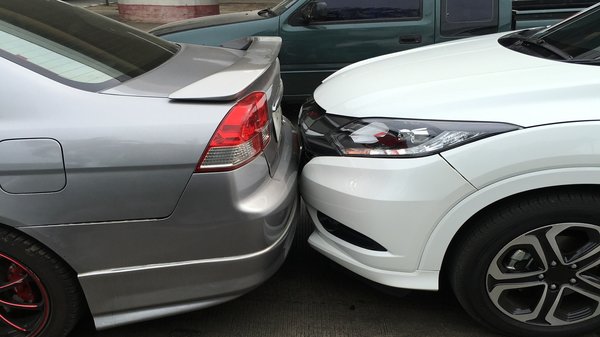
For years, Louisiana plaintiffs attorneys have argued that the force ofimpact in an auto accident is not determinative of their clients’ injuries andshould be afforded little, if any, weight. A recent decision out of theLouisiana First Circuit Court of Appeal does damage to that argument. In Jonesv. Bravata, Jr. and The City of Baton Rouge, 2018 CA 0837 (La. App. 1 Cir.5/9/19), the First Circuit upheld the trial court's jury instruction on “forceof impact” where photographs showed only minor damage and the defendantdescribed the accident as a “bump.”

The accident occurred when a City employee rear-ended the plaintiffs'vehicle. Liability was stipulated and the only question at trial was damages.Mrs. Jones alleged severe neck and back injuries. She began treatment with anorthopedist within a week of the accident and thereafter received five“relatively non-invasive surgical procedures” in lieu of a lumbar fusionsurgery. The jury returned a verdict of $200,000, which included $150,000 inpast medical expenses and $35,000 in future medical expenses, but awardedlittle for general damages. Mrs. Jones appealed the verdict, asserting that thetrial court erred in instructing the jury on force of impact.

The "force of impact" jury instruction in dispute provided:

Whilethe force of a collision may be considered in determining whether a person wasinjured by an accident and the extent of the injuries sustained, it should notbe the only factor to consider in making such a determination. Even though theforce of impact may be slight, it does not preclude an award of damages.However, in determining causation, you may consider the minimal nature of theaccident.

In considering the plaintiff's assignment of error, the First Circuit noted that Mrs. Jones was correct that no witness specifically testified that the accident was too minor to have caused her injuries. However, there was evidence in the record upon which the jury could have reached the conclusion that this was a minimal impact.

Common sense would appear to support a connection between the force of an impact and the injury one could be expected to suffer. The recent Jones decision allows defendants to promote this common sense argument. Where the claimed injuries are disproportionate to the forces involved, this argument can make the difference at trial.

John Grinton is a partner of the firm admitted in state, federal and appellate courts throughout Louisiana. His practice focuses on commercial and construction litigation, representing insurance companies, architects, engineers, contractors and other businesses in all aspects of litigation. His workers’ compensation practice includes representing clients in medical billing disputes, healthcare provider disputes, statutory/borrowing/special employer disputes, and court approved settlements. John has been involved in complex cases involving construction defect claims, breach of contract and negligence actions, insurance coverage issues, lender liability, securities litigation and personal injury matters. He has firsthand experience in jury trials and arbitration's, as well as mediation, appellate briefing and oral argument.

Posted by:

Disclaimer

Keogh Cox & Wilson, Ltd. provides this blog as a public service for general information only. The materials contained herein may not reflect the most current legal developments or even express the opinion of all or even most of Keogh Cox attorneys. Such material does not constitute legal advice or form any attorney-client relationship. Keogh Cox and all contributing author(s) expressly disclaim all liability to any person with respect to the contents of this Web site and Blog and expect that no reliance will be made upon the information provided.


Continue Reading

Explore legal perspectives on the issues shaping Louisiana's key industries and courtrooms.

Insight

A Matter of Control: Vicarious Liability in Construction Projects

Under Louisiana’s comparative fault system, each party in a lawsuit generally is only liable for their own percentage of fault. However, in some instances, a party may be “vicariously” liable for the fault of another party. One example of vicarious liability is an employment relationship, where an employer can be liable for the fault of its employees. On the other hand, vicarious liability generally does not apply when the alleged “employee” is found to be an independent contractor. Whether a worker qualifies as an employee or an independent contractor often becomes an important issue in suits related to construction projects.

The test for determining whether a party is an employee or an independent contractor involves analysis of who has the right to control his or her work. In the construction context, courts distinguish between “operational control” (which suggests an employment relationship) and control as it relates to the results of the work (which suggests an independent contractor relationship). Two recent cases examine this issue and provide examples of how courts analyze the type of control necessary to establish vicarious liability in the construction projects.

In Stonetrust Com. Ins. Co. v. TBT Contracting, Inc. of LA, homeowners hired a general contractor to renovate their home. During the project, an electrical subcontractor was injured after falling through an attic space. It was alleged that the general contractor created a hazard by cutting a hole in the attic and concealing it. The plaintiff sued the general contractor and the homeowner. The court had to determine whether the homeowner could be liable for the subcontractor’s injuries, which would require a finding that the homeowner was vicariously liable for the general contractor’s fault.

The plaintiff argued that the homeowners were particularly involved in the project. It presented evidence to show the homeowners would give suggestions regarding the work to be performed and also directed alterations or additions to the work. The plaintiff argued that this demonstrated control over the general contractor’s work. However, the court disagreed. Despite the homeowners’ level of involvement, the court held that their control was limited to the results of the work, and was not “operational control.” The general contractor therefore was an independent contractor, and the homeowners were not vicariously liable for its acts.

In Baham v. Fisk Elec. Co., a city worker brought suit against a general contractor after suffering injuries from an electrical shock. The worker alleged that the general contractor was vicariously liable for the fault of its subcontractor. While evidence showed the subcontractor relied on the general contractor for the location of its work, the court found that this was not “operational control.” The court observed that general contractors are entitled to exercise supervisory control over its independent contractors to ensure compliance with the contract. It further found that suggestions or instructions given to an independent contractor do not equate to control over the methods or details of the work. Absent such “operational control” vicarious liability could not be imposed.

Though they may be limited to their facts, these cases show courts usually require a showing of more than suggestions or instructions regarding the work to establish the “operational control” necessary to trigger vicarious liability. Absent such a showing, independent contractors usually remain independent.

Case References:

Stonetrust Com. Ins. Co. v. TBT Contracting, Inc. of LA, 2022-0971 (La. App. 1 Cir. 4/14/23), 2023 WL 2947826

Baham v. Fisk Elec. Co., 2022-0551 (La. App. 4 Cir. 3/22/23), 2023 WL 2595253

Insight

Renewed or Was it New? Dispute over UM Coverage in Auto Policy

Louisiana law requires UM coverage in automobile liability insurance policies in the same amount as the policy’s bodily injury liability coverage. UM coverage will be included in the policy unless the insured rejects UM coverage, selects lower limits, or selects economic-only coverage. This rejection, selection of lower limits, or selection of economic-only coverage must be made on a form prescribed by the commissioner of insurance and must be signed by the insured or its legal representative. See La. R.S. 22:1295. If a rejection form is not completed, UM coverage will be read into the policy. However, a valid UM waiver form executed for a policy of insurance remains in effect when that policy is renewed with a few exceptions. Generally, execution of a new waiver form is not required unless a new policy is issued or the liability limits increased. These basic principles were considered in the recent First Circuit decision in Johnson, et al. v. Bass, Geico General Ins. Co., and GoAuto Management Services, LLC, 2021 CA 0139 (La. App. 1 Cir. 12/22/21).

In Johnson, the plaintiff obtained a policy of insurance from GoAuto on July 17, 2015 and validly rejected UM coverage on the commissioner’s UM rejection form. The plaintiff renewed the policy multiple times and also completed an “Application for Personal Automobile Insurance” on February 23, 2018 to add her husband and an additional vehicle to the policy.

The Johnson plaintiff was in a motor vehicle accident on November 26, 2019 and claimed UM benefits under the policy. She argued that the insurance application she completed in February 2018 to add a new driver and a new vehicle to the policy created a new policy of insurance that required completion of a new UM waiver form. Because a new UM waiver form was not executed in February 2018, the plaintiff argued that UM coverage should be read into the policy. Thus, the question posed to the court was whether the 2018 policy became new or was simply a renewal. The trial court found that the policy was a renewal and dismissed the UM claim.

The First Circuit affirmed and rejected the plaintiff’s argument holding, “the language of La. R.S. 22:1295 is clear and unambiguous; only changes in the ‘limits of liability’ to an existing policy will create a new policy that requires the completion of a new UM selection form.” Despite multiple renewals, the liability limits of the policy did not change from the date it was issued through the date of the accident. Importantly, the limits also did not change when the new driver and vehicle were added to the policy in February 2018. Thus, no new policy was created. The original rejection of UM coverage remained in effect, and the plaintiff’s claims against her alleged UM insurer were dismissed.

Insight

Louisiana Supreme Court Uses Reason to Decide Case Involving Tragic Facts

Sometimes in law, the facts of a case may threaten to eclipse the legal issue. However, Louisiana law instructs the fact finder to see through the facts, and their sometimes tragic nature, and apply the law as written. As Aristotle once wisely said, “The Law is reason free from passion.”

In Kazan, et. al. v. Red Lion Hotels Corporation, et. al., 2021-CC-01820 (La. 6/29/22), the Louisiana Supreme Court recently ruled on a case with tragic facts, and its ruling provides an example of Aristotle’s description of law in action. In Kazan, a female patron was in the parking lot of a motel when a male patron approached her and used Kazan’s vehicle to abduct her from the premises. The car was later found submerged in a lake, and Kazan’s body was recovered from the water. The family filed a tort suit against several parties, including the motel’s owner and its insurer, the Great Lakes Insurance Company SE.

Great Lakes filed a motion for summary judgment and asked to be dismissed on grounds that coverage for the event was excluded from its policy. Specifically, the insurer argued that bodily injury caused by an “assault,” “battery,” or “physical altercation” was excluded under the policy’s terms. Great Lakes further argued that the kidnapping and ultimate death of the patron was excluded under the policy as bodily injury caused by an assault, battery, or physical altercation. The Louisiana Supreme Court agreed and reversed the decision of the trial and appellate courts.

Under Louisiana law, “[a]n insurance policy is a contract between the parties and should be construed using the general rules for the interpretation of contracts.” Id. at p. 3. “When the words of an insurance policy are clear and explicit and do not lead to absurd consequences, courts must enforce the language as written.” Id. at p. 3. “Courts lack authority to alter the terms of an insurance policy under the guise of interpretation and should not create an ambiguity where none exists.” Id. at p. 3.

With these basic rules in mind, the Court carefully reviewed the wording of the exclusion in the Great Lakes policy which stated as follows: “This insurance does not apply to ‘bodily injury,’ ‘property damage,’ or ‘personal advertising injury’ arising out of an ‘assault,’ ‘battery,’ or ‘physical altercation.’” “Physical altercation” was defined in the policy as “a dispute between individual [sic] in which one or more persons sustain bodily injury arising out of the dispute.” Citing Merriam-Webster’s dictionary, the Court defined the term “dispute” as “verbal controversy” or “quarrel.”

Based upon the evidence in the case, the Court found the female patron was involved in a “dispute” with her male attacker, and ultimately sustained bodily injury as a result of the dispute. Therefore, the patron was injured in a physical altercation, as defined under the specific terms of the Policy, and coverage for the event was excluded under the policy’s terms.

The Court noted as follows: “The facts of this case are undoubtedly tragic. Nonetheless, absent a conflict with statutory provisions or public policy, insurers are entitled to limit their liability by imposing reasonable conditions upon the policy obligations they contractually assume. That is what Great Lakes did in the insurance policy at issue here.” Despite the tragic facts presented in the case, in so holding, it appears the court agreed with Aristotle’s belief that the Law is Reason Free from Passion.

No items found.
Collision
Louisiana
Injury