Insight

Technical Difficulties: Incomplete “Fax Filed” Petition Interrupts Prescription

Published on: November 12, 2021

Tim Berners-Lee, computer scientist and founder of the World Wide Web Consortium, famously stated, “We can’t blame the technology when we make mistakes.” One Louisiana appellate court disagrees.

In Worm v. The Berry Barn, LLC, 20-1086 (La. App. 1 Cir. 10/21/21), the Louisiana First Circuit utilized a broad interpretation of Louisiana’s fax-filing statute, La. R.S. 13:850. In Worm, the plaintiff was injured in an accident on October 7, 2018. Plaintiff’s counsel fax-filed the Petition to the Tangipahoa Parish Clerk of Court’s office on Friday, October 4, 2019. The next Monday, the Clerk sent a “Fax Filing Confirmation” to Plaintiff’s counsel. Plaintiff’s counsel filed the original Petition with the Clerk of Court on October 11, 2019.

Defendants filed an exception of prescription, arguing that the faxed Petition did not interrupt prescription because Plaintiff’s original Petition was not “identical” to the faxed Petition, as required by La. R.S. 13:850. Defendants correctly pointed out that portions of the first and second pages of the fax filed Petition were “cut off … thereby eliminating some of the substance of plaintiff’s allegations.” Plaintiff opposed the exception, arguing that any error in the receipt or printing of the fax filed petition was attributable to the Clerk of Court and/or its fax machine.

The trial court recognized that the difference between the fax filed Petition and the original Petition was “ultimately the result of, we think a machine error.” Nevertheless, the court sustained defendants’ exception and dismissed plaintiff’s claims as prescribed. Plaintiff appealed.

The First Circuit Court of Appeals noted that Louisiana’s prescription statutes are to be strictly construed against prescription and in favor of the obligation sought to be extinguished. The court held, “There is no dispute that the physical copies contained in the record show that the fax filed petition and the original petition are different. However, the differences are due to missing as opposed to substantively different or altered portions of the petition. … As reasoned by the trial court, the apparent error in receipt and printing of plaintiff’s fax filed petition by the Clerk of Court was attributable to ‘machine error …’” The First Circuit held that the fax filed Petition interrupted prescription and reversed the decision of the trial court.

While the explicit language of La. R.S. 13:850 requires that a fax filed pleading be “identical” to the original pleading, the First Circuit’s decision in Worm suggests that the statute has at least some flexibility. Although the plaintiff in Worm was able to “blame the technology,” the impact of the decision may ultimately be limited to its specific facts where the “machine error” was caused by the Clerk’s system.

Posted by:

Disclaimer

Keogh Cox & Wilson, Ltd. provides this blog as a public service for general information only. The materials contained herein may not reflect the most current legal developments or even express the opinion of all or even most of Keogh Cox attorneys. Such material does not constitute legal advice or form any attorney-client relationship. Keogh Cox and all contributing author(s) expressly disclaim all liability to any person with respect to the contents of this Web site and Blog and expect that no reliance will be made upon the information provided.

Continue Reading

Explore legal perspectives on the issues shaping Louisiana's key industries and courtrooms.

News

A Jury Awards $5 Million In Favor of Spoked Manufacturing

A Louisiana federal jury awarded $5 million in favor of Spoked Manufacturing in a suit against Besco Tubular. Keogh Cox Partner, Tori S. Bowling and other counsel represented Spoked Manufacturing in the case. Find out more about this decision at LAW 360.

https://www.law360.com/articles/1180212/jury-hits-besco-with-5m-verdict-in-oil-drilling-patent-case

Insight

“Collectibility” in Legal Malpractice: Can a client have greater rights against an attorney that existed in the underlying case?

It is well-established that a client in legal malpractice shall have no greater rights against their attorney than they had against the original defendant. That is, until the recent decision by the Supreme Court in Ewing v. Westport Insurance Corporation, 20-00339 (LA. 11/19/20), 2020 WL 6789490 where the Louisiana Supreme Court held that the “collectibility“ of the underlying judgment against the defendant is neither part of the plaintiff’s burden of proof nor the proper subject of an affirmative defense.

In Ewing, the defendant/attorney fax-filed a petition for damages but failed to forward the original petition within seven days as required by statute. As a result, the claim he sought to advance on behalf of Elaine Ewing prescribed. Ewing sued her attorney and his insurer.

Prior to trial, the tortfeasor testified that he would have filed for bankruptcy had an excess judgment been entered. On this basis, the defendants obtained a motion for summary judgment establishing that the underlying tortfeasor would have been unable to pay any amount above the $30,000 in available insurance coverage. Following trial, an award of $30,000 was entered in favor of the plaintiff and the plaintiff appealed.

The appellate court reversed citing to the decision in Rodriguez v. Traylor, 468 So.2d 1186, 1188 (La. 1985) which held that “the wealth or poverty of a party to a lawsuit is not a proper consideration in the determination of compensatory damages.“

The Supreme Court upheld the appellate opinion. In the analysis, Chief Justice Johnson on behalf of the majority also cited to the Rodriguez decision for the proposition that the wealth of the tortfeasor is not relevant to damages. The majority acknowledged that a majority of courts nationwide hold that the collectibility of a judgment is an essential element of a plaintiff’s legal malpractice case. It also observed “a growing trend” in other states to allow the defendant/attorney to plead collectability as an affirmative defense. Nevertheless, the Supreme Court in Ewing chose to follow neither position.

The defendants in Ewing did not argue that collectibility was part of the plaintiff’s burden. However, they did assert an affirmative defense on this basis. In rejecting this defense, the Ewing court found that nothing in statutory law of Louisiana limits damages based upon the collectibility of a judgment against a particular tortfeasor. In Ewing, it was established that the tortfeasor would have been immediately unable to pay an excess judgment. Nevertheless, the majority highlighted that a money judgment is valid for 10 years and may be revived for successive 10-year periods. As such, the court concluded that the money judgment has intrinsic value, regardless of immediate collectibility. To quote the majority, “impecunity is a snapshot in time.”

The concurring opinion by Justice Weimer reasons that there may be certain and rare cases where the underlying tortfeasor is truly judgment proof. In that circumstance, he writes that summary judgment in favor of the defendant may be appropriate but not under the record before the court.

Writing for the dissent, Justice Crain observed: “Thirty states have determined collectibility is relevant in a legal malpractice action. No state has reached a contrary conclusion, until now.” According to the majority, the absence of any statute making collectability a relevant consideration mandated the result under our civilian traditions. Justice Crain disagreed and argued that the majority opinion is inconsistent with the Code of Evidence articles which generally allow the admissibility of relevant evidence such as an inability to pay. La. L.C.E. art. 402. In support of his position, Justice Crain gave a hypothetical scenario involving an insolvent, uninsured driver who rear-ends a world-class professional athlete rendering him a paraplegic, resulting in damages and $50 million. About this hypothetical, he states:

“What did the plaintiff lose, or what harm did the lawyer cause the plaintiff, when the lawyer failed to preserve the claim against the insolvent, uninsured driver? The lawyer did not cause the paraplegia, nor did he caused a loss of $50 million, as that money was clearly uncollectible.“

To Justice Crain, the determinative question is the value of the lost judgment.

Insofar as the majority and concurring opinions highlight the absence of any statutes to support their conclusions, it would not be surprising for this issue to be considered by the legislature in coming years.

Collin is a Keogh Cox partner who litigates injury, commercial, and legal malpractice disputes. He lives in nearby Zachary, Louisiana with his wife Melissa and three all too active children. He is an outdoorsman, a tennis player, a cook, and a hobbyist writer.

This blog was written in partnership with Andrew "Drew" Blanchfield whose practice also includes professional liability defense.

Insight

“Forensic Defendants” Dismissed from Wrongful Conviction Suit

On December 9, 1982, a victim was raped and stabbed multiple times in her Baton Rouge residence. In those harrowing moments, the victim was face-to-face with her assailant and vowed that she would remember the characteristics of her assailant in the unlikely event she survived. A friend arrived at the residence and entered the second-floor room containing the assailant and the wounded victim. Fortunately, at that moment, noise from a postal employee caused the assailant to flee the scene. The investigation began that same day.

Sometime later, Archie Williams became a suspect and was then criminally charged after the victim identified Mr. Williams as her attacker. The victim identified a prominent scar on the assailant which, in an unfortunate twist of fate, tended to match a scar on Mr. Williams. Several of the governmental officers involved in the investigation and the April 1983 criminal trial of Mr. Williams were sued many years later in the case styled Archie Williams v. City of Baton Rouge, ET AL. Keogh Cox attorneys Drew Blanchfield, Collin LeBlanc, Cathy Giering, and Chelsea Payne represented a forensic scientist, a lab technician, and a print examiner in the suit (the “Forensic Defendants.”) In his June 10, 2024 ruling, Judge Brian A. Jackson granted a Motion for Summary Judgment in favor of these defendants, dismissing the claims against them with prejudice.

At the 1983 criminal trial, Forensic Defendants testified that they could not identify Mr. Williams as the attacker. Similarly, both the prosecutor and defense counsel advised the jury that the physical evidence did not implicate Mr. Williams. Nevertheless, Mr. Williams was convicted based upon the passionate but mistaken testimony of the victim. Mr. Williams had not committed these crimes but remained incarcerated until his release decades later.

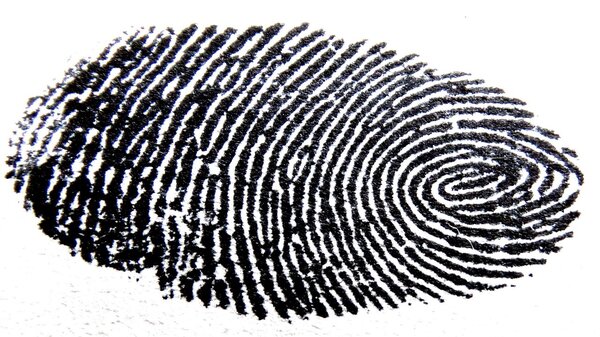
Mr. Williams consistently denied guilt. In 2008, he hoped DNA testing would help to prove his innocence. However, the DNA evidence was of no assistance. In 1999, The FBI launched its National Fingerprint Database (“IAFIS.”) Yet, a 2009 search generated no matches to fingerprints from the crime scene that had not already been identified. In 2014, Next Generation Identification (NGI) replaced IAFIS. By 2016, NGI held approximately 72,000,000 criminal fingerprints and 50,000,000 civil fingerprints. A 2019 search of this ever-expanding database matched fingerprint evidence taken from the 1983 crime scene to the prints of a convicted rapist who had died in prison years before. Mr. Williams was innocent and was soon released through a joint filing by the State of Louisiana and Mr. Williams. His lawsuit against multiple defendants followed.

In response, the Forensic Defendants filed a Motion that advanced the “qualified immunity” granted to governmental officials. In opposition to the Motion, the plaintiff possessed the burden: 1) to raise a fact dispute on whether his constitutional rights were violated by the defendants’ individual conduct; and 2) to show those rights were “clearly established” at the time of the alleged violation. The Court found that the plaintiff did not meet this burden. Although Plaintiff alleged that certain fingerprint evidence had been “suppressed” in violation of the “Brady Rule,” the Court cited the robust factual record showing that the jury was fully aware that no fingerprint evidence identified Mr. Williams and that unidentified prints were present at the crime scene. The Court also rejected the claim that there was any fabricated exculpatory blood or serology evidence.

The facts in Williams highlight the great technological improvements since the early 1980s which now aid the court system, prosecutors, and defense attorneys to protect against the conviction of an innocent suspect. These facts also tell a sad human story of an individual who spent more than 30 years in jail for a crime he did not commit. While it does not replace the lost years, Louisiana has created a fund which provides some financial resources to wrongfully convicted individuals to help them re-enter society. Williams was able to take advantage of this fund.

References:

Archie Williams v. City of Baton Rouge, ET AL, United States District Court, Middle District of Louisiana, No. 3:20-cv-00162.

No items found.
Attorney