Blog
Explore news, articles, outcomes, and legal resources by category or practice area.
Thank you! Your submission has been received!
Oops! Something went wrong while submitting the form.
deselect
No items found...
On May 17, 2016, Mary Anne Wolf will speak at a meeting of the International Facility Management Association, Baton Rouge Chapter, held at Juban’s Restaurant. The topic is Changing Contracting Methods – Design Build and Project Manager at Risk.
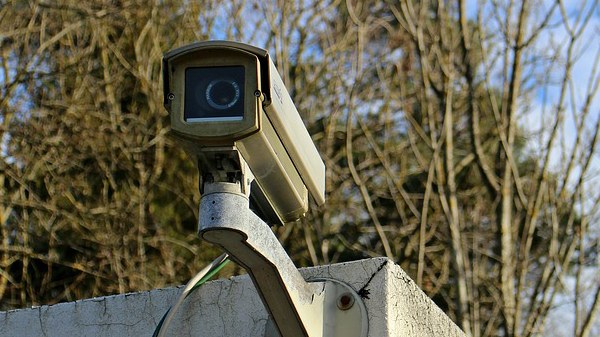
For more than a century, the debate has raged over whether Mrs. O'Leary and her famous cow truly started The Great Chicago Fire of 1871. Were the tragic events of that conflagration to happen today, someone would ask Mrs. O'Leary to produce the "RFID" chip in her bovine. (You know they would). They would contend that this key evidence could show the whereabouts and movement of the cow at the time the fire began. When she could not produce it, they would claim not only that she started the fire that destroyed a swath of Chicago, but that she also destroyed the evidence of her guilt. They would cry "spoliation."
"Spoliation" is the legal term for the improper destruction or alteration of evidence to prevent its use in litigation. It is also an ugly word and its presence in litigation can lead to ugly results. While this doctrine has existed in some form or the other for hundreds of years, understanding the concept may prove to be even more important now in a time when reams of documents can be stored on a "zip drive" smaller than a stick of gum and information can be maintained in a multiplicity of ways previously unthinkable.
To prove spoliation, a litigant must demonstrate that their adversary in litigation: (1) knew of a lawsuit or had a reasonable expectation that a lawsuit would follow; (2) failed to produce relevant evidence without an explanation; and, (3) participated in intentional conduct to alter, secret, or destroy the evidence. It is important to note that a defendant is not responsible under the doctrine of spoliation when the defendant’s failure to produce evidence is adequately explained.
A party who discovers that evidence has been spoliated has options. They may ask the court to enter an adverse presumption. If allowed, a court may instruct the jury that the missing or altered evidence would have been unfavorable to the party who destroyed it. Depending upon the nature and relevancy of the evidence, the court may have grounds to strike claims or defenses relevant to the evidence.
Another option is to file a formal claim against the party who spoliated the evidence. This type of claim alleges that the alleged “spoliator” impaired a party's ability to win or defend a law suit. In Louisiana, all five appellate circuit courts have recognized the tort of spoliation.
The issues surrounding spoliation have been magnified by technology. Meaningful information can now be found on almost anything: "smart refrigerators"; product sensors; a car's "black box" that may reveal the speed at the time of impact; SMS information on a phone, computer, or tablet; and on and on. Consider further the increasing scope of surveillance video recorded at businesses, schools, hospitals, and even homes, which is complicated by the fact that many systems automatically "write over" prior video in a matter of days, weeks, or months.
In short, it’s a good time for everyone to understand the doctrine of spoliation. The chance that some party will loudly proclaim that your spoliation of evidence adversely affected their case continues to increase. Being aware of the potential spoliation issues that may arise when a suit has been filed, or is expected to be filed, may save your case. It may also save you the time, money, and distraction involved in defending a claim that you have spoliated key evidence.
PREMISES LIABILITY- In Boyd v. Cebalo, 2015-1085 (La. App. 4 Cir. 3/16/16), ---So. 3d ----, a Tulane University student filed suit following an incident where Cebalo, a guest of her suitemate, was alleged to have snuck into her dorm room and inappropriately touched her while she was sleeping. The plaintiff sued the alleged perpetrator. She also sued Tulane under allegations that it failed to provide a safe environment or to comply with industry standards regarding doors, locks, and other security measures. Tulane filed an Exception of No Cause of Action alleging that Cebalo's alleged actions were an "intervening and superseding cause" and that it owed no legal duty to Boyd. The Exception was granted by the lower court.The Fourth Circuit reversed, labeling the dismissal of the claim as "clearly wrong." According to the Boyd Court, "a third-party's criminal activity does not grant the university absolute immunity from liability." In its analysis, the Court found that the factors given by the Louisiana Supreme Court in Posecai v. Wal-Mart Stores, Inc., 99-1222 (La. 11/30/99); 752 So. 2d 762 for the assessment of the liability of a business for the criminal actions of others "can easily be applied to a university setting." Further, the Court seemed to question the use of an Exception of No Cause of Action to resolve a potentially fact-intensive case insofar as no evidence is to be offered in support of such an exception. Because the plaintiff may be able to ultimately demonstrate that the alleged criminal conduct was reasonably foreseeable, the matter was remanded back to the trial court.
Unincorporated Associations and Immunity- Annually, the “Jingle All the Way 5K Run” is held on a course that begins in Natchez, Ms. and crosses the old Mississippi River Bridge to Vidalia, La. Normally, the “new” bridge is solely used by eastbound traffic. Nevertheless, to accommodate the race, it accepts traffic in both directions during the event. In Byargeon v. Concordia Chamber of Commerce, Inc., 15-900 (La. App. 3 Cir. 3/16/16), - - So.3d - - - (2016), it was alleged that Ms. Byargeon was not alerted to this change. Tragically, she was involved in a head-on collision that took her life.Numerous parties were sued following the accident including members of an unincorporated association named MissLou Regional Healthcare Committee. In response to the Petition, the association members argued that they were immune to liability by statute. Alternatively, they argued that they could not be held responsible because the police possessed exclusive control of the roadway. The defendants’ Exceptions of No Cause of Action were granted by the trial court, but reversed by the Third Circuit as outlined below.With respect to immunity, the defendants relied on LSA-R.S. 12:506 which provides immunity to the members of an unincorporated association as a result of their membership. However, according to the Byargeon Court, the statute does not create an unqualified immunity against negligent acts perpetrated by members of the association. Therefore, the statute did not provide a shield from liability to individual members of the association who may have individually performed acts or omissions which lead to the death.The Third Circuit also reversed the trial court’s ruling with respect to control of the roadways. Pursuant to LSA-R.S. 32:1 et seq., the state police force possesses the duty to address traffic on state roadways. Nevertheless, the Byargeon court cited to an earlier Supreme Court decision in Blair v. Tynes, 621 So.2d 591 (La. 1993) which held that, when a private entity assumes duties with respect to a traffic plan or roadway, it is required to execute that “assumed duty” in a non-negligent manner.

The image of a law firm stuffed with banker boxes floor-to-ceiling is shifting to the view of a computer server filled with gigabytes of information. This is increasingly a digital world and the documents, photographs, charts, memos, and emails that are the “stuff” cases are built upon now often come in digital form. As a result, great emphasis is placed upon “electronic discovery.”
What is “electronic discovery”? “Discovery” includes the exchange of information between parties in a lawsuit. “Electronic discovery” is the process of collecting, preparing, reviewing, and producing “electronically-stored information” in the context of a civil action.
What is electronically stored information (“ESI”)? The Federal Rules of Civil Procedure define ESI as information created, manipulated, communicated, stored, and best utilized in digital form, requiring the use of computer hardware and software. Because of the wide variety of computer systems currently in use, and the rapidity of technological change, courts often give an expansive definition of ESI which can include any type of information that is stored electronically, including emails, images, spreadsheets, “metadata,” PDF documents, databases, and other groupings of information.
Are printed copies of my emails sufficient? In litigation, emails are commonly produced as printouts or PDFs. However, courts may require the production of emails in their native electronic form to allow the other party to certify that the produced emails have not been altered. If the court finds that a party, anticipating litigation, intentionally deletes or destroys ESI, that party may be exposed to a claim that they have “spoliated” evidence. An opponent may even complain if a party fails to take affirmative steps to prevent information from being deleted or overridden as part of an automated process. For instance, this often occurs when a surveillance camera system “writes over” older video to create space for new video.
The Law of Corporations - In American Rebel Arms, LLC v. New Orleans Hamburger and Seafood Co., 15-599 (La. App. 5 Cir. 2/24/16), Deborah Norred, the sole member of American Rebel Arms, a limited liability company (“LLC”), alleged that she was injured when she slipped and fell in a bathroom owned and operated by the defendant/restaurant. Norred filed suit for her injuries. In a separate suit, American Rebel Arms claimed that the injuries to Norred damaged its business. In response, the defendants argued that American Rebel possessed no cause of action. The Trial Court agreed and dismissed the suit.In considering whether an LLC can recover for a slip and fall of its only member, the Louisiana Fifth Circuit looked to the language of Louisiana’s “slip and fall” statute, LSA-R.S. 9:2800.6, which creates a duty owed to “persons” who use the premises. American Rebel correctly contended that it is a “person” under Louisiana law. Nevertheless, the American Rebel Court determined that an LLC was not the type of “person” protected in the statute which references keeping “aisles, passageways, and floors in reasonably safe condition.” Only natural persons are capable of using such areas. As such, and consistent with supportive corporate law, the Fifth Circuit found that there is no “ease of association” between injury to a member and the corresponding damages to the LLC. The Court observed that even substandard conduct does not render an actor liable “for all consequences by spiraling outwards until the end of time.”
“ACT OF GOD” DEFENSE- In Rayfield v. Millet Motel, 15-496 (La.App. 5 Cir. 1/27/16), -- So.3d --, 2016 WL 359227, the plaintiff filed suit after the ceiling and wall of her motel room collapsed onto her during Hurricane Isaac. The plaintiff alleged that the owner was liable because the building was defective. According to the plaintiff, the defendants should be presumed negligent based upon the fact that the hotel did not withstand the forces of the hurricane. Additionally, the plaintiff contended that motel employees should have forced her to evacuate. The defendants filed a motion for summary judgment which the court granted. The plaintiff appealed.On appeal, the Louisiana Fifth Circuit addressed the the “force majeure” defense. In the common law, the analogous defense is described as an “Act of God.” According to Rayfield, this defense operates to absolve a defendant in an incident when an event is as “providential…and extraordinary” as a hurricane, but only when the defendant’s conduct did not contribute to the plaintiff’s damages.After outlining the force majeuere defense, the Rayfield court affirmed summary judgment in favor of defendants after finding that no evidence was offered to show that a defect in the building lead to the motel’s collapse.Similarly, the court rejected the assertion that the plaintiff should have been forced to evacuate, noting that the owner of a hotel does not insure the safety of the guests. The court added that the plaintiff was a resident of the motel, not just a passing guest and that it was illogical for her to argue that the employees should force her into the streets during a hurricane.While it appears likely under the facts in Rayfield that the court would have found for the defense even without the force majeuere defense, the court’s opinion confirms the viability of the defense moving forward.

It’s a question you will have to answer if you purchase automobile liability insurance in Louisiana. While the question may appear simple, many people, even sophisticated people, do not fully understand the purpose of uninsured motorist coverage.
Uninsured motorist coverage (or “UM”) is a form of insurance that can be purchased to protect you, your family, your passengers and/or your workers in the event they are injured in an automobile accident when the at-fault driver is uninsured. Your auto liability policy will not cover your bodily injuries, lost wages and other damages caused by the fault of another.
UM coverage also responds in the case of “underinsured drivers.” An underinsured driver is one who is in fault in an accident, but does not possess sufficient insurance to respond to the loss. Unfortunately, if you are in an accident in Louisiana, or anywhere really, there is an unhealthy chance that you will encounter an uninsured or underinsured motorist.
In 2014, the Insurance Research Council estimated that over one in eight Louisiana drivers are uninsured. When you consider that many “insured drivers” are insured only with “minimum limits” policies, the chance of you needing UM coverage increases dramatically. While you are not required to carry UM coverage under Louisiana law, UM may be your best option.
In deciding whether to purchase UM, one factor you may consider is whether you have other available forms of insurance such as health insurance or a disability policy. Nevertheless, those types of policies may not meet all of your needs. For instance, neither will address any pain and suffering you have experienced. A second factor is the cost. UM coverage is often not as expensive as you might expect and is generally much less expensive than liability coverage.
UM coverage will be provided by Louisiana law if it is not “waived.” Your carrier should ask if you choose to purchase UM. If you indicate that you don’t want UM, you will be provided with a Waiver. Should you decide to waive this coverage, at least you will now know what you have waived.
“In 2014, the Insurance Research Council estimated that over one in eight Louisiana drivers are uninsured.”

“Having a response plan in place before an accident is important. It can improve safety, save time, reduce distraction, and limit exposure.”
It will happen, maybe today, maybe tomorrow, maybe six years from now; but if you are an employer of any size, the call will come, and the co-worker, passerby, or caller- in a panicked voice- will inform you that there’s been an accident. You cannot control what has just happened. You can control what you do about it.While not easy, the first step is certain. Ensure that your worker receives immediate medical care. Shut down the whole plant, or office, or restaurant if you have to. Then, start the process of finding out what happened and why. The process will be much easier if you have a plan in place before the haziness that accompanies an injury. An attorney can help you put a plan in place before the phone rings. Here, we provide a few basic steps to consider. We also outline a few traps and pitfalls built into the dynamics.-Secure the accident site. This may involve barricades, warning tags, and tape.-Consider photographs or video of the scene, if indicated.-Call an attorney. Once the worker’s needs are fully addressed, consult with counsel who will often see things you might miss given their unique training. An attorney can counsel you on how steps taken now can impact later proceedings with an eye towards the proper preservation of evidence, prompt contact with insurance carriers, and a consideration of possible “indemnity” obligations owed to you or by you.-Consider prompt action to ensure there is no re-occurrence until the matter can be fully investigated. While an employer may fear that taking immediate corrective measures could be viewed as admission of fault, an attorney can explain the parameters of the subsequent remedial measure rule that may bar the use of this “evidence” against you.-Decide who will lead the investigation. Chose someone who, while mature and fair, also understands that the occurrence of an accident raises the specter of litigation. This will sometimes be the injured worker’s immediate supervisor.-Identify all witnesses.-Interview all witnesses including the injured worker if they are reasonably able. Ask the who, what, where, when, why questions. Questions may include but will not be limited to the following:-What was the worker doing at the time of the accident?-What were the witnesses doing?-What was the physical condition of the area at the time?-Was this a job the worker was trained to perform?-Was there a procedure being followed at the time? Not followed?-Was the worker wearing appropriate safety gear?-In a slip and fall, what was the condition of the footwear being used?-Was a proper tool or piece of equipment being used?-Was there a problem with the equipment?-Were the action of co-workers or third-parties involved?-Was an unsafe act involved?-Had there been prior warnings or instructions with respect to this act?-Prepare an incident report. This report should outline the basic facts that have been gathered. While the report must be honest and fact-based, an employer should know that this document may be scrutinized at a later date and any admission of fault on the part of the employer, even if premature and incorrect, will likely be cited as an “admission against interest” and self-proving evidence of your liability.-Preservation of evidence. Any destruction of evidence such as documents, photos or videos following an accident may be viewed as suspect and lead to a claim that you are guilty of “spoliation.” In extreme cases, a finding of spoliation can lead a court to enter an adverse presumption or even strip case defenses.-Root cause analysis. This analysis considers how best to prevent the particular brand of accident from ever happening again and sometimes identifies deeper issues that can be corrected to improve overall safety. To their detriment, employers sometimes merge the initial accident investigation and root cause analysis into one step and their desire for immediacy serves to unnecessarily costs them in the defense of an otherwise defensible claim.
“It may be time to consider whether your company is ready to respond when the call comes."

The question addressed in MR Pittman Group, LLC versus Plaquemines Parish Government, 2015-0396 (La.App. 4 Cir. 12/2/15) was whether the five-year peremptive period set by La. R.S. 9:5607 displaces Louisiana’s general one-year prescriptive period set by La. C.C. art. 3492, when applied to tort claims against design professionals. Finding a contractor’s claim against the project engineers prescribed, the MR Pittman court held that the one-year prescriptive period governs tort claims against design professionals.
La. R.S. 9:5607 explicitly provides a peremptive period that extinguishes all claims against architects, engineers and other design professionals five years after the project is completed, thus limiting design professional liability associated with the project. The MR Pittman plaintiff/contractor argued that the statute also eliminates the one-year prescriptive period and instead creates a special five-year prescriptive period, which allowed the contractor up to five years to bring its claim against the engineers to recover for delay and other extra costs allegedly resulting from deficiencies in the construction plans. This interpretation effectively expands tort liability by increasing the time period for bringing a tort claim from one to five years. In rejecting this argument, the MR Pittman court clarified that under the statute any claimant has no more than five years after project completion to bring suit against the design professional for any cause. However, a tort claimant still has only one year to file suit from the date he “knew or should have known” of damage caused by the alleged wrongful actions of the design professional.
A secondary question addressed in MR Pittman was the date of commencement of the one-year prescriptive period, which under La. C.C. 3492 commences to run from the day damage is sustained. The defendant/engineers argued that prescription commenced when the contractor first became aware of the alleged design deficiencies early in construction, as evidenced by the contractor’s notice to the owner of the deficiencies. The contractor argued that it could not fully appreciate its damages until the change orders were resolved later in the project. Citing Louisiana Supreme Court precedent holding that the quantum of damages need not be certain or fully incurred to trigger commencement of prescription, Harvey v. Dixie Graphics, Inc., 593 So.2d 351, 354 (La. 1992), the court agreed with the engineers’ position and dismissed the claims.

In a 68 page decision, the Louisiana Supreme Court in Hayes Fund for the First United Methodist Church of Welsh, LLC, et al. v. Kerr-McGee Rocky Mountain LLC, et al. forcefully explained the role of an appellate court. It is axiomatic that Louisiana appellate courts are courts of review. Louisiana law specifically sets the standard of review an appellate court must apply when reviewing a trial court’s factual decisions (manifest error) or its legal decisions (de novo). According to Hayes Fund, a failure to faithfully apply the “manifest error” standard of review where applicable causes an appellate court to function as a “choice-making court” when its proper role is to serve as an “errors-correcting court.”
The plaintiffs in Hayes Fund alleged that negligence by Kerr-McGee caused two wells to stop producing, leaving valuable assets out of reach. After a lengthy bench trial which spanned a ten-month period and involved over twenty-five days of live testimony, the trial court found that the plaintiffs failed to meet their burden to prove that the defendants caused the loss. Thereafter, the Third Circuit reversed the finding of the trial court as an abuse of discretion.
The Supreme Court reversed and reinstated the ruling in favor of defendants. The Court found that the primary issues in the trial court were factual issues concerning whether the experts were credible or factually correct, thus the “manifest error” standard of review should have been applied.
According to Hayes Fund, the manifest error standard of review is accomplished by undertaking a two-step process which asks: 1) whether there was any factual basis for the trial court’s conclusions; and, 2) whether the findings of the trial court were “clearly wrong.” Applying this test requires the appellate court to do more than “simply review the records for some evidence, which supports or controverts the Trial Court’s finding.” Instead, the appellate court must review the “entire record.” The Court cautioned that an appellate court is not to “re-weigh the evidence or to substitute its own factual findings just because it would have decided the case differently.”
Through its conclusion, the Hayes Fund Court provided clear guidance moving forward, stating:
Rarely should a District Court’s choice of expert(s) be found clearly wrong because it is so difficult to find a reasonable basis does not exist for the expert’s opinion relied upon by the District Court. It is destructive to the manifest error analysis for a reviewing Court to make its choice of the evidence rather than look for clear error in the reasonable basis found by the trier of fact. We have tortuously studied this scientific and voluminous record to demonstrate a proper manifest error review.
By its own terms, the Court intends the Hayes Fund decision in to provide “guidance” as to the “proper analysis for the reviewing Court(s).” While the principles discussed in Hayes Fund are not new or novel, the emphasis given by the Court was uniquely passionate and likely to quickly become a focus of future appellate argument and briefing.