Blog
Explore news, articles, outcomes, and legal resources by category or practice area.
Thank you! Your submission has been received!
Oops! Something went wrong while submitting the form.
deselect
No items found...
Attempts by defense counsel to use “low impact” expert testimony have been met by stiff resistance from the plaintiff's bar over the years. Pratt v. Culpepper, 2015 WL 848223 (La. App. 2 Cir. 2/27/15) is the latest example.In Pratt, the defense asserted that the impact between the two vehicles was slight and that the defendant merely “bumped” into the plaintiff’s vehicle. Defendant argued that the force of the impact was therefore insufficient to cause the damages alleged. The jury found for the defense.On appeal, the plaintiff alleged that the Trial Court erred in allowing expert testimony from defendant’s accident reconstruction, bio-mechanic and occupant kinematic expert. Although the defense expert was an engineer, and not a medical doctor, he was allowed to testify that, more likely than not, the plaintiff was uninjured as a result of the impact. He testified that the vehicle was designed to absorb the impact of the level experienced. There was no damage to the rear bumper absorber. The expert was careful to clarify that he was not definitively testifying that the plaintiff was uninjured.Plaintiff cited to a string of cases holding that force-of-impact testimony cannot be used to prove the extent of injuries. However, the Pratt Court reasoned that a Court is to evaluate all of the evidence and that the force-of-impact may prove relevant depending on the facts of a particular case. In its analysis, the Pratt Court cited to the First Circuit's decision of Fussell v. Roadrunner Towing and Recovery, Inc.,99-0194 (La. App. 1 Cir. 3/31/00), 765 So.2d 373, writ denied 00-1264 (La. 6/23/00), 765 So.2d 1042, which indicated that force-of-impact testimony may be relevant, especially where severe injuries are alleged in low-force accident. The Pratt Court declined to follow a recent Third Circuit opinion in Godchaux v. Peerless, Ins. Co., 13-1083 (La. App. 3 Cir. 6/4/14), 140 So.3d 187, which held that force-of-impact testimony cannot be used to prove a lack of causation.While the Pratt Court does indicate that force-of-impact expert testimony may be allowed, its decision was simplified under the facts of the case where the plaintiff's attorney, after challenging the defense expert, called the defense expert to the stand as a “hostile witness” during the plaintiff's case-in-chief.
In Thomas v. Nexion Health at Lafayette, Inc., 14-609 (La. App. 3 Cir. 1/14/15), the Court was asked to decide whether an allegation that a healthcare employee negligently failed to use a motor vehicle restraint during patient transport constituted an act of alleged medical negligence subject to the Medical Review Panel process or a general tort. Citing to the Medical Malpractice Act, which specifically references the “handling of a patient,” the Court concluded that the claim sounded in medical malpractice. As such, the plaintiff was required to have submitted the matter to a Medical Review Panel prior to filing.
In Watson v. State Farm Fire & Cas. Ins. Co., 469 So.2d 967, 972 (La. 1985), the Louisiana Supreme Court set forth numerous factors to assist the trier of fact in comparing fault between multiple parties. These factors include:
The recent decision in Williams v. Walgreen Louisiana, Co. Inc., 14-716 (La. App. 5 Cir. 2/25/15) applies the Watson factors under interesting facts. In Williams, the plaintiff alleged a severe medical reaction, including multiple strokes, when the pharmacist gave the wrong prescription to her son who went to the pharmacy to purchase the prescription. Instead of her typical blood pressure medication, the plaintiff was given Zyprexa, a potent anti-psychotic medication. The bottle's label identified the medication and described the patient as someone other than the plaintiff. The Court held that the law required the plaintiff to review the bottle's label prior to ingestion.Under these facts, the Appellate Court upheld the following allocation of fault: Walgreen (60%), plaintiff (35%) and plaintiff's son (5%).
A Court may rely on the contract terms between the parties to determine the existence and scope of duties owed. In Foster v. Sasol N. Am., Inc., No. 2:13 CV 2813, 2015 WL 338988 (W.D. La. Jan. 26, 2015), the Western District Court, citing Graham v. Amoco Oil co., F.3d 643 (5th Cir. 1994), granted the firm's Motion for Summary Judgment dismissing all claims against an on-site contractor for injuries to a sub-contractor's employee allegedly caused by the on-site contractor's negligence.
The United States District Court for the Western District of Louisiana, reasoned that the sub-contractor's contract with owner expressly assigned it the exclusive and sole responsibility to ensure its employees complied with the owner's safety requirements. Further, the client's contract with the owner did not include any supervisory oversight or safety obligations. Accordingly, the Court held that neither a duty nor an obligation to the Plaintiff existed because the terms of the contract determined the scope of the duties owed. All claims against the on-site contractor were dismissed. The case was handled by Keogh Cox attorneys John P. Wolff III, Chad A. Sullivan and Richard W. Wolff.
In Pot-O-Gold Rentals, L.L.C. v. City of Baton Rouge, (La. 1/16/15), a taxpayer operating a waste removal business brought an action against the City of Baton Rouge seeking a refund of sales taxes. The taxpayer argued that EBR Sales & Use Tax Ordinance 10127 § 2 did not give Baton Rouge the authority to collect a tax on sanitation services because the services were provided independently of the actual leasing of property. On appeal, the Louisiana Supreme Court noted that an ambiguous tax ordinance must be interpreted in favor of the taxpayer. The Court found that the cleaning and sanitation services were routinely provided separate from the actual leasing of property. As such, the tax ordinance was ruled ambiguous as to services provided in connection with an otherwise taxable activity. The taxpayer was therefore not liable.
In Smith v. Northshore Reg’l Med. Ctr., Inc., (La. App. 1 Cir. 1/26/15), the plaintiff was visiting a hospital when she slipped and fell in a puddle of water. The location of the fall was in a hallway where a janitor had been using a buffer machine immediately prior to the accident. The plaintiff filed a complaint against the hospital, the janitor individually, and the company providing the janitorial services.The hospital moved for summary judgment arguing that the relationship between the hospital and the janitorial service was not an employee/employer relationship. The trial court ruled in favor of the hospital, in part, because the hospital did not possess the right to exercise control over work performed by the janitorial service. The First Circuit upheld the decision noting that the “lack of control” suggested there was no genuine issue of material fact as to the absence of an employer/employee relationship.
In Lavalais v. Gilchrist Const. Co., LLC, (La. App. 3 Cir. 2/4/15), the Third Circuit extended workers compensation benefits to an employee despite a finding that the employee provided false answers to a routine pre-employment health questionnaire. The Court determined that the employee’s untruthful answers did not directly relate to the injury and therefore did not trigger a forfeiture of workers compensation benefits under La. R.S. 23:1208.1.Lavalais sustained injuries to his neck, back, and right knee in a car accident while in the employ of Gilchrist. Prior to the accident, Lavalais had suffered college football and accident-related injuries. Despite its finding that the plaintiff has been untruthful, the Court narrowly construed La. R.S. 23:1208.1 and held that Lavalais’ untruthfulness did not trigger forfeiture of benefits because the defendant did not meet its burden to show the prior injuries made re-injury “inevitable” or “very likely to occur.”
In Trench v. Winn-Dixie Montgomery LLC, 14-152 (La. App. 5 Cir. 9/24/14), — So.3d —, the court considered whether summary judgment was appropriate in a “slip and fall” where the plaintiff claimed that a store manager conceded that too much wax had been used in cleaning the floors. Despite this assertion, and the manager’s denial, summary judgment was upheld because the plaintiff lacked evidence to show what caused her fall. As such, plaintiff’s evidence was considered “mere speculation” and insufficient to defeat a supported summary judgment motion.
In Triche v. McDonald’s Corp., 14-318 (La. App. 5 Cir. 10/29/14), — So. 3d —, the plaintiff alleged that he was burned after an unreasonably hot cup of coffee fell out of defendant’s cup holder and spilled onto his leg and foot. The plaintiff asserted that defendant’s employee had failed to properly secure the coffee cup in the cup holder.The court noted that defendant’s duty to protect its patrons includes use of “to go” paper products by employees at drive-thru windows. However, the court upheld the dismissal of the claim because the plaintiff failed to demonstrate that the coffee was excessively hot or that the restaurant failed to properly secure the cups in the tray holder. In discussing whether the coffee was so hot as to be considered an unreasonably dangerous product under the Louisiana Products Liability Act, the court also determined that the plaintiff was a sophisticated consumer of coffee and therefore presumed to know the inherent danger associated with hot liquids.
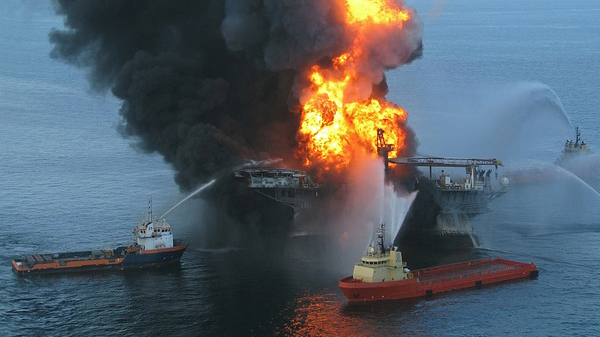
On April 20, 2010, BP's Deepwater Horizon rig exploded at a cost of eleven lives. What followed was the largest accidental marine oil spill in history. In the aftermath, BP looked for a solution, ostensibly to cap its exposure and address a swirling PR disaster. BP began to actively negotiate a settlement.
On March 2, 2012, BP agreed to a detailed settlement which set forth specific criteria for recovery under the Fund created by the Agreement. In August of that year, BP asked U.S. District Judge Carl Barbier to approve the settlement. The Agreement was approved.
Despite championing the settlement, BP later filed a lawsuit seeking to set aside the settlement, unless it was interpreted as suggested by BP. BP's challenges were rejected by the Federal District Court. Thereafter, the New Orleans-based Fifth Circuit Court of Appeals affirmed that ruling in a 2-to-1 decision. BP then applied for a Petition of Writ for Certiorari with the United States Supreme Court in a final challenge to the settlement.
About BP's legal maneuvers, Samuel Issacharoff, a New York University Law Professor, said the following: "This case is about a contract that BP signed that it now wishes it hadn't."
One of BP's primary complaints was that, in effect, the settlement could be interpreted to provide recovery for individuals or businesses who could not show a direct link between a financial downturn and the spill. In response, it was stated that the settlement was crafted to use objective measures to gauge whether losses are recoverable.
On December 8, 2014, the U.S. Supreme Court rejected BP's Petition for Writ of Certiorari. As such, the settlement agreement first proposed by BP will remain in place. No higher court remains.
Under the Agreement, potential claimants have 6 months from the Supreme Court's Petition denial to file claims.
In Nunez v. Pinnacle Homes, LLC, 13-1320 (La. App. 3 Cir. 12/17/14), — So. 3d —, the Third Circuit upheld the imposition of personal liability upon a Member of the defendant LLC after the LLC failed to build plaintiff’s house at the proper elevation. The case was on remand from the Supreme Court with the instruction to consider the impact of the Supreme Court ruling in Ogea v. Merritt, 13-1085 (La. 12/10/13), 130 So. 3d 888, which had addressed the exceptions to the non-liability of LLC Members.Generally, a member of an LLC is protected from personal liability for damages allegedly caused by the LLC. However, La. R.S. 12:1320(D) outlines exceptions to the general rule. One such exception is a “breach of professional duty.” Adopting an expansive definition of “professional,” the Nunez court held that a licensed contractor qualified as a professional and was therefore personally liable because he was “acting as a professional with attainments in special knowledge, particularly as evidenced by his having attained licensure from the state, as distinguished from mere skill.”The dissent in Nunez argued that the ruling improperly expanded what activities should be considered “professional” and potentially “open[s] any member or manager of an LLC to personal liability upon a finding of professional liability.” The dissent also questioned whether the majority faithfully interpreted Ogea. In this context, it would not be surprising to see the Supreme Court again take up the case.