Blog
Explore news, articles, outcomes, and legal resources by category or practice area.
Thank you! Your submission has been received!
Oops! Something went wrong while submitting the form.
deselect
No items found...
Merely "offering, filing and introducing" evidence in support of a summary judgment has been held insufficient to have the evidence considered – at least in Louisiana’s Third Circuit – which recently ruled that the introduction of evidence does not permit a trial court to consider such evidence in granting a motion for summary judgment. See, Bourque v. Transit Mix, 2014 WL 1805368 (La. App. 3 Cir. 5/7/14). To be considered, the evidence must be introduced and the judge must then admit the evidence into the record. **Update, the Third Circuit’s ruling has been addressed in the latest iteration of the summary judgment rules. Courts are no longer required to “admit” evidence for summary judgment.
Keogh Cox obtained dismissal of the suit asserted against the Sabine River Authority of Louisiana and Entergy by numerous plaintiff landowners alleging flood damages. Plaintiffs alleged their state law negligence and constitutional claims were preserved under Section 10(c) of the Federal Power Act [16 U.S.C. § 803], which provides that the licensee is liable for "all damages occasioned by the ... operation of the project works." Because the Toledo Bend Dam was not designed or licensed as a flood control dam, Keogh Cox argued on behalf of its clients that this provision does not permit claims based on conduct not required under the FERC license. To do so, Keogh Cox argued, amounts to a collateral attack of the FERC license and wrests operational control of the licensed project away from the Federal Energy Regulatory Commission [FERC] and places it in the hands of a trial judge.
The U.S. District Court for the Western District of Louisiana agreed with Keogh Cox's position. On appeal, the Fifth Circuit recognized the issue as one of first impression in the circuit. It found that the plaintiff's claims were conflict preempted by the FPA, and maintained that Section 10(c) of the FPA "cannot be interpreted so broadly as to allow state tort law to supplant FERC's exclusive control of dam operations." Plaintiffs filed a writ of certiorari to the United States Supreme Court, and on April 21, 2014, the U.S. Supreme Court denied writs, thereby preserving the Fifth Circuit's ruling.
The Fifth Circuit's interpretation of the scope of FPA Section 10(c)'s "savings clause" for damage claims against FERC licensees will likely become very important precedent throughout the United States. Keogh Cox is proud of its efforts in achieving this victory for the Sabine River Authority and the entire hydropower industry. John P. Wolff, III, Nancy B. Gilbert, Martin E. Golden and Virginia J. McLin were the attorneys handling the case for Keogh Cox.
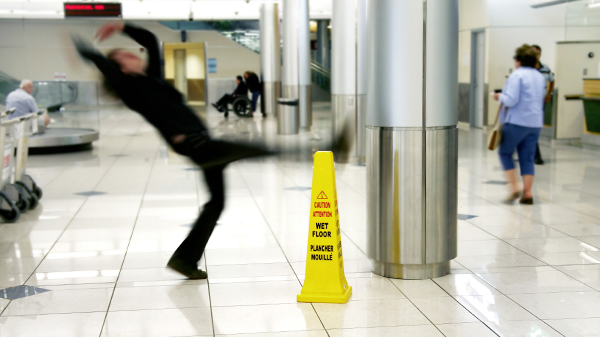
Louisiana premises liability law continues to evolve in the wake of the Louisiana Supreme Court's decision in Broussard v. State, 113 So.3d 175 (La. 2013). The Broussard decision was believed to limit the application of the open and obvious defense in the context of a Motion for Summary Judgment on liability.On February 18, 2014, the First Circuit Court of Appeals decided Gustafson v. Priority Electric, Inc., et al, 2013 CA 1096, 2014 WL 647704 (2/18/14) (not designated for publication), providing additional insight as to how Broussard will affect the applicability of the open and obvious defense. Based on Gustafson, the open and obvious defense may still be alive in the context of a Motion for Summary Judgment.While the Gustafson's home was under construction, Ms. Gustafson entered the home unescorted. She stood facing a newly repainted wall and took several steps backward to broaden her perspective of the wall. As she walked backwards, she tripped on one of two unfinished PVC conduit "stub-outs" containing electrical wire that would ultimately service floor-mounted outlets in an adjoining den. The lawsuit ensued.Priority Electric filed a Motion for Summary Judgment on the grounds that the stub-out presented an open and obvious condition that was readily discoverable had plaintiff exercised reasonable care. The company further argued that it had no duty to warn. The Trial Court agreed that the stub-out was an open and obvious condition and granted the motion.The Appellate Court conducted a de novo. The defendants argued, and the Trial Court agreed, that "if a defect is obvious and apparent, then there is no correlative duty to warn of its existence." Citing Broussard, the Appellate Court found that statement to be a misstatement of the law, noting that Broussard's analytic framework for evaluating an unreasonable risk of harm is classified as a determination of whether a defendant breached a duty owed, rather than a determination of whether a duty is owed ab initio.In light of Broussard, the Trial Court's reasoning underlying the grant of summary judgment was flawed. Nevertheless, the Appellate Court found a basis to support the Trial Court's dismissal of the claims utilizing a "risk-utility" analysis considering multiple factors.
1. Utility of the Stub-Outs
The necessity and utility of the stub-outs was not disputed.
2. Likelihood and Magnitude of Harm
The decision turned on this element. The utility of the stub-outs must be weighed against the likelihood and magnitude of harm presented by their defective condition, including whether the defect was open and obvious. The plaintiffs did not make a showing that any of the numerous contractors, subcontractors or visitors to the premises ever tripped. They also failed to offer expert testimony to show that the stub-outs presented an unreasonable risk of harm. Instead, they relied solely on the testimony of Ms. Gustafson, who admitted she was walking backwards and not paying attention. Unlike in Broussard, there was no evidence that the stub-outs were not "open and obvious to all who encountered them..."3. Cost of Preventing the HarmNo expert testimony was presented to show that the use of PVC stub-outs was unconventional in a new home or that there were reasonable alternatives to their use. No evidence was presented to show how the stub-outs could have been better placed or made more visible. Although plaintiffs argued that warning cones should have been in place, no evidence was presented to show that the contrast of the blue pipes on the gray cement was insufficient to alert an unsuspecting person.4. Nature of Plaintiff's ActivityPlaintiff was walking backwards when she fell. She acted unreasonably. The home was under construction and could have encountered a number of hazards. She failed to offer countervailing evidence on this issue.Upon balancing all of the factors above, all evidence showed that the accident would not have occurred "but for" Ms. Gustafson's own inattention and negligence.

The United States District Court for the Eastern District of Louisiana grants defendant, Circle K's, Motion to Dismiss concluding that plaintiff has no right to claim loss of opportunity to win the Louisiana Lottery Powerball jackpot, $103,100,000.00, because of an expired ticket issued in error.
This matter arose from plaintiff's purchase of two sets of Powerball tickets on or about January 19, 2012. The drawing that was the subject of the purchase was to be held on January 21, 2012 with a jackpot of $103,100,000.00. Sometime after the drawing date, plaintiff discovered the purchased tickets were printed on January 18, 2012 and worthless for the January 21, 2012 drawing. Plaintiff filed suit seeking damages in the amount of the Powerball jackpot.
After removal to Federal Court, on behalf of Circle K, Keogh Cox moved to dismiss the suit by claiming that Louisiana law affords no relief to plaintiff for the alleged claims. Specifically, Louisiana law explicitly precludes any relief to the plaintiff.
Keogh Cox cited La. R.S. 47:9009 which states "that there shall be no liability on the part of and no cause of action shall arise against the corporation, its governing board, staff, agents, vendors, or employees, arising out of or in connection with the issuance, failure to issue, or delivery of a lottery ticket."
Moreover, Keogh Cox asserted that the Louisiana Statute precludes payment of prize money on the basis of lottery tickets produced or issued in error. The United States District Court found merit in these assertions after extensive briefing and arguments by Keogh Cox attorneys, John P. Wolff, III, Nancy B. Gilbert, Richard W. Wolff and Mark Assad.
The United States District Court found that Circle K was statutorily exempt from the suit and, under the directives of the lottery itself, it is the sole responsibility of plaintiff to verify the accuracy of the game play. Plaintiff failed to do so and, as such, was barred from suit.
Gracella Simmons has been named a Super Lawyer 2014. Super Lawyers honors attorneys who have been nominated by their peers and evaluated through independent research.Jenny McLin has been named a Rising Star 2014 by Super Lawyers.Mary Anne Wolf will present a seminar on Design Professional Contract Review at the 18th Annual Joint Engineering Societies Conference in Lafayette on January 22, 2014. For information see www.les-state.org.

The longstanding rule that the analysis for "piercing the corporate veil" of an LLC is substantially the same as the analysis for piercing the veil of corporations has been called into question by the recent Louisiana Supreme Court decision in Ogea v. Travis Merritt and Merrit Construction, LLC, 2013-1085, --- So.3d ---. In Ogea, the Court addressed "the extent of the limitation of liability afforded to a member of an LLC" and the statutory basis for exceptions to this limited liability.
Typical of a veil piercing case, the Ogea Court began its discussion by citing familiar Louisiana cases on the topic: Riggins v. Dixie Shoring Co., Inc., 590 So.2d 1164 (La. 1991) and the more recent Charming Charlie, Inc. v. Perkins Rowe Associates, L.L.C., 11-2254 (La. App. 1 Cir. 7/10/12), 97 So.3d 595. However, the similarities stopped there.
The Court noted that traditional veil piercing doctrine was not invoked by the lower courts or the plaintiff. Instead, the Court's analysis turned on the interpretation of an infrequently cited statute within Title 12 that addresses the limitation of liability for LLC members. La. R.S. 12:1320(A) states that the liability of members and managers of an LLC "shall at all times be determined solely and exclusively by the provisions of this Chapter." Subsection (B) provides that members and managers are generally not liable for the debts, obligations, or liabilities of the LLC. Subsection (D) prescribes the exceptions to this limitation of liability, to include fraud, breach of professional duty, and any other negligent or wrongful act by the member or manager.
Addressing this statute as a matter of first impression, the Ogea Court applied the statute to the facts of the case. Merritt Construction, LLC was hired to build a home for plaintiff, Mary Ogea. As part of the process, Ms. Ogea requested that she have a friend prepare the site for the foundation. Travis Merritt, the sole member of Merritt Construction, LLC, informed Ms. Ogea that having someone else prepare the site would waive the warranty. Mr. Merritt subsequently operated the bulldozer to prepare the site for a subcontractor to pour the concrete slab. A dispute arose when a concrete contractor informed Ms. Ogea of problems with the home's foundation. Under these facts, the Court concluded Mr. Merritt was not personally liable under the exclusive exceptions to limited liability found in La. R.S. 12:1320(D).
The first exception, fraud, was rejected because no evidence in the record supported a finding that Mr. Merritt committed fraud.
Turning to the next exception, the Court also rejected the argument that plaintiff breached a professional duty as the sole member of the construction company. The professions recognized in Louisiana's corporate laws do not include individuals who perform construction work. Thus, Mr. Merritt could not breach a "professional duty" as contemplated by the statute. The Court also noted that the contract at issue only recognized Merritt Construction, LLC as a licensed contractor and did not reference any contractor's license held by Mr. Merritt personally.
Finally, the Court addressed the final exception to limited liability: "negligent or wrongful act." Plaintiff asserted that the term "negligence" in the statute only required proof of a tort by the individual. The Court quickly rejected this argument, noting that such an interpretation would improperly expand the liability of LLC members.
Rather, the Court set forth four factors to assist in the analysis under the last "negligence" exception: 1) whether a member's conduct could be fairly characterized as a traditionally recognized tort; 2) whether a member's conduct could be fairly characterized as a crime, for which a natural person, not a juridical person, could be held culpable; 3) whether the conduct at issue was required by, or was in furtherance of, a contract between the claimant and the LLC; and 4) whether the conduct at issue was done outside the member's capacity as a member.
It appears from the Ogea Court's focus that the prior analysis for "piercing the veil" of an LLC has perhaps been set aside and replaced with a new analysis which considers the exceptions to limited liability listed in La. R.S. 12:1320. However, the Court failed to expressly state that the prior analysis is improper and therefore no longer applicable. For now, it appears that the rules for piercing the veil of an LLC have changed but the true impact of Ogea remains to be seen.
PREMISES LIABILITY - In Guillot v. Dolgencorp, LLC, CA 13-587 (La. App. 3 Cir. 11/27/13), the Third Circuit addressed whether a merchant had "constructive notice" of an alleged hazard on its premises. Video surveillance indicating that a cup was on the floor for at least two minutes prior to the accident, coupled with video surveillance showing that a discarded plastic bag was on the floor in another part of the store for ten minutes before the accident, was held to be "constructive notice" sufficient to impose liability upon a merchant under the Merchant Liability Statute, La. R.S. 9:2800.6.INSURANCE - In Picou v. Fid. Nat. Prop. & Cas. Ins. Co, CIV.A. 13-5951, 2013 WL 6796865 (E.D. La. Dec. 23, 2013), the Eastern District of Louisiana held that an insurance agent was not liable for failing to advise a client as to whether he was underinsured or carried the right type of coverage. The court held that the agent has a duty of "reasonable diligence" to advise the client, but that this duty was not been expanded to include the obligation to advise whether the client has procured the correct amount or type of insurance coverage. The court cited to the insured's own responsibility to request the type of insurance coverage and the amount of coverage needed.MEDICAL MALPRACTICE - In Luther v. IOM Company LLC, 2013-C-0353 (10/15/2013), the Supreme Court held that a medical diagnostic monitoring company and its employee/physician were not "qualified health care providers" ("QHCPs") under the Louisiana Medical Malpractice Act, LSA-R.S. 40:1299.41, et seq. ("MMA"), for purposes of alleged acts of medical malpractice. In Luther, the Patient's Compensation Fund ("PCF") forwarded a letter stating that the defendants were QHCPs. However, PCF later discovered that the defendants had not enrolled in the fund at the time of the alleged malpractice and therefore could not be QHCPs under the MMA.The defendants claimed that they detrimentally relied on the actions of the PCF under Louisiana Civil Code article 1967. In order to prove detrimental reliance, they needed to establish three elements: 1) a representation by conduct or word; 2) justifiable reliance; and; 3) a change in position to one's detriment because of the reliance. The Court rejected the claim of detrimental reliance and held that reliance on the PCF's notice was not reasonable. The Court reasoned that the defendants knew they were not qualified or could have easily discovered the truth. Further, the Court observed that it is usually more difficult to show detrimental reliance upon a governmental agency.

The Louisiana Supreme Court recently held that the New Home Warranty Act ("NHWA") is not the exclusive remedy for a purchaser of a new home where the builder fails to disclose known defects in the Residential Property Disclosure Act ("RPDA"). Stutts v. Melton, 2013-0557, -- So.2d. ----. The Court also upheld an award of damages and attorney fees for fraud victims who elect not to seek rescission of a sales contract despite no Civil Code article expressly allowing for attorney fees in such instances.
Builder Chad Melton completed a home in Walker, Louisiana in 2004. He and his wife lived in the home for approximately nine months prior to selling the home to James and Lisa Stutts. The Residential Property Disclosure Act, La. R.S. 9:3196, et seq., requires disclosures of known problems with a home prior to sale. Melton provided the Stutts with a disclosure form, but failed to mention that color had previously been observed bleeding onto the walls of the home from the roof.
In Stutts, it was factually established that Melton was aware of the roof defect because he had entered into a $13,600 settlement with the roof manufacturer to fund the replacement of the roof. Nevertheless, Melton cleaned the walls and installed gutters instead of the more expensive roof replacement.
Melton's gutter solution was ill-advised and unsuccessful. After discovering the problem in the summer of 2006, the Stutts filed suit seeking as damages: the repair costs for the roof; costs for additional repairs; and attorney fees.
The Stutts filed a motion for summary judgment on their fraud claim citing La. C.C. art. 1953. The Meltons opposed the motion, arguing that the NHWA provides the "exclusive remedy" available to the Stutts. The motion was granted and, after a bench trial on damages, the trial judge awarded damages to include attorney fees.
The court of appeal reversed both the summary judgment and the money judgment, holding that the Stutts' claims were untimely under the NHWA.The NHWA provides a one year warranty period for new home construction and an additional thirty day period in which to file suit under the Act. By its terms, the NHWA provides the "exclusive remedies" between a builder and an owner relative to home construction.
The Louisiana Supreme Court reversed and reinstated that lower court's judgment. The Court held that the RPDA applied in this case because the home had been occupied by the Meltons after construction was completed. Even though the NHWA claims were prescribed, the Stutts possessed a timely claim that Melton had provided a fraudulent disclosure in violation of the RPDA.
The Court next addressed the Stutts' claim for attorney fees. The Court observed that no statute specifically authorized attorney fees where the plaintiff does not seek rescission of the sale. However, the Court reasoned, citing principles of equity found in Louisiana Civil Code article 4, that the legislature surely did not intend for victims of fraud to go uncompensated if they elect not to seek full rescission of the sale. Accordingly, attorney fees were held appropriate where fraud is committed but the victim elects not to seek rescission of the contract.
The Court's holding in Stutts may have a limited impact on the NHWA because of the peculiar facts of the case, i.e. the builder of the new construction living in the completed home before selling it to plaintiffs. However, the Court's award of attorney fees is an interesting development in the law. Time will tell whether the Court may be inclined to create further exceptions to the established rule that attorney fees cannot be awarded in the absence of statutory or contractual language awarding attorney fees.
NEW HOME WARRANTY ACT - In Shaw v. Acadian Builders and Contractors, LLC, 2013-0397 (La. 12/10/13), the Louisiana Supreme Court held that the appellate court misinterpreted the definition of "major structural defect" in the NHWA. The trial court determined that a stucco exterior was not properly applied and sealed by the builder. This allowed water to accumulate within the walls which, in turn, caused the loadbearing wall studs to rot. This rendered the home "unsafe, unsanitary and unlivable" under the five-year warranty provision in the NHWA statute.However, the appellate court ruled that the NHWA’s 5 year warranty did not apply because the improperly constructed stucco and moisture barrier system was not "loadbearing." The Supreme Court reversed and held that the defective component does not have to be "loadbearing" for a warranty violation to constitute a "major structural defect."MEDICAL MALPRACTICE – In Snider v. Louisiana Medical Mut. Ins. Co., 2013-0579 (La. 12/10/13), the Louisiana Supreme Court reversed the appellate court’s ruling that the defendant-physician committed malpractice when he failed to obtain informed consent. The plaintiff alleged that the defendant-physician performed unnecessary pacemaker implantation surgery which resulted in complications requiring further treatment and surgery.At trial, the jury found that the plaintiff failed to prove that the physician breached the applicable standard of care. On appeal, the plaintiff raised multiple assignments of error. The appellate court found merit only in the allegation that the doctor failed to properly provide all of the information required by subsection (E) of the Louisiana Uniform Consent Law.The Supreme Court reversed and remanded the matter back to the appellate court. The Court ruled that the appellate court should have employed a "manifest error" standard of review with regard to informed consent as opposed to the appellate court’s direct finding that the jury was wrong based upon the noncompliance with subsection (E).FORUM SELECTION - In Fidelak v. Holmes European Motors, 2013-0691 (La. 12/10/13), the issue was the enforceability of a forum selection clause contained in a contract between an auto repair shop and an engine supplier. The plaintiffs in the main demand filed suit in Louisiana State District Court against a Louisiana repair shop when the engine installed in their 2004 Land Rover failed a few days after the work was performed.The repair shop then filed a third party demand against the Texas-based engine wholesaler from whom the repair shop had purchased the engine. The wholesaler filed an exception of improper venue based upon a Texas forum selection clause in its contract with the repair shop. The trial court held that the forum selection clause was valid and enforceable such that the exception was sustained. The appellate court affirmed the trial court. After noting that the issue was res nova, the Louisiana Supreme Court reversed, finding that pursuant to LSA-C.C.P. art. 1034 the third-party defendant may not object to venue if the venue of the underlying "principal action" is proper.

Keogh Cox's recent blog entry "Did I pass?" looked at recent changes to the Louisiana attorney's "bar" examination and discussed the negative impact these changes seem to be having on the bar passage rate. Since that post, the results from the July, 2013 exam were released, and they are not good. In fact, the overall passage rate (53.34%) was among the lowest ever for a July examination.
By way of recap, on October 19, 2011, the Louisiana Supreme Court ordered the implementation of the first changes to the grading standards of the Louisiana Bar exam since the exam was instituted. These changes: began "compensatory scoring;" eliminated essay portions of the test; included "multiple choice" format portions; doubled the score value of the "Code subjects;" ended the "conditional failure" status; and, placed a five-time limit on unsuccessful attempts to pass.
The following reflects how the graduates of various law schools fared in the recent exam:
SCHOOL # PASSED FAILED
LSU 171 120(70.18%) 51(29.82%)
LOYOLA 203 115(56.65%) 88(43.35%)
SOUTHERN 154 53(34.42%) 101(65.58%)
TULANE 88 56(63.64%) 32(36.36%)
OTHER 147 63(42.86%) 84(57.14%)
TOTAL 763 407(53.34%) 356(46.66%)
The consistent decline in the overall applicant passage rate since the recent changes suggests that these low numbers can no longer be regarded as a coincidence.