Blog
Explore news, articles, outcomes, and legal resources by category or practice area.
Thank you! Your submission has been received!
Oops! Something went wrong while submitting the form.
deselect
No items found...

In a decision released October 9, 2013, the U.S. Fifth Circuit upheld the grant of the defendants' Motion to Dismiss by concluding that the Federal Power Act ("FPA") preempts property damage claims based in Louisiana state tort law where the alleged damage is the result of operations that comply with the FERC-issued license. Simmons v. Sabine River Authority, No. 12-30494, - F.3d - , (5th Cir. 10/09/2013).
This issue, recognized as a question of first impression in the Fifth Circuit, arose in a case where the plaintiffs, all Louisiana owners and residents of property located downstream from the federally-licensed hydroelectric Toledo Bend Dam situated on the Sabine River, sued Sabine River Authority of Louisiana and various Entergy defendants to recover damages for flooding incidents and to enjoin the opening of the Dam's flood gates in such a way as to cause inundation of the downstream properties.
On behalf of defendants, Keogh Cox moved to dismiss the suit by claiming state tort law claims for damages and injunctive relief interferes with the exclusive authority of the Federal Energy Regulatory Commission ["FERC"] to regulate and control the operations of the federally-licensed Toledo Bend project such that the plaintiffs' claims were preempted under the FPA. The District Court granted the motion after extensive briefing and argument by Keogh Cox attorneys, John P. Wolff, III, Nancy B. Gilbert, Martin E. Golden, and Virginia J. McLin.
In affirming the district court's ruling, the Fifth Circuit recognized U.S. Supreme Court precedent that has interpreted the FPA as "occupying the field of public water use and power generation except for water use rights." As a result, in accord with Ninth Circuit law, it interpreted the general savings clause in the FPA [16 U.S.C. § 821] narrowly to exempt only "a state property law regime [that] enables users of streams and wells to obtain proprietary rights in a continuing quantity of water." The Court also recognized that state damage claims can have the same effect as a state regulation and may serve as a collateral attack on a federal license, such that it refused to interpret the limited savings clause [16 U.S.C. § 803(c)] to permit "state tort law to supplant FERC's exclusive control of dam operations." Because "applying state tort law to set the duty of care for the operation of the FERC-licensed project would 'stand as an obstacle to the accomplishment and execution of the full purposes and objectives' of the FPA," the Fifth Circuit held plaintiffs' state law property damages claims were conflict preempted under the FPA.
That a single federal agency should control public water use and dam operations was noted to be especially appropriate because the Toledo Bend Dam spans Texas and Louisiana state lines and, if not preempted, different causes of action and standards of conduct could have been imposed under the laws of the two states.

The July 2013 Louisiana Bar Examination results are set to be announced on October 11, 2013. Until then, applicants have but a few remaining hours to ponder whether the recent changes to the bar examination will have the same negative effect on passage rates as they did last year.
On October 19, 2011, the Louisiana Supreme Court ordered the implementation of the first changes to the grading standards of the Louisiana Bar exam since the exam was instituted. These changes: began "compensatory scoring;" eliminated essay portions of the test; included "multiple choice" format portions; doubled the score value of the "Code subjects;" ended the "conditional failure" status; and, placed a five-time limit on unsuccessful attempts to pass. Under the new rules, an applicant must score a 650 or higher or will be required to retake the nine (9) section, week-long test encompassing over twenty one (21) hours of testing.
These changes did not go unopposed. The LSU Paul Hebert Law Center submitted a position paper to the Louisiana Supreme Court arguing against compensatory scoring. In support of its position, LSU cited the analysis of the Louisiana Supreme Court Committee on Bar Admissions which indicated that a sizable number of applicants could pass the bar under compensatory scoring, even though they failed two or more of the Code subjects.
Prior to implementation of the new rules, many feared that the changes would cause an artificial increase in the number of applicants who passed the bar. However, the exact opposite has occurred. The first examination under the new method was administered during July, 2012. The overall applicant passage rate was 61.32%, an 11.08% drop in the passage rate. The February 2013 examination demonstrated a similar decline. The February 2013 examination passage rate was 40.65%, a 12.95% drop from February 2012.
At this time, it is unknown whether the decline in the overall passage rate will become the "new norm." It has been suggested that passage rates will return to historical levels over time. Until then, applicants will continue to ponder, and the attorneys at Keogh Cox will continue to wish them luck.
Supreme Court decision of Arizona v. United States, 132 S.Ct. 2492 (2012). TheSarrabea Court found that the statute was "preempted" by federal law under the Supremacy Clause of the United States Constitution. Specifically, the Court identified the existence of "field preemption" with respect to "alien registration." With field preeemption, states may not legislate in an area the Federal Government has reserved for itself.
AGRICULTURE- The Louisiana Supreme Court of in Krielow v. Louisiana Department of Agriculture and Forestry, 2013-CA-1106 (October 15, 2013), considered the constitutionality of the "Rice Statutes," La. R.S. 3:3534 and La. R.S. 3:3544. The Rice Statutes established the Louisiana Rice Promotion Board and the Louisiana Rice Research Board, with the stated purpose to promote the growth and development of the rice industry in Louisiana. These statutes granted the authority to the Rice Boards to impose assessments on rice producers and the ability to prevent refunds to producers. In this context, the Supreme Court held the Rice Statutes facially unconstitutional because they improperly delegated governmental power to Boards not ultimately accountable to the voters.
NEW HOME WARRANTY ACT- The Louisiana Supreme Court in Stutts v. Melton, 2013-C -0557, considered whether a home purchaser was limited in their remedy against the seller/builder of the home to the New Home Warranty Act ("NHWA") remedies, or whether other remedies were available. In this case, the seller/builder was aware of a defect, but failed to notify the purchaser of the defect. After reviewing the record and the applicable law, the Supreme Court held that the purchasers were not limited to the provisions of the NHWA under the facts of this case. Because the builder was also the seller, the Court found that the builder had violated the Residential Property Disclosure Act in failing to disclose a known defect.
INSURANCE- In Orleans Parish School Board v. Lexington Insurance Company, 2012-CA-0095 (8/26/13), the Fourth Circuit held that an insurance policy provision which excluded damages "caused by mold" applied to damages resulting as a consequence of the initial presence of mold. The court reasoned that, once mold appears, the policy exclusion applies to all damages caused by the presence of the mold. However, the court also commented that there may be coverage for mold removal if the plaintiffs could prove that the mold resulted from a covered occurrence.
NEGLIGENCE- In Currie v. Scottsdale Indemnity Company, 2012-CA-1666 (8/26/13), the Louisiana First Circuit overturned a summary judgment which had been granted where a plaintiff voluntarily encountered uneven concrete covered by a puddle of water. Despite evidence that the plaintiff possessed pre-incident awareness of the defect, the court believed that material issues of fact existed in the determination of whether there had been a "breach of duty." The court highlighted the factual nature of deciding whether there had been a "breach of duty," as opposed to the legal question involved in deciding whether a "duty" is owed.
APPEALS- In Quality Paint Hardware & Marine Supply, Inc. v. Crescent Coating and Services, Inc.,2013-CA-129 (8/27/13), the Louisiana First Circuit ruled that a minute entry and an oral judgment that had not been signed by the trial court were insufficient to divest the trial court of jurisdiction. As a result, the oral "judgment" could not be reviewed through the appeals process.

"I never worry about action, only inaction."
- Winston Churchill
The Louisiana Supreme Court's decision not to take up a case is sometimes just as important as a decision to grant Writs and issue a ruling. Recently, much attention has been given to the Court's decision not to grant a Writ filed by Louisiana State University.
On August 28, 2013, the Court denied a Writ brought by LSU in a case filed by local media outlets in the 19th JDC demanding access to information regarding LSU's presidential candidates. The media appears interested in the interview process and why only one of the 35 candidates was formally interviewed. The media outlets argue that the information concerning the candidates is "public record" under Louisiana law.
Prior to the Writ filing, the state District Court had ruled that the information was public record and ordered LSU to produce the requested documents. LSU did not comply with this order. On August 14, 2013, LSU was held in contempt of court and fined $500 per day. LSU filed a Writ to the Louisiana Supreme Court. The Louisiana Supreme Court denied the Writ, stating that LSU had a "sufficient remedy" through a suspensive appeal. The Court offered no further explanation of its ruling.
Attorneys on both sides have publically offered differing opinions as to the significance of the Court's Writ denial. The attorney for the media outlets stated to Nola.com that LSU now must comply with the district court's order and produce the requested information. However, the attorney for LSU argues that the Court's Writ denial is functionally a "stay" of the District Court's order because the Supreme Court specifically expressed that LSU could file a suspensive appeal. LSU has expressed an intention to appeal the entire case to the Louisiana First Circuit.
RESTAURANT LIABILITY- The recovery by plaintiff against the Department of Health and Hospitals (DHH) was upheld in the First Circuit's recent Travis v. Spitale's Bar, Inc., 2013 WL 4105400 (La. App. 1 Cir. 8/14/13) decision. In Travis, the plaintiff became ill due to vibrio vulnificus bacteria contained in raw oysters sold by Spitale's Bar. Although Spitale's posted the required safety warnings in its bar, the statutorily-mandated signs were not posted in the restaurant area nor on the menu. The jury allocated fault as follows: DHH (40%), Spitale's (33%) and plaintiff (27%).On appeal, DHH argued that the trial court failed to properly instruct the jury on the law of "superseding negligence." DHH contended that the decision by the plaintiff to ignore his physician's instruction to avoid raw seafood constituted superseding negligence. In rejecting this argument, the First Circuit held that the court's charge to the jury was adequate because they "informed the jury that they were permitted to assign fault to Mr. Travis for his role in causing his own injuries."INSURANCE- In Lockwood v. Allstate Ins. Co., 109 So. 3d 931 (La. App. 2 Cir. 2013), the Louisiana Second Circuit held that an insurance policy that expired one hour before an accident did not provide coverage. The insurer offered to renew the policy, but the insured did not pay premium timely. The original policy contained an "Automatic Termination" clause, stating: "If we offer to renew or continue your policy and you or your representative do not accept by making timely payment of . . . premium due, this policy will automatically terminate at the end of the policy period." The court held that the policy expired according to its terms.The court found that the facts presented a "nonrenewal" as opposed to a "cancellation," and, therefore, not subject to the statutory procedures for cancellation.CONTRACT- The Louisiana Supreme Court recently issued a ruling upholding the long-standing contract law cannon that parties must read their contracts. In Cynthia Fry Perionnet and Elizabeth Fry Franklin v. Matador Resources Company, 2012-2292, 2012-2377, -- So. 3d --, the Court held that a contract could not be rescinded for unilateral error when the party's alleged error was inexcusable. Specifically, the Court found that the plaintiffs claiming error: 1) could show no excuse for failing to read and understand the contract; 2) plaintiffs were self-proclaimed experts in the contractual subject matter; and, 3) the original contract was on the plantiff's own forms. Because the Court could find no plausible excuse for plaintiff's error, the contract was not rescinded.
John P. Wolff is a member of the Board of Directors of the Baton Rouge Epicurean Society, a non-profit organization which has goals to include raising local awareness of childhood health and nutrition issues; helping young students learn about community involvement, cultural preservation and leadership; and awarding endowment funds and scholarships in the epicurean arts. The Society's annual event, Fete Rouge, will be held on August 23 and 24, 2012.Gracella Simmons has been named to the Board of Directors of Yelp!Baton Rouge. This organization is a nonprofit animal welfare organization that is committed to ending euthanasia of healthy and treatable companion animals in the Greater Baton Rouge Area.Andrew Blanchfield has been elected as President of Bocage Racquet Club, a member owned club in Baton Rouge. Bocage is a nationally-recognized center for tennis and recreation.

The Louisiana Supreme Court recently addressed the impact of contractual "errors" in Cynthia Fry Perionnet and Elizabeth Fry Franklin v. Matador Resources Company, 2012-2292, 2012-2377, -- So. 3d --.
The Perionnet case involved a dispute over the intent of a contract to extend a mineral lease. The property owners believed that the lease was extended as to only 168.95 acres of nonproducing land. The defendant/lessors argued that the contract contemplated that the lease would extend to the entire 1850.34 acres to include producing wells. Plaintiffs/property owners argued that their unilateral error regarding the terms of the contract was ground for rescission. The jury ruled in favor of the defendant/lessors. The Court of Appeal reversed. The Supreme Court granted writs.
The Perionnet Court began its opinion with an overview of basic tenets of contract law. The Louisiana Civil Code defines a contract as "an agreement by two or more parties whereby obligations are created, modified, or extinguished." La. C.C. art. 1906. Contracts are formed through offer and acceptance. La. C.C. art. 1927. Once formed, contracts have "the effect of law for the parties and may be dissolved only through the consent of the parties or on grounds provided by law." La. C.C. art. 1983. One such "ground" under Louisiana law is "error." La. C.C. art. 1948.
The Louisiana Civil Code recognizes two forms of error: mutual error (both parties are mistaken) or unilateral error (only one party is mistaken). However, for either error to cause the dissolution of a contract, the error (1) must effect the cause of the obligation and (2) the other party must have known that the matter impacted by the error was the reason for the contract. La. C.C. art. 1949. In a case of mutual error, the court can reform the contract. Either partial or full rescission is the only remedy available for unilateral error. La. CC. art. 1952.
A party challenging a contract for unilateral error must also prove that the error was excusable. "Louisiana jurisprudence is sprinkled with cases which deny relief to the parties who claim an agreement should be invalidated because of unilateral error which is caused, in large part, by the complaining party's inexcusable ignorance, neglect or want of care." Id. p. 25.
The Perionnet Court found that the plaintiffs' alleged mistake was inexcusable. The defendants demonstrated that: 1) plaintiffs could show no excuse for failing to read and understand the contract; 2) plaintiffs' agents who negotiated and reviewed the contract were self-proclaimed experts in oil and gas; and 3) the original lease was on the plaintiffs' agent's own forms. The Court found a "sea of flags" in the written agreement that should have notified the experienced plaintiffs that the agreement extended to the entire property. Therefore, the Court found that the mistake was easily detectable and could have been rectified by a minimal amount of care, i.e. "by simply reading the document and/or requesting simple changes to the written offer before acceptance." Id. at 30.
The Supreme Court's Perionnet decision serves as a healthy reminder of a basic concept - read your contracts. Although to err may be human, it can affect your bottom line.

Can a child have more than one father? Yes, according to Louisiana law which allows for "dual paternity."
Louisiana's "family law" has undergone many changes in an attempt to react to the challenges presented by new medical technology and a breakdown of the traditional family structure. The recent Supreme Court decision in Derek Alan Pociask v. Kera Mosely is the latest effort to address these "modern problems."
The Pociask Court explained that there is a public interest in "protect[ing] innocent children, born during marriage, against scandalous attacks upon their paternity by the husband of the mother, who may be seeking to avoid paternal obligations to the child ... Thus, the traditional and historical position of Louisiana jurisprudence was to zealously guard and enforce the presumption of paternity created by the Civil Code." This public policy was easier to promote in the past when a husband may have had no reason to question or ability to challenge his paternity. However, in a world of vasectomies and DNA testing, the husband now has an increased ability to factually prove that he is not the father.
With "dual paternity," the first "father" is the husband of the child's mother. The second "father" is the biological father of the child. This situation can occur because the husband is presumed to be the father of the child under Louisiana law. See, La. C.C. art. 185. This "presumption" becomes incontrovertible if the husband does not bring an action to disavow his paternity within one year from when he learns or should have learned of the child's birth unless the husband lived separate and apart continuously from the mother for three-hundred days immediately preceding the birth of the child. See, La. C.C. art. 189.
If the husband lived separate and apart for three-hundred days immediately preceding the birth of the child, the husband can bring a disavowal action within one year from being notified in writing that a party in interest asserts that he is the father of the child. If he fails to bring the disavowal action, he will be considered the "father" for all legal purposes. The purpose behind the "separate and apart" exception is to bring legal and biological paternity into "closer association." See, Katherine Shaw Spaht, Who's Your Momma, Who are Your Daddies?: Louisiana's New Law of Filiation, 67 La. L. Rev. 307 at 314 (2007).
In Pociask, the Louisiana Supreme Court addressed what it means to "live separate and apart continuously" from the mother. The plaintiff in Pociask (the presumed father and ex-husband of the defendant mother) brought an action to disavowal his paternity. The disavowal action was brought well over a year after the child's birth.
Factually, the presumed father in Pociask underwent a vasectomy prior to the birth of the child, had not entered into sexual relations with the mother for over three-hundred days (over nine months) prior to the child's birth and had barely seen the mother in the three-hundred days prior to the birth of the child. Moreover, DNA testing proved that he was not the biological father. Nevertheless, the Louisiana Court of Appeals determined that the husband was the presumed father of the child because he did not bring his disavowal action within a year of the child's birth.
The Court of Appeals interpreted the phrase "lived separate and apart continuously" so strictly that the husband's one night stay at the marital domicile during the three-hundred day period preempted the disavowal action. The Appeals Court held that the phrase "lived separate and apart continuously" should not be interpreted in pari materia (in a like manner) with the divorce articles of the Civil Code. In the divorce setting, a spouse will be found to have lived "separate and apart" when the overall circumstances show that there was no mutual intention to resume the marital relationship.
The Pociask Court disagreed with the strict reading of the "separate and apart" language used by the appellate court. According to the Pociask Court, the phrase "lived separate and apart continuously" should be interpreted the same way in a disavowal action as it interpreted with a divorce. Therefore, the overnight visit in Pociask did not serve to interrupt the three-hundred day period and the disavowal action was timely.

The Louisiana Supreme Court recently held that the enactment of the "Cash Balance Plan" was unconstitutional. See The Retired State Employees, Association et. al v. The State of Louisiana et. al., 2013-0499, - So.3d -. The Cash Balance Plan is a 401-k style retirement plan that was to be put in place for state employees, including teachers, hired after July 1, 2014.
The key issues in The Retired State Employees litigation were: 1) whether the Cash Balance Plan was a new retirement plan or merely a modification of an existing retirement plan; and 2) whether the Cash Balance Plan had an "actuarial cost." If the Cash Balance Plan was a new plan or had an actuarial cost, a two-thirds vote would be required to pass the legislation rather than a mere majority of votes under Louisiana Constitution Article X, § 29(F).
The Speaker of Louisiana House of Representatives determined that a mere majority was required to pass the bill (HB 61 (Act 483)) containing the Cash Balance Plan. The bill passed by a majority, but with less than a two-thirds vote and was signed into law on June 5, 2012.
The 19th JDC determined that the Cash Balance Plan required a two-thirds vote to be enacted and was therefore unconstitutional. The Supreme Court granted writs.
The Retired State Employees Court determined that the Cash Balance Plan, even if it was a new plan, was a part of the old retirement system and therefore was subject to Constitutional Article X, § 29(F). Article X, § 29(F) requires a two-thirds vote when there is an actuarial cost related to the bill being enacted.
The Court reasoned that whether there is an actuarial cost to a bill is a determination to be made by the legislative auditor. While multiple fiscal advisors expressed the opinion that there was no actuarial cost, the legislative auditor determined that the Cash Balance Plan did, in fact, have an actuarial cost. Therefore, a two-thirds vote was required to pass the Cash Balance Plan and its enactment was unconstitutional.

The Louisiana Supreme Court recently announced a decision that could alter the impact of Louisiana's "Direct Action Statute." See Soileau v. Smith True Value and Rental, et. al., 2012-1711, -- So. 3d ---.In Soileau, the injured plaintiff initiated suit after a John Deere front-end loader malfunctioned. She settled with a number of parties but proceeded to trial against the store from which the machinery was rented, the store's owners (collectively, the Smiths) and the Smiths' insurer, Hartford Insurance Company.The plaintiff sued Hartford under Louisiana's Direct Action Statute, which was enacted to provide plaintiffs with a "direct" right of action against a tortfeasor's insurance company. In many other states, a plaintiff cannot sue a tortfeasor's insurer directly as this cause of action is not permitted by the common law. Insured Lloyd's v. Bobo, 156 S. E. 2d 518 (Ga. App. 1967).Generally, the Direct Action Statute allows a plaintiff to assert a claim against both the insured and its insurer. However, suit may be brought against the insurer only in the few exceptions outlined in the statute.The plaintiff's original petition in Soileau complied with the statute because it joined both Hartford and its insureds, the Smiths. During the trial, the plaintiff verbally dismissed the Smiths from the suit, not seeking "any damages personally against them."Following the dismissal, Hartford was the only party who remained. The plaintiff did not expressly reserve any rights against Hartford who then sought dismissal on two grounds:
The trial court rejected both of Hartford's arguments. The jury found for the plaintiff in the amount of $9.4 million and allocated 15% of the fault to the Smiths. Judgment was then rendered against Hartford. Hartford appealed. The Third Circuit Court of Appeal agreed with Hartford's arguments and dismissed it from the suit. The Louisiana Supreme Court accepted writs.In a 4-3 decision, the Supreme Court held that the plaintiff maintained her right of action against Hartford despite the dismissal. The Court accepted the plaintiff's position that she intended to reserve her rights against Hartford and cited to Civil Code article 1802 which provides that the renunciation of rights against one solidary obligor "must be express." Therefore, because the plaintiff did not expressly release Hartford, its release would not be presumed.The majority also ruled that the Direct Action Statute did not bar the plaintiff's claim against Hartford. Under the Court's reasoning, the circumstances outlined in the Direct Action Statute are relevant only at the time suit is filed. Thereafter, after suit is "brought," a plaintiff can freely dismiss the insured and maintain its suit against the insurer alone.The Court expressed that its holding is consistent with the statute because the naming of the Smiths in the caption of the suit allowed the jury to recognize that the suit was not just against a "company." In support, the Court quoted from one of the drafters of the Direct Action Statute who testified as follows:[T]he purpose of the bill is to permit the trier of fact to see that there are two human beings involved, a plaintiff and an insured defendant, rather than just a victim and a company.However, the plaintiff's counsel in Soileau was allowed to inform the jury during closing arguments that Hartford was the only defendant left in the lawsuit and that the Smiths could not be held liable.Three justices dissented.One dissenting opinion reasoned that Hartford should not be held liable because it could never be liable for the conduct of a dismissed insured who could not be "legally liable to pay damages."All dissenters complained that the majority's holding will, in effect, allow plaintiffs to sidestep the requirements of the Direct Action Statute. Justice Guidry wrote that the majority ruling will allow plaintiffs to "circumvent" the direct action. Justice Victory added that the Court's holding allows a "plaintiff to name the insured along with the insurer as defendants in order to comply with the statute, but then dismiss the insured and proceed at trial against the insurer alone..." The true impact of Soileau remains to be seen.
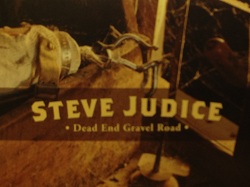
Keog Cox partner Steve Judice is an accomplished litigator, but has also begun to make his mark in the world of country music. We take this opportunity to congratulate Steve on the June 19th release of his third, full length CD entitled "Dead End Gravel Road."
EXPERTS - In Benjamin v Zeichner, 2012-1763 (La. 4/15/13), 113 So.3d 197, the Louisiana Supreme Court examined the requirements for a physician to qualify as an expert in a medical malpractice case, as set forth in La. R.S. 9:2794(D). At trial, plaintiff sought to introduce the testimony of Dr. Shamblin as an expert witness in general surgery, with specific expertise in bariatric surgery. Dr. Shamblin had relinquished his medical license in Louisiana, and had not renewed his license in Alabama. The trial court refused to qualify Dr. Shamblin as an expert witness and granted defendant's directed verdict. The Court of Appeal reversed, holding that La. R.S. 9:2794(D) did not specifically require that the expert be licensed at the time of the testimony. The Court held that a physician licensed when the claim arose is qualified under the statute.The Supreme Court reversed, finding that the statute unambiguously provides that a physician may only qualify as an expert if he "is" licensed to practice medicine. The Court reasoned that the statute's use of the present tense "is" signifies that the physician only qualifies if he is currently licensed to practice medicine. The Court held that the relevant time for determination of whether Dr. Shamblin met the qualifications of La. R.S. 9:2794 was at the time he was presented for qualification as an expert, i.e. at trial. Therefore, Dr. Shamblin did not qualify as an expert because he was not licensed to practice medicine at the time of trial.SETTLEMENT - In Feingerts v. State Farm Mutual Automobile Insurance Company, 2013 WL 3214811 (La. Appl. 4 Cir. 6/26/13), the Fourth Circuit upheld the settlement of an attorney fee dispute between the client and multiple sets of attorneys. Mr. Feingerts was injured in an automobile accident and retained multiple sets of attorneys over the course of the litigation. Ultimately, the plaintiff obtained a settlement in the sum of $784,000.00. However, he was unable to reach an agreement with any of his attorneys pertinent to the fees owed.A full-day mediation was conducted concerning the attorney fee issue. At the end of mediation, a hand-written document was executed by all of the participants. The document was entitled "Fee Dispute Settlement Agreement," referenced the case docket number and outlined the amount of payment to be made to the settling attorneys. Nevertheless, the plaintiff failed to compensate any of the attorneys after the mediation.In response to the failure to pay, separate motions to enforce the settlement agreement were filed and granted. On appeal, Feingerts alleged that the handwritten document failed to satisfy the legal requirement for a settlement under Louisiana law because the agreement contained no specific language resolving any claim or waiving any rights. Moreover, he alleged that there was no "concession" made by the attorneys in the agreement such that it was unenforceable.The Fourth Circuit affirmed and held the agreement valid. It accepted the appellees' argument that the title of the agreement expressed an intent to settle the fee dispute; therefore, it was unnecessary to include specific release language in the agreement. Citing earlier cases, the Fourth Circuit held that, absent evidence of duress, a mediation agreement signed by the parties constitutes a legal and binding compromise.PRESCRIPTION - In Milbert v. Answering Bureau, Inc., 2013 WL 3285852 (La. 6/28/13), the Louisiana Supreme Court held that, when a non-healthcare provider is a "joint tortfeasor" with a healthcare provider, the provisions of the Medical Malpractice Act which suspend prescription against the healthcare provider will also suspend prescription against the non-healthcare provider. In Milbert, the plaintiff/patient brought a malpractice claim against the physician. He also sued an answering service (Dexcomm) after it allegedly failed to promptly and accurately forward medical information.Mr. Milbert fell off of his roof and broke his right ankle. Surgery was performed and he was released and instructed to call his doctors if he had any problems. When his pain level increased, he called the answering service asking that his physician, Dr. Yerger, be notified. When the service failed to receive return calls from the physician, Mr. Milbert went to the hospital emergency and sat for several hours. The answering services' logs indicated that it employees initially paged the wrong doctor. When the correct doctor was reached, the Milberts had already arrived at the emergency room. Despite Dr. Yerger's directive to contact him if the Milberts called again, he was not informed of the subsequent phone calls by the Milberts. After several hours in the emergency room, Mr. Milbert was examined and diagnosed with a syndrome of the right leg. At that time, Dr. Yerger was finally contacted and thereafter performed surgery.Under these facts, the Milberts filed suit against Dr. Yerger, the hospital and other physicians. Among other allegations, the Milberts alleged that the damages suffered could have been prevented had he received prompt medical care after calling the answering service.After the Medical Review Panel rendered an opinion favorable to the medical providers, the Milberts filed a timely medical malpractice action against various doctors and the hospital and moved to consolidate the claim with the District Court suit filed against Dexcomm. In response, Dexcomm filed a Motion for Summary Judgment asserting that the claims were prescribed. The alleged negligence of Dexcomm occurred on September 7, 2008 but suit was not filed until December 23, 2009. Milberts argued that prescription against Dexcomm was suspended because it was a "joint tortfeasor" with the medical defendants under Louisiana Medical Malpractice Act, specifically citing LSA-R.S. 40:1299.47(A)(2)(a).Dexcomm's Motion for Summary Judgment was granted and affirmed on appeal. The Appellate Court concluded that Dexcomm was neither a healthcare provider nor a joint or solidary obligor with any healthcare provider; therefore, it held that the language in Louisiana's Medical Malpractice Act and its suspension of prescription for joint tortfeasors did not apply.The Louisiana Supreme Court disagreed. It found that Dexcomm was a "joint tortfeasor" such that the interruption of prescription as to the medical providers equally applied as to Dexcomm.