Louisiana is a "direct action" state that continues to present new challenges for insurers. Over the years, Louisiana courts have expanded the duty to defend. This expansion created pitfalls for the insurer and forced the provision of a complete defense, even when all or a majority of the claim was not covered by the insurance policy. However, some of this expansion has been drawn back by the Louisiana Supreme Court which recently ruled that, in latent, long-term exposure cases, the duty to defend is to be spread across a number of years--as opposed to the arbitrary selection of a single insurer to defend the entirety of the case. This change presents opportunities for immediate risk transfer and reimbursement to recoup what can be significant dollars invested in the defense of legacy and environmental actions.
A General Overview: Like many other states, an insurer’s duty to defend suits against its insured is broader than its liability for damage claims. The duty to defend is determined by the factual allegations contained in the plaintiff's petition, which are to be broadly construed. American Home Assurance Co. v. Czarniecki, 230 So.2d 253 (La. 1969). The court examines the duty under the “eight corners” rule which means that the duty attaches if a review of the four corners of the policy and the petition raises the potential for coverage and coverage is not unambiguously excluded. Once a complaint states one claim within the policy's coverage, the insurer has the duty to defend the entire claim, even though other claims in the complaint fall outside the policy's coverage. Treadway v. Vaughn, 633 So.2d 626 (La. App. 1 Cir. 1993), writ denied, 635 So.2d 233 (La. 1994).
Execution of the defense duty can present big challenges given that Louisiana is a direct action state where the attorney is often called upon to represent both the insured and the insurer. If the insurer does not properly handle the assignment, coverage positions can be waived. See Steptore v. Masco Const. Co., 643 So. 2d 1213 (La. 8/18/94); Sosebee v. Steadfast Ins. Co., 701 F.3d 1012, 1020 (5th Cir. 2012). Additionally, insurers must recognize that Louisiana has recognized Cumis (insured selected) counsel in situations when coverage positions issue. Belanger v. Gabriel Chemicals, Inc., 00-0747 (La.App. 1 Cir. 5/23/01); 787 So.2d 559, writ denied, 01-2289 802 (La. 2001); So.2d 612 (citing 46 C.J.S.§ 1157 (1993). In such a situation, independent counsel must be separately retained to represent the diverging interests.
When is the duty to defend discharged: The court will determine whether exhaustion of policy limits will terminate an insurer’s obligation to defend the insured on a case-by-case basis, taking into consideration whether the settlement was made in good faith. Holtzclaw v. Falco, 355 So.2d 1279 (La. 1977). An insurer that “hastily enters a questionable settlement simply to avoid further defense obligations under the policy” does not act in good faith and may be held liable for damages caused to its insured. Pareti v. Sentry Indemnity Co., 536 So.2d 417, 423 (La. 1988). The timing of its withdrawal from the suit is critical to a determination of the insurer’s good faith. A tender of policy limits into the registry of the court may terminate the duty to defend; however, the tender must comply with all of the statutory requirements (to include the admission of liability). In this connection, an insurer who wishes to tender its limits and admit liability may well face a challenge from the insured that such action is a breach of its good faith obligations. Pareti, supra.
Long-Tail Exposure Cases: For some time now, Louisiana courts have recognized the concept of “horizontal spreading” over a number of years based on the “trigger” of coverage each year a policy was in place. See Cole v. Celotex Corp., 599 So. 2d 1058 (La. 1992) and Norfolk Southern Corp. v. Cal. Union Ins. Co., 859 So. 2d 167, 192 (La. App. 2003),writ denied, 861 So. 2d 578 (2003). The practical effect is to hold each insurer liable to indemnify only for its pro-rata time on the risk and, if the insured was not covered for a period of time, it bore its own pro-rata portion of the risk.
Until recently, the courts held that the duty to defend in such actions was a solidary (joint and several) obligation, meaning that the insured could select any carrier and require it to defend the entire claim. Simply, the courts held that the duty to defend was not subject to proration such that an insurer who was on the risk for a very short time could be compelled to pay all of the fees and costs and must then file a reimbursement action to collect from other insurers. But, the Louisiana Supreme Court recently ruled that defense costs are now subject to proration in the same manner as with indemnity. Arceneaux v. Amstar Corp., 15-0588 (La. 9/7/16); 200 So 3d 277.
At the outset, almost every long-tail exposure claim is a complex action that can take years to resolve. It is nearly always a very expensive proposition in terms of defense costs. The Arceneaux decision has meaningful, real-world impact upon both the insurer and the insured.
From the insurer’s perspective, it can easily calculate its percentage of time on the risk and thereby readily ascertain what it owes in the defense of the action. Insurers can applaud the fact that they no longer pay for uninsured time on the risk or the portion of recalcitrant insurers who do not wish to “participate” in a joint defense.
From the insured’s perspective, new incentive exists to scour all avenues to find older policies that may have been on the risk to avoid having direct participation in defense costs. In this regard, the insured will now have strong monetary incentive to keep all policies on file (or to take depositions of agents and brokers to identify coverage that may have been in place). Of course, insurers who otherwise might have remained unknown might now have an active role in long-tail exposure cases.
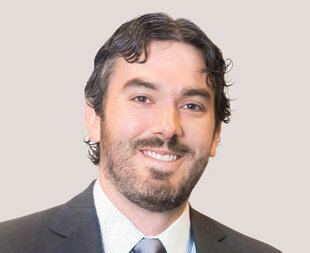
John Wolff is a member of the management committee and a senior partner at Keogh Cox with more than thirty years of experience. John has made his mark in a practice that has included complex litigation, commercial disputes, serious injury, bad-faith and insurance coverage, legacy/long-term exposure, and other matters. He has litigated numerous significant cases in state and federal courts and regularly appears before the courts of appeals in and out of the state. John has devoted attention to non-profit boards dedicated to assisting at-risk children. In his spare time, he enjoys spending time with wife, his three children, and grandchildren, playing tennis, and hiking.