Blog
Explore news, articles, outcomes, and legal resources by category or practice area.
Thank you! Your submission has been received!
Oops! Something went wrong while submitting the form.
deselect
No items found...

The COVID-19 pandemic had a profound impact on the global economy. Louisiana was not spared, and many businesses had to close as sales to their customers slowed or stopped altogether. Not surprisingly, the question arose regarding whether business interruption insurance would provide coverage to businesses in this situation. The Louisiana Supreme Court recently was asked this question in Cajun Conti, LLC v. Certain Underwriters at Lloyd’s, London and found that the policy at issue did not provide such coverage.
The mayor of New Orleans issued a proclamation on March 16, 2020, that prohibited most public and private gatherings. This applied to restaurants, whose business initially was limited to takeout and delivery services. Before the pandemic, Oceana Grill, a restaurant located in the French Quarter, could serve up to 500 customers at one time. However, it had to limit its business to takeout and delivery services when the mayor’s proclamation was announced. Because of social distancing guidelines, it remained at 60% or less capacity throughout the pandemic.
Oceana maintained a commercial insurance policy with loss of business income coverage and filed suit to request a declaratory judgment that the “policy provides business income coverage from the contamination of the insured premises by COVID-19.” Oceana’s insurer argued that there was no coverage under the policy because COVID-19 did not cause “direct physical loss of or damage to property” under the policy’s terms.
The trial court denied Oceana’s request for declaratory relief at trial. The appellate court reversed and found the policy’s terms ambiguous because it held “direct physical loss” could mean loss of use of the property. Because the pandemic prevented the full use of the property due to capacity limitations, the appellate court found coverage was triggered.
The Supreme Court disagreed and reversed the appellate court’s decision, finding its focus on the use of the property to be misguided. The Court found that suspension of operations “caused by direct physical loss of or damage to property,” as defined by the policy, required “the insured’s property to sustain a physical, meaning tangible or corporeal, loss or damage.” The Court noted that the restaurant’s physical structure was not lost or damaged because of the pandemic. COVID-19 restrictions did not cause damage or loss that was physical in nature. Therefore, the policy did not provide coverage for loss of business income.
Whether a policy affords coverage depends on the terms and conditions of each policy and the facts of each case. However, in light of this decision, businesses with insurance policies that include provisions with language like that at issue in Cajun Conti should not anticipate coverage for loss of business income allegedly caused by the COVID-19 pandemic.
Case References:
Cajun Conti LLC v. Certain Underwriters at Lloyd's, London, 2022-01349 (La. 3/17/23), 2023 WL 2549132.
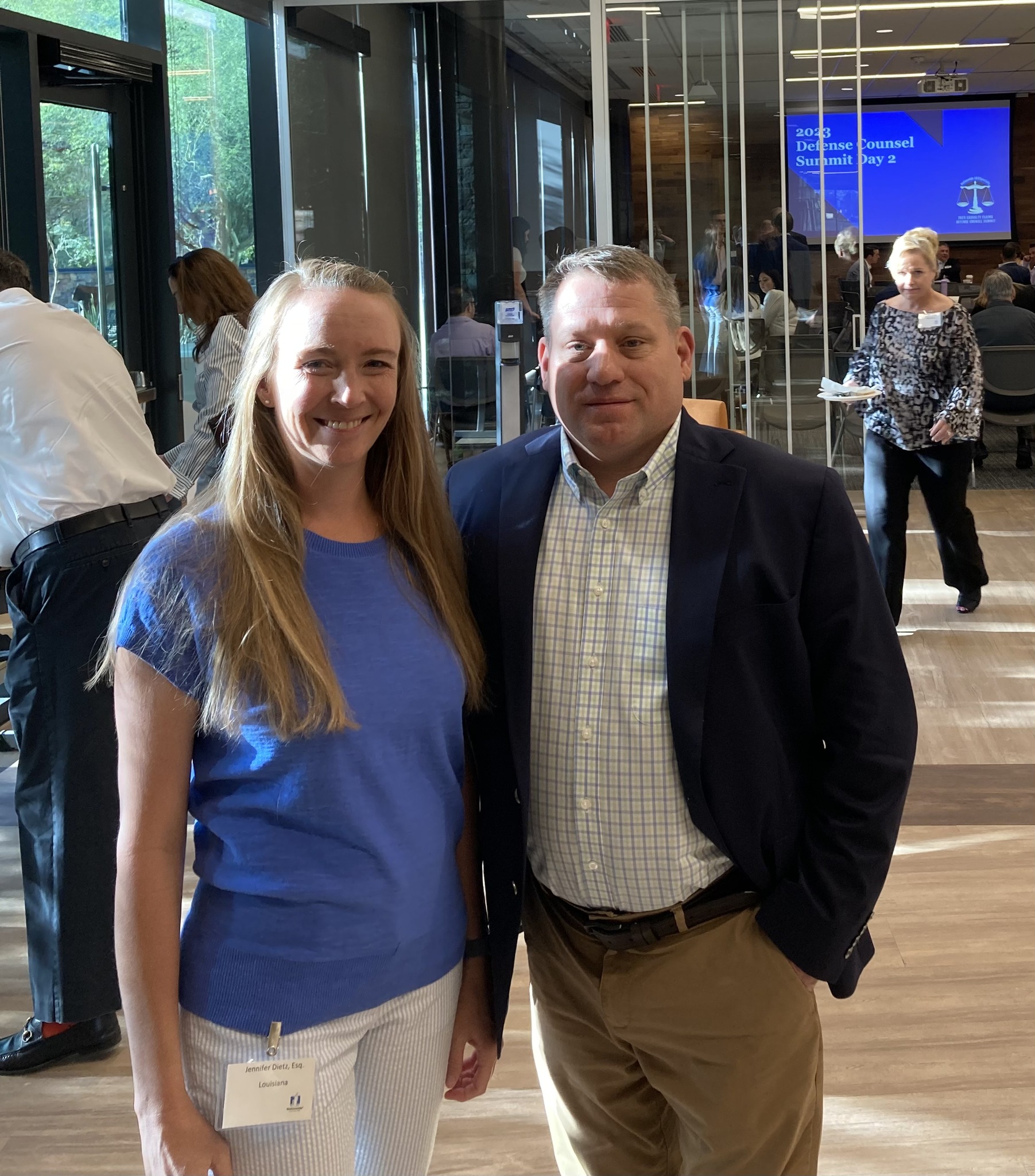
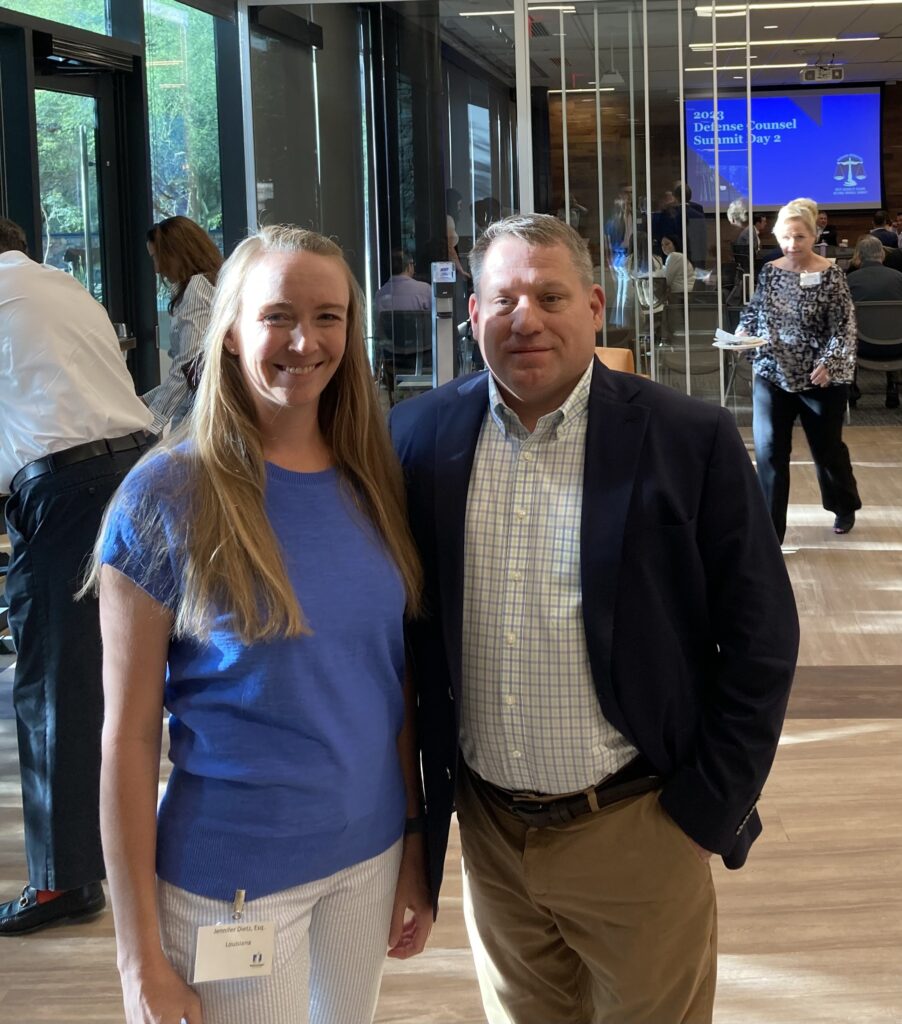
Partners Collin Leblanc and Jennifer Dietz recently accepted an invitation to attend and represent Keogh Cox at the 1st Annual Defense Counsel Summit held in Scottsdale, Arizona March 26-27, 2023.
Sometimes, a number of people or parties will file claims, in which each party alleges the same or similar injuries that were caused by the same or similar conduct. In these circumstances, federal and Louisiana law recognize class actions as procedural devices that can be used to aggregate the parties’ claims into a single action.
The purpose and intent of class action procedure is to adjudicate and obtain res judicata effect on all common issues applicable to the representatives who bring the action. However, this res judicata effect also applies to all others who are “similarly situated,” provided they are given adequate notice of the pending class action and do not timely exercise the option to exclude themselves from the class. Class actions are commonly filed in matters that involve common facts and damages such as plant explosions, claims based upon allegedly defective products, or claims involving employment practices or civil rights violations.
Before a court can hold a trial on the merits of a class action, the court must determine whether all of the procedural requirements are met for certification of the class. In making this determination, the court rules on whether the matter may proceed as a class action or whether the named parties must bring individual claims. In Louisiana, the threshold requirements for class certification are found in La. C.C.P. art. 591(A), which provides:
A. One or more members of a class may sue or be sued as representative parties on behalf of all, only if:
(1) The class is so numerous that joinder of all members is impracticable.
(2) There are questions of law or fact common to the class.
(3) The claims or defenses of the representative parties are typical of the claims or defenses of the class.
(4) The representative parties will fairly and adequately protect the interests of the class.
(5) The class is or may be defined objectively in terms of ascertainable criteria, such that the court may determine the constituency of the class for purposes of the conclusiveness of any judgment that may be rendered in the case.
Every one of these requirements must be met for an action to be maintained as a class action. Stated differently, the class cannot be certified if even one of these threshold requirements is not met. A party seeking class certification must also establish one of the additional requirements outlined in La. C.C.P. art. 591(B).
In Doe v. Southern Gyms, LLC, the Louisiana Supreme Court held that a court must conduct a “rigorous analysis” of the class certification requirements, to ensure that every one of them are satisfied before a case is certified as a class action. Moreover, it is the plaintiff’s burden to prove that every requirement of La. C.C.P. art. 591 is satisfied. While only the procedural requirements for class certifications are relevant to determine if a matter should be certified, the “rigorous analysis” required of the court oftentimes requires analysis of the overlapping merits of the plaintiff’s underlying claim. See Wal-Mart Stores, Inc. v. Dukes.
Whether a matter should be certified as a class action is often a contested issue involving high stakes. If it is certified, the matter proceeds as a class action, where the claims are asserted on behalf of the entire class and can result in substantial damage awards. If the matter is not certified, the claim representatives must pursue their claims individually, which leads to significantly less exposure for defendants named in the action.
Case References:
Doe v. Southern Gyms, LLC, 2012-1566 (La. 3/19/13), 112 So.3d 822, 829.
Wal-Mart Stores, Inc. v. Dukes, --- U.S. ---, 131 S.Ct. 2541, 2550, 180 L.Ed.2d 374 (2011).

Mary Anne Wolf, PE, Chelsea A. Payne, and the Keogh Cox law firm are proud to sponsor Women in Construction Week and to serve as an associate member of Louisiana Associated General Contractors.
Legal malpractice claims in Louisiana are governed by a peremption period that cannot be interrupted or suspended. La. R.S. 9:5605(A) provides that a legal malpractice claim must be brought one year from the date of the alleged malpractice, or within one year from the date the alleged malpractice should have been discovered. However, even when a claim is filed within one year of discovery, it must be filed within three years of the date of the alleged malpractice. If a party fails to assert a legal malpractice claim before the peremption period expires, the right to bring the claim is lost.
The Louisiana Supreme Court holds that “peremption commences to run in a legal malpractice case when a claimant knew or should have known of the existence of facts that would have enabled him to state a cause of action for legal malpractice.” In Crosby v. Waits, Emmett, Popp & Teich, LLC, the court recently examined the types of circumstances that should inform a plaintiff that an act of alleged malpractice occurred, which would trigger the peremptive period in which the plaintiff’s claim must be filed.
The plaintiff in Crosby owned 75% of a company and was in the process of buying out the minority stakeholder. The company was involved in litigation at the time. Initially, the minority stakeholder maintained all of the recovery and risk related to the suit. In April 2016, an attorney advised the plaintiff to accept an offer to split the recovery and risk in the suit 50/50 as part of the sale. The plaintiff then accepted the 50/50 offer. The litigation concluded after the sale, in February 2018, and resulted in an adverse judgment for which the plaintiff was responsible pursuant to the 50/50 agreement.
The plaintiff filed suit on February 12, 2019, within one year of the verdict in the underlying litigation, and claimed that its attorney committed malpractice when he advised that plaintiff accept the offer to split the recovery and risk in the suit. Specifically, it was alleged the attorney failed to examine the nature of the litigation or discover that the seller’s employees were aware the suit bore serious risk. The plaintiff’s representative testified that he did not keep track of the litigation and therefore could not have known the attorney engaged in the alleged malpractice until the jury rendered its verdict in the underlying suit.
However, the minority stakeholder testified that he knew the 50/50 offer was a bad deal for the plaintiff. Another employee testified he thought the risk of loss in the underlying suit was apparent to everyone involved. The court agreed. Based upon the evidence presented, “it should have been obvious to all concerned that the 50/50 option was favorable” to the minority stakeholder, who was adverse to the plaintiff’s interest.
The court held that the plaintiff should have known its attorney may have committed an act of malpractice when he advised it to accept the 50/50 split before the underlying litigation concluded. Accordingly, suit was not filed within one year of when the plaintiff should have known the alleged act of malpractice occurred. The plaintiff’s claims that it lacked such knowledge could not stand up to conflicting evidence. Thus, the claim was peremepted, and the plaintiff’s suit was dismissed.
Case References:
Crosby v. Waits, Emmett, Popp & Teich, LLC, 2022-0395 (La. App. 4 Cir. 11/21/22), 352 So. 3d 145.
Jenkins v. Starns, 2011-1170, p. 15 (La. 1/24/12), 85 So.3d 612, 621.
Keogh Cox is pleased to sponsor the 27th Annual Joint Engineering Societies Conference in Lafayette on February 23-24, 2023. Check out the seminar schedule on the Louisiana Engineering Society website at les-state.org.
We are pleased to announce that Keogh Cox Partner Cathy Giering now serves as the Chairman of the Board of Trustees for the Foundation for Woman's Hospital!

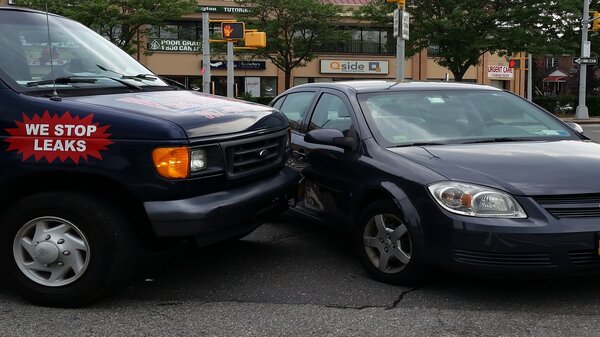
Under Louisiana law, all automobile liability policies include uninsured/underinsured motorist coverage (“UM coverage”) unless the insured affirmatively rejects such coverage, selects lower limits, or selects economic only coverage in writing. The question of what qualifies as a valid rejection of UM coverage has been debated in numerous lawsuits across the state. In Barbera v. Andrade, examination of this issue continued, and the court ruled that an initial rejection of UM coverage remains effective until changed by the insured’s written request.
In Barbera, the court examined whether UM coverage was triggered under a policy when the insured, who previously waived coverage, failed to respond to the insurer’s request to complete a new UM waiver form. It was undisputed that the insured executed a valid waiver of UM coverage in 2001. In 2014, the insurer sent the insured a letter that asked the insured to complete an updated coverage selection form and return it to the insurer’s office. The insured did not execute the updated form. A driver insured under the policy was involved in a motor vehicle accident in 2017 and filed a claim for UM benefits.
The insured argued the letter sent with the waiver form in 2014 was ambiguous and could be read to mean that failure to respond would mean that UM coverage would be read into the policy by default. Evidence also showed that some of the insurer’s employees also thought the failure to respond with the updated form would result in UM coverage.
However, La. R.S. 22:1295(1)(a)(ii) provides, “An insured may change the original uninsured motorist selection or rejection on a policy at any time during the life of the policy by submitting a new uninsured motorist selection form to the insurer on the form prescribed by the commissioner of insurance.” Thus, the Court ruled that the insured’s initial rejection of UM coverage could only be changed via written request by submitting a waiver form to the insurer. The intent of the parties was inconsequential.
Because the insured executed a valid UM waiver in 2001, it remained part of the existing policy. No event, such as a change in the policy’s liability limits, occurred that required the execution of a new UM selection waiver form, and the insured did not submit a new form to the insurer to obtain UM coverage. Therefore, UM coverage was not afforded under the policy, and summary judgment was affirmed in favor of the insurer.
Case Reference: Barbera v. Andrade, 22-147 (La. App. 5 Cir. 11/30/22), 2022 WL 1733087, --- So.3d ---.
Mary Anne Wolf, PE, JD will present Legal Basics for Engineers, covering legal issues faced by engineers from negotiating contracts through project close-out, at the Joint Engineering Societies Conference in Lafayette on February 23. For more information on the conference, please visit Events for February 2023 – LES (les-state.org).

When an employee is injured on the job and the employee’s request for workers’ compensation benefits is disputed, La. R.S. 23:1201.1 allows an employer to request a preliminary determination hearing (“PDH”) with the Office of Workers’ Compensation (“OWC”). If the workers’ compensation judge rules at the PDH that benefits are owed, the employer has ten days to comply with the judge’s ruling. The First Circuit recently ruled that an employer can find “safe harbor” if it technically complies with the rigorous deadlines of the statute, which if missed can have profound consequences, subjecting the employer to penalties and attorney fees.
In Kilbourne v. Dixon Correctional Institute, the court recently affirmed a ruling that found an employer complied with La. R.S. 23:1201.1 and could not be subject to penalties or attorney’s fees when it mailed the disputed workers compensation benefits within ten days of the judge’s ruling at the PDH. The ruling was affirmed even though the employee did not receive payment within ten days of the hearing.
The employer in Kilbourne stopped issuing weekly workers compensation benefits after two doctors found the claimant’s ongoing complaints were unrelated to the work accident and the claimant could return to full duty work. The employee then filed a disputed claim with the OWC and requested reinstatement of his benefits. He also requested an award of penalties and attorney’s fees because he claimed the employer’s suspension of indemnity benefits was arbitrary and capricious. The employer requested a PDH to address these issues.
The OWC judge issued a preliminary determination that although the employee was owed supplemental benefits from the date his payments of benefits stopped, the employer was not arbitrary and capricious in its decision to stop payment. Within ten days of the mailing of the PDH ruling, the employer issued and mailed benefit checks to the employee and filed a form with the OWC to provide notice the employer was paying the benefits. Nevertheless, the employee disagreed with the PDH ruling and the matter went to trial.
At trial, the employee argued that he should have received penalties, attorney fees, and interest on the back benefits paid after the PDH ruling. The employee argued the employer failed to comply with section 1201.1 because he did not receive the indemnity benefits until more than ten days after the PDH ruling. However, evidence showed the benefit payments were postmarked and mailed within ten days of the receipt of PDH ruling.
Accordingly, the trial court found that the employer was immune from an award of penalties and attorney fees pursuant to the “safe harbor” provision of section 1201.1. Interest also could not be owed on back pay when the employer complied with the statute. The First Circuit affirmed this decision on appeal. Although providing the claimant funds within 10 days of the PDH ruling remains the best practice for an employer, this ruling informs employers that they should find safe harbor from what could be significant penalties and attorney’s fees if they meet the technical requirements of the statute and mail their compliance with the judge’s ruling within ten days of the PDH.
Case Reference: Kilbourne v. Dixon Correctional Institute, 2022-0455,(La. App. 1 Cir. 11/4/22) ____So. 3d ___,2022 WL 16706951.

Congratulations to John P. Wolff, Andrew Blanchfield, and Chris Jones for being honored in the 2023 list of Louisiana Super Lawyers. John was selected for Civil Litigation. Andrew was selected for Professional Liability. Chris was selected for Class Action & Mass Torts. This selection is based on an evaluation of 12 indicators including peer recognition and professional achievement in legal practice. The Super Lawyers list recognizes no more than 5 percent of attorneys in each state.
Congratulations to George A. Wright for being honored in the 2023 list of Louisiana Super Lawyers Rising Stars. The Rising Stars list recognizes no more than 2.5 percent of attorneys in each state.

Louisiana Code of Civil Procedure article 1464 allows a defendant to select a physician to perform a physical and/or mental examination of a plaintiff to challenge the plaintiff’s claimed physical and mental injuries. This is called an Additional Medical Opinion (AMO); this was previously referenced as an Independent Medical Examination (IME). Earlier this year, the Louisiana Supreme Court, outlined the “good cause” requirement of the statute—an essential element required to proceed with an AMO. But, what remained as a question was the scope of an AMO and which party had the burden to deal with requested restrictions on the physician’s medical exam. This question was answered: In Augustine v. Safeco Insurance Company of Oregon, the Louisiana Supreme Court held that after “good cause” has been shown for the examination, the party seeking to limit the scope of the AMO bears the burden to justify the restrictions.
In Augustine, a sequel to Hicks v. USAA General Indemnity Company, Et al, the Court held that if the party to be examined for the AMO, usually the plaintiff, wants to place limits upon the examination, that party then has the burden of proof to justify the need for any restrictions or limitations with competent evidence. This ruling appears to show a trend in which the Court is confirming a defendant’s ability to obtain an AMO to support its defenses to a personal injury claim. Augustine follows another Supreme Court decision from March of 2022, in which the Court held that a party establishes “good cause” for an AMO if that party shows a “reasonable nexus” between the requested examination and the condition in controversy. See Hicks v. USAA General Indemnity Company, Et al. The Hicks decision eased the hurdles that defendants faced when seeking to compel AMOs pursuant to Louisiana Code of Civil Procedure article 1464. For more information on the Hicks decision, see our prior blog here. Supreme Court Clarifies “Good Cause” for Additional Medical Opinion (“AMO”) (keoghcox.com)
In Augustine, the defendants requested an AMO. The plaintiff agreed to the examination, but the parties were unable to agree on “certain restrictions” the plaintiff sought to impose on the scope of the examination. The defendants ultimately filed a Motion to Compel regarding this issue. The District Court limited the examination to only those tests that the plaintiff’s treating physicians had performed. The District Court also noted that it did not want the AMO to turn into a “fishing expedition.” The Court of Appeal denied the defendant’s request for review of the Trial Court’s decision. The defendants then sought relief from the Supreme Court, which vacated the Trial Court’s ruling and remanded the case for further proceedings consistent with its opinion.
In its opinion, the Supreme Court set forth the burden of proof each party has in the context of a Motion to Compel an AMO. As outlined in Hicks, the party requesting the AMO initially has the burden to establish “good cause” for the AMO. Importantly, the Augustine court found that once “good cause” has been found, “the court should presume that the examination will be conducted in a reasonable manner.” Because it is presumed the examination will be conducted reasonably, if a party opposing the AMO wants to place restrictions on the examination, the burden now shifts to that party to establish “special circumstances” that justify the restrictions they request. To meet this burden, the opposing party must produce “competent evidence” to establish (1) the need for the restriction and (2) that harm that will result if the restrictions are not imposed. The type of evidence that may support AMO restrictions under Augustine likely will vary depending on the unique facts of each case. However, Hicks and its “sequel,” Augustine, provide clarification and guidance to parties seeking to compel or limit an AMO under article 1464.
Case References:
Augustine v. Safeco Insurance Company of Oregon, 2021-01753 (La. 10/1/22), __ So.3d __.
Hicks v. USAA General Indemnity Company, Et al., 2021-00840 (La. 3/25/22), 339 So.3d 1106.
Written by Chad A. Sullivan and George A. Wright