Blog
Explore news, articles, outcomes, and legal resources by category or practice area.
Thank you! Your submission has been received!
Oops! Something went wrong while submitting the form.
deselect
No items found...
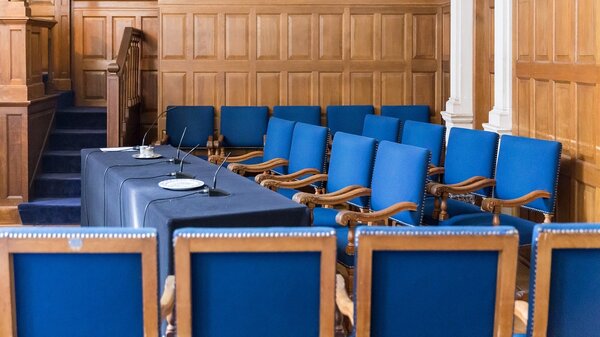
Preparing for a trial is a tense and stressful process for attorneys and their clients. Sometimes, during trial preparation, a crucial piece of evidence can come to light that may push a case from a path towards trial to a path towards a settlement agreement. A “settlement” or “compromise” under Louisiana law is just that – an agreement between the parties to settle the dispute raised in the lawsuit, usually with the exchange of a sum of money. Often, settlements are reached in the weeks leading up to trial or even on the courthouse steps.
This type of scenario occurred in Nola Title Company, LLC v. Archon Information Systems. While in the thick of trial preparation, audio recordings from one of the parties were discovered. That party concluded this evidence would be prejudicial to its case at trial, which spurred settlement negotiations. The parties eventually agreed to a compromise and notified the court of the settlement via an email to the judge’s law clerk. The next day, the attorneys reported to court and verbally outlined the terms of the settlement agreement on the official court record.
Two weeks later, the defendants hired new counsel. Two months after that, counsel for the plaintiff forwarded the formal settlement documents to memorialize the agreement that was made between the parties and entered into the court’s record. However, the defendants refused to sign the paperwork and did not timely make the payments that previously were agreed upon. Therefore, the plaintiff filed a motion to enforce the settlement agreement.
In opposition to the motion to enforce, the defendants argued: 1) that their prior counsel did not have authority to enter into the settlement agreement; and 2) that the agreement on the record of the court was invalid because it did not include a provision about the audio recording, which the defendant claimed was a key element of the agreement between the parties. After an evidentiary hearing, the trial court found that the settlement that was stated on the record was an enforceable settlement agreement.
The Louisiana Court of Appeals for the Fourth Circuit affirmed the ruling of the trial court. In its opinion, the appellate court includes a summary of the law governing settlements in Louisiana. After a thorough review of the applicable law, the court came to the following conclusions:
Based upon the court’s ruling, if the parties have a meeting of the minds and settlement terms are entered on the trial court record, there are no “do-overs” or “take-backs.” It is important to “make sure you are sure” when entering the crucial courthouse steps settlement agreement.
References:
Nola Title Company, LLC v. Archon Information Systems, et. al., 2022-CA-0967 (La. App. 4 Cir. 4/13/23), 360 So. 3d 166.

As a general rule of Louisiana law, a plaintiff cannot recover general damages for mental disturbance or distress unless the defendant’s act also causes physical injury, illness, or some other physical consequence. However, in Spencer v. Valero Refining Meraux, LLC, the Louisiana Supreme Court recently reexamined the circumstances under which a limited exception to this general rule may apply.
The Spencer case involved an explosion and fire that occurred shortly after midnight at the Valero refinery in Meraux, Louisiana. The plaintiffs claimed Valero should be liable for negligent infliction of emotional distress. Specifically, the plaintiffs alleged they heard loud sounds, experienced anxiety, and had difficulty sleeping after the event. None of the plaintiffs received any medical treatment or experienced physical injury/symptoms. The defendant argued that the plaintiffs could not recover damages under these circumstances.
The court held that recovery for negligent infliction of emotional distress is not precluded under Louisiana law. However, the court also cautioned that not every act that causes some harm also yields liability and compensatory damages. It held that Louisiana courts must also consider the goal set forth under Louisiana law to prevent “spurious” or false claims when examining these types of actions.
In review of the plaintiffs’ claims, the court cited Moresi v. State Through Dept. of Wildlife & Fisheries, to show that the plaintiffs were required to establish “the especial likelihood of genuine and serious mental distress, arising from the special circumstances, which serves as a guarantee that the claim is not spurious.” The Spencer court held evidence of generalized fear or evidence of mere inconvenience is not enough to show that a plaintiff’s distress is “serious.” The court added that this rule must be “stringently applied,” because these types of cases, though fact intensive, are inherently speculative in nature.
In review of the facts presented in Spencer, the court found that Valero owed a duty to the plaintiffs and breached the “duty it owed, which was a cause-in-fact of plaintiffs’ generalized fear and anxiety.” However, the plaintiffs failed to produce evidence to show that their complaints, which included anxiety and difficulty sleeping, were sufficiently “serious” to support an award for negligent infliction of emotional distress, and their claims were dismissed. Although the result in Spencer may be limited to its facts, the Court’s decision appears to align with the general rule that a plaintiff usually cannot recover general damages for emotional distress in Louisiana absent an accompanying injury.
References:
Spencer v. Valero Refining Meraux, LLC, 2022-00469 (La. 1/27/23), 356 So. 3d 936.
Moresi v. State Through Dept. of Wildlife & Fisheries, 567 So.2d 1801 (La 1990).

La Code Evid. Art. 704 addresses the use of expert testimony in Louisiana Courts and provides, “Testimony in the form of an opinion or inference otherwise admissible is not to be excluded solely because it embraces an ultimate issue to be decided by the trier of fact.” Though the text of this article is simple, Louisiana trial courts often face questions about when an expert’s opinion crosses a line and invades the jury’s fact-finding function. These questions often arise in the context of Daubert hearings under La. Code Civ. P. art. 1425.
The Louisiana Supreme Court recently addressed this issue in Hulin v. Snow, where the Court was asked to review the extent to which an expert in a civil case could offer testimony that addressed the ultimate issues of law and fact in the case. The ultimate issue in the Hulin case, which involved parental care, was the alleged negligence of the defendants. The Court examined multiple tendered opinions of the plaintiffs’ expert, including expert testimony about the defendants’ negligence and credibility.
In a Per Curiam opinion, the Court ruled that it was improper for the expert to testify on the ultimate issues of whether the defendants were negligent or credible. It held that “(a)lthough experts may aid the trial court in the determinations of ultimate facts, the final conclusions drawn from those facts belong exclusively to the trier of fact.” The testimony of plaintiffs’ expert stated conclusions about these ultimate issues. Therefore, it was inadmissible.
However, the Court did allow the expert, a board-certified pediatrician, to opine on the parental care of the defendants. “Even though this testimony may embrace some of the ultimate issues to be decided by the trier of fact, it is permissible.” It appears the Court found that this testimony did not state conclusions about ultimate issues, as the Court held that the trier of fact could accept or reject the expert’s opinions on parental care as they relate to ultimate facts.
Reference:
Hulin v. Snow, 2023-00530 (La. 6/26/23), --- So.3d ---, 2023 WL 4199310.
On July 27, 2023, the Louisiana First Circuit entered judgment in favor of Louisiana State Trooper Andre Bezou in the shooting death of Coltin LeBlanc. The case was defended by Keogh Cox attorneys Drew Blanchfield, Brian Butler, and Collin LeBlanc. In support of its ruling, the First Circuit cited La. R.S. 9:2798.1 which provides qualified immunity for an officer’s actions, unless their action constituted “criminal, fraudulent, malicious, intentional, willful, outrageous, reckless, or flagrant misconduct.” The court found Trooper Bezou was entitled to qualified immunity under the facts of this case.
After midnight in an area of Hammond, La. dotted with bars and restaurants, Trooper Bezou spotted LeBlanc driving a large Ford truck. Trooper Bezou testified that he witnessed two traffic violations and initiated a stop. “Bodycam” footage captured the interaction. LeBlanc exited the vehicle, and when the trooper asked for identification, LeBlanc indicated it was in his truck. LeBlanc moved to the cab of the truck, and Trooper Bezou followed, stopping within the open driver’s side door. Based upon his observations during this interaction, Trooper Bezou suspected LeBlanc was intoxicated. Later testing confirmed that LeBlanc had a blood alcohol level more than two times the legal limit.
But LeBlanc was not attempting to retrieve his license. Instead, he revved the engine and attempted to flee with Trooper Bezou immediately next to the vehicle. Trooper Bezou later testified he feared that LeBlanc would steer the vehicle to run him over with the back left wheel. In reaction, Trooper Bezou latched onto the truck and LeBlanc sped around a corner and down the roadway. Trooper Bezou was able to draw his weapon and gave multiple orders to stop. Trooper Bezou testified that he feared he would be thrown from the vehicle or scraped against parked cars in the area. When the trooper received no indication LeBlanc would relent, he opened fire. Thereafter, the truck came to a rest.
In the subsequent litigation, plaintiffs argued that Trooper Bezou used “excessive force” and should have attempted to move away and allow LeBlanc to flee the scene. In response, Keogh Cox cited Harmon v. City of Arlington, 16 F.4th 1159 (5th Cir. 2021), where the federal Fifth Circuit held that no “clearly established precedent” would prohibit an officer from firing while perched on the running board of a fleeing vehicle. Finding no excessive force under the facts of the case, Harmon acknowledged the simple truth that “there is an obvious threat of harm to an officer” who is “on the side of a fleeing vehicle.” The facts presented to the First Circuit showed that Trooper Bezou gave more warning to relent than was given in Harmon.
The New York Times covered this incident in an article titled, “Before the Final Frame: When Police Missteps Create Danger.” 11/17/21. In its coverage, the New York Times reported that Trooper Bezou “appeared to be in grave danger.” It then suggested that the trooper could have just backed away. However, courts are instructed not a gauge questions of immunity from an out-of-context application of “20/20 hindsight.” Because the facts in this case showed Trooper Bezou was in grave danger “at the moment” force was used and was faced with a split-second decision, he was protected from liability.
Mary Anne Wolf, PE, JD is pleased to present Legal Topics for Engineers at the Louisiana Engineering Society Lake Charles meeting on August 8th. For more information, please visit LES Lake Charles - 08/08/23 Meeting Registration (constantcontact.com).
The Louisiana Health Emergency Powers Act (LHEPA), La. R.S. 29:760 et seq, was enacted in 2003 to allow the government to use extraordinary powers in order to respond to potential or actual public health emergencies. Historically, claims against medical providers have been governed by a negligence standard, which requires a plaintiff to prove the provider failed to act with reasonable care. However, La. R.S. 29:771(2)(c), which was enacted as part of the LHEPA, provides what has been described as a limited or quasi-immunity for health care providers:
During a state of public health emergency, any health care providers shall not be civilly liable for causing the death of, or injury to, any person or damage to any property except in the event of gross negligence or willful misconduct.
This provision imposes a heightened standard of gross negligence or willful misconduct for claims against health care providers and their employees. “Gross negligence” has been defined as “the entire absence of care and the utter disregard of the dictates of prudence, amounting to complete neglect of the rights of others.”* Therefore, absent a showing of gross negligence or willful misconduct, the provision provides immunity from civil liability for all claims against all health care providers.
The reach and application of this heightened standard of gross negligence under the LHEPA has been the subject of recent rulings from Louisiana courts. In Lejeune v. Steck, which was decided before COVID-19 in connection with a public health emergency declared following Hurricane Katrina, the Louisiana Fifth Circuit Court of Appeals ruled that the LHEPA’s heightened standard applied to all medical providers in the state while the state was in a public health emergency.^
In Lejeune, a doctor left a sponge in a patient during a surgery. The plaintiff argued that a general negligence standard should apply because the surgery occurred outside the Hurricane Katrina emergency area. However, the Court found that the plaintiff must prove gross negligence or willful misconduct because the LHEPA “does not provide for a limited set of health care providers, nor does it limit its application to only those medical personnel rendering emergency assistance voluntarily due to the emergency in the area.” Thus, the Court ruled the LHEPA was broad reaching and covered all health care providers in all areas of Louisiana during the public health emergency.
More recently, Governor Edwards invoked the LHEPA on March 11, 2020 in response to COVID-19. In line with the all-inclusive application seen in Lejeune, the Louisiana Second Circuit Court of Appeals recently held that the LHEPA applied to all claims against health care providers that arose during the public health emergency declared for COVID-19.
In Lathon v. Leslie Lakes Ret. Ctr., the Second Circuit applied the LHEPA to a premises liability claim.^^ The plaintiff slipped and fell in a puddle at Leslie Lakes Retirement Center. The accident occurred during the declared public health emergency. The retirement center filed a motion for summary judgment and argued that because it qualified as a health care provider, the gross negligence standard set forth in the LHEPA should apply to the plaintiff’s claim.
The court agreed and found that the statute dictated that immunity applied in favor of any healthcare provider for any personal injury or property damage claim as long as it arose during a public health emergency. In so holding, the Court stated that the purpose of the LHEPA was to alleviate the liability burden on healthcare providers during public health emergencies. Therefore, the Court found its ruling aligned with the purpose of the act. The Lathon decision is significant because it applied the LHEPA’s statutory immunity to personal injury claims against healthcare providers outside of a medical malpractice setting.
At least one justice on the Louisiana Supreme Court voiced a desire to address the constitutionality of this statutory immunity provision. However, the Court ultimately declined to review the Second Circuit’s ruling. Therefore, under Lathon, it appears the statutory immunity granted under the LHEPA applies to any claim brought against any healthcare provider for acts that occur during a public health emergency. While it remains to be seen how courts will address this issue in the future, these decisions show the reach and application of the LHEPA continue to evolve.
References:
*Ambrose v. New Orleans Police Dep't Ambulance Serv., 93-3099 (La. 7/5/94), 639 So. 2d 216.
^Lejeune v. Steck, 13-1017 (La. App. 5 Cir. 5/21/14), 138 So. 3d 1280, writ denied sub nom. Daigle v. Steck, 2014-1408 (La. 10/3/14), 149 So. 3d 800.
^^Lathon v. Leslie Lakes Ret. Ctr., 54,479 (La.App. 2 Cir. 9/21/22); 348 So.3d 888, writ denied, 2022-01566 (La. 12/20/22); 352 So.3d 80.

Clients frequently ask their attorneys whether they should arbitrate their commercial and construction disputes instead of litigating in the court system. This question arises either when drafting the contract or, if the contract contains an arbitration clause, once a claim occurs. Claims that require analysis of complex contracts, government regulations, and technical issues, such as those that arise in the construction, environmental, and energy industries, are well-suited to arbitration.
Parties typically want the quickest and least expensive means to a fair result. This is true even for highly sophisticated businesses where the amount in dispute is high. Arbitration gives parties a high level of control in the dispute resolution process. It is specifically designed to provide an alternative to the onerous and expensive discovery and trial procedures required in litigation. Parties can tailor the discovery and schedule to the needs of the case, which drastically reduces the overall time and cost of reaching resolution.
Arbitration also allows parties to select an arbitrator with specialized knowledge necessary to decide the case, which is especially beneficial in complex cases. Because parties agree to arbitration in their contract, they have control over the process in a way that is not available in litigation. For example, the parties may designate the administrative body and applicable rules, require a three-arbitrator panel for a complex case, name a particular arbitrator, require confidentiality, or dictate the timeframe for the hearing.
The following four factors are key considerations in assessing arbitration:
Expertise of decision-maker – One of the most important benefits of arbitration is the parties’ ability to select the arbitrator. This affords parties an opportunity to designate a decision-maker with specific qualifications and expertise needed to understand the contracts, legal issues, engineering and technical facts, and expert evidence to be presented. The parties can also select someone with strong management skills to handle complex matters or difficult decisions. The benefit is two-fold: Fewer resources are needed to educate the decision-maker in the critical industry background information, and the risk of an unreasonable ruling is reduced.
Timeframe for resolution – The median time to resolution in commercial arbitrations is less than one year, whereas the time to trial in federal court is two to three years.* Because appeal rights in arbitration are limited, the award typically terminates the dispute and the expense. However, after a trial, the case could linger through the appeal process for several more years, thus increasing the expense.
In addition to direct cost saving, decreasing the resolution time creates an indirect cost benefit to industry. Because “time is money,” shaving years off the process results in significant savings that likely can be better used advancing the business than litigating a case. Businesses lose billions of dollars every year because of the inherent delays in the litigation process.^ These losses stem from uncertainty in the outcome, capital set aside as reserves for potential losses, open claims reported to insurers, investors, potential clients and auditors, and loss of employee hours and administrative costs expended in litigation. Arbitration offers an alternative to mitigate and control these costs.
Expense – Arbitration typically costs more upfront than litigation. The parties must pay the administrative costs and arbitrator fees, which vary depending on the time and complexity involved, but generally range from $20,000 for a $100,000 claim to $60,000 for a $1 million claim. The costs are shared among the parties, which decreases the per-party cost in multiparty claims.
However, parties can control the cost of arbitration. Discovery, depositions, and document production in complex cases can come with staggering costs. In arbitration, the rules governing discovery and evidence are less formal. Additionally, discovery is more limited, which encourages a streamlined process and reduces costs and time significantly.
Risks – An often-cited risk of arbitration is the lack of appeal right. An arbitration award can only be vacated on limited grounds of fraud, corruption, misconduct, or where an arbitrator exceeds their power.~ However, if the initial decision-maker has expertise in the industry and law involved, the expectation is that the decision will be a well-reasoned one that the parties can accept.
In contrast, a major risk of litigating a complex commercial dispute is the fact-finder’s lack of understanding of the issues, the escalating potential for nuclear verdicts, and the appellate court’s limited power to correct factual findings.
In sum, arbitration is a good choice for dispute resolution where parties want to control the risk of an unreasonable outcome, reduce the time and expense of the process, and select a decision-maker with special expertise in their industry.
About the author: Mary Anne Wolf is an engineer and attorney. She is on the panel of commercial and construction arbitrators for the American Arbitration Association. Her goal as an arbitrator is to assist parties in managing their case for efficient resolution, give a high level of attention to each party’s position, and achieve a fair result.
References:
* AAA, Measuring the Costs of Delays in Dispute Resolution [online]; Micronomics, (March 2017), Efficiency and Economic Benefits of Dispute Resolution through Arbitration Compared with U.S. District Court Proceedings.
^ Efficiency and Economic Benefits, pp. 4-5, 16-23.
~ La. R.S. 9:4210 (LA Binding Arbitration Act); 9 USCA §10 (FAA).
It is with deep sadness that we announce the passing of one of our founders, John “Reggie” Keogh. He enjoyed a full life and passed away on June 6, 2023 at home with his loving family.
Reggie’s passion was photography which began in high school. He operated his own photography business until he finished his law degree from LSU Law School. After serving five years in the U. S. Army JAG Corps, he returned to the private practice of law with his brother, Joe Keogh.
Reggie was a consummate professional who enjoyed the practice of law, teaching and his family. While he retired some years ago, he continued to travel, cook and visit with friends.
We lost a founder, a mentor, and a friend. He will be missed dearly.

A motion for summary judgment is a procedural device a party can use to avoid a full-scale trial when there is no genuine issue of material fact. La. C.C.P. art. 966 is the statute that governs motions for summary judgment in Louisiana. The statute was amended in 2015 to establish some new procedural rules for filing summary judgment motions. Before the statue was amended, the deadline for opposing a motion for summary judgment was set in the District Court Rules, and courts frequently allowed oppositions to motions for summary judgment to be filed after the statutory delay.
In 2015, the Legislature amended the statute to state that “absent the consent of the parties and the court, an opposition shall be filed” within the new fifteen-day deadline established by the article. In Auricchio v. Harriston, the Louisiana Supreme Court ruled the amendments to the statute removed the discretionary language that previously allowed a court to allow a party additional time to oppose a motion for summary judgment. Accordingly, the Court ruled the amendments to art. 966 made the opposition deadline mandatory, and late-filed oppositions should not be considered in connection with a ruling on a motion for summary judgment.
The Louisiana Supreme Court recently revisited this issue in Mahe v. LCMC Health Holdings LLC. The Court considered whether a trial court may grant a continuance of a hearing on a motion for summary judgment when a party fails to file its opposition within the fifteen-day deadline set in La. C.C.P. art. 966(B)(2).
In Mahe, a party requested a continuance of the hearing after the fifteen-day deadline passed. While subsection 966(C)(2) provides that a continuance of the hearing is permitted “for good cause shown,” the Court held that the requested continuance could not serve to circumvent the mandatory deadline for filing an opposition, as described in the Auricchio case. Accordingly, the order granting the continuance was reversed, and the trial court was instructed to rule on the motion for summary judgment without consideration of the untimely filed opposition. In so holding, the Court reinforced the mandatory deadlines set in La. C.C.P. art. 966 and provided additional guidance on the procedural rules for filing and opposing motions for summary judgment.

Under Louisiana’s comparative fault system, each party in a lawsuit generally is only liable for their own percentage of fault. However, in some instances, a party may be “vicariously” liable for the fault of another party. One example of vicarious liability is an employment relationship, where an employer can be liable for the fault of its employees. On the other hand, vicarious liability generally does not apply when the alleged “employee” is found to be an independent contractor. Whether a worker qualifies as an employee or an independent contractor often becomes an important issue in suits related to construction projects.
The test for determining whether a party is an employee or an independent contractor involves analysis of who has the right to control his or her work. In the construction context, courts distinguish between “operational control” (which suggests an employment relationship) and control as it relates to the results of the work (which suggests an independent contractor relationship). Two recent cases examine this issue and provide examples of how courts analyze the type of control necessary to establish vicarious liability in the construction projects.
In Stonetrust Com. Ins. Co. v. TBT Contracting, Inc. of LA, homeowners hired a general contractor to renovate their home. During the project, an electrical subcontractor was injured after falling through an attic space. It was alleged that the general contractor created a hazard by cutting a hole in the attic and concealing it. The plaintiff sued the general contractor and the homeowner. The court had to determine whether the homeowner could be liable for the subcontractor’s injuries, which would require a finding that the homeowner was vicariously liable for the general contractor’s fault.
The plaintiff argued that the homeowners were particularly involved in the project. It presented evidence to show the homeowners would give suggestions regarding the work to be performed and also directed alterations or additions to the work. The plaintiff argued that this demonstrated control over the general contractor’s work. However, the court disagreed. Despite the homeowners’ level of involvement, the court held that their control was limited to the results of the work, and was not “operational control.” The general contractor therefore was an independent contractor, and the homeowners were not vicariously liable for its acts.
In Baham v. Fisk Elec. Co., a city worker brought suit against a general contractor after suffering injuries from an electrical shock. The worker alleged that the general contractor was vicariously liable for the fault of its subcontractor. While evidence showed the subcontractor relied on the general contractor for the location of its work, the court found that this was not “operational control.” The court observed that general contractors are entitled to exercise supervisory control over its independent contractors to ensure compliance with the contract. It further found that suggestions or instructions given to an independent contractor do not equate to control over the methods or details of the work. Absent such “operational control” vicarious liability could not be imposed.
Though they may be limited to their facts, these cases show courts usually require a showing of more than suggestions or instructions regarding the work to establish the “operational control” necessary to trigger vicarious liability. Absent such a showing, independent contractors usually remain independent.
Case References:
Stonetrust Com. Ins. Co. v. TBT Contracting, Inc. of LA, 2022-0971 (La. App. 1 Cir. 4/14/23), 2023 WL 2947826
Baham v. Fisk Elec. Co., 2022-0551 (La. App. 4 Cir. 3/22/23), 2023 WL 2595253

It seems intuitive that people have an obligation to avoid potentially harmful conditions that are open and obvious. Nevertheless, treatment of open and obvious conditions in Louisiana law has proved tricky because many cases did not apply a uniform analytical framework. In Farrell v. Circle K Stores, Inc. and the City of Pineville, the Louisiana Supreme Court recently offered needed guidance on the appropriate analysis for open and obvious conditions.
The plaintiff stopped at a gas station and decided to walk her dog in a nearby grassy area. To get to the grassy area, Farrell had to cross a pool of water that was “approximately the length of a tractor-trailer.” Farrell attempted to jump across the narrowest part of the pool, but slipped and fell. She sued for damages arising from her injuries. The defendants moved for summary judgment on the grounds that the condition was open and obvious. The trial court and court of appeal denied the defendants’ motion. However, the Louisiana Supreme Court reviewed the matter and reversed.
In finding that the condition was open and obvious, the court began its analysis by outlining the elements that a plaintiff must establish to recover for damage arising from a defect under Louisiana Civil Code articles 2315, 2316, 2317 and 2317.1:
The court also highlighted the requirement under La. R.S. 2317.1 that plaintiff show the defendant knew or should have known of the condition before the injury occurred.
The court noted that some courts had assessed whether a condition was open and obvious in the context of whether the defendant owed the plaintiff a duty, while other courts had assessed whether a condition was open and obvious in the context of whether the defendant had breached the duty that was owed. In Farrell, the court found a duty was owed under the code articles referenced above. It clarified that whether a condition was open and obvious should be considered during analysis of whether the duty was breached, pursuant to Louisiana’s “risk/utility” test. This test requires consideration of whether the condition presented an unreasonable risk of harm, which considers whether the condition had any social utility; the likelihood and magnitude of harm the condition presented; the cost of preventing the harm; and the nature of the plaintiff’s conduct, including whether plaintiff’s conduct was socially useful or inherently dangerous.
Specifically, whether a condition is open and obvious should be considered in determining the likelihood of harm and magnitude of harm to an objectively reasonable person. The court further advised that the specific nature of the condition should be considered, such as its location and size. In contrast, a plaintiff’s particular and subjective knowledge of the condition is not relevant in determining whether defendant has breached a duty.
The Farrell court applied this analysis to the facts. It found that the pool served no useful purpose. No evidence existed regarding the cost to eliminate the risk. With respect to Farrell’s conduct, the court found that walking a dog was not dangerous by nature and may have an important social function, but this did not weigh heavily in the analysis. However, with respect to whether the condition as open and obvious, the court considered the location of the pool at the edge of the parking lot, the size of the pool, and the fact that it was apparent to all who encountered it. Thus, the condition was open and obvious, and the likelihood of and magnitude of the harm was minimal.
The court concluded that these factors collectively showed the condition was not unreasonably dangerous. The defendants did not breach their duty to plaintiff, and summary judgment should have issued for the defendants. In so holding, the Supreme Court provided clarifying guidance on analysis of open and obvious conditions under Louisiana law.
Case Reference:
Farrell v. Circle K Stores, Inc. and the City of Pineville, 2022-000849 (La. 3/17/23), --- So.3d ----, 2023 WL 2550503.