Blog
Explore news, articles, outcomes, and legal resources by category or practice area.
Thank you! Your submission has been received!
Oops! Something went wrong while submitting the form.
deselect
No items found...

The Louisiana Supreme Court recently ruled that a co-defendant who pleads comparative fault as an affirmative defense may appeal a summary judgment that dismisses a co-defendant, even when the plaintiff did not file an appeal. The Court’s decision in Amedee v. Aimbridge Hospitality resolved a circuit split among the Louisiana Courts of Appeal regarding this issue.
The Amedee plaintiff filed a personal injury suit against multiple defendants including the City of New Orleans and Premium Parking of South Texas, LLC. After discovery, the City of New Orleans filed a Motion for Summary Judgment seeking dismissal from the suit. The plaintiff did not oppose the city’s motion. Premium Parking was the only party to file an opposition. The trial court granted the city’s motion and dismissed it from the suit. Premium Parking appealed the court’s judgment.
The Fourth Circuit did not address the merits of Premium Parking’s appeal. Instead, the court dismissed the appeal because it found Premium Parking did not have a legal right to appeal the city’s dismissal when the plaintiff did not appeal the judgment.
The Supreme Court disagreed and reversed the appellate court’s ruling. The Court noted that “to prohibit appellate review of a summary judgment by a co-defendant, even where a plaintiff did not appeal, diminishes the search for truth—the object of a lawsuit—and denies a defendant the ability to fully defend itself.” To reach this conclusion, the Court first asked, who may appeal a judgment?
To answer this question, the Court looked to La. C.C.P. art. 2082 and observed the article makes no restriction regarding what party may appeal a final judgment. Further, the Court noted that the right to an appeal is even extended third parties, not involved in the suit, when that third party is allegedly aggrieved by the judgment. See La. C.C.P. art. 2086.
The Court also considered a defendant’s right to appeal in the context of Louisiana’s pure comparative fault system and summary judgments. Under La. C.C. art. 2323, Louisiana’s comparative fault statute, the fault of all parties is to be quantified. La. C.C.P. art. 966(G), provides that when summary judgment is granted in favor of a party or non-party to a suit, the fault of the dismissed party may not be considered in any subsequent allocation of fault in the matter.
The Court noted that while art. 966(G) precludes an allocation of the fault of a party dismissed under the statute, it does not limit the right of a defendant to appeal the dismissal of a co-defendant. No statute limited a defendant’s right to appeal a summary judgment only to those situations where a plaintiff also filed an appeal. Therefore, a defendant who hopes to keep a co-defendant in the case so that fault still may be allocated to the dismissed party at trial now may appeal the co-defendant’s dismissal, even when the plaintiff fails to do so.
Case Reference: Amedee v. Aimbridge Hosp. LLC, 2021-01906 (La. 10/1/22), --- So.3d ---, 2022 WL 12338929.
Many insurance policies contain a Concealment or Fraud provision that provides no coverage where the insured concealed or misrepresented any material fact or circumstance, engaged in fraudulent conduct, or made false statements related to the insurance.
But will a court enforce the Concealment or Fraud provision to deny an insured recovery on an otherwise covered peril? According to a recent decision out of the Eastern District of Louisiana, the answer is YES.
In Fahimipour v. United Property & Casualty Insurance Company, the plaintiffs sought contractual and extra-contractual damages from their insurance carrier for damages to their residential property allegedly sustained during Hurricane Zeta. After a bench trial, Judge Morgan concluded Plaintiffs’ application for insurance included a false statement made with knowledge of its falsity and voided the insurance policy from inception, in its entirety.
Citing Talbert v. State Farm Fire & Cas. Ins. Co., the Fahimipour court noted that “Under Louisiana law, an insurance policy is voided entirely and from its inception when the insured makes a material misrepresentation in the application for insurance with the intent to deceive the insurer.” The insurer must prove by a preponderance of the evidence the following elements in order to succeed on such a claim:
(1) the insured made a false statement;
(2) the false statement was material; and
(3) the false statement was made with intent to deceive.
With regard to the first factor, the Court found the insureds obtained and read an inspection report in connection with their purchase of the property. They “were concerned enough about the findings of the inspectors to contact their real estate agent” about the issues. The insureds represented in their insurance application that the property was well maintained, and free of damage, debris, and liability hazards, despite the extensive contradictory findings in the inspection report.
Regarding the second element, the carrier’s in-house expert testified that the insurer would not have bound coverage if the application contained the information from the inspection report. Therefore, the court found the insured’s false statements were material.
The third element – intent to deceive – “must be determined from the surrounding circumstances indicating the insured’s knowledge of the falsity of the representations made in the application and his recognition of the materiality of his representations, or from circumstances which create a reasonable assumption that the insured recognized the materiality.”
In finding the insurer established the third element, the Court noted the insureds were “sophisticated users of insurance.” Evidence showed the insureds previously purchased houses for renovation and resale, owned multiple properties, submitted insurance applications before, and also submitted claims for coverage on at least three prior occasions.
Ultimately, the Court denied plaintiffs any recovery for alleged hurricane damages because of the misrepresentations they made in their application for insurance coverage.
Prior to Fahimipour,Courts had found that post-loss misrepresentations may also void a policy. In Roach v. Allstate Indem. Co., 476 Fed. App’x 778, 779 (5th Cir. 2012), the plaintiff’s house was damaged in a fire. The Fifth Circuit upheld a summary judgment that voided the plaintiff’s policy after he submitted a falsified claim that included contents not located on inspection following a fire at the residence.
The policy at issue in Roach included a similar Concealment or Fraud provision that stated the policy would provide no coverage if the insured misrepresented any material fact before or after a loss. In granting summary judgment, the district court applied the same three factors used in the Fahimipour case to find the plaintiff made material misrepresentations in his personal property claim when he claimed items not located on inspection.
While the policy in Fahimipour was voided in part because the insureds were “sophisticated users of insurance,” it remains to be seen whether a Louisiana court will void coverage based on a similar provision brought by a less sophisticated insured under a different set of facts.
However, the Fahimipour and Roach decisions show that a court can void a policy, from its inception, because of an insured’s misrepresentations, whether they occur in connection with the application for the policy or after a loss. These rulings also suggest that Louisiana law recognizes an insured also has a reciprocal duty of good faith in its relationship with its insurer.
Case References: Behnaz Fahimipour, et al. v. United Property & Casualty Insurance Company, 2022 WL 16833693 (E.D. La. Nov. 9, 2022); Roach v. Allstate Indem. Co., 476 Fed. App’x 778, 779 (5th Cir. 2012); Talbert v. State Farm Fire & Cas. Ins. Co., 971 So.2d 1206 (La. App. 4 Cir. 2007).

Imagine you are visiting family during the holidays. As a favor, you take a family member’s vehicle to the gas station for a fill-up. While in transit, you get into an accident where you are at fault. Does your insurance policy provide coverage for the accident?
According to La. R.S. 22:1296.1, a new statute that went into effect on August 1, 2022, the answer to this question is “yes,” your insurance may afford coverage under these facts.
La. R.S. 22:1296.1 now requires insurance policies issued in Louisiana to provide coverage when the driver insured under the policy operates a non-owned vehicle with the express or implied permission of the vehicle’s owner. The statue was enacted to declare a new public policy regarding this issue and was passed in response to the Louisiana Supreme Court’s decision in Landry v. Progressive Security Insurance Company, 2021-00621 (La. 1/28/22), reh'g denied, 2021-00621 (La. 3/25/22); 338 So.3d 1162.
The Landry case involved a motor vehicle accident that occurred as the defendant-driver, as a favor to the vehicle’s owner, drove the vehicle to a tire shop to repair a tire. The plaintiffs brought an action against the defendant-driver, the driver’s insurer, and the insurer of the vehicle that he drove at the time of the collision.
The Louisiana Supreme Court upheld a provision in the driver’s policy that stated coverage under such circumstances was only available when the driver’s own vehicle was out of service. Because the driver’s vehicle was not out of service, no coverage was found under the driver’s policy. In so holding, the Landry court found that public policy did not require automobile insurance liability coverage for a driver’s negligent operation of a non-owned vehicle.
The Louisiana legislature enacted La. R.S. 22:1296.1 in response to the Landry decision. The statute provides that an insurer writing automobile liability, uninsured, underinsured, or medical payments coverage shall not exclude the benefits of such coverage under its policy to an insured operating a non-owned vehicle if all of the following requirements are satisfied:
The statute also provides this coverage is secondary to the vehicle owner's insurance policy. Furthermore, if the coverage provided under the statute is included within the coverage provided pursuant to La. R.S. 22:1296, which addresses coverage for temporary, substitute, and rental vehicles, the provisions of La. R.S. 22:1296 determine which coverage is primary. (For additional information regarding La. R.S. 22:1296 click here.) [Sophia, please include link to blog from 5/25/22].
Let’s return to real life scenarios like those we addressed above. Perhaps you are blocked in at a party, so a friend tosses you the keys to move their car, or, like the situation in Landry, maybe you are trying to do a good deed by driving your parents’ car to a gas station for a fill-up when an accident occurs. While it remains to be seen how courts will interpret this statute in these circumstances, under the new legislation, these actions may now implicate coverage under your insurance policy.
Case Reference: Landry v. Progressive Security Insurance Company, 2021-00621 (La. 1/28/22), reh'g denied, 2021-00621 (La. 3/25/22); 338 So.3d 1162.

In Dunlap v. Empire Trading Group, LLC, the buyers of a home sued the seller and the seller’s real estate agent for fraud after the home flooded three times in the first year after they bought the home. The seller was a home-flipper who disclosed two prior flooding incidents, both of which occurred during the ten months the seller owned the home.
However, the plaintiffs later discovered the home had a substantial flooding history when they requested a flood insurance quote from the National Flood Insurance Program. The quote included a report that identified eighteen incidents of flooding and flood insurance claims at the property over the ten years before the plaintiffs purchased their home.
The plaintiffs argued the seller’s agent committed fraud because she concealed her knowledge of previous flood claims. The seller’s agent moved for summary judgment, arguing that the plaintiffs could not prove that she knew about any of the prior undisclosed flooding incidents. The plaintiffs had no direct evidence to dispute the agent’s defense.
Instead, they argued that circumstantial evidence was sufficient to defeat the motion. They claimed that because the seller had a flood policy on the home, it also would have received the same flood claim history the plaintiffs received in connection with the same federal program. However, the plaintiffs had no evidence to show the seller, or anyone affiliated with the agent’s firm, actually received the flood claim history as they alleged.
Based upon these facts, the court agreed that without evidence that the seller’s agent actually received the flood claim history or otherwise had knowledge of it, the plaintiffs could not carry their burden of proving misrepresentation by the agent.
Case Reference: Dunlap v. Empire Trading Group, LLC, 2021-0180 (La. App. 1 Cir. 10/18/21), 331 So. 3d 932.
A federal court for the Middle District of Louisiana recently ruled that a 1½ inch elevation change in a Walmart parking lot did not present an unreasonable risk of harm to the plaintiff patron in Lacaze v. Walmart Stores, Inc. The case involved a slip and fall/trip and fall accident in the parking lot of Walmart’s Burbank Drive store in Baton Rouge. The defendant moved to dismiss the suit where the plaintiff claimed she tripped and fell as she crossed the area where the black asphalt parking lot adjoined the concrete crosswalk as pictured below.
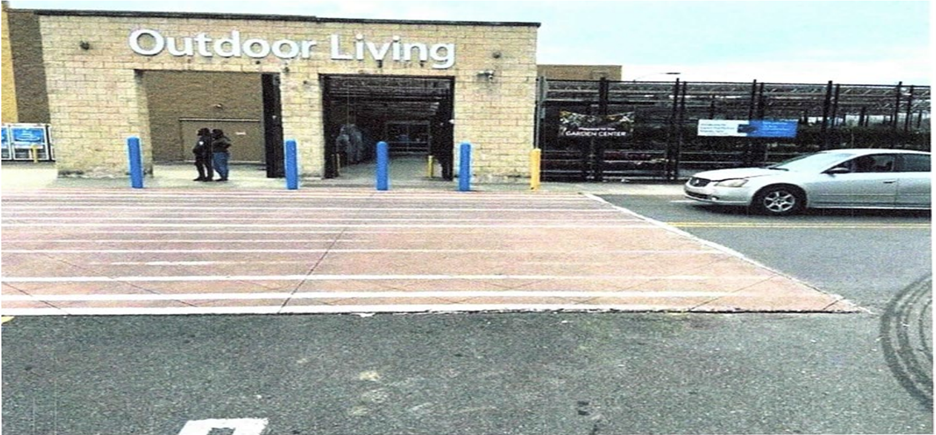
In the area where the asphalt meets the crosswalk, the surface presented a ¼ inch to 1½ inch change in elevation. Plaintiff admitted the black pavement was distinct in appearance and color from the concrete crosswalk. Surveillance showed that plaintiff looked down at her cell phone at the time she tripped and fell. Though in a high pedestrian traffic area, Wal-Mart maintained this was the first reported incident.
The Court found the condition was open and obvious and did not present an unreasonable risk of harm. To reach this decision, the Court made the following observations:
The Court concluded that all but factor four pointed to a single conclusion: the 1½ inch elevation difference did not pose an unreasonable risk of harm. The Court reached this conclusion even though the plaintiff retained an expert who gave opinions regarding possible violations of the Americans with Disabilities Act (ADA) and OSHA regulations. The expert’s opinions were insufficient to defeat summary judgment when the condition was open and obvious. In reaching its ultimate conclusion, the Court joined with several other courts, including the following:
Case References: Lacaze v. Walmart Stores, Inc., No. CV 20-696-JWD-EWD, 2022 WL 4227240 (M.D. La. Sept. 13, 2022); Chambers v. Vill. of Moreauville, 2011-0898 (La. 01/24/12), 85 So.3d 593; Reed v. Wal-Mart Stores, 97-1174 (La. 03/04/98), 708 So.2d 362; and Boyle v. Board of Sup'rs, Louisiana State University, 96-1158 (La. 01/14/97), 685 So.2d 1080.
Keogh Cox Attorneys John Wolff, George Wright, and Cole Frazier presented a CLE on electronic professionalism to the Dean Henry George McMahon American Inn of Court.

Can a nonresident corporation, who is not a party to a pending action, be compelled to respond to discovery in Louisiana? The Louisiana Fifth Circuit says YES. See Molaison v Cust-O-Fab Specialty Services, LLC, a case where Keogh Cox successfully handled the appeal.
The Molaison case involved an industrial accident claim where catastrophic injuries were alleged. In this context, the appellate court found that a non-resident company has sufficient presence in Louisiana to subject it to the court’s subpoena power. However, the trial court must first assess the scope of discovery to ensure it is calculated to lead to discoverable evidence and is not too onerous.
In Molaison, the owner of an industrial plant who employed the plaintiff claimed that its nonresident status prevented the parties from requiring it to respond to discovery by deposition or otherwise. The plant owner cited a Louisiana Supreme Court case that held personal jurisdiction, without more, did not subject a nonparty, out-of-state defendant to submit to discovery in this state.
But, in this case, the nonparty maintained a facility in Louisiana and employed the plaintiff. As a consequence, the Molaison court found that the Louisiana “discovery rules control” and “the trial court did not err in finding that (the company) was subject to the subpoena power of a Louisiana court.”
The contractor established it issued the subpoena to obtain evidence from the chemical plant owner that was relevant to the allocation of fault under Louisiana’s pure comparative fault tort system. Therefore, the appeal court reasoned that the nonresident plant owner was subject to the subpoena, “even if (the company) is not obligated to pay in tort by operation of workers compensation immunity.”
Of note, the court also held that the review of a discovery order that finds a nonresident company subject to the subpoena power is a final appealable judgment, as opposed to an interlocutory order subject the discretionary review on supervisory writ.
Case Reference: Molaison v Cust-O-Fab Specialty Services, LLC, 21-585 (La. App 5 Cir. 6/1/22); 343 So. 3d 866.

Sometimes in law, the facts of a case may threaten to eclipse the legal issue. However, Louisiana law instructs the fact finder to see through the facts, and their sometimes tragic nature, and apply the law as written. As Aristotle once wisely said, “The Law is reason free from passion.”
In Kazan, et. al. v. Red Lion Hotels Corporation, et. al., 2021-CC-01820 (La. 6/29/22), the Louisiana Supreme Court recently ruled on a case with tragic facts, and its ruling provides an example of Aristotle’s description of law in action. In Kazan, a female patron was in the parking lot of a motel when a male patron approached her and used Kazan’s vehicle to abduct her from the premises. The car was later found submerged in a lake, and Kazan’s body was recovered from the water. The family filed a tort suit against several parties, including the motel’s owner and its insurer, the Great Lakes Insurance Company SE.
Great Lakes filed a motion for summary judgment and asked to be dismissed on grounds that coverage for the event was excluded from its policy. Specifically, the insurer argued that bodily injury caused by an “assault,” “battery,” or “physical altercation” was excluded under the policy’s terms. Great Lakes further argued that the kidnapping and ultimate death of the patron was excluded under the policy as bodily injury caused by an assault, battery, or physical altercation. The Louisiana Supreme Court agreed and reversed the decision of the trial and appellate courts.
Under Louisiana law, “[a]n insurance policy is a contract between the parties and should be construed using the general rules for the interpretation of contracts.” Id. at p. 3. “When the words of an insurance policy are clear and explicit and do not lead to absurd consequences, courts must enforce the language as written.” Id. at p. 3. “Courts lack authority to alter the terms of an insurance policy under the guise of interpretation and should not create an ambiguity where none exists.” Id. at p. 3.
With these basic rules in mind, the Court carefully reviewed the wording of the exclusion in the Great Lakes policy which stated as follows: “This insurance does not apply to ‘bodily injury,’ ‘property damage,’ or ‘personal advertising injury’ arising out of an ‘assault,’ ‘battery,’ or ‘physical altercation.’” “Physical altercation” was defined in the policy as “a dispute between individual [sic] in which one or more persons sustain bodily injury arising out of the dispute.” Citing Merriam-Webster’s dictionary, the Court defined the term “dispute” as “verbal controversy” or “quarrel.”
Based upon the evidence in the case, the Court found the female patron was involved in a “dispute” with her male attacker, and ultimately sustained bodily injury as a result of the dispute. Therefore, the patron was injured in a physical altercation, as defined under the specific terms of the Policy, and coverage for the event was excluded under the policy’s terms.
The Court noted as follows: “The facts of this case are undoubtedly tragic. Nonetheless, absent a conflict with statutory provisions or public policy, insurers are entitled to limit their liability by imposing reasonable conditions upon the policy obligations they contractually assume. That is what Great Lakes did in the insurance policy at issue here.” Despite the tragic facts presented in the case, in so holding, it appears the court agreed with Aristotle’s belief that the Law is Reason Free from Passion.
Keogh Cox is a proud sponsor of the Woman’s Hospital Bust Breast Cancer Event. The event is a high energy, inspirational evening including food tasting, bar, silent auction, live auction, and survivors modeling their “bra art” designed by local artists. All dollars remain local and are specifically dedicated to breast cancer in the Baton Rouge area. The event will be held at L’auberge Casino & Hotel on Thursday, September 22, 2022 from 6-10 pm. For more information or to make a donation to this wonderful cause, please follow the following link: BUST Breast Cancer | Woman's Hospital | Baton Rouge, LA (womans.org).
Cathy Giering, partner at Keogh Cox, serves as a Trustee on the Board of Trustees for the Foundation for Woman’s. Ms. Giering was an inaugural board member and presently serves on the Executive Committee and the Governance and Nominating Committee. The Foundation for Woman’s is an extension of Woman’s Hospital in Baton Rouge, Louisiana that raises philanthropic support to improve the health of women and infants. Foundation for Woman's | Woman's Hospital | Baton Rouge, LA (womans.org)

Uninsured/underinsured motorist coverage (“UM coverage”) is included in all automobile liability policies by Louisiana law unless the insured “rejects [UM] coverage, selects lower limits, or selects economic only coverage.” What constitutes an adequate rejection of UM coverage has been the crux of countless lawsuits across the state. Recently, in Havard v. Jeanlouis, et al, 2021-C-00810 (La. 6/29/22), the Louisiana Supreme Court examined the validity of a corporate representative’s signature in the context of execution of a UM waiver form. Louisiana courts have found that without a valid signature, UM coverage generally may not be waived.
The Havard court recognized that a corporation cannot “sign” its own name, and that an authorized representative must act on its behalf. Under the facts of this case, an administrative assistant attempted to execute a UM waiver form at the corporate representative’s direction with a stamp of the representative’s signature. The plaintiff argued that the use of the stamp did not meet the requirements for proper execution of the UM waiver form at issue.
Considering these facts, the court noted that Louisiana law of mandate provides that “when the law prescribes a certain form for an act, a mandate authorizing the act must be in that form.” The court continued: “Accordingly, where one individual signs a UM form on behalf of another individual and authority is not conferred by law, our Civil Code requires this authority be in writing.”
While the corporate representative in Havard verbally instructed his administrative assistant to complete the waiver with his signature stamp, no written mandate existed between the representative and the assistant to confirm this authority. Absent the written mandate, the court disregarded the express intention of the corporate representative and held the form invalid.
The court recognized the impracticality of its holding. However, it also commented “Concerns over the practical impact within the insurance industry in scrutinizing stamped signed UM forms are unavailing. Inconvenience is not absurdity. The insurer has the authority, opportunity, and responsibility to assure the UM form is completed properly. … Practical considerations regarding increased due diligence requirements are matters of policy best directed to the legislature.”
Cases involving UM waiver forms are fact-sensitive. Havard involved unique facts where the company’s authorized agent did not sign the UM waiver form personally. While Havard may be limited to its facts, it reminds that proper execution of a UM waiver form is necessary for UM coverage to be properly waived.
Louisiana Supreme Court Provides Updated Guidance on Execution of UM Waiver Forms

The country was recently captivated by the Johnny Depp and Amber Heard trial, arguably the most high-profile defamation case in recent history. Following a colorful trial, a Virginia jury found that a 2018 Washington Post op-ed by Heard defamed Depp. As a result, Depp was awarded $10 million in compensatory damages and $350,000 in punitive damages. At the same time, the jury awarded Heard $2 million dollars in compensatory damages for defamatory statements made by one of Depp’s attorneys, ostensibly on Depp’s behalf. The trial had millions of people asking a number of different questions, including the basic question “What is defamation?” Recent Louisiana cases such as Yanong v. Coleman, 53-933 (La. App. 2 Cir. 5/17/21), 317 So. 3d 905, 911, reh’g denied (June 24, 2021), writ denied, 21-01107 (La. 11/10/21), 326 So. 3d 1249 help to provide an answer.
As explained in Yanong, a party claiming defamation in Louisiana must prove four elements:
(1) a false and defamatory statement concerning another;
(2) an unprivileged publication to a third party;
(3) fault (negligence or greater) on the part of the publisher; and
(4) resulting injuries.
**To prove the third element of “fault,” malice must be shown.
The Yanong court explained that claims of defamation must be balanced against the right to free speech found in the state and federal Constitutions.
Louisiana recognizes two categories of defamatory words: (1) words that are defamatory per se and (2) words that are defamatory in meaning. Id. at 9. Words that are defamatory per se “expressly or implicitly accuse another of criminal conduct, or which by their very nature tend to injure one’s personal or professional reputation, without considering extrinsic facts or circumstances.” Id. When words are deemed defamatory per se, there is a presumption of fault on the part of the defendant that may be rebutted by showing that the statement was true or protected by a privilege such as fair commentary on a matter of public concern. Id. Words that are defamatory in meaning are words that, when taken in context, “a listener could have reasonably understood the communication to have been intended in a defamatory sense.” Id. at 9-10. Proof of words that are defamatory in meaning creates no presumption of fault.
Louisiana defamation suits frequently arise in the employment context. However, defamation claims in the employment context face obstacles. Such cases sometimes fail on the second element, publication to a third party, because “inter-corporate communications…[are] merely a communication of the corporation itself,” meaning an employer may need to communicate the alleged defamatory statement to an outside third party outside for it to be considered “published to a third party.” Cook v. Par. Of Jefferson, 2022 WL 19350, at *11 (E.D. La. Jan. 3, 2022). However, defamation claims do not always fail on the publication element and they are not limited to “A-list” celebrities or multi-million dollar cases.
In Yanong, the Louisiana Second Circuit affirmed a $15,000 compensatory damage award to a plaintiff who successfully proved that statements made by defendants on a podcast show and on Facebook were defamation per se. Yanong, p. 8. Under the facts of the case, the defendants on a live “podcast” expressed on multiple occasions their belief that the plaintiff was a victim of sex-trafficking and that she was purchased by her much-older husband. Id. at 1. The defendant(s) also labeled the plaintiff’s marriage as “legalized prostitution,” and stated that they had contacted foreign authorities to inform them the plaintiff was a victim of “trafficking.” Id. at 2. The statements continued onto social media, where one defendant insinuated the plaintiff’s husband purchased her from a catalogue or an internet matchmaking site. Id.
On appeal, the defendants argued the plaintiff did not prove the publication element of her case. Id. at 5. The appellate court found this contention meritless. The defendants “were fully aware they were engaging” in communications with third parties, they were recoding a podcast, were “shown onscreen on all the broadcasts,” and made comments that showed “they were aware that they had an audience and third parties were engaged in the interactive broadcast.” Id. at 17-19. Thus, the Second Circuit found Plaintiff met her burden on the publication element and affirmed the trial court’s judgment. Id. at. 20.
While the publication element can present a hurdle in some cases, the publication need not be in a national media source as featured in the Depp-Heard case. The Yanong decision reminds that statements made on social media and podcasts can meet the required standard.
A Decade Old Article Finds New Life: Televised Testimony - Keogh Cox.

The United States Attorney for the Eastern District of Louisiana recently announced that two defendants, Doniesha Gibson and Erica Lee, had been sentenced for crimes related to staging automobile collisions with tractor-trailers. The sentences were announced as part of a criminal investigations known as "Operation Sideswipe." The years-long operation has produced multiple pleas and convictions, including a guilty plea from an involved attorney last year.
Gibson admitted that she was a passenger in a staged accident that occurred on October 15, 2015. A co-defendant intentionally drove the vehicle she occupied into a bus on the interstate. Gibson retained an attorney and filed a suit for damages. Claims related to this accident later settled for $667,500.00
Lee also admitted to filing a suit to claim injuries after the driver of the vehicle she occupied intentionally crashed into a tractor trailer on September 6, 2017. The claims for this suit settled for $30,000.00
United States District Judge Sarah S. Vance sentenced Gibson to 17 months incarceration plus 3 years of supervised release and ordered Gibson to pay restitution in the amount of the settlement. Lee was sentenced to serve 3 years of probation and 100 hours of community service. She was also ordered to pay restitution.
While “Operation Sideswipe” did not involve the typical claimants, it reminds of the need for vigilance in assessing accident claims.