Blog
Explore news, articles, outcomes, and legal resources by category or practice area.
Thank you! Your submission has been received!
Oops! Something went wrong while submitting the form.
deselect
No items found...
In Reed v. Cowboy's W. Store & Trailer Sales, Inc., 2016-462 (La. App. 3 Cir. 3/1/17), — So.3d —, the Third Circuit affirmed summary judgment and found that a night club was not be liable to the plaintiff after one of its patrons left the premises and rear-ended the plaintiff’s tractor. At issue in the case was whether the bar’s duty extended beyond a duty not to sell alcohol to an underage patron.
In Reed, the plaintiff alleged that the underage bar-patron was intoxicated after she left the bar and that her impairment contributed to the accident. The plaintiff argued that the bar breached its duty to prohibit underage consumption of alcohol on its premises and was therefore liable in the accident.
The Third Circuit disagreed. According to the Reed court, the only duty the bar possessed was a duty to refrain from selling alcohol to those below the legal age. It declined to impose a heightened duty to patrol the premises continuously to ensure that underage patrons did not consume alcohol unlawfully or secure alcohol from someone of legal drinking age. Because no evidence showed that the patron bought alcohol at the bar, the court was left with only speculation as to how she acquired the alcohol.
In dicta, the court commented that plaintiff also failed to establish that the patron was, in fact, intoxicated or that her intoxication caused the accident. The bar offered expert testimony that the patron was neither intoxicated nor impaired at the time of the accident based upon an examination of her body weight, the amount of alcohol she consumed, and the time that elapsed before the accident transpired. In response, the plaintiff offered testimony from three lay witnesses who essentially testified that the patron “could have been intoxicated.” This testimony was insufficient to dispute the expert’s conclusion.

Webster's top two definitions of the word "drone" are as follows:
1: A stingless male bee (as of the honeybee) that has the role of mating with the queen and does not gather nectar or pollen.
2: one that lives on the labors of others: parasite
While bees and parasites have their allure, Webster's third definition of the word "drone" is the one with current intrigue.
According to Webster's, a drone is also "an unmanned aircraft or ship guided by remote control or onboard computers." Drones began as play things; but are now poised to revolutionize industry, retail, agriculture, journalism, art, and law at an ever-increasing pace.
Currently, drones are regulated by the Federal Aviation Administration which has for decades regulated flight by planes and helicopters; but not everyone can own an airplane or helicopter. Everyone can own a drone and many soon will.
The soon-to-be pervasive use of drones will stretch at the fabric of criminal and civil law and raises intriguing questions with hazy answers. For example,
1: Without probable case, can the government park a drone over a house or building, or even a crime-ridden city block, and monitor for criminal activity with sensors that easily peer through walls?
2: Does one have a reasonable expectation of privacy within a fenced-in back yard?
3: Is following a personal injury plaintiff via drone considered stalking?
4: Can a business fly a drone over a competitor's work yard to observe it processes without recourse?
5: Is it legal to use technology (which is now available) to disrupt or even crash drones flying overhead? Would that be a tort?
In an upcoming Keogh Cox blog, we will advise of pending changes to the law that may begin to answer some of these questions. For now, we will observe that the word "drone" is no longer a boring word.
A Workers’ Compensation Judge in Monroe, Louisiana found that a claimant met his burden of proving that a specific mosquito bite at work caused him to contract the West Nile Virus, resulting in permanent total disability.
At trial, the claimant asserted that “he specifically remembers being bitten on his left leg by a mosquito” while working in the break room of his employer, Graphic Packaging. Claimant presented evidence that mosquitoes were present at the work site, although his purported eyewitness to the event (who also contracted the disease) was proven to have not been at work that day.
The director of the Ouachita Parish Mosquito Abatement District was offered by the claimant and testified that there was a prevalence of mosquitoes in Ouachita Parish during that summer which carried the West Nile Virus. Mosquitoes trapped near both the employer’s location and the claimant’s house tested positive. According to the director, the only way to determine if a mosquito is infected with West Nile is to have that particular mosquito tested. An expert epidemiologist for the employer added that the most commonly infected mosquitoes would not have been active during the middle of the day when the claimant alleges he was bitten.
Based upon the testimony of the claimant, his witness, and the experts, the Workers’ Compensation Judge ruled that the claimant had sufficiently proven that the specific mosquito infected with the West Nile Virus had bitten him at work. The court also stung the employer and its workers’ compensation insurer with penalties and attorneys' fees, finding that they had not contested the claim on a reasonable basis.
The Court of Appeal in Allen vs. Graphic Packaging, No. 51,080 (La. App. 2d Cir. 1/11/17), - - So 3d - -, upheld the Workers’ Compensation Judge. The court noted that all proof of the “accident” rested upon circumstantial evidence and that the claimant possessed no direct evidence that the break room mosquito carried the disease. In this setting, the claimant “faced a burden of proof to show circumstantially that the break room mosquito carried the disease.” Utilizing the “manifest error or clearly wrong standard,” the appellate court held that the claimant had met his burden despite his indirect proof.
The Allen court ultimately reversed the finding of permanent total disability, because the Workers’ Compensation Judge misapplied the statutory requirements. It also reversed the award of penalties and attorneys' fees noting that “there were numerous factors sufficient to validate Graphic’s reasonable controversion of Allen’s claim.”
The question of whether injuries were "proximately caused" by the negligence of another is a complicated question with a long, murky history in Louisiana. However, the analysis found in Vince v. Koontz, 16-521 (La. App. 5 Cir. 2/8/17), --- So.3d ---- helps to shed light on the issue.
In Vince, the plaintiff contended that the negligence of the defendant driver caused or contributed to the plaintiff's injury. At trial, the jury agreed that the defendant acted negligently. However, it also found that the defendant's conduct was not the "proximate cause" of the plaintiff's injuries. On appeal, the plaintiff argued that the jury erred because "a finding of negligence mandates a finding of causation." The court in Vince disagreed, stating that, as a matter of law, a finding of negligence does not necessitate a finding of causation. The Vince court upheld the jury verdict even though the jury received improper instruction on proximate causation.
The jury was informed that a "proximate cause" is "the primary act which produces the accident." According to Vince, this definition did not describe "proximate causation," but instead described "cause-in-fact," one of several elements needed to prove negligence. The question of whether an act of negligence was a cause-in-fact of an injury is a purely factual question. By contrast, proximate causation involves a "mixed question of law and fact" and seeks to determine whether the law was intended to protect this plaintiff from this particular harm under these particular facts.
The Vince court concluded that the jury reached its decision on the legitimate basis that Mr. Koontz's negligence was not the cause-in-fact of the injuries and, for this reason, affirmed under the manifest error standard of appellate review.
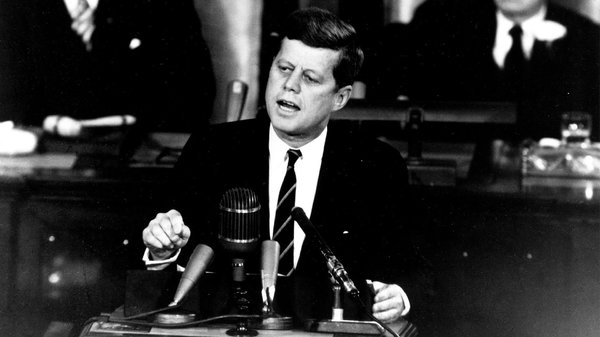
When President John F. Kennedy signed the Equal Pay Act, he called it a "first step" and one which "affirms our determination that when women enter the labor force they will find equality in their pay envelopes.” Despite the many federal statutes passed since the Equal Pay Act, "equal pay" remains a hot-button issue and the subject of protests aimed at correcting an actual and/or perceived disparity. Locally, the New Orleans Police Department estimates that between 10,000 and 15,000 protesters took part in the Women’s March in New Orleans on Saturday, January 21, 2017.
New Orleans Mayor Mitch Landrieu issued an executive order during the week following the protests wherein he requested that a pay disparity survey be conducted by the Civil Service Commission. He further announced a ban of questions about salary history during the hiring process for New Orleans city employees, noting, “It is unacceptable that, on average, women make just 79% of what men make. We need equal pay for equal work.”
Mayor Landrieu's order is limited to city jobs and follows a year when some state officials, including Gov. John Bel Edwards, were dealt a defeat in the Legislature on a separate equal pay measure. The state “equal pay” measure ultimately passed the Senate, but was defeated in a House committee.
The right of employees to be free from discrimination in their compensation is protected under many federal laws, including the Equal Pay Act of 1963, Title VII of the Civil Rights Act of 1964, the Age Discrimination in Employment Act, and the Americans with Disabilities Act. Specifically, the Equal Pay Act requires that men and women be given equal pay for equal work. Pay differentials are permitted only when they are based on seniority, merit, quantity or quality of production, or a factor other than sex. Of course, these bases provide affirmative defenses that can be raised by the employer in the event of a lawsuit.
Whether the recent protests will become a catalyst for further "equal pay" legislation is not known; what is known is that the issue has been around since before John F. Kennedy and does not appear to be going away anytime soon.
The Louisiana Court of Appeal for the Third Circuit recently affirmed a workers' compensation judge’s decision to terminate workers' compensation benefits based upon fraud by the injured worker. In Hypolite v. Louisiana Workers’ Compensation Corp., 2016-387 (La. App. 3 Cir. 11/2/16), 2016 WL 6496578, the workers' compensation insurer terminated benefits based upon numerous false statements made by the claimant to his doctor during medical treatment for the injuries sustained in a work accident.
La. R.S. 23:1208 makes it “unlawful for any person, for the purpose of obtaining or defeating any benefit or payment under the provision of this Chapter, either for himself or for any other person, to willfully make a false statement or representation.” Among the remedies available against an employee who violates the statute is forfeiture of workers' compensation benefits. To establish "§1208 fraud," the employer/insurer must prove that: 1) the claimant made a false statement or representation; 2) the statement or representation was willfully made; and, 3) the statement or representation was made for the purpose of obtaining workers’ compensation benefits. However, false statements “must be more than inadvertent or inconsequential statements.”
In Hypolite, the workers' compensation judge found, and the appellate court agreed, that sufficient evidence was presented during the five-day workers' compensation trial to establish that the claimant deliberately made false statements in order to receive workers' compensation benefits. Alleging an aggravation of a low back injury, the plaintiff told his physician that he felt increased pain when “sitting, standing, walking, driving or riding in a vehicle, flexion, and extension” and rated his pain as a 10/10. However, surveillance video presented by the insurer showed the claimant walking, driving, bending, crouching, dancing, and performing other physical activities without any signs of discomfort. Further, at trial, an expert physician viewed the video and testified that an injured person with the back complaints voiced by the claimant could not physically have been able to perform the walking, jumping, dancing, etc. depicted in the video.
Based upon the evidence presented at trial, the claimant was found to have committed §1208 fraud which forfeited his right to workers' compensation benefits.

Louisiana law protects building contractors from liability for past projects that otherwise could extend for an indefinite period of time. La. R.S. 9:2772 prohibits any lawsuit against a contractor for damages arising from a construction project five years after: (1) the date project acceptance was filed into the public records; or, if no acceptance was filed, (2) the date of occupancy. This five-year period is referred to as the "peremptive" period.
This law is broad enough to bar untimely claims of breach of contract and negligence, as well as failure to warn of dangerous conditions. It also covers all conceivable building activities: design, construction, consultation, planning, evaluation, construction administration, and land surveying. It applies both to residential and commercial construction. It also covers claims of property damage, personal injury, and wrongful death brought by any person. The only noted exception is where a contractor’s fraud caused the damages.
The law is meant to establish a specific date to cut off the contractor’s liability. Under the law, nothing can interfere with the running of a peremptive period. After it expires, the claim no longer exists.
Construction litigation in this area often focuses on commencement of the peremptive period. For instance, in Celebration Church, Inc. v. Church Mutual Insurance Company, 16-245 (La.App. 5 Cir. 12/14/16), the owner of a shopping center sued its property insurer for roof damage related to Hurricane Isaac. The insurer prevailed in defending the claim based on defective roof repairs made following Hurricane Katrina. The owner then filed suit against the roofer who made the repairs after Hurricane Katrina. To avoid the peremptive defense, the owner argued that peremption did not begin to run until substantial completion of the entire shopping center. The court rejected this argument and held that the law is specific in defining the date of commencement of the peremptive period. It began to run when the tenants first occupied the space. By the time suit was filed, the owner’s claim no longer existed.
Because construction defects may not surface for years, a claim may be barred before the owner even discovers the problem.
Intuitively, contracting parties in commercial transactions understand that legal consequences follow a breach of contract: If a party fails to deliver a product as promised, the breaching party can be liable for the cost to correct the breach; but what is that cost?
Say, for example, a business cancels an order to provide parts to a long-time customer because the relationship has gone sour. Legally, the liability for that breach of contract may extend beyond the cost of the order. A breaching party is liable for damages that are a direct consequence of the failure to perform and that were foreseeable at the time the contract was made, which may include lost profit. If the breach was intentional or malicious, the party's liability may extend even to direct damages that were not foreseeable.
The business that cancelled the order now faces a jury’s decision to identify the direct and foreseeable losses, a decision that, by its nature, is vague. However, the law imposes a limit on the jury’s prerogative to decide the damages. Even for a bad faith breach of contract, liability arises only for the direct, immediate consequences of the breach and there should be no liability for damages determined to be remote, indirect, or that have no necessary relation to the breach.
In a recent case, a jury found that a defendant boat engine manufacturer breached its contract with plaintiff boat manufacturer by cancelling a purchase order for engines, and further, that the engine manufacturer was in bad faith. The jury awarded $1.8 million in foreseeable lost revenues and $1.3 million in unforeseeable lost profits. The trial court threw out the “unforeseen” portion of the award because it was not a direct damage, and emphasized that a breaching party does not “become the insurer for all misfortunes that may arise from the breach.”
The boat manufacturer had argued that the cash flow expected from the sale of the boats rendered engine-less by the breach would have been invested in more personnel and capital to grow its northwest division. But, because of depleted cash flow from lost sales, that opportunity was lost. The court found, as a matter of law, that this loss was not a direct consequence of the breach, and thus, regardless of the bad faith, was not a recoverable contract damage. Simply, loss of cash flow in one part of the business that had a ripple effect in a separate division was too indirect to be a recoverable damage. See Marine Power Holding, LLC v. Malibu Boats, LLC, 2016 WL 7241560 (E.D. La. 12/15/2016).
By contrast, courts have found that loss of cash flow is recoverable where directly related to the damages suffered, such as where breach of a contract to deliver chickens to a chicken farmer caused the forced sale of the chicken farm. See Volentine v. Raeford Farms of La., 50-698 (La.App. 2 Cir. 8/15/16), 201 So.3d 325.
Failure to perform on a contract exposes a business to more than it may realize. Understanding this risk allows for smarter decisions before the breach.
The Louisiana Supreme Court has again addressed what impact a new law can have upon activities which pre-date the law's passage in Dana Johno v. John Doe, et. al., 2016-CA-0087 (La. 12/3/16). LSA-R.S. 9:2800.17 provides immunity to a state or political subdivision and its contractors who make operational decisions or conduct clean-up activities on the behalf of the state or political subdivision following a hurricane. In Dana, the plaintiff asserted that the immunities provided by LSA-R.S. 9:2800.17 should not be applied retroactively.
Plaintiff, Dana Johno, owned a house that was lifted and moved by the flood waters that occurred during Hurricane Katrina. Sometime after the hurricane, contractors for the state demolished the house. Plaintiff sued for property damage, and the defendant contractors claimed statutory immunity under LSA-R.S. 9:2800.17.
LSA-R.S. 9:2800.17 went into effect on June 15, 2006. The statute provides that the immunities it bestows are to be applied both prospectively and retroactively to August 29, 2005 – the date of Hurricane Katrina. Plaintiff’s house was destroyed prior to June 15, 2006. Plaintiff challenged the constitutionality of the "retroactivity clause" of the statute.
The Supreme Court agreed with Plaintiff. It held that the retroactivity clause stripped Plaintiff of his vested right for property damage against the state and its representatives. “When a party acquires a right to assert a cause of action prior to a change in the law, that right is a vested property right which is protected by due process. Thus, a cause of action, once accrued, cannot be divested by subsequent legislation.” Therefore, the Supreme Court found the retroactivity clause unconstitutional.
After six years with no adjustment, the legal interest rate in Louisiana is going up to 4.25% effective January 1, 2017. Under Louisiana law, the Commissioner of Financial Institutions is to ascertain the Federal Reserve’s approved "discount rate" published daily in the Wall Street Journal on the first day of each October; the judicial interest rate is then set at three and one-quarter percentage points above the discount rate.
Legal interest is designed to compensate a plaintiff for his loss of the use of the money to which he is entitled, the use of which the defendant had during the pendency of the litigation. Therefore, if a tort suit is filed and verdict is thereafter entered for the plaintiff, the plaintiff is entitled to legal interest on the entire judgment from the date of judicial demand (the date the suit is filed) until the judgment is paid.
Insurers should note that, regardless of the provisions in their policy, LSA-R.S. 13:4203 provides that all insurance policies providing coverage for a loss in this state are deemed to include a provision that provides pre-judgment interest on any amount awarded within the policy limits from the date the original petition was filed. Any provision to the contrary is deemed null and void. Also, some authority exists to require an insurer to consider pre-judgment interest in settlement, if a "limits" demand is at issue.
Whether you are building a new home, buying a new home, or a residential construction contractor, there is one Louisiana law that you should know: The New Home Warranty Act (“NHWA”).The NHWA provides the exclusive remedies, warranties, and peremptive periods between a builder and owner relative to home construction. The NHWA provides a warranty for new home purchases and defines the responsibilities of the builder during the warranty periods.What warranties are provided?
However, the builder’s warranty will exclude certain items, including, but not limited to: fencing, landscaping, insect damage, bodily injury, and mold damage.The homeowner is also required under the NHWA to give written notice to the builder by registered or certified mail within one year of knowledge of the defect. Failure to give this required notice may forfeit any claims the homeowner may possess against the builder.Once notice is given to the builder, if the builder fails to perform as required by the warranties, the owner may bring a claim against the builder for damages, including a claim for attorney fees. This cause of action must be brought within 30 days of the expiration of the applicable warranty period. The damages available to a homeowner cannot exceed the reasonable cost of the repair of the defect, and cannot exceed the original purchase price of the home.While the NHWA provides certain “bright-line” rules and clarifies the rights and remedies available when a problem arises with new construction, litigation of these claims and the defenses provided to builders can present difficult issues. When an issue arises, you should consult an attorney experienced in this area of practice.
"Spoliation" occurs when a party destroys evidence in order to disadvantage another party. In Louisiana, the rule is that a claim of spoliation is only recognized when there is intentional, as opposed to negligent, spoliation of evidence. However, the 2016 decision in Sayre v. PHK (Lake Charles), LLC, No. 15-859 (La. App 3 Cir. 2016); 188 So. 3d 428 calls into question the true impact of this rule.
In Sayre, a casino guest tripped and fell. The fall and part of the subsequent investigation were recorded on video surveillance by the casino. The video revealed that the post-incident investigation was not performed in accordance with the casino's formal, written policies and procedures. Although four witnesses could be seen in the video, their identity and statements were not obtained or preserved, contrary to policy. Similarly, the defendant failed to preserve the video of the investigation as required.
During discovery, several witnesses denied any independent recollection of the incident. The plaintiff argued that their version of events would have been available had the casino followed its normal protocol. Claiming prejudice as a result of the casino's actions, the plaintiff asked the trial court to give the jury an instruction that an adverse presumption should be made against the casino that the witnesses' testimony would have been unfavorable to the defense. The trial court refused, noting that all of the cases cited by the plaintiff involved situations where evidence had actually been collected, but was not available for use at trial. In Sayre, the witness statements had never been taken.
Without the adverse presumption, the jury ruled against the plaintiff. On appeal, the Third Circuit held that the instruction should have been given. Even though there was no evidence that the casino intentionally acted to spoliate evidence, Sayre concluded that the actions of the casino impermissibly impaired the plaintiff’s ability to present her claim. Instead of remanding the case, the Sayre court reversed and rendered a verdict for the plaintiff.
While the decision in Sayre did not overtly create a tort claim for negligent spoliation, it exemplifies how a mishandled investigation can lead to the same consequences as spoliation. Nevertheless, the impact of Sayre may ultimately prove to be limited to situations where a party violates its own very specific accident investigation protocol which results in the other party not being able to obtain evidence which was ultimately needed to prove their case at trial.