Blog
Explore news, articles, outcomes, and legal resources by category or practice area.
Thank you! Your submission has been received!
Oops! Something went wrong while submitting the form.
deselect
No items found...

We are pleased to announce that six Keogh Cox lawyers were recognized in the 2025 editions of The Best Lawyers in America® and The Best Lawyers: Ones to Watch in America® .
Lawyers on The Best Lawyers in America® list are divided by geographic region and practice areas. They are reviewed by their peers based on professional expertise and undergo an authentication process to make sure they are in current practice and good standing.

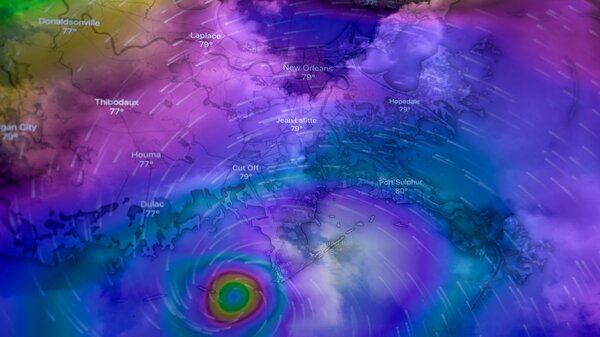
Fortunately, the 2024 hurricane season has been relatively calm. We previously blogged about steps that can be taken after your property is damaged by a hurricane or other natural disaster. (Click here to access our prior blog). With a Tropical Storm, and potential Hurricane, threatening our coast, here are some steps to consider taking to prepare before a storm arrives in the event you must make a property insurance claim for damages after the storm:
In Casbon v. K.W.E.J., LLC d/b/a Keller Williams Realty, et al, the buyer of a home sued her real estate agent for the seller’s alleged misrepresentation of the home’s living area square footage. The facts of this case are unusual because the seller’s representation was based on a prior appraisal report, and accurately reflected the home’s square footage as stated in that report. Also, the buyer financed the purchase, and her lending institution appraised the home again, which resulted in a nearly identical living area square footage calculation.
The plaintiff sought to refinance about a year after buying the home. She used a different lending institution, which retained a different appraiser. The house included a sunroom which had been converted from a porch. The appraiser chose to classify the sunroom as something other than standard living area. As a result, the appraisal report stated the home’s living area square footage was several hundred square feet smaller than the prior appraisal reports, and the plaintiff was not approved for the refinance. The plaintiff sued her real estate agent on the ground that the agent failed to verify the living area square footage before plaintiff purchased the home.
The defendant agent filed summary judgment, arguing she did not owe the plaintiff a duty to investigate or confirm the home’s square footage. The trial court denied the defendant’s motion, finding an issue of fact regarding the classification of the sunroom, specifically “whether it is living area or not living area.”
Reversing the Trial Court, the Court of Appeal granted summary judgment in favor of the real estate agent. The Court noted prior caselaw establishing that agents are not required to confirm square footage as represented by a property owner by measuring or otherwise researching the accuracy of the seller’s representation. The Court also rejected the plaintiff’s contention that the issue here was how the sunroom was classified rather than how the room was measured. To the Court, this was a “distinction without a difference.”
The Court applied the standard rule that real estate agents only are required to disclose defects which are known or should be known to them. Additionally, the purchase agreement expressly put the obligation to verify the seller’s representation of living area on the buyer. Thus, the plaintiff’s claims were dismissed.
Case reference: Casbon v. K.W.E.J, LLC, et al, 23-321 (La. App. 5 Cir. 10/4/23), 375 So.3d 524.
The Louisiana State Bar Association Committee on the Profession presented its annual Law Student Orientation on Professionalism to LSU first year students on August 15, 2024. Cathy Giering was one of the 20 attorneys/judges who spoke on professionalism.
The Emerge Center of Baton Rouge announced the 2024 Honorees of the Baton Rouge Area Volunteer Activist Award at a reception at Lee Michael’s on August 15, 2024. Past honoree, Cathy Giering, attended in support of her nominee and 2024 honoree, Stuart Gilly.
Under the Louisiana Health Emergency Powers Act (“LHEPA”), a plaintiff must establish a medical provider’s gross negligence in a medical malpractice case when the treatment at issue occurred during a declared state of public health emergency.^ However, the Louisiana Supreme Court recently ruled that a medical review panel shall not consider gross negligence when the medical treatment occurred during a declared state of public health emergency.
In Sebble v. St. Luke’s, the plaintiff instituted a medical review panel for a medical malpractice claim related to medical treatment provided from June 17, 2020 to June 24, 2020. This treatment was received during a declared state of public health emergency. Sebble asked the court for a declaratory judgment to state that the gross negligence standard, usually applied during a state of public health emergency, should not be considered or applied in medical review panel proceedings conducted pursuant to the Louisiana Medical Malpractice Act (“LMMA”).
In response, the health care provider also sought a declaratory judgment that LHEPA’s standard of gross negligence applied and that the medical review panel must consider and analyze the claim under the gross negligence standard. The trial court ruled in favor of Sebble declaring that the gross negligence standard shall not be considered or applied in the medical review panel proceeding. The Louisiana Fourth Circuit Court of Appeal affirmed.
The Louisiana Supreme Court examined provisions of the LMMA and the LHEPA and affirmed the trial court and court of appeal. The court agreed there is a distinction between a medical standard of care (considered by the medical review panel) and a legal standard of care (dictated by the LHEPA). The panel of medical experts is only qualified to render an opinion based on the medical standard of care. The panel’s opinion is then considered by the trier of fact in making a judicial determination.
Medical review panels include an attorney chairperson. However, the Supreme Court stated that the attorney chairperson is not authorized to instruct the panel on gross negligence. The Supreme Court also rejected a proposed two-step process where the panel would first determine whether the medical provider breached the standard of care; and only if the panel found a breach would it consider whether there was gross negligence. The Court rejected this proposal because the legislature did not provide for this process in the statute.
Although the Court agreed that the LHEPA is an immunity statute, it made clear that immunity is an affirmative defense that can only be plead in civil litigation. The statute provides for two defenses at the panel stage: right of action and prescription. Therefore, immunity provided under the LHEPA may not be invoked until a civil action is instituted district court.
However, Sebble was 4-3 decision, with a dissent by Justices Weimer, Cain, and McCallum, which may suggest this issue could resurface in the future. For now, under Sebble, gross negligence is not to be considered by the medical review panel.
References:
Sebble v. St. Luke’s, 2023-C-00483 (La. 10/20/23), 379 So.3d 615.
^ La. R.S. 29:766(A).
The Louisiana legislature recently enacted laws that set new prescription periods for most delictual/tort actions and claims for damage caused to immovable property. Civil Code articles 3492 and 3493 previously established a prescription period of one year for these types of claims. The legislature repealed these articles and enacted Louisiana Code Articles 3493.1 and 3493.2 in their place.
Louisiana Code Article 3493.1 now establishes a prescriptive period of two (2) years for delictual actions/tort claims that runs from the day injury occurred or damage is sustained. It contains language previously included in Louisiana Civil Code Article 3492, which states that prescriptive period does not run against minors or interdicts in actions involving permanent disability and brought pursuant to the Louisiana Products Liability Act or state law governing product liability actions in effect at the time of the injury or damage.
Louisiana Civil Code Article 3493.2 also establishes a prescriptive period of two (2) years when damage is caused to immovable property. This prescriptive period runs from the day the owner of the immovable acquired, or should have acquired, knowledge of the damage.
These changes went into effect of July 1, 2024. Louisiana Civil Code Articles 3493.1 and 3493.2 apply prospectively only and apply to delictual actions arising after July 1, 2024.

In the wake of recent hurricanes, Louisiana courts were flooded with cases property owners filed against their insurers alleging improper denial or underpayment of hurricane claims. Many of those cases were stayed and the parties were compelled to arbitration, despite Louisiana law prohibiting arbitration provisions in insurance contracts, La. R.S. 22:868(A)(2).
In a typical case involving commercial property, a property owner filed suit against its insurers, often including both domestic and foreign companies. One or more insurance policies contained an arbitration agreement requiring all disputes to be resolved by arbitration in a specified U.S. city. Undeterred, the insured filed suit in Louisiana state court. The insurers removed the case to federal court and filed a motion to compel arbitration.
The foreign insurers sought to enforce the arbitration agreement under the Convention on the Recognition and Enforcement of Foreign Arbitral Awards (aka the New York Convention). The New York Convention is an international treaty that requires signatory countries to enforce an arbitration agreement where four requirements are met: (1) a written arbitration agreement exists, (2) that provides for arbitration in a signatory country, (3) which arises from a commercial legal relationship, and (4) at least one party is not a U.S. citizen. These conditions are met where a foreign insurer issues a commercial policy that contains an arbitration provision to a U.S. property owner. Under such circumstances, the courts were bound to compel the parties to arbitration.
The cases presented some interesting questions. For example, could domestic insurers also compel arbitration? Yes. Under the doctrine of equitable estoppel, where the claims against the insurers are interdependent, the domestic insurers, even if they were not signatories to the arbitration agreement, could compel arbitration.
Does the McCarran-Ferguson Act, a federal law that maintains the states’ power to regulate the insurance industry, cause Louisiana’s law prohibiting arbitration in insurance contracts to reverse-preempt the Convention? No, the Act does not apply to treaties.
What about the arguments that the contract was not freely negotiated, or that under conflict of laws principles Louisiana law should apply, or that the federal courts should abstain because the state has a vital interest in regulating insurance? The courts rejected these arguments as well.^
Recently, the U.S. Fifth Circuit Court of Appeals, in Bufkin Enterprises, LLC v. Indian Harbor Ins. Co., affirmed that equitable estoppel applied to allow domestic insurers to compel arbitration under the New York Convention even where the insured dismissed the foreign insurers with prejudice.* However, the U.S. Second Circuit has held the opposite in two recent cases involving insurance contracts between foreign insurers and Louisiana property owners – that Louisiana law applied to prohibit the enforcement of the arbitration provision in the insurance policy.^^
With the exception of the Second Circuit split, the numerous cases arising from recent hurricanes confirm a strong policy favoring arbitration under the New York Convention, which overrides potential state law obstacles to enforcing arbitration provisions in insurance policies.
Mary Anne Wolf is an arbitrator on the commercial, construction and large, complex cases panels of the American Arbitration Association and is a neutral at Perry Dampf Dispute Solutions.
References:
^ See for example, General Mill Supplies, Inc. v. Underwriters at Lloyd’s, London, et al, 23-6464, 2024 WL 216924 (E.D. La. 1/19/2024), - F.Supp.3d – (2024); Dryades YMCA v. Certain Underwriters at Lloyds, London, et al, 23-3411, 2024 WL 398429 (E.D. La. Jan. 31, 2024); Parish of Lafourche v. Indian Harbor Ins. Co., et al, 23-3472, 2024 WL 397785 (E.D. La. Feb. 2, 2024).
* Bufkin Enterprises, LLC v. Indian Harbor Ins. Co., et al, 96 F.4th 726 (5th Cir. Mar. 26, 2024).
^^ See Certain Underwriters at Lloyds, London v. 3131 Veterans Blvd. LLC, 22-9849, 2023 WL 5237514 (S.D.N.Y. Aug. 15, 2023); and Certain Underwriters at Lloyd’s, London v. Mpire Properties, LLC, 22-9607, 2023 WL 6318034 (S.D.N.Y. Sept. 28, 2023) (appeal filed).

On December 9, 1982, a victim was raped and stabbed multiple times in her Baton Rouge residence. In those harrowing moments, the victim was face-to-face with her assailant and vowed that she would remember the characteristics of her assailant in the unlikely event she survived. A friend arrived at the residence and entered the second-floor room containing the assailant and the wounded victim. Fortunately, at that moment, noise from a postal employee caused the assailant to flee the scene. The investigation began that same day.
Sometime later, Archie Williams became a suspect and was then criminally charged after the victim identified Mr. Williams as her attacker. The victim identified a prominent scar on the assailant which, in an unfortunate twist of fate, tended to match a scar on Mr. Williams. Several of the governmental officers involved in the investigation and the April 1983 criminal trial of Mr. Williams were sued many years later in the case styled Archie Williams v. City of Baton Rouge, ET AL. Keogh Cox attorneys Drew Blanchfield, Collin LeBlanc, Cathy Giering, and Chelsea Payne represented a forensic scientist, a lab technician, and a print examiner in the suit (the “Forensic Defendants.”) In his June 10, 2024 ruling, Judge Brian A. Jackson granted a Motion for Summary Judgment in favor of these defendants, dismissing the claims against them with prejudice.
At the 1983 criminal trial, Forensic Defendants testified that they could not identify Mr. Williams as the attacker. Similarly, both the prosecutor and defense counsel advised the jury that the physical evidence did not implicate Mr. Williams. Nevertheless, Mr. Williams was convicted based upon the passionate but mistaken testimony of the victim. Mr. Williams had not committed these crimes but remained incarcerated until his release decades later.
Mr. Williams consistently denied guilt. In 2008, he hoped DNA testing would help to prove his innocence. However, the DNA evidence was of no assistance. In 1999, The FBI launched its National Fingerprint Database (“IAFIS.”) Yet, a 2009 search generated no matches to fingerprints from the crime scene that had not already been identified. In 2014, Next Generation Identification (NGI) replaced IAFIS. By 2016, NGI held approximately 72,000,000 criminal fingerprints and 50,000,000 civil fingerprints. A 2019 search of this ever-expanding database matched fingerprint evidence taken from the 1983 crime scene to the prints of a convicted rapist who had died in prison years before. Mr. Williams was innocent and was soon released through a joint filing by the State of Louisiana and Mr. Williams. His lawsuit against multiple defendants followed.
In response, the Forensic Defendants filed a Motion that advanced the “qualified immunity” granted to governmental officials. In opposition to the Motion, the plaintiff possessed the burden: 1) to raise a fact dispute on whether his constitutional rights were violated by the defendants’ individual conduct; and 2) to show those rights were “clearly established” at the time of the alleged violation. The Court found that the plaintiff did not meet this burden. Although Plaintiff alleged that certain fingerprint evidence had been “suppressed” in violation of the “Brady Rule,” the Court cited the robust factual record showing that the jury was fully aware that no fingerprint evidence identified Mr. Williams and that unidentified prints were present at the crime scene. The Court also rejected the claim that there was any fabricated exculpatory blood or serology evidence.
The facts in Williams highlight the great technological improvements since the early 1980s which now aid the court system, prosecutors, and defense attorneys to protect against the conviction of an innocent suspect. These facts also tell a sad human story of an individual who spent more than 30 years in jail for a crime he did not commit. While it does not replace the lost years, Louisiana has created a fund which provides some financial resources to wrongfully convicted individuals to help them re-enter society. Williams was able to take advantage of this fund.
References:
Archie Williams v. City of Baton Rouge, ET AL, United States District Court, Middle District of Louisiana, No. 3:20-cv-00162.