Blog
Explore news, articles, outcomes, and legal resources by category or practice area.
Thank you! Your submission has been received!
Oops! Something went wrong while submitting the form.
deselect
No items found...

As part of the unique aura that surrounds Mardi Gras inSouth Louisiana, the expression “Laissez les bons temps rouler” is foreverlinked to the spirit of the season. The Cajun French phrase meaning “Let thegood times roll” captures the eccentric soul of Carnival. However, it might bedifficult to let the good times roll after being struck by a bag of beadshurled from the second deck of float. If the spectator suffers a severe injuryas a result, who is liable? Does the injured party have any recourse againstthe person who threw the beads? Against the Mardi Gras krewe organizers?
The Fourth Circuit Court of Appeal held that spectatorsassume the risk of injury when attending a parade. Citron v. Gentilly CarnivalClub, Inc., 14-1096 (La. App. 4 Cir. 4/15/15), 165 So.3d 304. The foundation ofthe decision was based on the Mardi Gras Immunity Statute, La. R.S. 9:2796,which has two parts: (1) creates broad immunity for krewes which sponsorparades; and (2) states that anyone who attends such a parade “assumes the riskof being struck by any missile whatsoever which has been traditionally thrown,tosses or hurled by members,” which include, but are not limited to: beads,cups, doubloons, and many other things.
To impose liability on a krewe, there must be evidence ofthe krewe’s—as opposed to its member’s—gross negligence. Palmer v. Zulu Soc.Aid & Pleasure Club, Inc., 09–0751 (La. App. 4 Cir. 3/1/10), 63 So.3d 131(emphasis added). Furthermore, a carnival krewe or organization may not bevicariously liable for its members' acts. To the contrary, Louisianajurisprudence has rejected the argument that a krewe is vicariously liable forits members' acts. Kibble v. B.P.O. Elks Lodge No. 30, 640 So.2d 267, 269 (La.App. 4th Cir. 1993).
The Mardi Gras Immunity Statute imposes an extremely high burden of proving the “loss or damage was caused by the deliberate and wanton act or gross negligence” of the krewe or organization. Gross negligence has been defined as the “entire absence of care” and an “extreme departure from ordinary care or the want of even scant care.” Ambrose v. New Orleans Police Department Ambulance Service, 93–3099 (La. 7/5/94), 639 So.2d 216. In calculating whether an act was grossly negligent in the context of Mardi Gras Immunity Statute, the Citron court considered several factors: (1) the weight of the object thrown, (2) the distance the object was throw, and (3) the manner in which the object was thrown. Citron, 165 So.3d at 317.
Ultimately, the statute absolves krewes from liability for injuries caused by objects thrown to parade spectators, except in extreme and unusual circumstances. Therefore, be alert during parades this Mardi Gras season and Laissez les bons temps rouler.
Cole Frazier joined Keogh Cox as an associate in 2019 after working at the firm as a law clerk during law school. He earned his J.D. and Diploma in Comparative Law from Louisiana State University, Paul M. Hebert Law Center. During his time at LSU Law, he also studied comparative law at Jean Moulin Lyon 3 University in Lyon, France. Cole received his Bachelor’s degree in Business Administration with a concentration in Pre-law from Nicholls State University in 2015. He was elected to the Southland Conference all-academic team twice as a member of the Nicholls State football program.
Congratulations to Chris Jones for being honored in the 2020 list of Louisiana Super Lawyers. Chris was selected for Class Action/Mass Torts. This selection is based on an evaluation of 12 indicators including peer recognition and professional achievement in legal practice. The Super Lawyers list recognizes no more than 5 percent of attorneys in each state.
Congratulations to Tori Bowling, Reynolds LeBlanc, Jenny McLin, and Richard Wolff for being honored in the 2020 list of Louisiana Super Lawyers Rising Stars. Tori Bowling was selected for Civil Litigation: Defense. Reynolds LeBlanc was selected for Appellate. Jenny McLin was selected for Workers’ Compensation. Richard Wolff was selected for Civil Litigation: Defense. The Rising Stars list recognizes no more than 2.5 percent of attorneys in each state.
Partner Chris Jones was installed as the President-Elect of the Baton Rouge Bar Association at a ceremony at the Russell B. Long Federal Building and United States Courthouse. Chief U.S. District Judge Shelley D. Dick presided over the installation ceremony. The BRBA has served the legal profession and public for more than 80 years in the Baton Rouge area, and has a voluntary membership of over 2,400 lawyers.

Primary insurance policies include the duty to defend aninsured in connection with a covered loss. The insurer is sometimes presentedwith the question of whether a defense is owed when many of the allegations arenot apparently covered by a particular policy. In this circumstance, how doesan insurer determine its obligation? The law provides the answer: the “eightcorners” rule—do the four corners of the policy unambiguously exclude coveragein all respects when viewed within the context of the four corners of thepetition? If the answer is “no,” the duty to defend arises. Mossy Motors,Inc. v. Cameras America, 2004-0726 (La. App. 4 Cir. 3/2/05), 898 So.2d 602,606.
Courts generally hold that the duty to defend the caseextends to ALL claims, not just the covered claims. This duty can often provequite costly, especially when non-covered claims are high-value or involveextensive factual development or testimony to defend. In some instances, theanswer under the eight corners analysis is not so clear. The safe choice forthe insurer is to provide a defense and hire separate counsel to handle thecoverage side of the case.
In this scenario, where an insurer has serious coveragedefenses, but agrees to provide the defense, when does the duty to defend terminate?The Louisiana First Circuit Court of Appeal recently ruled on this issue againin Ponchartrain Natural Gas System, K/D/S Promix, L.L.C. and Acadian GasPipeline System v. Texas Brine Company, L.L.C., No. 2018 CA 0254 (La. App.12/12/19), stating:
“Our previous decisions in the related sinkhole appeals clearly set out the well-established rule of law that an insurer' s duty to defend terminates once the undisputed facts establish, or a judicial determination is made, that the claims asserted are not covered under the policy. See Florida Gas, 272 So. 3d at 551; Pontchartrain, 264 So.3d at 553- 54; Crosstex, 240 So.3d at 1032.”
So, the duty to defend ends when undisputed facts establishOR a judicial determination is made that the asserted claims are not covered.Of course, who is to say that the facts are “undisputed” without a judicialdetermination that confirms this conclusion. An insurer couldunilaterally determine that facts are undisputed and terminate the defensebefore a judicial determination, but if the court does not agree, the insurermay have issues. Accordingly, the safe course is to await a judicialdetermination before an insurer terminates the defense.
It is important to distinguish the duty of an excess carrierbecause such policies generally do not provide an obligation to defend.Instead, the excess carrier may exercise its “right to defend.”

InNiang v. Dryades YMCA School of Commerce, Inc., 19-0425 (La. App. 4 Cir.12/4/19), - - - So.3d - - -, the Fourth Circuit declined to expand the “loss ofchance of survival” cause of action to non-medical defendants. Despite astatute which arguably supported such a cause of action under case facts, theFourth Circuit felt constrained to reject the claim.
OnMarch 7, 2017, Mouhamadou Niang collapsed while playing basketball at aYMCA. Mrs. Niang was certified in cardiac life support, and requested anautomated external defibrillator (“AED”) to attempt to resuscitation. Mrs. Niang was advised that an AED machine was not available. Thereafter,Mr. Niang was transported to University Medical Center where he died on March11, 2017 secondary to cardiac arrest.
Mrs.Niang sued the YMCA for failing to have an AED machine on premises and assertedmultiple claims including a loss of chance of survival claim. Shecontended that the lack of the defibrillator contributed to her husband’sdeath. Under La. R. S. 40:1137.3, all “physical fitness facilities” suchas the YMCA are required to have an AED available.
TheYMCA filed a Motion for Partial Summary Judgment which was granted. Inits reasons, the trial court held that the “loss of chance” cause of action waslimited to claims raised in a medical malpractice context. The FourthCircuit affirmed.
TheFourth Circuit found that, although styled as a Motion for Partial SummaryJudgment, the YMCA had actually raised an Exception of No Cause of Action andtherefore analyzed the issue as a pure question of law. The FourthCircuit reviewed prior Louisiana Supreme Court decisions providing a right torecover damages for a loss of chance of survival in the medical malpracticecontext including the decision in Hastings v. Baton Rouge Gen. Hosp., 498So.2d 713 (La. 1986). In Hastings, the Louisiana Supreme Courtidentified a cause of action where a stab wound victim with weak vital signswas transferred from the hospital after the patient lacked insurance. The Hastingscourt commented on the reduced burden of proof in such cases:
“The law does not require the plaintiff to prove to a certainty that the patient would have lived had he received more prompt diagnosis and treatment for the condition causing the death.”
TheFourth Circuit identified no cases directly “on point” when the defendant wasnot a medical practitioner. Therefore, the Fourth Circuit gaveconsideration to a noted Oklahoma decision in Hardy v. Southwestern BellTel. Co., 910 P.2d 1024 (Okla. 1996) which addressed the issue. Thecourt in Hardy considered the public policy implications associated withexpanding the loss of chance of survival claim to non-medical cases andreasoned that the policy concerns which justify a reduced burden of causationin medical malpractice claims do not transfer to ordinary negligencecases. The cause of action against medical providers is supported by the“special relationship” of the physician and the patient. No suchrelationship exists in a non-medical setting.
Citingto Hardy, the Niang court determined that allowing a loss ofchance of survival claim with general negligence would allow for improperspeculation as to a person’s chance of survival. Identifying nocontrolling cases and the lack of any statute creating a cause of action innon-medical malpractice cases, the Niang court concluded that loss ofchance of survival claims are not supported outside of the medical context.
Collin is a Keogh Cox partner who litigates injury,commercial, and legal malpractice disputes. He lives in nearby Zachary,Louisiana with his wife Melissa and three all too active children. He is anoutdoorsman, a league tennis player, a cook, and a hobbyist writer.
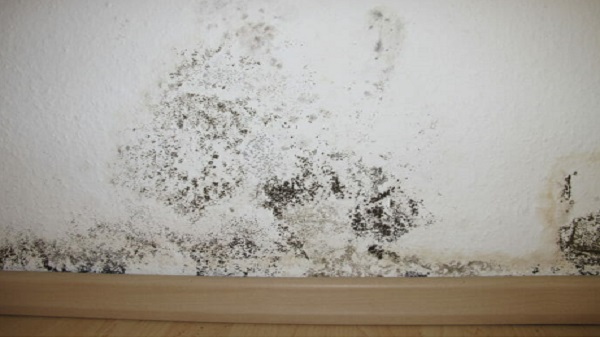
“Prescription” is the timeperiod in which a litigant must file suit, or the action is barred. Oneof the first lessons a Louisiana law student learns is the importance ofdetermining the prescriptive period of a cause of action. Filing a causeof action too late is fatal. A recent decision from the Louisiana FifthCircuit Court of Appeal reads like a law school exam and illustrates thatdetermining which prescriptive period applies is sometimes the key to the case.
In DeFelice v. FederatedNat'l Ins. Co., 18-374 (La. App. 5 Cir. 7/9/19), mold was discovered inplaintiff’s home on June 10, 2016. Plaintiffs notified their insurancecompany, who hired a mold remediation company to inspect the home. Whenthe home was inspected on June 22, 2016, the inspector verbally informedplaintiffs that the home was safe. On the same day, a separate moldinspector collected samples. The second mold inspector issued a report on June23, 2016 advising that mold remediation may be necessary. This reportspecifically stated that “certain mold and mold spores in buildings and housingcan result in mild to severe health effects in humans and can deteriorate thestructure of the dwelling resulting in content or structure damage.” Thesecond report was provided to the plaintiffs.
Plaintiffs continued to live inthe home. In August of 2016, plaintiffs’ infant son was born. Shortly thereafter, the infant began to experience breathing issues and wasdiagnosed with a lung condition by December of 2016. Plaintiffs vacatedthe premises in January of 2017.
More than one year after receiptof the second mold report, plaintiffs filed suit on July 24, 2017 against theirinsurer and the inspector who advised that the home had no mold problems. Plaintiffs raised claims for property damage, damage to the health of theparents, damage to the health of the minor child, and consortium claims onbehalf of the parents for the damage to the minor child.
The DeFelice court foundthat prescription began to run on June 23, 2016 with regard to the parents’individual and property damage claims. Because suit was not filed withina year of the second mold report advising of possible health and propertydamages, the parents’ individual health claims and the claims for propertydamage were prescribed under the one-year period set by Civil Code article3492.
The minor child was not bornwhen the report was issued on June 23, 2016. Plaintiffs argued that thoseclaims were brought within a year of the child’s birth, and were thereforetimely. The DeFelice court agreed and held that prescription could notbegan to run until the child was born. While Louisiana law provides that a childis a “person” upon conception, this “legal fiction” applies only to protect theinterests of the child. The court reasoned that a finding that prescriptioncommenced prior to birth would not “protect the interests” of the child. While the parent’s claims were prescribed, the claim filed on behalf of theinfant, and any claims that the parents had related to their infant’s healthcondition, were timely.
The court's analysis inDeFelice reminds that determining which prescriptive period applies to whichclaim is often the most important issue.

The Louisiana First Circuit Court of Appeal recently ruledon the duty of law enforcement and the potential for tort liability should thatduty be breached. In Aaron L. Van Cleave and Christy Van Cleave v.Arthur Wayne Temple, et. al., 2018 CA 1353 (La. App. 1 Cir. 5/31/19), theappellate court considered the duty of law enforcement to the general publicafter the police receive a report of erratic driving.
Arthur Wayne Temple was driving a 2006 Ford F-250 truck inSt. Helena Parish when he crossed the center line of Louisiana Highway 16 andstruck a truck driven by Allen Marchand. Aaron Van Cleave was a passengerinjured in the accident.
About an hour before the collision, June Blades was driving behind Temple, observed erratic driving, and called the police. In response, a sheriff’s deputy was dispatched to the area but could not locate the truck. Van Cleave sued a number of potentially liable parties. Aware that the police knew of the erratic driving before the accident, he included the sheriff’s department as a defendant. He argued that the sheriff’s department possessed a duty to locate the erratic driver before they cause harm.
Louisiana jurisprudence recognizes that the police have an affirmative duty to ensure that motorists are not subjected to an unreasonable risk of harm. But, the scope of that duty is based on the particular facts of the case and the relationships of the parties; and must be reasonable. In this case, the court found that the sheriff’s department acted reasonably by immediately dispatching an officer to attempt to locate the truck, even if they were unable to ultimately stop the accident.
Virginia "Jenny" McLin has experience handling cases from the initial client consultation to preparing a writ of certiorari to the United States Supreme Court. Her experience allows her to work with clients to develop a cost-effective litigation plan for each case. Recently, Jenny was on the defense team that prevailed in a workers' compensation case involving a discovery-related issue that was upheld on appeal to the Louisiana Supreme Court. This had a state-wide effect on the handling of discovery in workers’ compensation matters.
Mary Anne Wolf’s article on the impact of green design on design professional liability is published on the AIA Trust website at https://www.theaiatrust.com/green-design/. Check it out for a great read!

For years, Louisiana plaintiffs attorneys have argued that the force ofimpact in an auto accident is not determinative of their clients’ injuries andshould be afforded little, if any, weight. A recent decision out of theLouisiana First Circuit Court of Appeal does damage to that argument. In Jonesv. Bravata, Jr. and The City of Baton Rouge, 2018 CA 0837 (La. App. 1 Cir.5/9/19), the First Circuit upheld the trial court's jury instruction on “forceof impact” where photographs showed only minor damage and the defendantdescribed the accident as a “bump.”
The accident occurred when a City employee rear-ended the plaintiffs'vehicle. Liability was stipulated and the only question at trial was damages.Mrs. Jones alleged severe neck and back injuries. She began treatment with anorthopedist within a week of the accident and thereafter received five“relatively non-invasive surgical procedures” in lieu of a lumbar fusionsurgery. The jury returned a verdict of $200,000, which included $150,000 inpast medical expenses and $35,000 in future medical expenses, but awardedlittle for general damages. Mrs. Jones appealed the verdict, asserting that thetrial court erred in instructing the jury on force of impact.
The "force of impact" jury instruction in dispute provided:
Whilethe force of a collision may be considered in determining whether a person wasinjured by an accident and the extent of the injuries sustained, it should notbe the only factor to consider in making such a determination. Even though theforce of impact may be slight, it does not preclude an award of damages.However, in determining causation, you may consider the minimal nature of theaccident.
In considering the plaintiff's assignment of error, the First Circuit noted that Mrs. Jones was correct that no witness specifically testified that the accident was too minor to have caused her injuries. However, there was evidence in the record upon which the jury could have reached the conclusion that this was a minimal impact.
Common sense would appear to support a connection between the force of an impact and the injury one could be expected to suffer. The recent Jones decision allows defendants to promote this common sense argument. Where the claimed injuries are disproportionate to the forces involved, this argument can make the difference at trial.
John Grinton is a partner of the firm admitted in state, federal and appellate courts throughout Louisiana. His practice focuses on commercial and construction litigation, representing insurance companies, architects, engineers, contractors and other businesses in all aspects of litigation. His workers’ compensation practice includes representing clients in medical billing disputes, healthcare provider disputes, statutory/borrowing/special employer disputes, and court approved settlements. John has been involved in complex cases involving construction defect claims, breach of contract and negligence actions, insurance coverage issues, lender liability, securities litigation and personal injury matters. He has firsthand experience in jury trials and arbitration's, as well as mediation, appellate briefing and oral argument.
By C. Reynolds LeBlanc
La. R.S. 9:5628 provides that a patient/medical malpractice plaintiff must assert his or her claim within one year of the alleged negligent act or from when that act is discovered. If a claim is not raised within this time frame, it is “prescribed,” i.e., untimely. The statute also declares that all claims must be asserted within three years of the alleged negligent act, even if the patient was unaware of the malpractice. However, there are exceptions.
Under the doctrine of contra non valentem,prescription does not run if the defendant has done something to prevent theplaintiff from filing within the prescriptive period. In In re MedicalReview Panel of Gerard Lindquist, 18-444 (La. App. 5 Cir. 5/23/19), 274So.3d 750, the Louisiana Fifth Circuit considered whether a decision not totell a patient about malpractice exempted from prescription a claim which wasnot filed within three years of the alleged malpractice.
In the case, Lindquist had spinal surgery on August 22,2013. He returned on August 24, 2013 with complaints of pain. Although an x-rayshowed a metal artifact in the operative site of his back, he was not informedand was discharged. He returned the next day with continued complaints of painand an MRI was ordered. Like the x-ray, the MRI showed the metal artifact.Again, the plaintiff was not informed.
Lindquist continued to experience pain for years. When another MRI was performed on May 25, 2017, Lindquist was first informed of the metal object in his back. Within months, he filed a claim against the doctor who performed the 2013 surgery. In response, the doctor argued that the claim was prescribed under La. R.S. 9:5628 because it was filed more than three years after the surgery.
Contra non valentem applies where a plaintiff has been lulled into inaction because of concealment or fraudulent conduct by the defendant. The doctor argued that this standard was not met simply because the doctor was silent about the patient’s condition. However, the Lindquist court held that a doctor possesses an affirmative duty to advise a patient of pertinent medical information such as the presence of a metal artifact near the spine. Therefore, if the doctor, as alleged in Lindquist, failed to disclose a metal foreign object, this would constitute a fraudulent act which prevented the plaintiff from filing his claim timely. In Lindquist, prescription was interrupted by silence and the plaintiff/patient was allowed to pursue his claim.
Reynolds LeBlanc is a partner at Keogh Cox. His practice areas include commercial litigation, personal injury claims, appeals, and other matters. Reynolds is a former teacher, who in his free time plays music and perpetually talks himself into training for his next marathon.
A Louisiana federal jury awarded $5 million in favor of Spoked Manufacturing in a suit against Besco Tubular. Keogh Cox Partner, Tori S. Bowling and other counsel represented Spoked Manufacturing in the case. Find out more about this decision at LAW 360.
https://www.law360.com/articles/1180212/jury-hits-besco-with-5m-verdict-in-oil-drilling-patent-case

By Brian Butler
Many do not realize modern vehicles are always ready to record critical driving information. As with airplanes, most passenger vehicles are now equipped with Event Data Recorders (EDR), or "Black Boxes." This information may be critical after an accident to show what happened, and who was at fault.
EDRs may record pre-event data for five seconds before and one second after an accident, possibly including vehicle speed, engine speed, percent throttle, change in velocity, and whether the brakes were applied. The make and model of the vehicle will determine what data is available. If you want this data, you must act quickly because it will be “overwritten” at some point if the vehicle continues in use.
It is also important to retain a competent expert to download the data. In Laborde v. Shelter Mutual Insurance Co., 82 So. 3rd 1237 (La. 3/9/2011), the trial court excluded the printout of data downloaded from a Black Box because of the boxes "chain of custody" and the method the information downloaded. It is important that your legal team knows how to obtain and preserve this evidence.
Data from Black Boxes can be useful in many ways. In some cases, it may help to prove that the accident involved a low impact or to show that no brakes were applied. In other cases, it may harm your position, but the data is almost always relevant. There are costs in downloading and interpreting the data. But in the right case, the secrets kept in the Black Box may be the only way to reveal the truth.
Brian has been doing defense work for the last 28 years. He has handled all types of defense matters over his career, but in recent years his practice has been focused in serious injury or damage cases and has worked extensively with experts involving complex cases, fire cases, and forensic work.