Blog
Explore news, articles, outcomes, and legal resources by category or practice area.
Thank you! Your submission has been received!
Oops! Something went wrong while submitting the form.
deselect
No items found...

The costs of litigation can be substantial, but a seldom used statute arms defendants with a tool to minimize these costs. If a defendant has not filed another pleading, La. R.S. 13:4522 allows the defendant to request that a court order the plaintiff to post a bond as security to cover certain costs. If the plaintiff fails to post this security in the time fixed, his case will be dismissed without prejudice.
The security identified in this statute can include expert witness fees, deposition costs, exhibit costs, and other related expenses. The defendant bears the burden of showing the amount needed for proper security. If a plaintiff’s damages are questionable, or preliminary investigation shows that the plaintiff might be apportioned most of the liability for the incident, the attorney filing the suit may think twice before pursuing the claim further, especially if a substantial amount of security is ordered.
By its terms, the statute does not apply to cases brought in forma pauperis. It also does not apply to claims filed in the Parish of Orleans. Everywhere else, the provisions of La. R.S. 13:4522 can add a layer of protection in the defense of frivolous claims.
John Grinton is a Keogh Cox associate whose practice areas include commercial and construction litigation. When not practicing law, John spends most of his time with his wife and son, and their two dogs.

What does it mean to “waive” something? To an insurer in Louisiana, the meaning is clear; a waiver can mean thousands or even millions of dollars in insurance coverage that may otherwise be excluded. Recently, the Louisiana Supreme Court in Forvendel v. State Farm Mutual Automobile Insurance Company, 2017-C-2074 (June 27, 2018) clarified when an insurer will be found to have waived coverage defenses.
Waiver is generally understood as the “intentional relinquishment of a known right, power, or privilege.” Waiver occurs when there is: 1) a right; 2) that is known; and, 3) an actual intention to forego the right or conduct so inconsistent with an intent to enforce the right so as to induce a reasonable belief that it has been relinquished. The waiver rule is generally applied to an insurer who defends itself and its insured without having obtained a nonwaiver agreement to preserve its coverage defense. The joint defense of the insured and the insurer, without asserting a known defense, is deemed to be conduct inconsistent with the enforcement of the coverage defense and therefore a waiver.
In Forvendel, the Louisiana Supreme Court considered whether an insurer’s waiver of a coverage defense in a prior claim served to waive the coverage defense in a subsequent claim involving the same insured and similar circumstances. The key issue in the case was whether the insurer’s conduct in allowing the same insured to "stack" two UM coverages contrary to Louisiana's "anti-stacking" law (La. R.S. 22:1295 (1)(c)) when adjusting an accident claim in 2007 served as a waiver of the right to assert the anti-stacking law when adjusting a 2013 accident claim.
Luckily for insurers, who could be forever bound by past mistakes in their handling of claims, the Louisiana Supreme Court reversed the two lower courts and found the right was not waived. In so ruling, the Court distinguished prior case law in which a coverage defense was found to have been waived because the insurer’s conduct took place while handing the same claim, not a prior claim. The Louisiana Supreme Court also drew on a line of cases that allowed insurers to recover previously made payments under well-established principles of Louisiana law allowing for the recoupment of payments not due.
The Forvendel case provides a common-sense result by relieving insurers from unintended consequences from past omissions in the handling of an insured’s new claim.
Nancy B. Gilbert is a partner with Keogh Cox. She is a puzzle-solver by nature and uses these skills to provide clear and in-depth analysis of complex litigation issues. Nancy is a devoted grandmother, an avid camper and gardener, and enjoys renovating her 80-year-old home.

Louisiana law does not recognize "strict liability" for slip and falls and a merchant is not automatically liable for someone’s injuries simply because he or she fell on the merchant’s premises. Before plaintiffs can recover damages for a slip and fall that occurs in a merchant’s store, La. R.S. 9:2800.6 requires plaintiffs to prove three separate elements in addition to causation and damages: 1) that the condition that caused the accident presented an unreasonable risk of harm that was reasonably foreseeable; 2) that the merchant either created the condition or had actual or constructive notice of the condition (the “notice element”); and 3) that the merchant failed to exercise reasonable care. A recent decision from the Louisiana Fifth Circuit highlights that evidence used to establish one element is not always good enough to establish another. Instead, all three of these elements are required for liability to attach.In Batiste v. United Fire and Casualty Company, 17-482 (La. App. 5 Cir. 3/14/18), the plaintiff claimed she slipped and fell on water in a grocery store aisle. Batiste admitted that she did not know where the water came from, how long the water had been on the ground, or whether any employees knew the water was present. As such, the plaintiff conceded that she could not show that the grocery store created the condition or had actual knowledge of the puddle before she fell.However, Batiste claimed the store had constructive notice of the condition. To support this argument, the plaintiff pointed to evidence that a grocery store employee failed to confirm she completed a walk-around inspection of the store before the accident, in violation of company policy. Batiste argued that the puddle of water would have been discovered had the inspection been performed and that the failure to perform the inspection was proof that the grocery store possessed “constructive notice.”The court disagreed. To establish constructive notice, plaintiffs “must come forward with ‘positive evidence’ showing the damage-causing condition existed for some period of time” sufficient to place the merchant on notice of the defect. Without this “temporal element,” constructive notice cannot be inferred. An employee’s failure to perform a pre-incident inspection could not establish this temporal element. Therefore, the court found that plaintiff’s claims were properly dismissed. In closing, the court observed:
While the evidence regarding the adequacy and timing of the floor inspection may be relevant for proving a failure to exercise reasonable care to discovery a hazardous condition, a delay in the performance of such procedures offers no proof of how long any such condition may have been on the floor, a separate and equally essential requirement of the Batistes’ burden of proof under Section 9:2800.6.
The plaintiff’s claims were dismissed because she could not establish each element of her claim. Evidence of one element was not evidence of another. Reynolds LeBlanc is a partner at Keogh Cox. His practice areas include commercial litigation, personal injury claims, appeals, and other matters. Reynolds is a former teacher, who in his free time plays music and perpetually talks himself into training for his next marathon.

Louisiana’s anti-indemnity statute applicable to construction contracts, R.S. 9:2780.1, became law in 2011. The statute renders unenforceable any provision in, or collateral to, a construction contract that purports to indemnify or hold harmless a person from liability for its own negligence, or has the effect of doing so. Since the law's passage, few court decisions have interpreted its seemingly broad language and many questions remain as to the law's full impact.
The obvious intent of the anti-indemnity law is to avoid shifting liability away from a party at fault to another person. To this end, the language in the statute nullifies any agreement that has "the effect of holding the person at fault harmless.” But what about "limit of liability" provisions? Arguably, such provisions have the effect of holding harmless the party at fault. Does a limit of liability provision, otherwise valid and enforceable under Louisiana law, run afoul of the anti-indemnity statute? After all, those parties with superior bargaining power in construction contracts will seek to insulate themselves from liability to the fullest extent allowed by law, and will look for alternatives to the indemnity provisions that now expressly violate public policy.
One court recently held that R.S. 9:2780.1 does not prohibit a limit of liability provision in a construction contract. In Patriot Contracting, LLC v. Star Insurance Company, (E.D. La. 3/01/2018), the construction contract contained a provision that excluded liability of the architect for good faith decisions made during contract administration. The plaintiff/contractor alleged that the architect was negligent in its contract administration duties and caused it to suffer economic loss. The court dismissed the claim, rejecting the contractor’s argument that the provision violated the anti-indemnity law.
The Patriot court explained that the statute prohibits an indemnity agreement, i.e., where one party agrees to reimburse a second party for damages for which the second party becomes liable to a third party. However, the anti-indemnity law did not impact the provision that excluded the contractor’s right to recover from the architect. Thus, at at least according to one court, parties in construction contracts are still free to include limit of liability provisions.
Mary Anne Wolf is an engineer/attorney with a construction background who represents design professionals, contractors, and others in construction litigation. She also gives seminars on the subject. She enjoys travel, yoga, and encouraging her husband in his gardening and cooking endeavors.

Historians call it "The Grand Bargain." At its heart, the workers’ compensation law is a bargain, an exchange between the employer and the employee. In this bargain, the employee without having to prove his employer's negligence receives the benefit of continued income and medical treatment. In return, the employer, even if it is at fault, receives protection from tort suits. However, for this bargain to apply, the accident must have occurred within the "course and scope" of employment. But the question of when an accident is considered to have occurred in the "course and scope" is not always as simple to answer as it might otherwise appear.
The issue of course and scope has been litigated many times, in many forums. The recent decision in Jackie Holden v. Mike’s Catfish Inn, Inc. and Massachusetts Bay Insurance Company, 2017 CA 1056 (La. App. 1 Cir. 2/27/18) explores course and scope in the context of an employee who was on break.
In Holden, the plaintiff was "clocked in" and on the premises of her employer. When her daughter called and asked to meet her outside, the plaintiff took an employer-sanctioned work break, walked outside, and fell on the steps, causing injury to her left knee. She filed a tort suit against her employer alleging negligence for failing to remove a foreign substance which allegedly caused her to fall. The employer sought to dismiss the suit under the contention that the plaintiff’s exclusive remedy for the fall was workers’ compensation.
The trial court dismissed the suit as barred by the employer's workers’ compensation protections and plaintiff appealed. The sole issue before the appellate court was whether the plaintiff was in the course and scope. Plaintiff argued that she was on break and had left her designated work duties to speak with her daughter such that her activities at the time of the fall were not work-related. The employer countered that plaintiff remained on the clock during her break and was on the employer’s premises when she fell.
In assessing course and scope, courts consider the time of the accident, the place where the accident occurred, and the employee’s activities at the time of the accident. “An accident occurs in the course and scope of employment when the employee sustains an injury while actively engaged in the performance of her duties during work hours, either on the employer’s premises or at other places where employment activities take the employee.” Holden at p. 6, citing, McLin v. Industrial Specialty Contractors, Inc., 02-1539 (La. 7/2/03), 851 So. 2d 1135.
In ruling against the plaintiff, the Holden court colorfully concluded:
"An employee who is getting paid, is on her employer’s premises, and is on an approved work break is in the course and scope of her employment whether she is visiting her daughter, getting a breath of fresh air, smoking a cigarette, or walking outside to drink a diet coke."
While workers’ compensation is a bargain, Holden reminds that it is a bargain workers will continue to try to escape.
Virginia “Jenny” McLin is a partner at Keogh Cox who practices in the fields of corporate litigation, insurance defense, and workers' compensation defense. When she is not practicing law, Jenny can be found volunteering with the Junior League of Baton Rouge; cheering for the LSU Tigers with her husband, Ryan; or shuffling her two kids to and from dance practice.
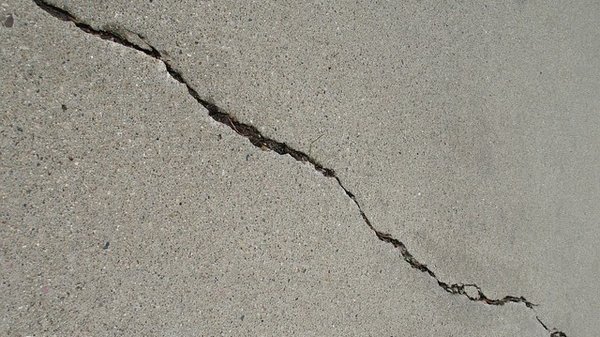
You tell a contractor you want him to repair a problem. Before leaving your house, the contractor says he will “look into it” and “get back to you.” Have you just made an oral contract for the repair? The answer to this question is no, according to Hodson v. Daron Cavaness Builder, Inc., 2017-1235 (La. App. 1 Cir. 2/27/18), a recent First Circuit Decision.
In Louisiana, an oral contract for over $500 must be proved by at least one witness and other corroborating circumstances. See La. C.C. art. 1846. The person trying to enforce the oral contract may serve as her own witness to meet this standard, but evidence of the corroborating circumstances must come from some other source. In Hodson, the plaintiff observed cracks in her floor and called a contractor to examine the problem. The plaintiff made it clear she wanted the contractor to repair the floor. While the contractor denied promising to fix the floor, he admitted that he promised to “look into it and get back with her in a week or two.” Despite his promise, he never called the homeowner back.
The plaintiff filed suit and claimed she was entitled to recover damages for the cost of repairing her floor. The Trial Court found the contractor’s admissions to be enough “corroborating evidence” to establish an oral contract for the repair. However, the First Circuit found the parties did not make an oral contract to repair the floor. Instead, the contractor only agreed to “look into it.” According to the Hodson Court, a “broken promise to look into a situation does not equate to an oral agreement to repair.”
The Hodson decision shows that while Louisiana law allows parties to create oral contracts, it can be difficult to prove that a contract was actually formed or to define the details of the agreement. If you put the agreement in writing, you won’t be left wondering whether you just created a contract.
Reynolds LeBlanc is a partner at Keogh Cox. His practice areas include commercial litigation, personal injury claims, appeals, and other matters. Reynolds is a former teacher, who in his free time plays music and perpetually talks himself into training for his next marathon.

**If you’re reading this article while driving, stop reading or driving - your choice**
Distracted driving is dangerous and can lead to an accident. Everyone knows this now. But one factor that appears to have gone unnoticed by the public at large is that distracted driving not only results in more automobile accidents, but often causes accidents which are more severe. The reasons why are becoming clear to insurance carriers who write automobile liability policies.
In a January 2017 "earnings call," Travelers Insurance observed that it was detecting a higher percentage of car crashes at higher speeds. Simple physics shows that higher speeds bring higher forces, and increase the risks involved. Research has shown that sending or reading a text takes your eyes off of the road an average of 5 seconds. If correct, at 55 mph, you will travel 403 feet while not looking at the road. Often times, a driver, even if they cannot avoid an accident, can do something to minimize the consequences, such as braking or taking a better angle to protect the driver or the passengers.
The fact that an insurance company is able to detect an increase in the severity of accidents, in an age where cars are safer than ever before, is something we should all consider.
Brian Butler is a partner with Keogh Cox. With over 30 years of experience, Brian has handled all types of defense matters. In recent years, his practice has been focused on cases involving complex cases with serious injuries and damages, which has led to extensive work with experts in complex cases, fire cases, and cases involving extensive forensic investigation. In his free time, Brian enjoys traveling with his wife.

As part of its travel pitch, Louisiana tourism once used the slogan: “Louisiana. Come as you are. Leave different.” If an out-of-state insurer writes in Louisiana and does not understand the ramifications of “Gasquet,” then they may leave different, very different.
The term “Gasquet” comes from the case of Gasquet v. Commercial Union Ins. Co., 391 So. 2d 466 (La. App. 4th Cir. 1980). The case considered how a settlement of the plaintiff's claims against the primary carrier and a partial settlement of claims against the tortfeasor/insured impacted the excess carrier.
In Gasquet, the plaintiff alleged serious personal injury. Prior to trial, he settled with the primary insurer, Commercial Union, for $200,000, even though it had a $300,000 policy limit. In the deal, the plaintiff fully released Commercial Union. He also released the tortfeasor/insured from all liability not insured by the excess carrier, Stonewall Insurance. The insured therefore remained in the lawsuit as a “nominal defendant” to allow the plaintiff to pursue the excess carrier.
After settlement, the excess carrier denied the claim and asserted that payment by the primary carrier of less than policy limits did not trigger its policy, which required that the primary policy be "exhausted." Without exhaustion, the excess carrier argued that it could not be called upon to respond under its policy language. The court rejected this argument and held that the plaintiff was entitled to a direct action against the excess carrier who would, in turn, receive a credit for the full limits of the primary policy. The “Gasquet release” has since become a staple of Louisiana litigation.
In Louisiana, unlike many states, a primary insurer owes no general duty to the excess carrier under Great Southwest Fire Ins. Co. v. CNA Insurance Companies, 557 So. 2d 966 (La. 1990). This creates a dynamic not present in states where the primary carrier is duty bound to consider the interests of the excess carrier. This lack of duty magnifies the vulnerability of the excess carrier’s position in Gasquet-friendly Louisiana.
An excess carrier in Louisiana should measure its reliance upon a primary carrier who can independently settle out with the plaintiff, sometimes on the eve of trial. If the excess carrier relied upon the primary carrier to defend the case, the excess carrier could be placed in the unenviable position of scrambling to defend a case where the insured (protected by Gasquet) may be suddenly disinterested in the outcome. Excess carriers with real potential exposure need to stay involved in the litigation and be prepared.
Following Gasquet, permutations have developed such as a “reverse-Gasquet,” where the excess carrier settles with the plaintiff and then pursues the primary insurer to recoup its payment. So, come to Louisiana, but know that we are sometimes different.
Collin LeBlanc is a Keogh Cox partner and experienced litigator who concentrates in injury, commercial, and legal malpractice disputes. He lives in nearby Zachary, Louisiana with his wife Melissa and three all-too-active children. He is an outdoorsman, a tennis player, a cook, and a hobbyist writer.

The period of time before the contract is signed in one of optimism. After all, few sign a contract expecting problems. But if you do not consider the many "what ifs," you may be left holding the bag. And this "bag" may include indemnity provisions which could force you respond for the actions of other parties.
Many contracts include "indemnity" or "hold harmless" provisions. Black's Law Dictionary defines indemnity as "a duty to make good any loss, damage, or liability incurred by another." Like many states, Louisiana allows one party to agree to pay for the damages caused by the fault of the other, if this intention is sufficiently expressed. However, there are broad statutory exceptions that can nullify the indemnity requirement.
Parties to construction contracts should be careful not to blindly rely upon indemnity provisions because the Louisiana legislature in La. R.S. 9:2780.1 declared invalid any indemnity provision where a party seeks indemnity from another for its own fault.
Despite the broad nullification of certain types of indemnity provisions in construction contracts, current Louisiana law allows a party to be indemnified for its own fault when the other party obtains insurance to cover the risk, and recovered the cost of insurance in the contract price. For example, a general contractor can require a subcontractor to indemnify the general contractor for the general contractor’s fault, as long as the subcontractor obtains insurance for this obligation, and was paid that amount under the contract.
Indemnity obligations are not always as they seem. Even in the pre-contract period of optimism, you may want to contact an attorney so you won't be left holding the bag.
Chelsea Payne is an associate at Keogh Cox and has been practicing for three years. Her practice mainly relates to construction law and complex litigation. Chelsea enjoys playing tennis and spending time with her family.

The poet Robert Frost famously wrote that: “Good fences make good neighbors.” But what if there is a problem even fences won’t solve? Louisiana law offers some answers.
Under Louisiana law, a landowner cannot use their property in a manner that interferes with their neighbor’s enjoyable use. While a neighbor may have to put up with some inconveniences, excessive inconveniences that cause damage may be actionable. If a landowner’s activity is considered a nuisance, he may be liable for damages, and the court may require the landowner to stop the activity.
To determine whether a particular activity is considered a nuisance, courts look to the following factors: (1) the character of the neighborhood; (2) the degree of the intrusion; and, (3) its effect on the use and enjoyment of neighboring properties. For example, a person living in a heavy industrial area may have to put up with more noise than someone living in the suburbs. Whether activity is considered a nuisance is determined on a case-by-case basis.
Further, the nature of the noise and its persistence and duration can be a factor in determining whether the activity is a nuisance. For example, in Parish of E. Feliciana ex rel. E. Feliciana Parish Police Jury v. Guidry 2004-1197 (La. App. 1 Cir. 8/10/05), 923 So. 2d 45, writ denied, 05-2288 (La. 3/10/06), 925 So. 2d 515, the court looked not only at the level of the noise, but also at the “nature” of the noise. The court held that noise from a motor cross track was a nuisance, likening the noise to a chainsaw, a buzzing bee, or a dentist drill.
Even when a landowner has a right to conduct a business on his property, he cannot create a nuisance in running the business. Louisiana courts have held that noxious smells, dust, debris, rats, flies, and noise may all constitute a nuisance, even if the business was otherwise lawful.
The duty owed to neighbors applies not only to the landowner, but may also apply to tenants or contractors performing “work” on the property. To prove a nuisance, the offended neighbor must show that the landowner/tenant/contractor either “knew or should have known” that the activity was a nuisance.
When mending fences is not possible, you may have other options.
Chelsea Payne is an associate at Keogh Cox and has been practicing for three years. Her practice mainly relates to construction law and complex litigation. Chelsea enjoys playing tennis and spending time with her family.

“Historically, privacy was almost implicit, because it was hard to find and gather information. But in the digital world, whether it's digital cameras or satellites or just what you click on, we need to have more explicit rules - not just for governments but for private companies.” -Bill Gates
Supreme Court oral arguments were heard earlier this week in Carpenter v. United States, a closely watched case which stands to impact what privacy means in our digital age. The case will decide whether law enforcement is permitted to gather cellphone data from third-party service providers like Verizon and AT&T without a warrant. Carpenter presents the latest installment in the eternal struggle between the need for safety and the desire to prevent a surveillance state.
In Carpenter, the FBI investigated a series of robberies at Radio Shack and T-Mobile stores in Detroit. Suspecting that Carpenter was operating as a “getaway driver,” the FBI sought and obtained without a warrant the location data for his cell phone. This data revealed that Carpenter (or at least his cell phone) was near the stores at the times of the robberies––damning evidence.
Carpenter argued that the government’s collection of his cell photo data was a “search” under the 4th Amendment, a "search" which would require a warrant supported by “probable cause.” The government maintained that privacy concerns were addressed when law enforcement complied with the Stored Communications Act which allows law enforcement access upon a showing that the information sought is "relevant and material" to an ongoing investigation. The government further argued that there is no reason to afford greater protection to cell phone data than given to other data such as bank records and dialed telephone numbers which can be obtained without a warrant.
The issues presented in Carpenter are not new, but are magnified by the awesome power of advancing technology to track our movement and assembly with others. The Louisiana court in State v. Bone, 12-34 (La. App. 5 Cir. 9/11/12), 107 So. 3d 49, held that an exclusive user of a cell phone did not have a reasonable expectation of privacy to the call detail record log associated with the phone. The court reasoned that access to the information in the detail record log was voluntarily surrendered by the defendant to the phone’s providers. However, in United States v. Jones, 132 S. Ct. 945 (2012), the United States Supreme Court found that the installation of a GPS device on a vehicle to monitor the vehicle’s movement was a “search” under the 4th Amendment. Carpenter addresses the intersection of these two cases.
By carrying a cell phone you know can track your movements, do you lose any reasonable expectation of privacy? Or, would allowing warrantless access to this information be akin to the prohibited GPS search in United States v. Jones? The Supreme Court will soon decide. How it chooses will impact criminal litigation and by extension how cell phone data is regarded in civil suits. More importantly, it may also impact the relationship between citizens and their government.
Collin LeBlanc is a Keogh Cox partner and experienced litigator who concentrates in injury, commercial, and legal malpractice disputes. He lives in nearby Zachary, Louisiana with his wife Melissa and three all-too-active children. He is an outdoorsman, a tennis player, a cook, and a hobbyist writer.