Blog
Explore news, articles, outcomes, and legal resources by category or practice area.
Thank you! Your submission has been received!
Oops! Something went wrong while submitting the form.
deselect
No items found...

Andrew Blanchfield, Managing Partner at Keogh Cox, represented the Louisiana Office of State Police and a State Trooper in a recent wrongful death jury trial in the 19th Judicial District Court in Baton Rouge. In the case, Andrew Arway was fatally shot during a traffic stop in Avoyelles Parish on May 24, 2004 by a Louisiana State Trooper.
The Trooper's dash cam video established that the traffic stop was initiated at 4:30 a.m. However, Arway did not initially stop his vehicle and instead drove forward slowly for several hundred feet. Once Arway's vehicle came to a stop, he exited, placed his hands in his pockets, and began to move to the front of his truck, ignoring the Trooper’s commands. Arway then made the motion of searching for a weapon. At one point, he formed his hands as if he held a gun and yelled “freeze.” In response, the Trooper loudly commanded Arway to place his hands where they could be seen. Arway again ignored the Trooper's commands and moved towards a ditch, outside of camera view.
The Trooper testified that Arway continued to make gestures as if he was looking for a weapon around his ankle. According to the Trooper, he fired two shots when he lost sight of Arway’s hands. No weapon was found on Arway and his blood alcohol level was twice the legal limit.
Arway’s wife and children brought a wrongful death action alleging excessive force. At trial, Blanchfield argued that the Trooper’s force was reasonable and that the Trooper justifiably feared for his life in view of Arway’s bizarre and threatening behavior. Evidence was also presented that Arway’s behavior was consistent with a “suicide by cop” theory.
The Baton Rouge jury deliberated for 90 minutes and concluded that the Trooper’s use of force was reasonable under the circumstances.
Andrew "Drew" Blanchfield is a litigator with over 30 years of courtroom experience. Litigating dozens of complex jury trials in state and federal courts, Drew has offered representation to various sectors to include industrial accidents, business litigation, oil and gas, healthcare, and professional liability defense. When he is not advising his corporate clients or in a court room (or on the tennis court), Drew spends time with his wife and four children.
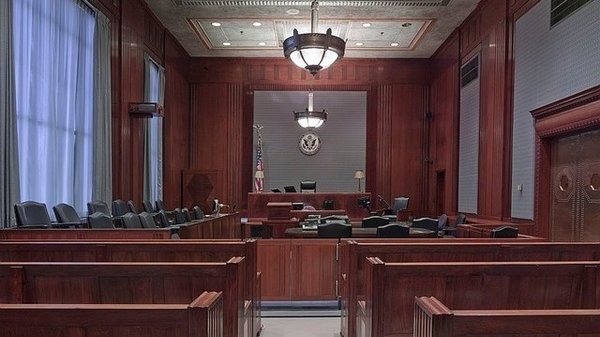
“There were eleven votes for 'guilty.' It's not easy for me to raise my hand and send a boy off to die without talking about it first.” - Reginald Rose, Twelve Angry MenJury service is a civil duty. Our system would collapse without the diligent individuals who respond and serve, but the law does provide exemptions and exceptions which may be utilized to be excused. Part 2 of this blog will explore those circumstances.General Exemptions
Louisiana provides two general exemptions from jury service.
1 - Age. Persons seventy years of age or older shall be exempt from jury service and may decline to serve as jurors. La. Const. Ann. art. V, § 33. However, they are free to serve if otherwise qualified.
2 - Prior Service. The second, all “persons who have served as grand or petit jurors in criminal cases or as trial jurors in civil cases or in a central jury pool during a period of two years immediately preceding their selection for jury service.” La. Sup. Ct. R. 25.
No exemption is automatic. A prospective juror qualifying for one of the above exemptions must assert the exemption by contacting the appropriate jury commission.
Recognized Excuses
In criminal cases, a juror may be excused when such service “would result in undue hardship or extreme inconvenience.” C.Cr.P. art. 783
In civil cases, a juror may be excused when service would result in “undue or extreme physical or financial hardship.” However, these circumstances are limited to circumstances in which an individual would:
1. Be required to abandon a person under his or her personal care or supervision due to the impossibility of obtaining an appropriate substitute care giver during the period of participation in the jury pool or on the jury; or
2. Incur costs that would have a substantial adverse impact on the payment of the individual's necessary daily living expenses or on those for whom he or she provides the principal means of support; or
3. Suffer physical hardship due to an existing illness or disease. La. Rev. Stat. Ann. § 13:3042
With respect to both criminal and civil service, a request for excusal can be mailed to the issuing court and should include an explanation of circumstances. In most cases, the letter must also include supporting documentation, such as, “state income tax returns, medical statements from licensed physicians, proof of dependency or guardianship, and similar documents, which the judge finds to clearly support the request to be excused.” “Failure to provide documentation shall result in a denial of the request for a waiver.” La. Rev. Stat. Ann. § 13:3042You should serve if you can but, if you need to be excused, questions regarding exemptions, excusals, and/or qualifications should be directed to the appropriate jury commissioner’s office.

“Jury: A group of 12 people, who, having lied to the judge about their health, hearing, and business engagements, have failed to fool him.” - Henry Louis MenckenCongratulations, you have been selected for jury duty. As American as baseball, jury duty is a pillar of the American system of justice, and you can step right up and participate-if you are qualified. In this two-part series, we outline the qualifications and exemptions for potential jurors in Louisiana.In Louisiana, “all qualified citizens shall have the opportunity to be considered for jury service in the district courts of Louisiana and shall have an obligation to serve as jurors when summoned for that purpose, and that no citizen shall be excluded from jury service in the district courts of Louisiana on account of race, color, religion, sex, national origin or economic status.” La. Sup. Ct. R. 25To serve as a juror for a civil or criminal case, you must meet the following criteria:
If you receive a jury duty notice and do not meet one of the above requirements, you are encouraged to contact the jury commissioner’s office. Who knows, you may be free in time for the first pitch.

Part 1 of this two-part series explored the basic elements of the attorney-client privilege. Part 2 will discuss some of the restrictions to the privilege.
The privilege applies only to legal matters.
While legal advice is protected, advice that is considered “business advice” may not. Unfortunately, the line between legal and business advice is not always clear. Legal advice requires that the attorney interpret law and apply it to specific facts to do one (or both) of two things: tell the client what to do in the future or tell the client what was done right (or wrong) in the past. Business advice involves discussions about the operations of a client which are independent from legal considerations.
If the communication involves both legal advice and business advice, the general rule is that the legal advice must predominate over the business advice. See, Exxon Mobil Corp. v. Hill, 2013 WL 3293496 (E.D. La. June 28, 2013), vacated and remanded on other grounds by Exxon Mobil Corp. v. Hill (5th Cir. May 6, 2014).
The crime-fraud exception.
The privilege is also subject to the “crime fraud” exception. Communications between an attorney and client regarding either: 1) a plan or intent to commit a crime or fraud; or 2) while the crime or fraud is being committed, are not protected by the attorney-client privilege. Remember, you obtain the services of an attorney to obtain legal advice, not illegal advice. As explained by the court in State v. Menard, 02-1182 (La. App. 3 Cir. 5/7/03), 844 So. 2d 1117, the reasons for the privilege cease to operate when the legal advice refers to future wrongdoing.
Other exceptions.
The privilege also has other limitations, including the fact that it may be waived, intentionally or unintentionally, by the client. As discussed in Part 1 of this blog, the decision to include third-parties in conversations and communications (including emails) between the client and the attorney may waive the privilege. If a client sues an attorney after the relationship has terminated, the privilege is likewise waived, and the attorney can discuss privileged communications to defend himself against that suit. Similarly, if an attorney acted as a notary or witness to a document, the attorney may discuss whether a document is authentic or whether the signors were legally competent to sign. Interestingly, the privilege also does not apply to communications with a deceased client if the communications are relevant to an inheritance dispute.
The attorney client privilege offers broad protection; however, it is important to remember that this protection is not without its limits.

This blog is one of a two-part series regarding perhaps the most important aspect of the attorney-client relationship -- the attorney-client privilege. So, what is it and why is the privilege so important? In short, the attorney-client privilege is a legal doctrine that protects communications between a client and his or her attorney. Unlike most other relationships, the privilege stays in place even after the relationship is terminated. The purpose of the privilege is to allow clients to have open and honest communications with their attorney. LSA-L.C.E. art. 506. However, not all communications between a client and attorney are privileged and certain requirements must be met for the privilege to attach.
-Existence of Attorney-Client Relationship. An attorney-client relationship must be in place. Louisiana law does not require that the attorney be formally retained or payment made for the privilege to attach. The privilege may apply even when the client merely discusses a legal matter with an attorney when the client reasonably believes the attorney is acting as his or her attorney.
-Confidential Communications. While the communication can take many forms (oral, written, digital, etc.) it is protected only if it was intended to be confidential, which generally means that the communication was not intended to be disclosed to others not involved in the attorney-client relationship or the legal representation. For example, if a client meets with his attorney and brings a friend along, then the meeting may not be protected by the privilege. Because the privilege is for the protection of the client, the client may choose to intentionally waive the privilege, or may do so inadvertently through their actions.
-Legal Services. The communication must be related to obtaining or facilitating the legal services offered by the attorney. The privilege has been held to apply to the employees of the attorney and sometimes experts retained to assist in the case.
When applicable, the attorney-client privilege applies not only to what was said, but also to your attorney’s observations of your mental, emotional, and physical state at the time you communicate. The privilege does not generally apply to information gathered by the attorney from other sources; however, another doctrine, the “work product” doctrine, may nevertheless protect such information.It is important that clients understand that the privilege does not apply merely because the client chooses to involve the attorney in the communication. Generally, the privilege only applies when the communication was intended as confidential and to further the legal services offered by the attorney. In this way, the client may not be allowed to utilize the privilege where they include the attorney in a communication with a third-party that is not otherwise protected.While the attorney-client privilege safeguards the attorney-client relationship, ensures that clients can tell their attorney the things they need to know about a case, and assists the attorney to provide the best legal help possible, it is also subject to restrictions. These restrictions are explored in Part 2 of this series.

A case successfully handled by Keogh Cox on behalf of the Louisiana Department of Revenue serves a strong reminder of the importance of maintaining business tax records, and of the significant burden imposed on Taxpayers who do not.
In Barfield v. Diamond Construction, Inc., 51,291 (La. App. 2 Cir. 4/5/17), 217 So.3d 1211, writ denied, 2017-0751 (La. 9/15/17), 2017 WL 4105839, the Louisiana Second Circuit affirmed the Trial Court who granted summary judgment in favor of the Louisiana Department of Revenue in response to a Taxpayer’s failure to pay sales and use taxes over the span of several years.
Although the burden of proof on a motion for summary judgment is usually imposed on the party who filed the motion, a Louisiana statute (La. R.S. 13:5034) shifts the burden in suits filed by the Department of Revenue to collect unpaid taxes. Therefore, to defeat the Department’s motion in Barfield, the Taxpayer possessed the burden to demonstrate that taxes were not owed on the various transactions at issue. Because the law presumes that sales and rentals of tangible personal property are fully taxable, the Taxpayer possessed the additional burden to show that the sales and rentals involved exempted categories. In the face of this “double burden,” the Taxpayer was unable to provide business records to demonstrate the nature of each transaction as these records were not preserved by the Taxpayer.
During the Department’s audit, the Taxpayer was unable to present the necessary records to prove it did not owe taxes on certain transactions. As a result, the Department was allowed to complete the audit by making an estimate of the amount of taxes owed for the subject transactions. The resulting audit findings were then treated as prima facie correct and were ultimately accepted because the Taxpayer offered no contrary evidence.
Noting the Taxpayer’s poor record-keeping, the Court cited the failure to produce the necessary records in support of its conclusion that the Taxpayer did not create a “material issue of fact” in opposition to the Department’s motion. This warranted the entry of judgment in favor of the Department and should remind every business of the real-world need to keep your tax records.
Written by: Chris Jones

With home prices soaring in today’s housing market, many people choose to rent rather than buy. Factored into their decision is the style, the square footage, the location, and other criteria, but few renters consider one risk that comes with many, if not most, leases. Many renters are exposed to personal liability for accidents occurring on the premises, and they don’t even know it.A lease is executed between the renter/tenant (the “lessee”) and the property owner (the “lessor”). By law, the lease imposes general obligations on both parties.The lessee (renter) is bound:
1. to pay the rent in accordance with the agreed terms;
2. to use the thing as a prudent administrator and in accordance with the purpose of which it was leased; and,
3. to return the thing at the end of the lease in a condition that is the same as it was when the thing was delivered to him, except for normal wear and tear. LSA C.C. Art. 2683
The lessor (property owner) is bound:
1. to deliver the thing to the lessee;
2. to maintain the thing in a condition suitable for the purpose of which is was leased; and,
3. to protect the lessee’s peaceful possession for the duration of the lease.” LSA C.C. Art. 2682.
These general obligations are typically expanded by terms in the lease because the lessee and lessor are “free to contract for any object that is lawful, possible and determined or determinable.” Family Care Services, Inc. v. Owens, 46 So.3d 234 (La. App. 2 Cir. 8/11/10). This “freedom of contract” allows the parties to construct their own bargains, shifting certain rights and obligations. In many commercial and residential lease agreements, this shifting includes a transfer of the liability for vices or defects on or in the leased premises.Although the lessor warrants that the leased premises is free of vices or defects, Louisiana law allows the lessee to assume responsibility for the condition of the leased premises under LA. R.S. 9:3221. Often, lessees assume that the lessor, as the owner of the premises, will be responsible if there is an accident. However, cases such as Jamison v. D’Amico, 955 So.2d 161 (La. App. 4th Cir. 3/14/07) demonstrate that the owner may be entirely free of fault even though they owned a defective premises which caused an accident. In Jamison, a worker was injured when a floor collapsed beneath her. There was insufficient evidence that the owner was aware of the defective floor. Because the lease contained a clause shifting responsibility, the owner was under no duty to inspect the premises and was dismissed from the case.A lesson to all renters: read and understand the provisions in your lease. Even if you like the colors and the location, you should also like the lease contract before you sign it.

Unfortunately, Louisianans (and their property insurers) have endured many natural disasters in the past several years. From the historic flooding in the greater Baton Rouge area in August 2016 to the devastation caused by Hurricane Harvey in August 2017, Gulf Coast residents are all too familiar with significant storms and flooding events. While the rebuilding process will take months or years, this article is designed to provide some basic information on how to document your property claim and apply for and obtain disaster assistance.
Recovering after a disaster may not be a quick or easy process, but spending more time and effort initially may ultimately save you time and allow you to present a claim your insurer will agree to pay.
A deputy arrives at your home or office and announces that you have been served. You quickly realize you have been named as a defendant in a lawsuit. Now what?Whether the suit involves a breach of contract, an automobile accident, or the one and a million other circumstances that can lead to a suit being filed, the process is essentially the same in Louisiana state courts. This blog provides a general roadmap of Louisiana’s “pre-trial” procedure, which applies in most situations. Different procedures are involved with workers’ compensation claims, administrative proceedings, medical malpractice claims, and other areas.Petition/Answer - When a person or company believes they have been damaged by fault, breach, or neglect, Louisiana law provides that the person allegedly wronged, the plaintiff, may file a Petition for Damages. Louisiana does not have a “loser pays” system. For this reason, there is little disincentive to a plaintiff who wants to sue. Once the Petition is filed with the Clerk of Court, the Sheriff serves the defendant with a certified copy of the Petition and the “Citation.”A defendant has fifteen days to file an Answer or to secure an extension from either the plaintiff attorney or the Judge, by filing a Motion for Extension of Time to File Responsive Pleadings. A failure to respond to a suit or obtain an extension within 15 days of service may result in a default judgment.Trial by Judge or Jury -The parties advise if they desire a judge or jury trial in the initial filings. There is no right to a jury in cases which do not have a possible value of more than $50,000. If a plaintiff “stipulates” that case value is at or below $50,000, the defendant has no right to demand a jury trial under Louisiana Code of Civil Procedure article 1732.Exceptions - Defendants have the right to raise “exceptions” to the suit. Common exceptions include a claim that the suit is vague; is filed in the wrong venue (i.e., the wrong location); or is untimely, and therefore “prescribed.” Defendants can use the exception process to challenge the plaintiff’s legal ability to recover. Many exceptions are waived if they are not filed before or with the Answer.Discovery
Case Deadlines - Typically, the court will establish a scheduling order to establish key dates such as deadlines to identify witnesses, exhibits, and any experts who may testify on behalf of the parties. The court often sets a deadline to file “dispositive” motions, such as motions for summary judgment where the plaintiff or the defendant tries to have the case determined before the trial.Alternative Dispute Resolution - Frequently, the parties agree to attempt to mediate the case with the assistance of a mediator. This is a voluntary process. In some cases, the parties will be bound by an agreement to arbitrate which will be conducted outside of the normal court process.There is no law or statute which sets the time frame for the “pre-trial” process. Depending upon the complexity of the suit, the pre-trial phase of a suit may take months, and often years.
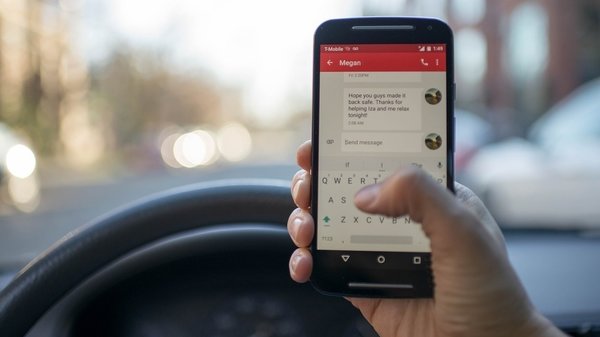
Earlier this year, Apple was sued in the California class action of Ceja v. Apple, BC #647057, Superior Ct. of California, County of Los Angeles. In the Ceja suit, it was alleged that Apple is liable for automobile-related injuries and death. The “theory of recovery” against Apple is fairly straight-forward: 1) since 2008, Apple has possessed the “lock-out” ability to prevent texting while driving; and, 2) it is liable because it failed to do so. Whether or not the plaintiffs prevail against Apple, the national trend is toward stricter anti-texting laws and harsher consequences for those who text and drive. While this post does not intend to suppose a moral equivalence between drunk driving and driving while texting, the building momentum against texting while driving is reminiscent of the development of the anti-drunk driving laws and message.
It was not until 1938 when 0.15 became the first commonly-used blood alcohol level for intoxication (nearly two times today’s legal limit). Today, driving with a .08 will land you in a Louisiana jail. Many states such as Louisiana have enacted punitive damage statutes that allow for substantial money awards against drunk drivers. For instance, under Civil Code Article 2315.4, punitive damages (a.k.a. “exemplary” damages) are available against any driver whose intoxication causes injury. The message has been heard: drunk driving is illegal and may costs you your freedom, your money, or both.
The prohibitions against texting while driving (and even the broader category of “distracted driving”) are expanding. The State of Washington was the first state to ban texting while driving in 2007. Almost every state has since followed suit. Attitudes are also changing, perhaps in response to public service announcements and targeted media campaigns.
While once legal here, Louisiana, at least on paper, now completely bans texting while driving under La. R.S. 32:300.5. This law was later expanded to prohibit driving while accessing, reading, or posting to a “social networking site.” Last year, related fines and penalties were increased.
The practice of texting while driving has been said to involve three forms of distraction:
1. Manual distraction- taking your hands away from the wheel;
2. Visual distraction- diverting your eyes away from the road;
3. Cognitive distraction- taking your attention away from safely driving.
In the last few years, at least two drivers (one in New Jersey and one in Pennsylvania) have been sued under allegations that they are liable for injury because they sent texts to persons they knew or should have known were driving. Kubert v. Best, 75 A.3d 1214 (2013) and Gallatin v, Gargiulo, #10401 of 2015, Lawrence County, PA.
At some point, auto manufacturers and phone/electronics suppliers may choose or be forced to render texting while driving impossible. Until such a time, the trend against texting while driving continues.

I have met smart, sophisticated “business” people whose eyes glass over when they try to explain their understanding of “UM” coverage. The picture becomes murkier when discussing “economic-only UM,” a form of UM coverage many people purchase without even knowing it. Through many years and conversations, I have come to conclude that there is a general fogginess that obscures this entire subject with many, if not most, people. This blog is an effort to improve understanding on the subject.What is “UM” Coverage?“UM” signifies “uninsured motorist” insurance coverage, but is more properly described as “uninsured/underinsured” motorist coverage. A person, family, business, or group purchases UM coverage to respond to damages caused in an accident by someone who has either no insurance or not enough to cover the loss. You purchase UM insurance to protect yourself or those connected to you. Without UM, you are gambling that the person who caused the accident (the “tortfeasor”) will have insurance coverage, and enough coverage, to respond to the injuries and damages they have caused.Why UM?This question is simply answered in a two-part response:#1- The roads are dangerous-Unless you are a crop duster or an undercover agent, the most dangerous thing you will likely do on any given day is to drive on a public road, even more so in the age of “smartphones” and distracted-driving.#2- Many drivers lack sufficient liability coverage- An unhealthy portion of drivers have either no insurance on insufficient insurance coverage to address an accident involving severe injuries or damages. The State of Louisiana requires motorists to obtain at least the minimum insurance of $15,000 “per person,” $30,000 “per accident,” and $25,000 to address property damage. If you do not purchase UM, you are trusting that these limits will be enough, as they might be in a minor accident. But what if the injuries are severe or you have multiple passengers in your car, van, or suburban?Often, the same people who reject UM, will buy “collision” coverage on their car to make sure they are not left paying for a car note after the car is destroyed in an accident. In this limited way, you can think of UM insurance as collision coverage on you, your family, passengers, or employees.While perfect statistics are not available, many drivers on the road have no insurance. Frequently, drivers will obtain minimum limits insurance through a “premium finance” arrangement, but will have stopped paying the premiums (thereby losing coverage) by the time of an accident.What is “Economic-Only” UM?In Louisiana, UM coverage will be afforded to you unless you “waive” the coverage under La. R.S. 22:1295. Louisiana residents are presented with a form that allows them to waive or select UM coverage. They are also allowed to select “economic-only” UM. People often choose this option because it is cheaper, but economic-only UM coverage will only pay for economic damages such as lost wages, medical bills, funeral costs, and other monetary damages. Economic-only UM will not pay money to compensate for pain and suffering/mental anguish, scarring and disfigurement, or other non-economic damages.FAQS
CONCLUSIONRational people may decide to reject UM to save money; and this decision may be the right one if they have health insurance, short-term disability, long-term disability, or others such protections. However, people often make such decisions with less than full information. Hopefully, you will make the smart choice.
Imagine you are a defendant sued because you negligently injured someone in Louisiana. In the accident, the plaintiff received extensive medical treatment. The health insurer paid $50,000 for medical costs even though the doctors billed $150,000 for the plaintiff’s care. The plaintiff was only out-of-pocket $500 for his health insurance deductible. What amount should you have to pay: $150,000, $50,000, or only $500?
The answer to this question is not so simple. You will certainly have to pay more than the plaintiff’s deductible, that much is clear. But whether you are required to pay the medical providers’ full rate of $150,000, the insurer’s discounted rate of $50,000, or some other amount for the medical services provided is a more complicated issue.
This blog is broken down in a two-part series. This installment will address the background of the collateral source rule and the public policy behind the rule.
What is the Collateral Source Rule?
The collateral source rule provides that a tortfeasor is generally not entitled to a credit for payments made to a plaintiff through “collateral sources,” i.e., sources not provided by the defendant. Under this rule, a tortfeasor’s exposure for damages should be the same regardless of whether or not the plaintiff purchased health insurance.
The collateral source rule permits the plaintiff to recover medical expenses in excess of the amounts actually paid by the plaintiff or their insurer. Critics therefore assert that the rule provides a “windfall” to the plaintiff that violates the goal of Louisiana tort law, namely to make the victim “whole.” As applied, the rule can make the victim more than whole.
Origins of the Collateral Source Rule
To understand the collateral source rule, it helps to look at its origins. The rule in the United States at least dates back to the 1854 case The Propeller Monticello v. Mollison, 58 U.S. (17 How.) 152, 15 L.Ed. 68 (1854). In Propeller Monticello, two ships wrecked and one sank. The insurer of the ship that sank paid for the loss. The owner of the at fault ship asserted that the plaintiff had been fully compensated by the insurer’s payment and that it was therefore not obligated to pay for the damage. In rejecting this argument, the Propeller Monticello Court held the defendant was not a party to the insurance contract and could not reduce exposure by citing to the insurance available to the plaintiff.
Policies Behind the Collateral Source Rule
In Dep't of Transp. & Dev. v. Kansas City S. Ry. Co., 846 So. 2d 734 (La. 5/20/03), the Louisiana Supreme Court detailed the public policy concerns that support the collateral source rule. According to the court, the policies in favor of the rule include:
i. Fairness- a defendant should not gain an advantage from benefits provided to the plaintiff independent of any act of the defendant;
ii. Deterrence- the rule provides a deterrence to negligent conduct; and,
iii. Promotion of Insurance- victims could be dissuaded from purchasing insurance if that act could affect tort recovery.
So, how much do you owe: $50,000, $150,000, or some other amount? We’ll tell you in Part II of this blog.