Blog
Explore news, articles, outcomes, and legal resources by category or practice area.
Thank you! Your submission has been received!
Oops! Something went wrong while submitting the form.
deselect
No items found...

The First Circuit Court of Appeals affirmed the Trial Court’s ruling that granted summary judgment in a premises liability case filed following an accident that occurred at the LSU Hilltop Arboretum. The Louisiana Supreme Court recently denied writs seeking review of the lower courts’ rulings. Keogh Cox attorneys, Brian T. Butler and C. Reynolds LeBlanc, defended the case.
In Hebert v. Louisiana State Univ. Sys. Bd. of Supervisors Through Louisiana State Univ., the plaintiff went to the LSU Hilltop Arboretum to attend a wedding. Before the wedding, she went to the ladies’ room located in the outdoor pavilion area. The door to the restroom is controlled by an automatic door closer. The plaintiff alleged that the door began to close with “excessive force” when she exited the ladies’ room, and her finger was injured when it slid into the hinge-side of the door.
The plaintiff claimed the automatic door closer was defective because it was not properly adjusted at the time of the accident. The plaintiff retained an expert professional engineer to support her claims. The expert inspected the door and the door closer approximately 19 months after the incident. He testified that when he inspected the door, it was closing too fast, was out of adjustment, and had been improperly maintained. The plaintiff argued these findings showed the door was also defective at the time of the accident.
The expert also said the doors should have been inspected and adjusted every six months. The plaintiff argued the alleged problem with the door would have been discovered if it was inspected as her expert recommended.
Keogh Cox filed a Motion for Summary Judgment on behalf of the defendants. First, we argued the plaintiffs failed to produce evidence that the door was defective on the date of the accident. While the expert opined the door was defective when it was inspected nineteen months after the accident, the plaintiff had no evidence to show the alleged defect existed at the time of the accident. Keogh Cox asserted that the expert’s testimony claiming a defect was pure speculation. The court agreed and found the plaintiff failed to show the door presented an unreasonable risk of harm.
Second, we argued the plaintiff could not show LSU had prior notice that the door was defective at the time of the accident. As the door to the primary restroom on the premises, it was frequently used. There was no evidence of any prior complaints or reports of problems with the door before the accident. The plaintiff argued that notice could be found because LSU did not have a set inspection plan for the door as her expert recommended.
The court rejected this argument, stating “The opposite is true; in the absence of other facts such as recorded complaints about a defect or hazard, the lack of a plan of inspection implies that the public entity has no knowledge of dangerous defects or conditions.” Thus, the court found the plaintiff failed to show LSU had notice of the alleged problem with the door.
Reference:
Hebert v. Louisiana State Univ. Sys. Bd. of Supervisors Through Louisiana State Univ., 2025-0246 (La. App. 1 Cir. 11/7/25), 424 So. 3d 809, writ denied, 2025-01542 (La. 2/10/26), 425 So. 3d 1205.
Keogh Cox is pleased to announce that seven attorneys were named to the 2026 Louisiana Super Lawyers list:
Partner Christopher K. Jones is also recognized as a 2026 Louisiana Top 50 Super Lawyer.Four attorneys were selected to the 2026 Louisiana Super Lawyers “Rising Stars” list:

In Webber v. City of Shreveport, No. 56,705-CA (La. App. 2 Cir. Dec. 17, 2025), the Louisiana Second Circuit recently affirmed summary judgment in favor of the defendants in a trip-and-fall case involving a cracked sidewalk.
The plaintiff alleged she tripped and fell over an uneven area of the sidewalk in front of the defendant’s business. The defendant moved for summary judgment, arguing that the plaintiff could not establish (1) a defect creating an unreasonable risk of harm or (2) the defendant knew or should have known of any defect. The defendant produced evidence to show it had no notice of any defect and no prior accidents in the area where the plaintiff fell. The defendant also produced photographs showing no holes in the area and no differences in elevation exceeding one inch.
In support of her claims, the plaintiff provided evidence including testimony from a corporate representative of the defendant who admitted to knowledge of cracks in the sidewalk prior to the plaintiff’s accident.
However, the court importantly distinguished that knowledge of a condition is not the same as knowledge of an unreasonably dangerous condition. The defendant maintained that not all cracks in sidewalks present unreasonably dangerous conditions. It also offered proof that the subject portion of the sidewalk was traveled every day as the building’s main passage. There were no prior complaints regarding its condition, nor were there any prior accidents.
Based upon this evidence, the court found that the plaintiff failed to prove that the cracks in the sidewalk were unreasonably dangerous or that the defendants had any actual or constructive notice of the defect’s existence. Summary judgment was affirmed in the defendant’s favor.
Reference: Webber v. City of Shreveport, 56,705 (La. App. 2 Cir. 12/17/25), 425 So. 3d 485.

Mary Anne Wolf, PE, Esq, will present Resolving Design & Construction Disputes – How to Minimize the Risk and Expense in Lafayette on March 4, 2026.


In Ames v. Ohio Department of Youth Services, the U.S. Supreme Court recently clarified an important issue under Title VII of the Civil Rights Act of 1964. The Court addressed whether employees who belong to “majority groups” must meet a higher burden by proving “background circumstances” when bringing discrimination claims. The Court unanimously held that they do not.
The case involved an employee of the Ohio Department of Youth Services, who alleged she was denied a promotion and was later demoted because of her sexual orientation. The plaintiff is heterosexual, and her supervisor is homosexual. When the plaintiff sought the promotion, the position ultimately was awarded to a homosexual woman. After her demotion, plaintiff’s position also was filled by a homosexual man.
The plaintiff filed suit under Title VII, which prohibits employment discrimination based on protected characteristics, including sex. The district court dismissed her claims. It applied a rule requiring “majority-group” plaintiffs, i.e., plaintiffs who are not part of a minority group, to prove additional “background circumstances” suggesting the defendant is “the unusual employer who discriminates against the majority” employees.
The Supreme Court unanimously vacated the lower court’s ruling. The Court focused on the statutory text of Title VII, which protects “any individual” from discrimination. The statute does not distinguish between majority and minority groups.
The Court held Title VII does not impose a higher evidentiary burden on plaintiffs who are part of a majority group. Therefore, the “background circumstances” rule applied by the lower courts imposed an additional evidentiary burden on majority group plaintiffs that was inconsistent with the statute.
This decision resolved a split among lower courts regarding this issue and confirmed that Title VII discrimination claims should be evaluated equally for all employees.
Reference:
Ames v. Ohio Department of Youth Services, 605 U.S. 303, 145 S. Ct. 1540, 221 L. Ed. 2d 929 (2025).
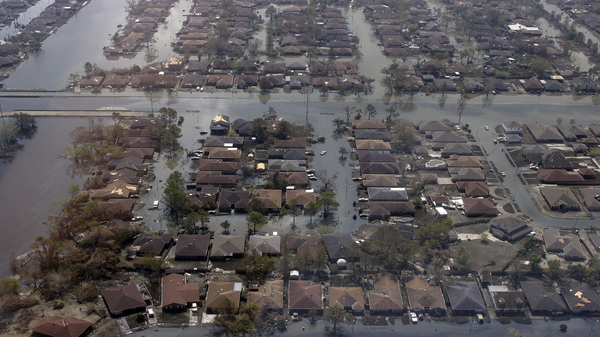
In Smith v. Grantham, homebuyers sued the sellers for alleged failure to disclose prior flooding of the home. The buyers also sued the sellers’ real estate agent for negligent misrepresentation, arguing the realtor knew or should have known of a prior history of flooding. The plaintiff referenced the previous sellers’ property disclosure documents located in the MLS listing database, which disclosed a prior flooding incident. However, the property disclosure document that the realtor received from her clients denied any prior flooding of the property or structure.
The Court of Appeal affirmed summary judgment in favor of the sellers’ agent, noting that her clients represented in their property disclosure document that the property had never flooded, and she had no actual knowledge contradicting their representation. The Court stated that under La. R.S. 9:3894(B), a real estate agent is relieved of liability for providing false information furnished by her client if she did not have actual knowledge that the information was incorrect. The court held that imposing a higher duty on a real estate agent would improperly “create a situation in which the agent had to independently verify information before conveying it to the buyer.”
Reference:
Smith v. Grantham, 93-0881 (La. App. 1 Cir. 9/4/24), 394 So.3d 316.

In a case of first impression, the United States Court of Appeal for the 5th Circuit concludes that a maritime tort plaintiff’s overdose from illegal drugs was a superseding cause of his death that was not traceable to his maritime work injury. Therefore, damages stemming from his death could not be recovered.
In Bommarito v. Belle Chasse Marine Transportation, L.L.C., the plaintiff was injured on the job while constructing a launch site on the Mississippi River. The plaintiff’s injuries included a concussion, a fractured eye socket, and a displaced disc that required emergency surgery. He was advised additional surgeries were needed to address his complaints of pain. His prescription medication ran out, and the plaintiff tried to control his pain with over-the-counter medication while he waited for an appointment with his doctor.
One day, the plaintiff’s mother found him unconscious from what a pathologist determined was an overdose of street fentanyl mixed with Xylazine, a horse tranquilizer not available for human use. The autopsy revealed his blood contained more than six times what is considered a lethal dose of fentanyl.
The plaintiff’s estate brought claims against various defendants under the Jones Act and general Maritime Law and subsequently added a claim under the Longshore and Harbor Workers’ Compensation Act. Following a bench trial, the District Court Judge awarded damages, including damages for wrongful death.
The Court of Appeal reversed. The court applied the “superseding cause doctrine” to its proximate cause analysis. The court found that where the defendant’s negligence in fact substantially contributed to the plaintiff’s injury, but the death was actually brought about by a later cause of independent origin that was not foreseeable, the superseding cause doctrine applies.
While the court noted that few federal courts have addressed the issue of overdose from illegal drugs as a superseding cause, various state court cases had. The court found those cases that found ingesting illegal drugs to be a superseding cause to be persuasive. Citing its own precedent on the superseding cause doctrine, the court noted that it “is predicated on the notion that there must be some terminus somewhere, short of eternity, at which the second party becomes responsible in lieu of the first.” Noting that foreseeability is a continuum, the court added that “at some point, there is no causation as a matter of law.”
References:
Bommarito v. Belle Chasse Marine Transportation, L.L.C., 159 F.4th 297 (5th Cir. 2025)

Keogh Cox attorneys celebrated John P. Wolff, III, who was honored for his dedication and leadership with the McMahon Inn of Court's Distinguished Member Award.


Picture it – you purchase a new home in a quiet, family-friendly neighborhood. On your first night, you notice that the neighbors are having a party – a big loud party. Your haven of peace and tranquility is interrupted by thumping bass and the shrieks of people jumping into a pool. The next day, the neighbors are gone, and the block is quiet again. However, the party returns the next weekend, bigger and louder than before. You do some research and find the house is listed on a popular website for short term rentals. What do you do?
This is the exact question that was posed to the Louisiana Court of Appeals for the Second Circuit in Marina Homeowners Association, Inc. v. Cahill. In that case, the Marina Homeowner’s Association filed a petition seeking declaratory judgment against the owner of the house on the basis that the use of the home as a short-term rental violated the covenants of the homeowner’s association. In response, the property owners argued that the covenants had expired and were no longer applicable. Therefore, they claimed they were free to use their property as they saw fit.
Many homeowners in Louisiana are familiar with building restrictions. Authority for the issuance of building restrictions is found in Louisiana Civil Code article 775. A building restriction is a real right under Louisiana Civil Code article 777. However, Louisiana Civil Code article 778 provides that if there is doubt as to the existence, validity, or extent of building restrictions, the issue should be resolved in favor of the unrestricted use of the immovable. These articles also provide a subsequent purchaser of the immovable property is also bound by the building restrictions if they are recorded in the public records.
The building restrictions for the subdivision at issue provided that the restrictions had a term of twenty years and then would renew automatically in ten-year periods. These restrictions bound the original property owners and all subsequent property owners. The court found that even though the original twenty-year term for the building restrictions had expired, the restrictions would automatically renew unless amended by the Association. Therefore, the property owner’s house was subject to the building restrictions.
Importantly for this case, the building restrictions specifically prohibited the use of the property for any reasons other than residential purposes. Therefore, the operation of a short-term rental was a violation of the building restrictions.
The Homeowners Association prevailed in this case – the property owners were no longer able to use their property for short term rentals. As the moral of the story – to be a good neighbor – it helps to follow the rules. And it is always important to check the fine print to know what those rules are!
References:
Marina Homeowners Ass'n, Inc. v. Cahill, 56,423 (La. App. 2 Cir. 8/27/25), 420 So. 3d 782.

Pursuant to House Bill 291, Louisiana modified the prescriptive dates for wrongful death and survival actions. Survival actions are brought to recover damages a deceased person suffered before his or her death. For survival actions, La. Civil Code Article 2315.1 (A) now provides as follows:
If a person who has been injured by an offense or quasi offense dies, the right to recover all damages for injury to that person, his property or otherwise, caused by the offense or quasi offense, shall survive for a period of one year from the death of the deceased or two years from the day that injury or damage is sustained, whichever is longer.
A wrongful death claim can compensate the surviving family members for their own suffering following someone’s death. Similar amendments were made for the wrongful death statute. La. Civil Code Article 2315.2(B) now provides that the right of action for wrongful death prescribes one year from the death of the deceased or two years from the day that injury or damage is sustained, whichever is longer.
The changes to these articles went into effect August 1, 2025.

Plaintiff Brady Hardisty and a coworker attempted to use chains attached to a tractor to pull a Caterpillar bulldozer from the mud. A chain snapped and struck plaintiff in the head and face. Hardisty sued Caterpillar under allegations that its product was unreasonably dangerous. Caterpillar filed a Motion for Summary Judgment arguing Hardisty was not engaged in a “reasonably anticipated use” of its product. Both the trial court and the appellate court identified “material issues of fact” in denying Caterpillar’s motion. The Supreme Court reversed, and entered summary judgment for Caterpillar.^
Caterpillar cited its Operation Manual that warned against the use of chains and gave a safer alternative. Hardisty asserted that material issues of fact existed as to whether Caterpillar “knew or should have known” that users were not following product warnings. Hardisty offered opinions from its expert witness that: (1) Caterpillar knew of the danger because it warned against the use of chains and (2) experience showed that the use of chains was a common practice in the industry.
The Hardisty court reasoned that the expert’s own “experience” was insufficient to refute Caterpillar’s evidence that it received no report of prior similar accidents. However, the Court cited to earlier case law for the proposition that even actual knowledge would not defeat the motion, stating:
The jurisprudence has recognized that knowledge of the potential and actual intentional abuse of a product does not create a question of fact on the question of reasonably anticipated use when the manufacturer expressly warned against the danger of such misuse.
In a recent case handled by Keogh Cox, the federal Fifth Circuit affirmed summary judgment for defendants, citing Hardisty for the proposition that a manufacturer may reasonably expect that its users will follow “clear and direct” product warnings. See Friels v. Louisiana State Administrative Office of Rick Management, et al.
References:
^Hardisty v. Walker, 25-00239 (La. 6/3/25), 410 So,3d 774.
Louisiana State Administrative Office of Rick Management, et al., No. 24-30688, 8/15/25. Opinion not designated for publication. 5th Cir. R. 47.5.